Featured Building: Lake Huron Hall
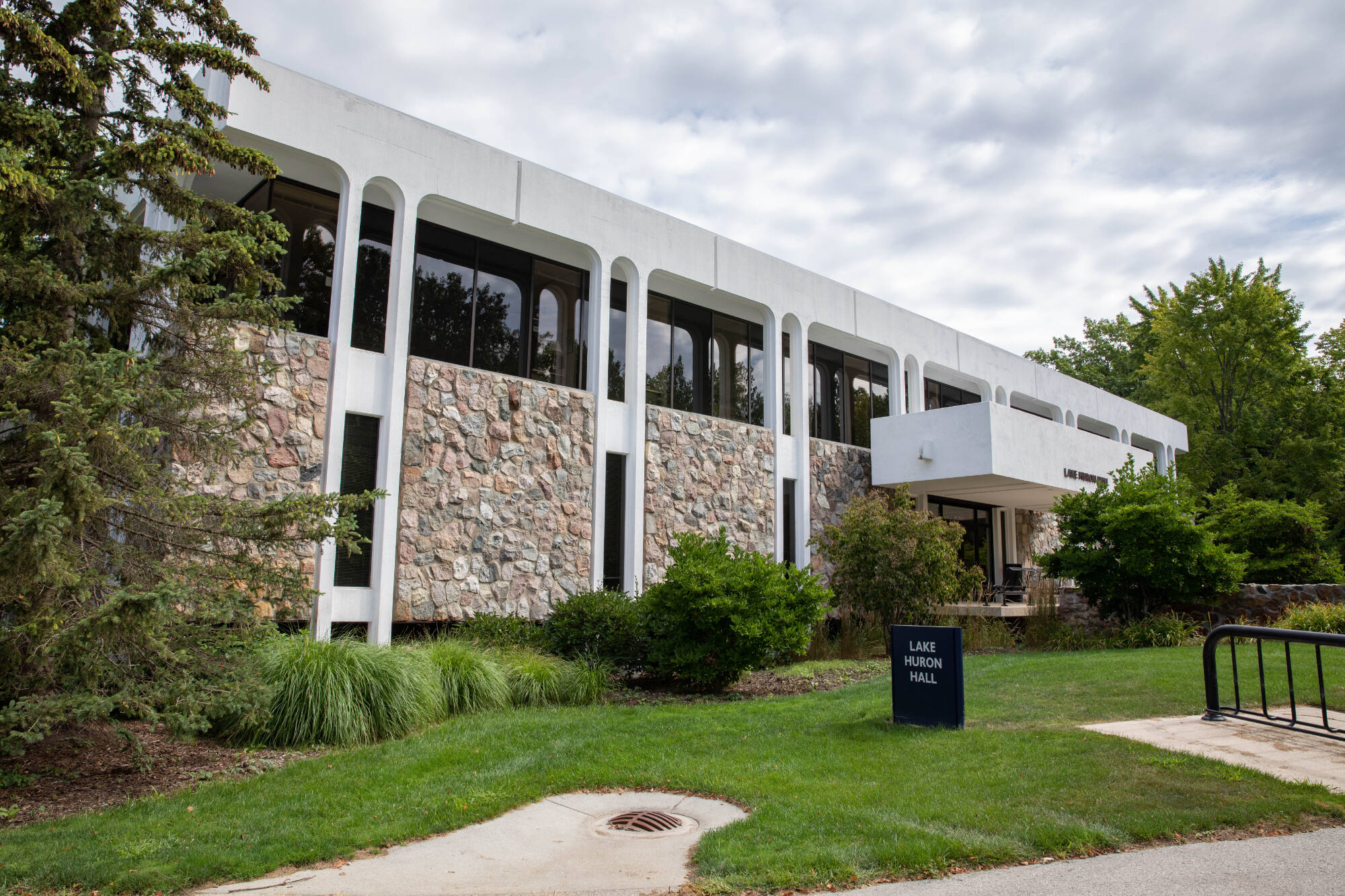
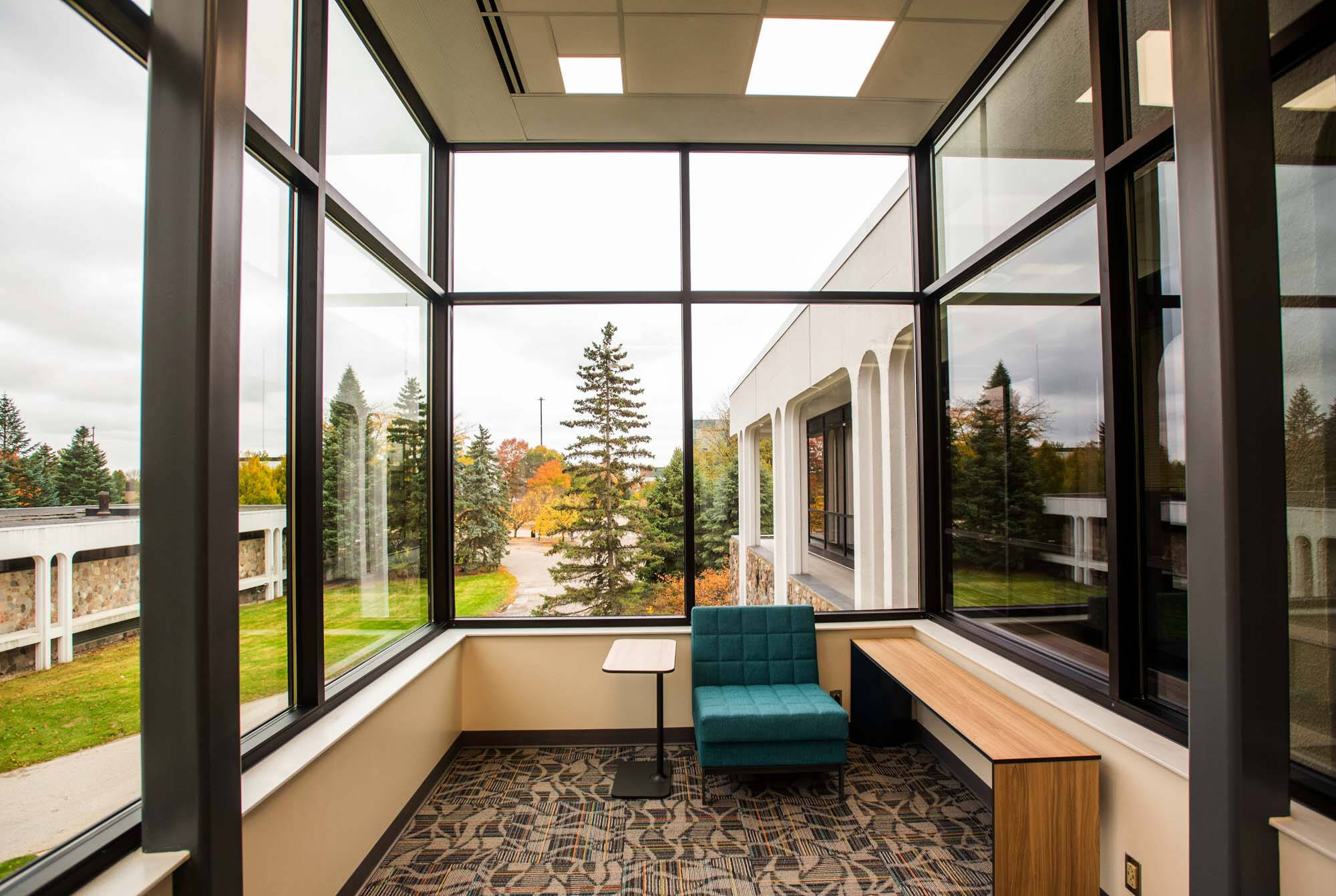
Lake Huron Hall (LHH) was originally constructed on the Allendale campus in the early 1960’s, along with two other lake buildings: Lake Michigan Hall and Lake Superior Hall. LHH has undergone an extensive renovation, preserving the exterior design of the lake buildings, but with a totally restructured interior. Included in this massive renovation was a refresh of the artwork that was selected in partnership with the Department of Classics and the Department of English.
The artwork displayed in the beautifully renovated building encourages appreciation and understanding of art and its role in society through direct engagement with original works of art.
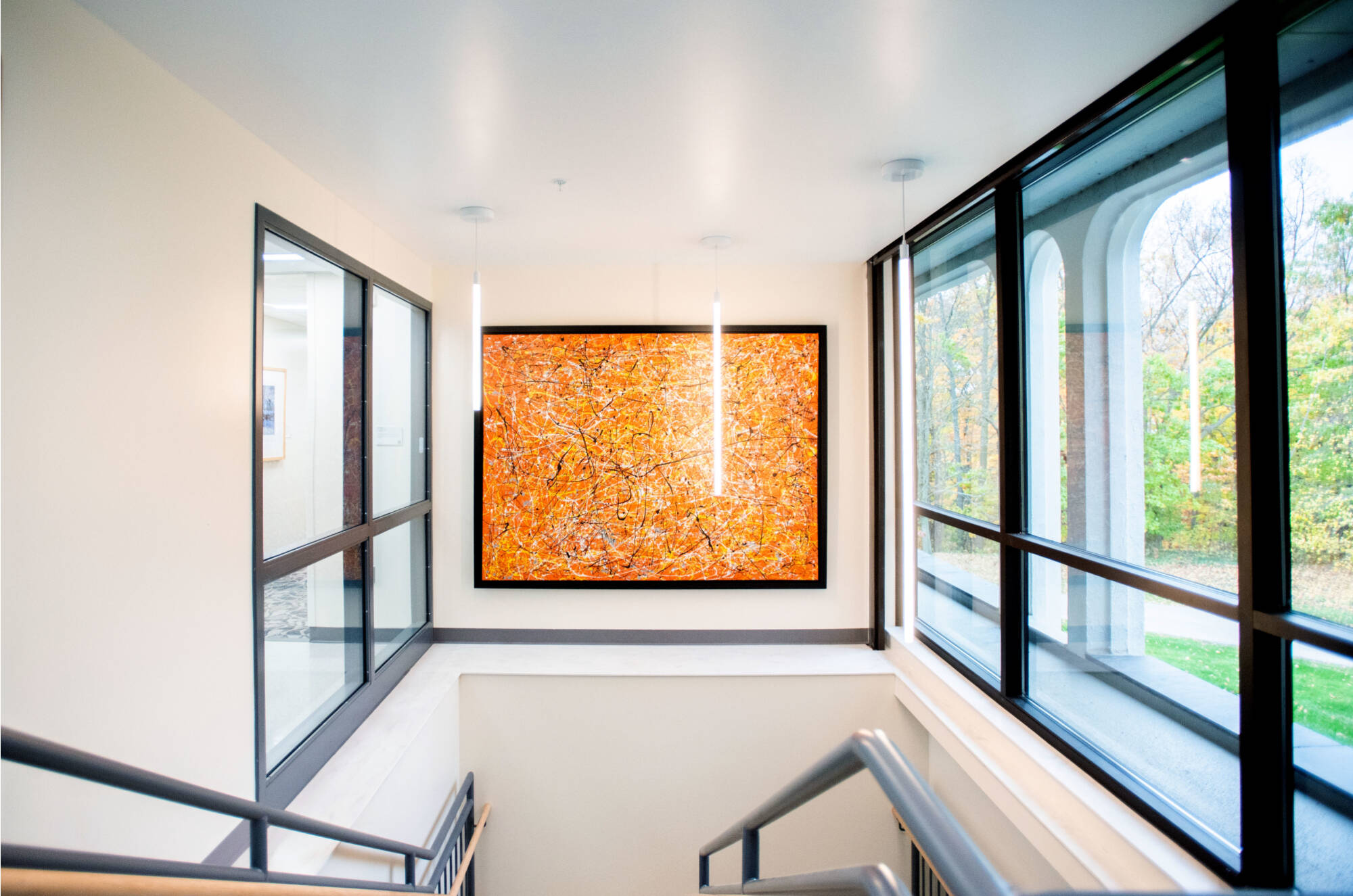
Brad Walworth, Big Orange, Acrylic on Canvas, 2009, 2019.62.2
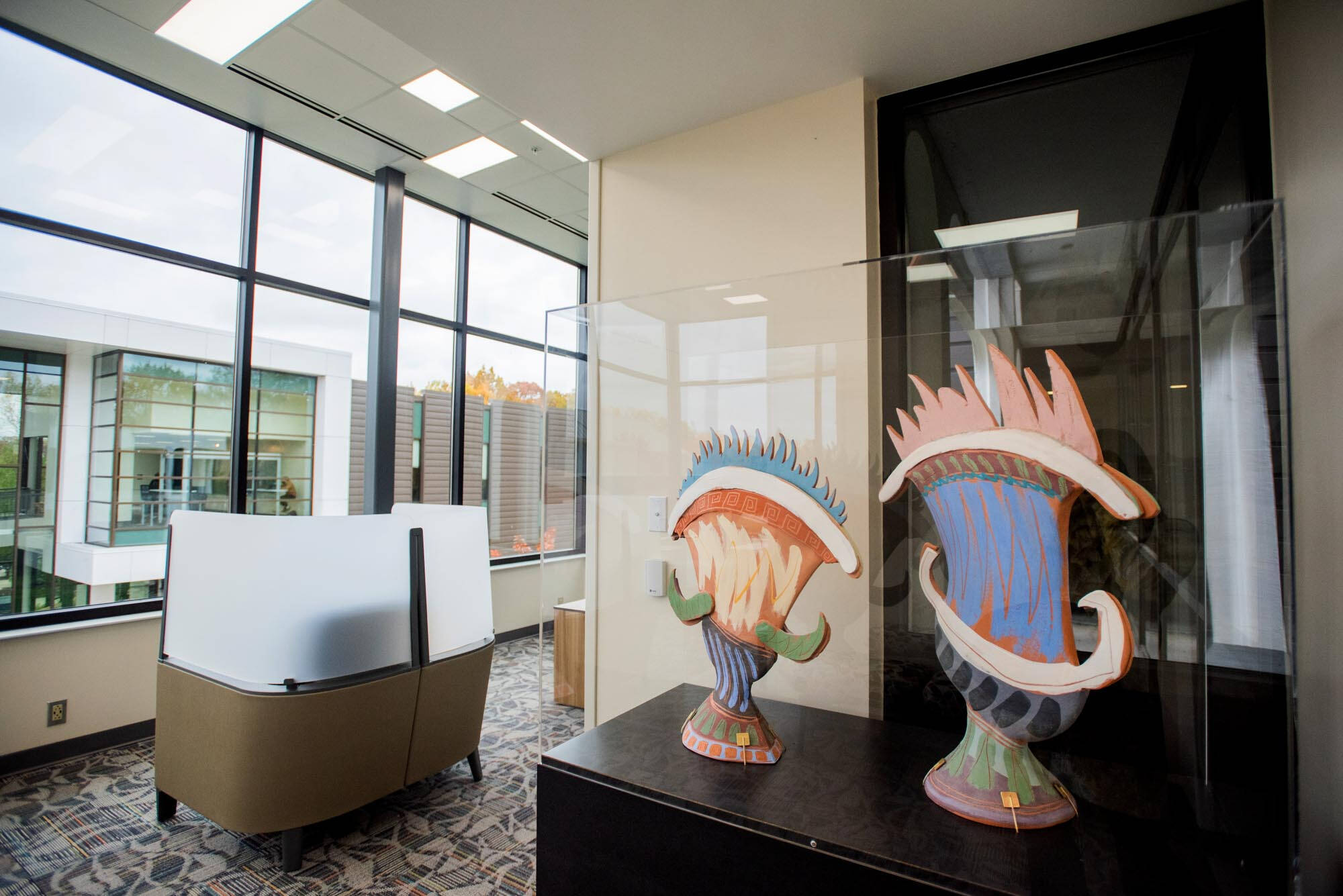
(left) Daleene Menning, Postmodern Greek Vessel, Fire Hydria, Terra Cotta, ca 2005, 2005.104.1, (right) Daleene Menning, Adolescent Krater of the Blue Flame, Terra Cotta, 1988, 1998.066.1
No matter what your interests or area of study, the GVSU Art Gallery has amazing pieces of art that speak directly to your work! Get a conversation going with your students! Contact the gallery staff for tips about how to get started.
- Dr. Melissa Morison, Associate Professor and Chair of the Department of Classics
The Department of Classics
Associate Professor and Chair of the Department of Classics, Dr. Melissa Morison, describes the carefully selected artworks in LHH as, “great examples of a successful marriage of art and instructional space. Each object group offers students opportunities to explore connections between ancient and modern-exactly the kinds of connections our discipline encourages students to build, and exactly the kinds of connections we want to make in our teaching in Lake Huron Hall.”
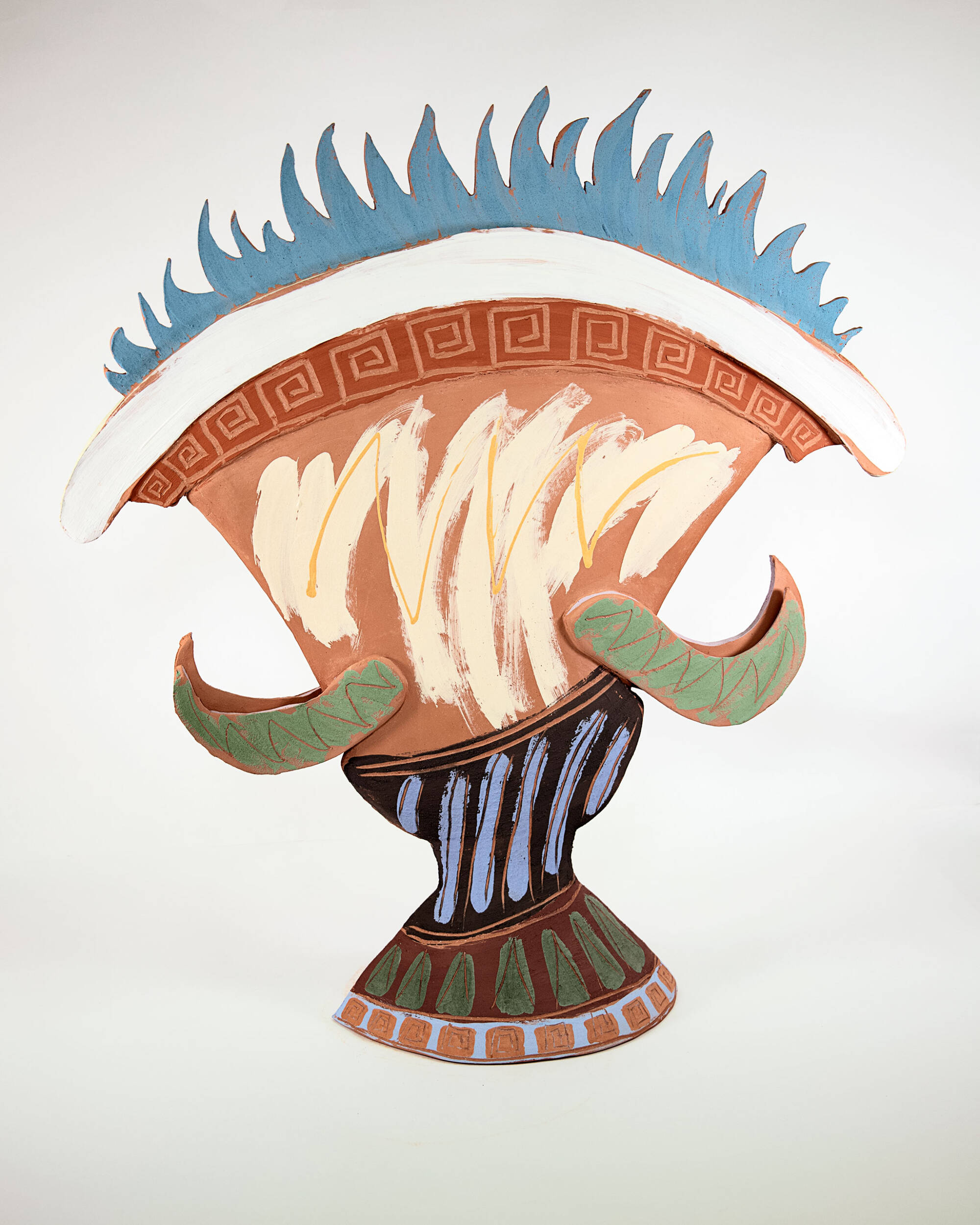
Daleene Menning, Adolescent Krater of the Blue Flame, terra cotta, 1988, 1998.066.1.
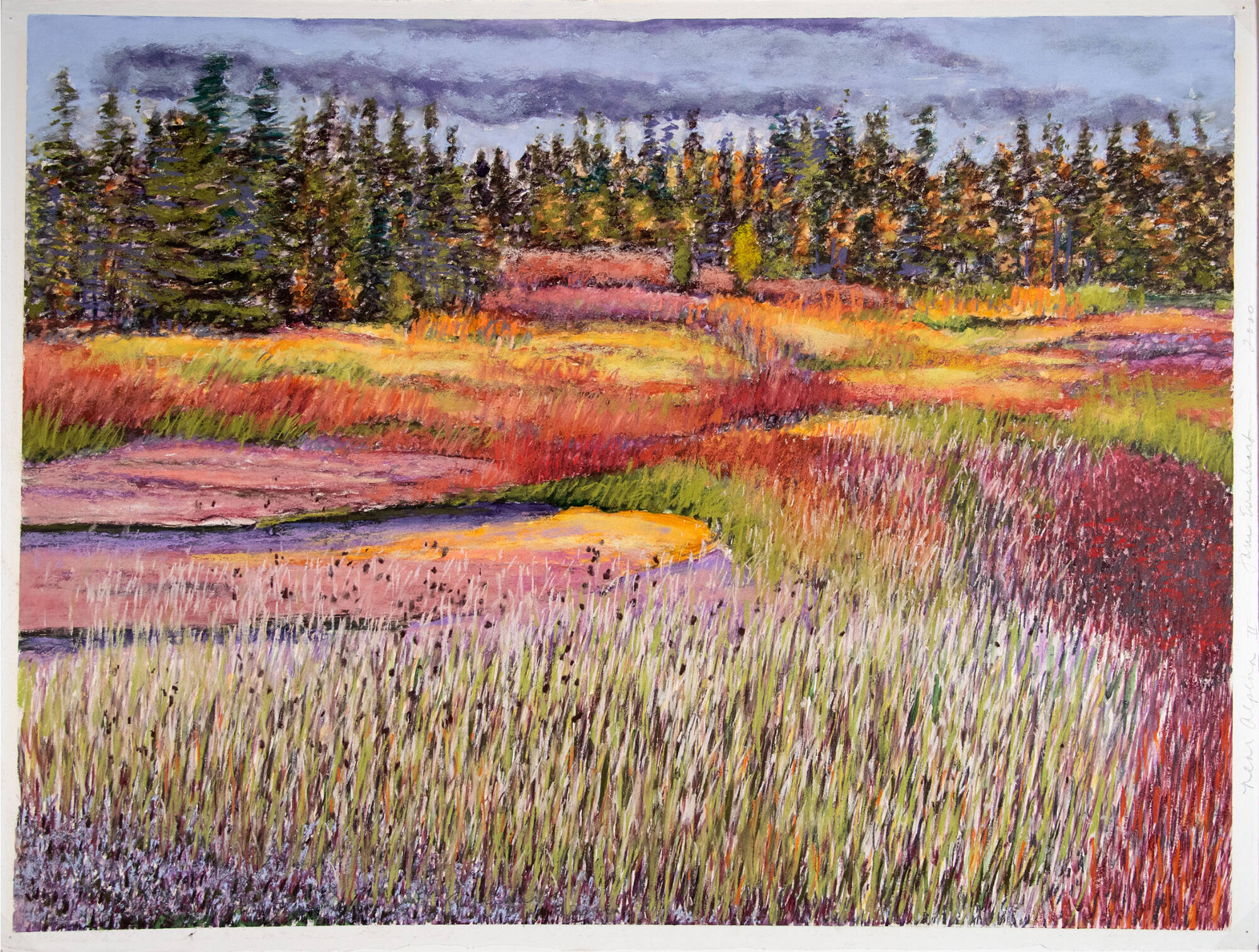
Jane Everhart, Near Alpena: Glacial Bog, pastel on paper, 1999, 2000.113.1.
The Department of English
Associate Professor and Chair of the Department of English, Dr. Ashley Shannon, observed, “It was nice to see some old friends [art] as well as some outstanding new pieces, and the focus on storytelling through art really comes through.” Storytelling and visual literacy skills, along with the ability to think critically, deeply analyze, and reflect on what students have learned, are central to the mission of the Department of English.
Explore the Artwork in Lake Huron Hall
First Floor
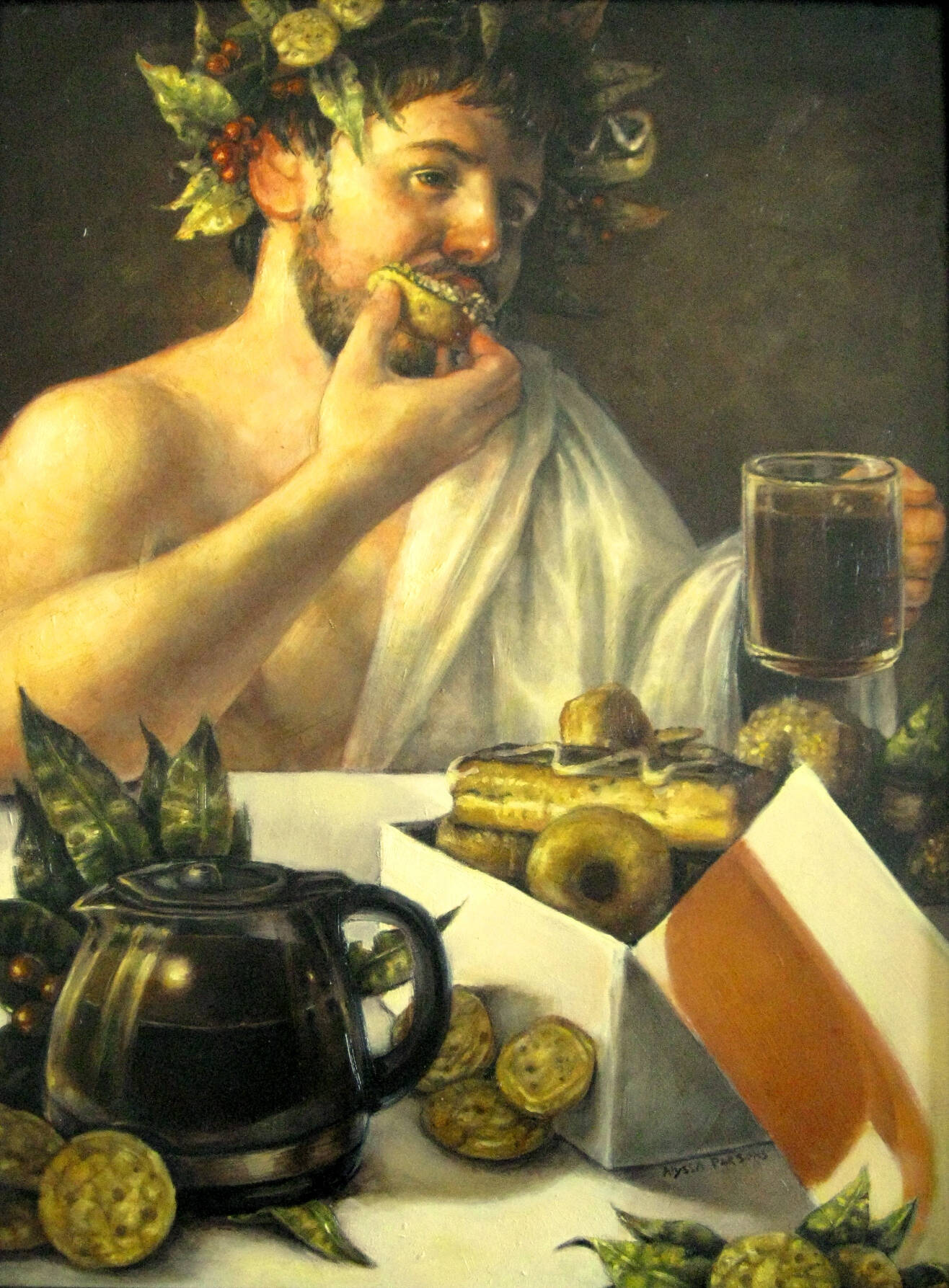
Alyssa Parsons, Bacchus, oil on board, 2011, 2012.83.2.
Alyssa Parsons studied illustration and painting at Kendall College of Art and Design of Ferris State University. This painting titled, Bacchus, is a modern interpretation of the Roman god of agriculture, wine, and fertility-reimagined drinking coffee and eating donuts. This type of imagery is a perfect example of how learning about the classics can be re-imagined in a modern era.
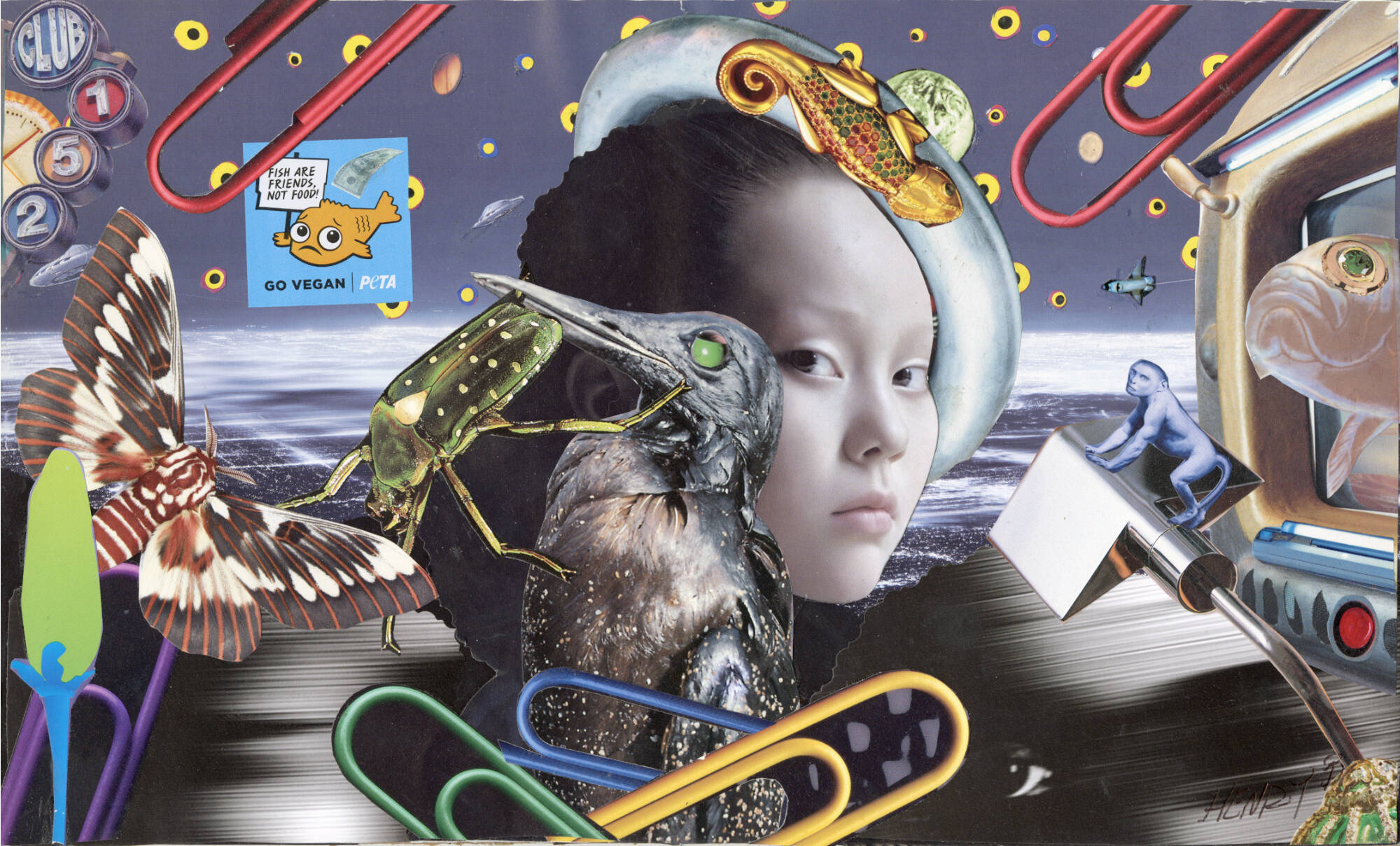
Henry A. Brown, Untitled, cut paper collage, 2019.57.2.
The GVSU Art Museum actively collects works of art created by outsider artists, including this piece by Grand Rapids artist Henry Brown. Brown creates works of art that raise awareness of social issues like institutional racism, societal oppression, environmental issues, and corporate greed. He uses the medium of collage to express his concepts; finding the perfect images from old books and magazines that are manipulated and skillfully pieced together to create the final design.
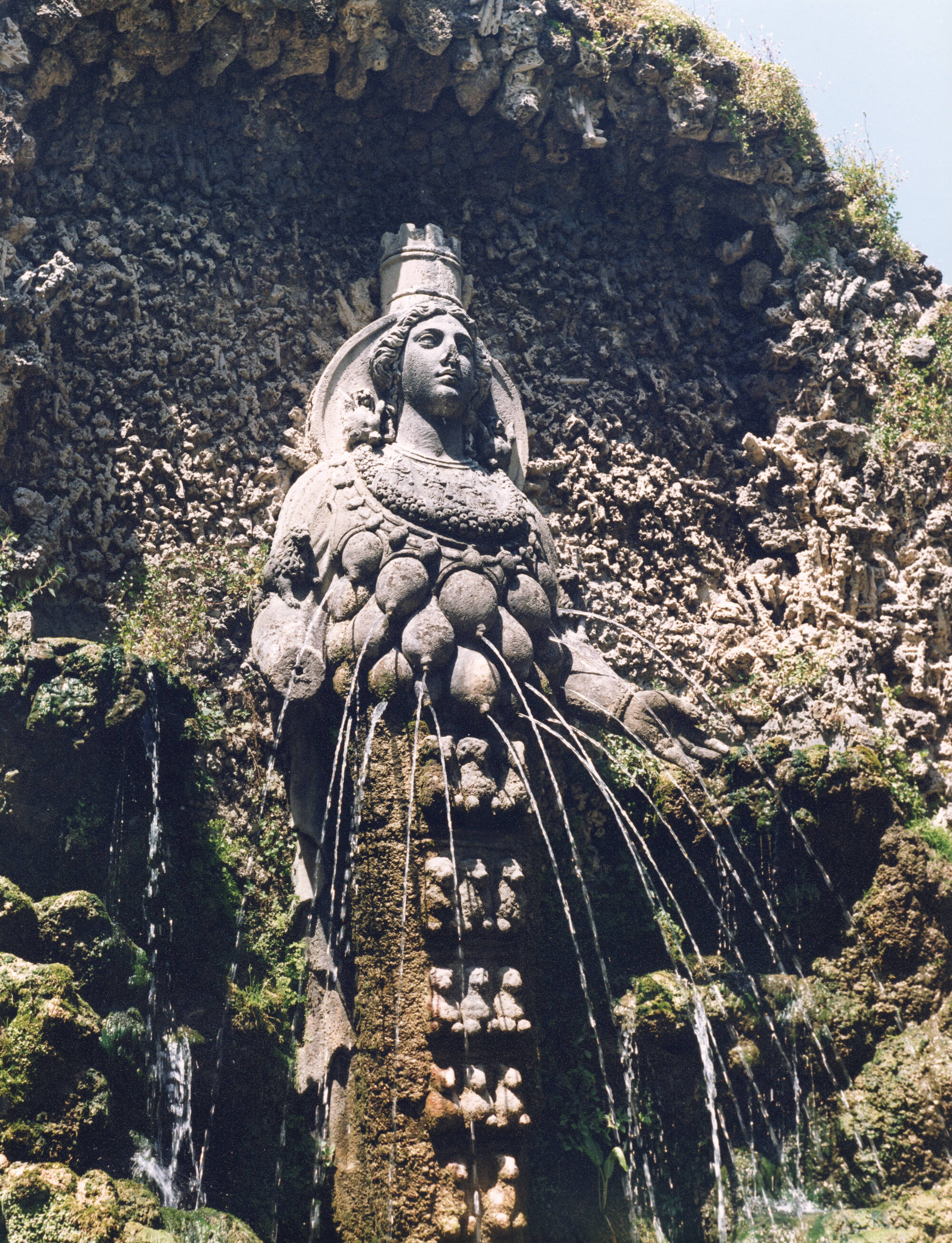
Claudia S. Liberatore, Untitled, photographic print, 2019.48.171.
Photographer Claudia S. Liberatore made it her mission to document the world around her, whether that be hanging laundry, painting with her small children, or traveling the world. This photograph was taken while on a trip to Italy. This fountain, often called the Fountain of Fertility, is located in Villa d’Este, Tivoli. It represents an interpretation of Artemis, the “great mother goddess,” and the goddess of fertility in Ancient Greek mythology. The spherical objects on her chest, which are commonly assumed to be breasts, are more likely gourds which have been used as fertility symbols for centuries.
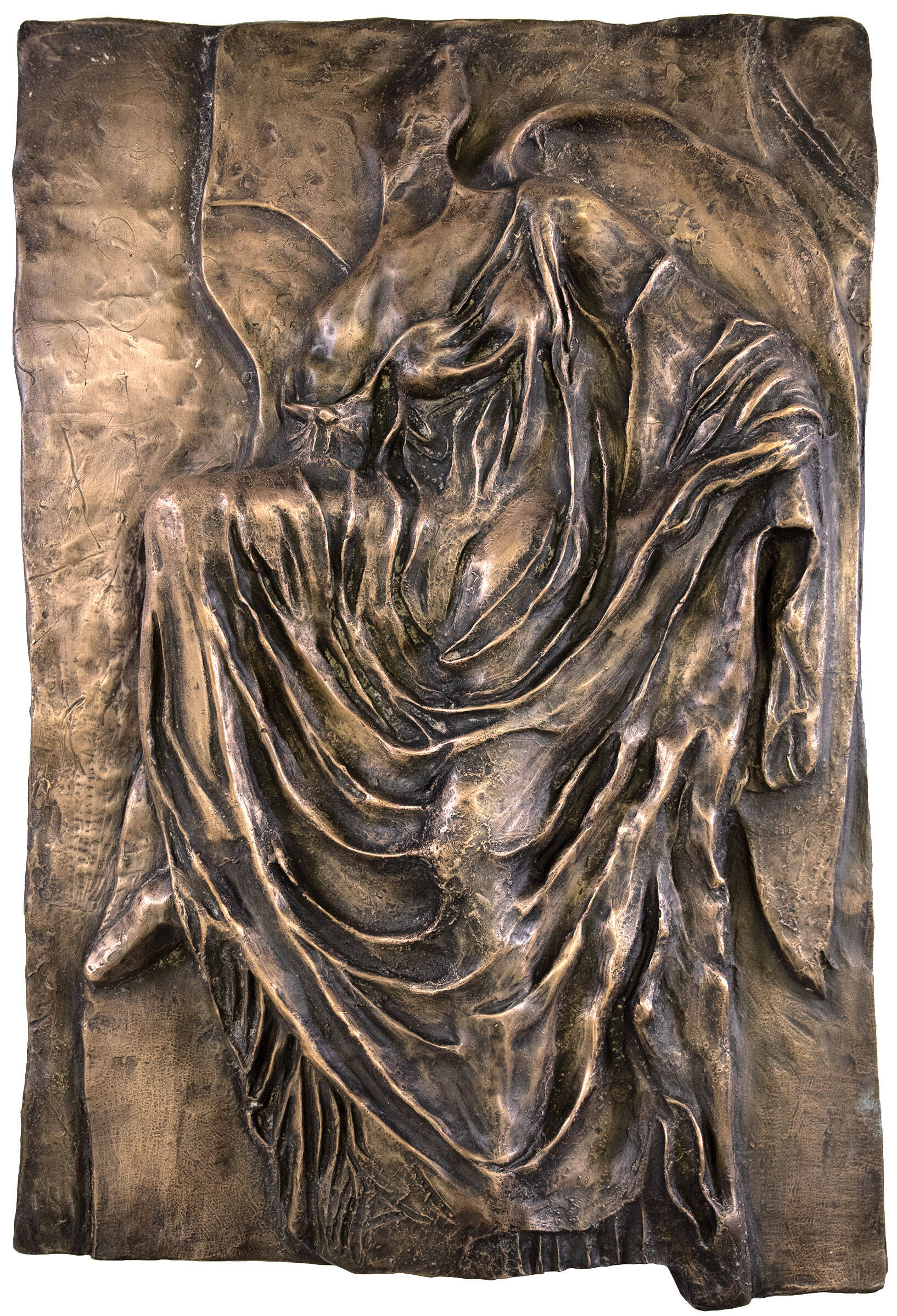
Artist Unknown, Nike Tying Her Sandal, bronze, 2008. 2013.28.6.
In 2008, the GVSU Department of Visual and Media Arts and the Department of Classics collaborated to create a series of Ancient Greek bronze sculpture replicants. The Art and Design department led the students through the process of lost-wax casting; a method of metal casting, often silver, gold, brass, or in this case, bronze, in which the molten metal is poured into a mold that has been created using a wax model. The Classics department contributed information about how to accurately portray an Ancient Greek mythical figure.
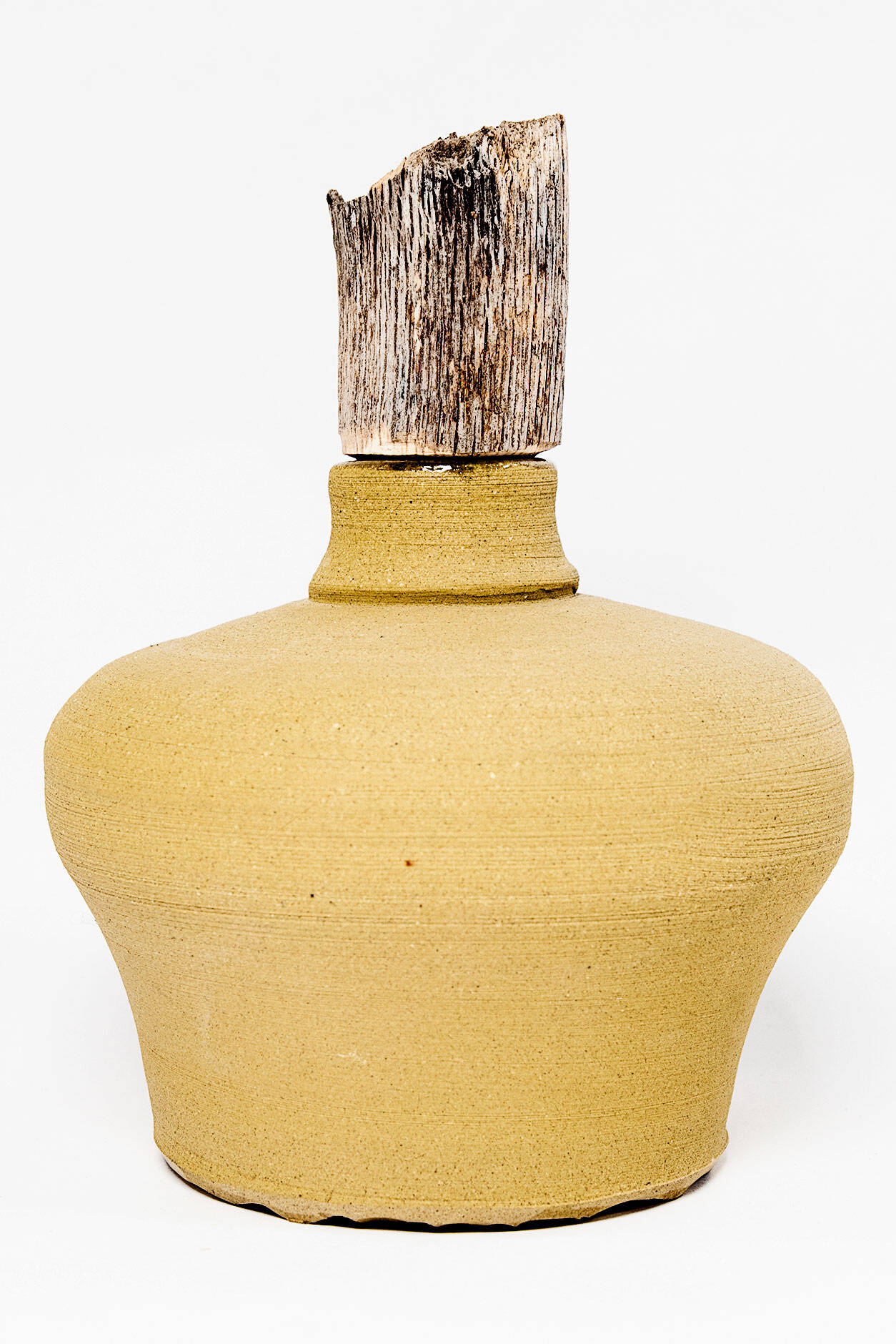
Meghan Kelly, Ravine Clay Bottle #1, ravine clay and wood, 2009, 2009.105.1.
The clay for these bottles came from the ravine that flows in and around the GVSU Allendale Campus. For GV alum Meghan Kelly the act of finding and working with local deposits of clay is part of her artistic process. She states, “I believe in earth's natural cycles. My inspiration comes from exploring the relationship between the natural world and the man-made. Within the observable patterns of life and death I find truth and consistency. Even while cities grow and change, industries develop and climb, wars rage and destroy, I'm comforted by nature's steady heartbeat.”
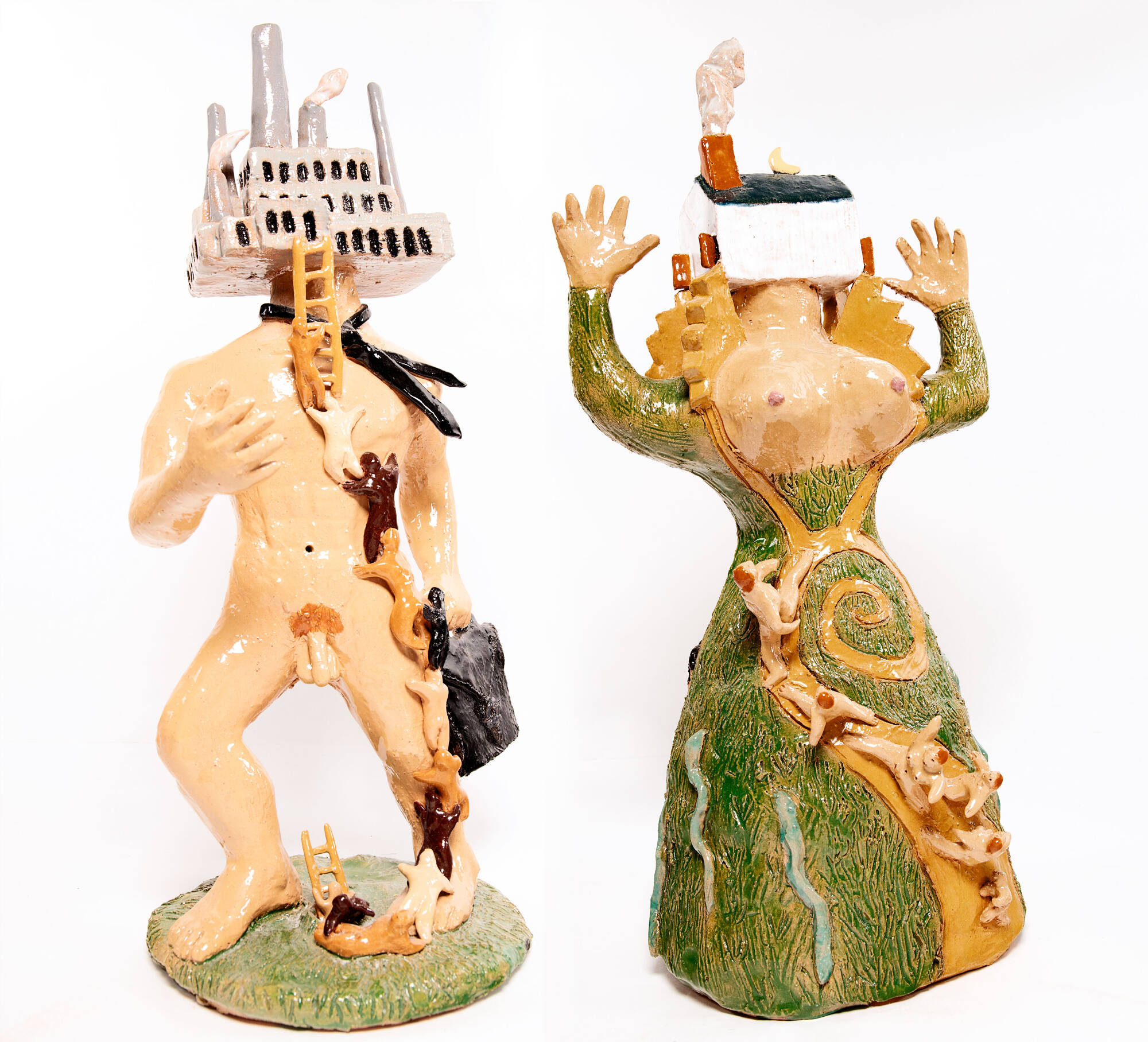
Mary Ellen McNaughton, Modern Myth: Mr. Work and Mrs. House, ceramic, 2009.42.1ab.
"Students love these pieces because they are so clearly and vividly “in conversation” with ancient objects. Mrs. House directly references ancient Minoan (Bronze Age) priestess figurines, but with a modern twist, inviting viewers to consider how the social roles of women have – or haven’t – changed over time. Mr. Work uses a later style of Greek art – a style used for the depiction of mythological heroes – to engage us in consideration of the social roles of men. As a pair, these figures challenge us to think about some tough current questions, using comparison of ancient and contemporary visual references as a framework for discussion." - Faculty Chair of Classics Melissa Morrison
Second Floor
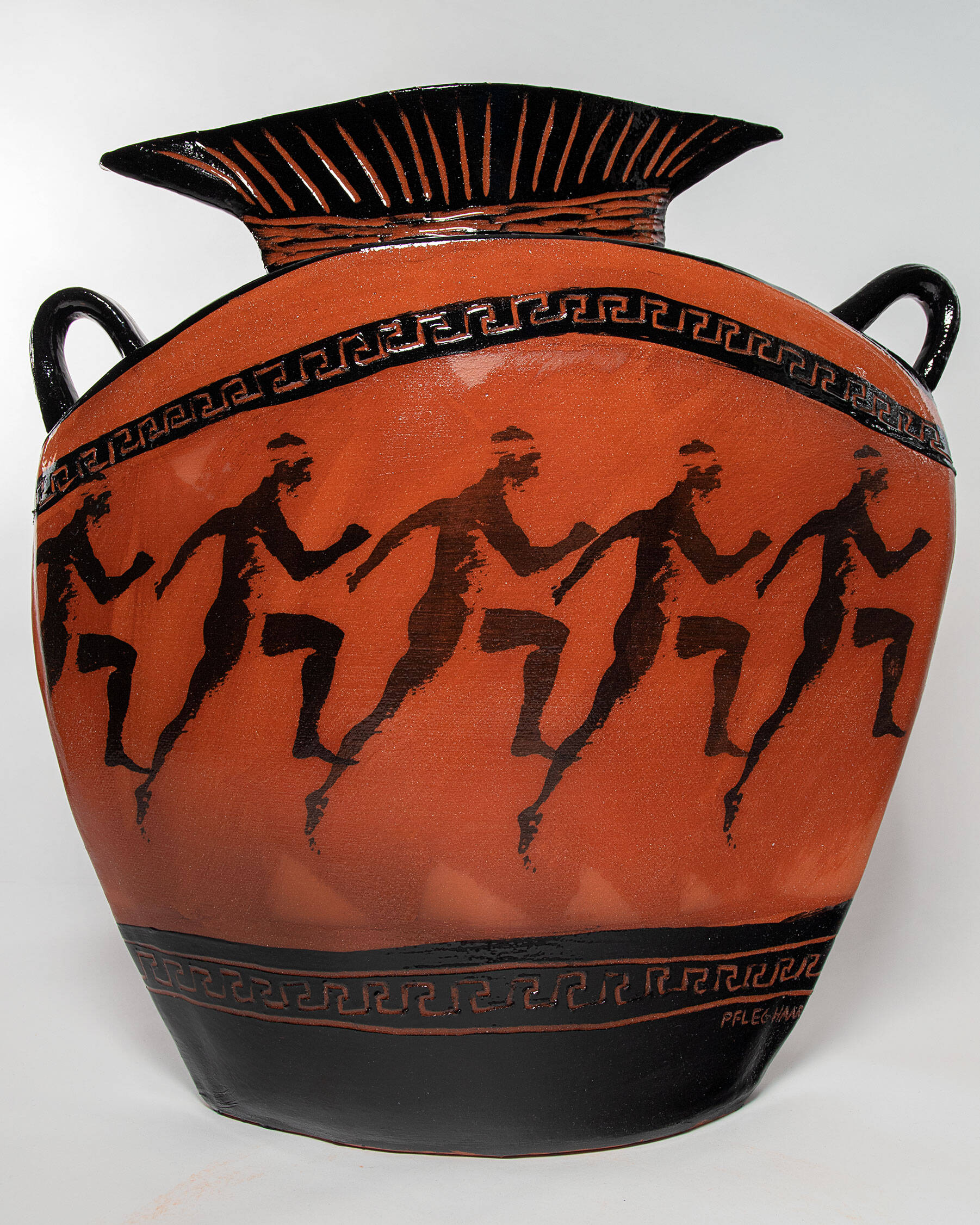
Michael Pfleghaar, Run, terra cotta and silkscreen, 2008, 2009.132.1.
This vessel created by alum Michael Pfleghaar is often used in classroom assignments given by the Classics department. The students are asked to review the following statement and answer the related question below.
“The artists and craftsmen of ancient Greece and Rome left behind more than a collection of fascinating objects. They also left behind a rich and imposing set of images and motifs, specific shapes and styles—an entire visual language that other groups have taken up and used as they saw fit. In many later cultures, the visual language of Greek and Roman architecture and art represented something their own work would adapt, transpose, change, and bend to their own purposes in their own times and places. Some would use the elements of classical objects as familiar reference points to establish a connection between themselves and the ancient world; others would reject it.”
For this project, you will study modern objects that participate in the “visual conversation” between ancient and modern artists, designers, architects, and consumers. What are some ways in which contemporary buildings, public art, and other objects here at Grand Valley – and in Grand Rapids – have become part of this “conversation” with ancient Greece and Rome?
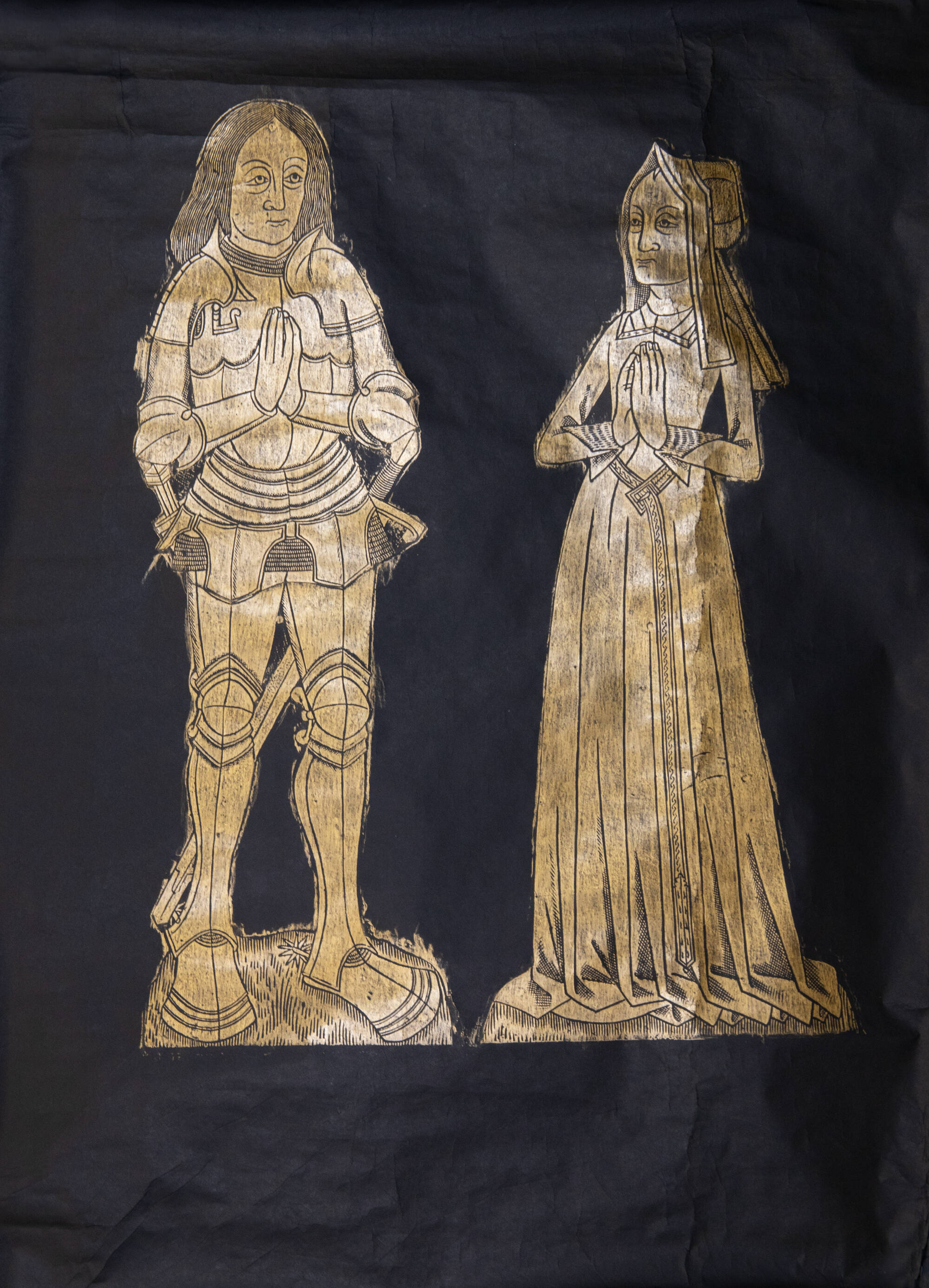
Artist Unknown, John Tame and Wife Alice, paper and heelball, ca 1975, 2019.58.4.
During the 1970s, Jane Ewing traveled across Europe documenting brass altar tombs by taking a rubbing with heelball, a mixture of hard wax and lampblack. These reproduction images allow researchers to better understand the symbolism behind the imagery on the tombs and how they represent the interned individuals. These two effigies from Fairford Church in Gloucestershire, England are of John Tame (1430-1500) and his wife Alice Twyniho (d. 1471). Tame was a wealthy wool producer who helped fund the stain glass windows that can still be found in the church today.
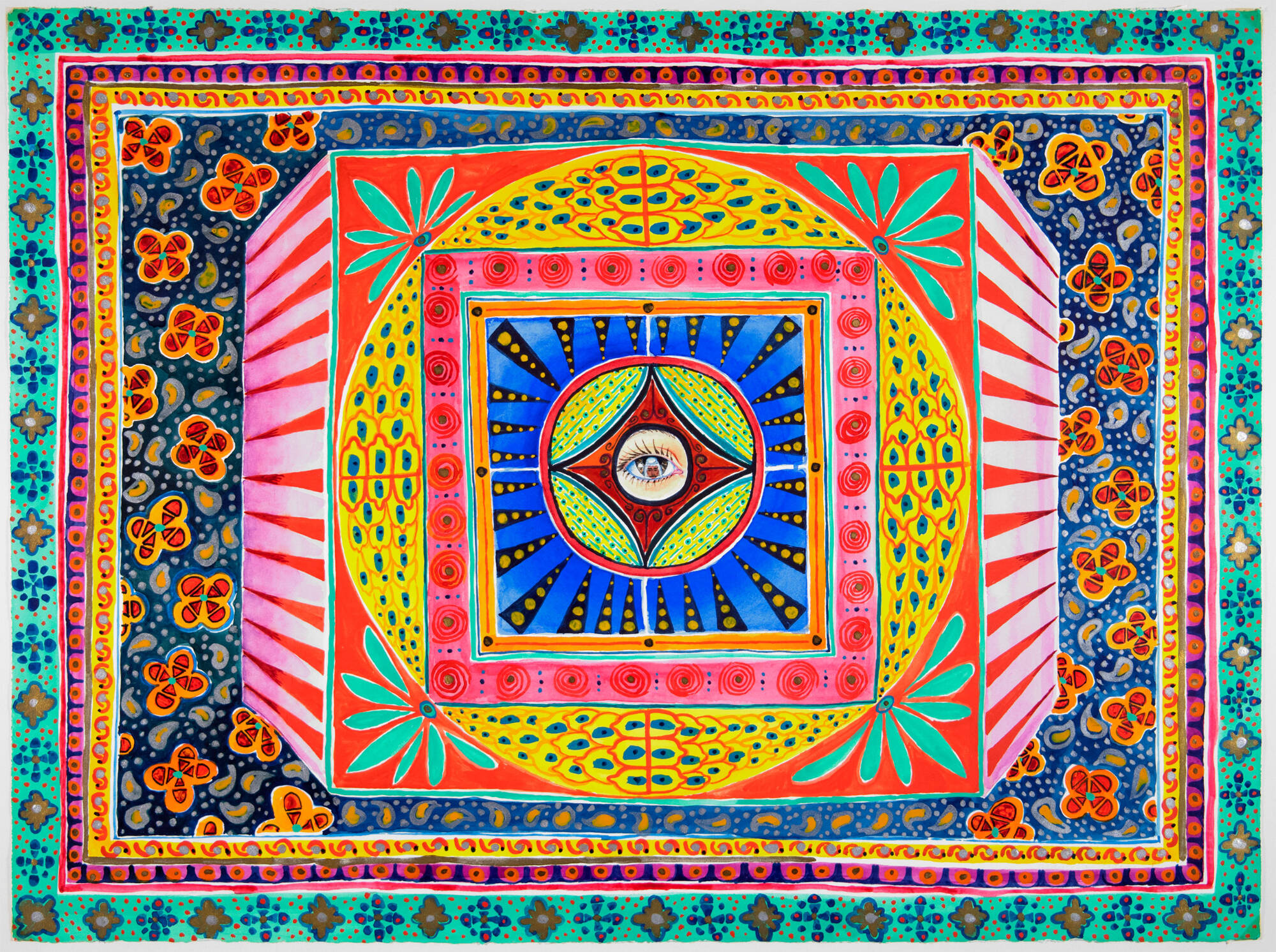
Eleanor Van Haitsma, Eye of the Odalisque (Odalisque #19), watercolor, 1988, 1999.986.1.
Originally a term for chambermaids living in sequestered quarters of female members of the Turkish court, the term odalisque was later used to refer to a harem, a slave, or a concubine in Renaissance France. From there the term evolved to indicate a specific reclined pose of the female body depicted in European art and literature. While the nude female form in art goes back to antiquity, the odalisque woman became a site for exotic fantasy and an object of male sexual gratification; the odalisque is alienated from her reality and identity, transformed into an object of desire, accessible by the male voyeur. This painting by Eleanor Van Haitsma asks the viewer to question what they are seeing. Whose eye is at the center of the painting, who is watching who, and what are they seeing?
Associate Professor of Art History, Sigrid Danielson, often uses this painting in her Middle Eastern Art course to drive conversation about the female body in art and the male gaze.
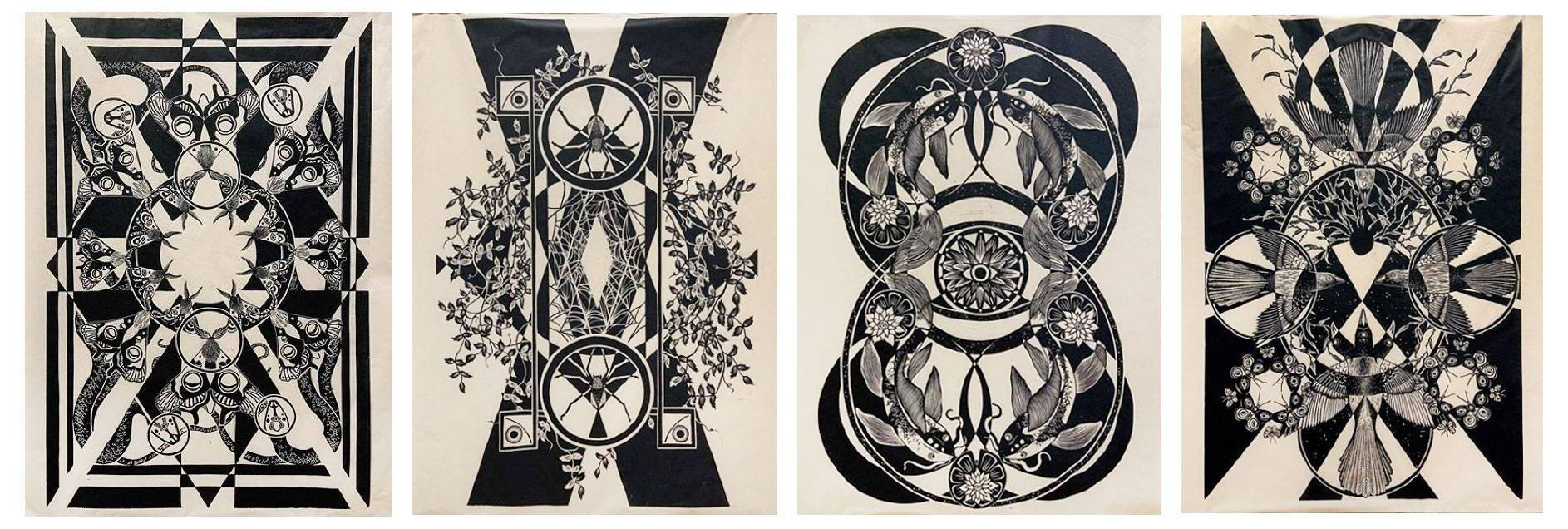
El Ronan, Return / Devotion/ Reflection/ Creation, linocut, 2019, 2019.67.10.
These large scale linocut prints were purchased in 2019 from GVSU alum El Ronan during her Senior exhibition. The artist draws on themes of death, myth, and beauty emphasizing the intersection of the known and unknown. “The process of making is exploratory and devotional, with the end product becoming a relic of that search.” - El Ronan
Virtual Tours of Lake Huron Hall
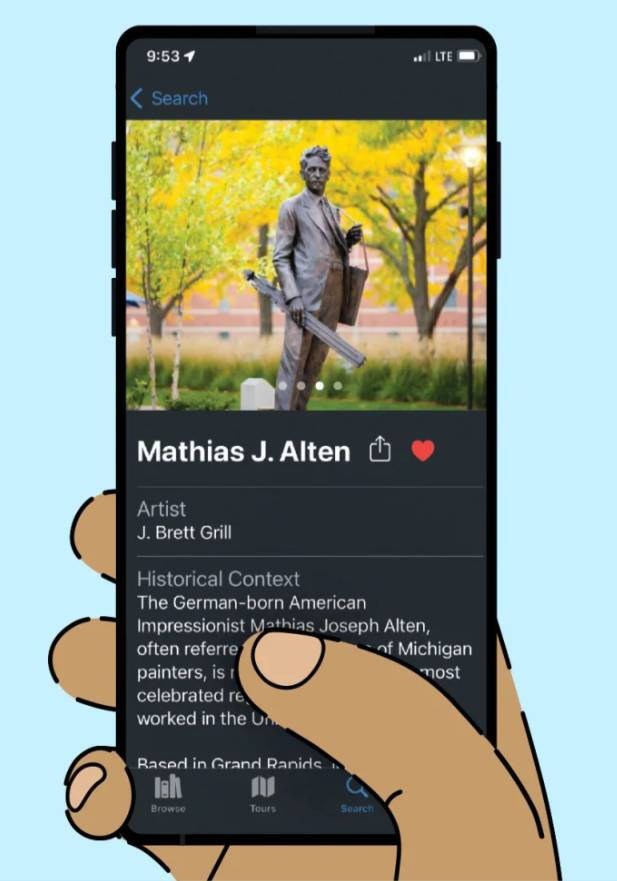
Take a Tour Through Lake Huron Hall with the Art @ GVSU App
The Art at GVSU app is your gateway to the vast and diverse art collection at Grand Valley State University. Whether you're a student, faculty member, or visitor, this app will enrich your understanding and appreciation of the art that surrounds you.
Explore more artwork in Lake Huron Hall by taking a curated art tour in the app!