

Exhibit- Art of the People: Contemporary Anishinaabe Artists
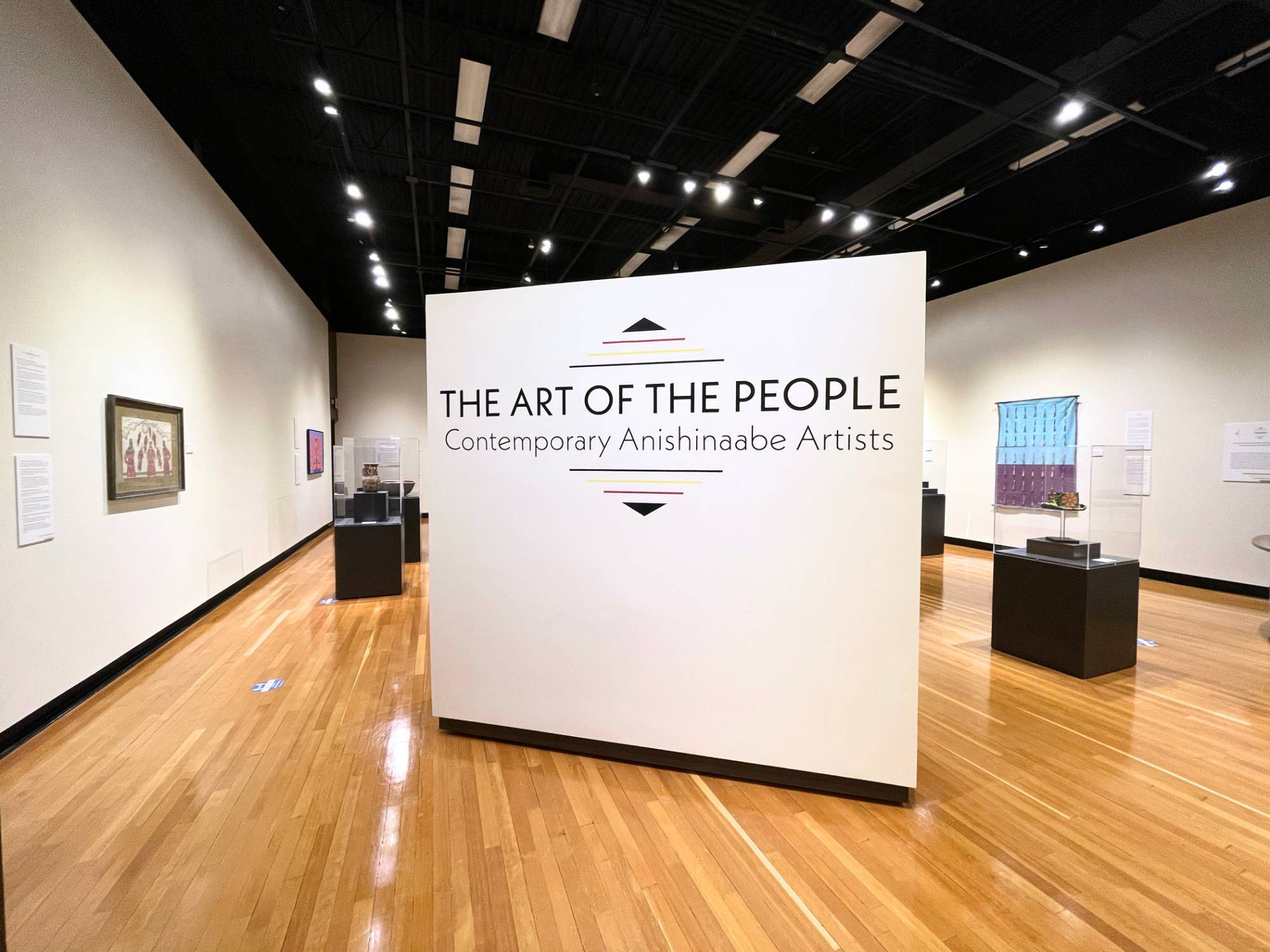
The Haas Center for Performing Arts Gallery featuring The Art of the People: Contemporary Anishinaabe Artists.
The Art of the People: Contemporary Anishinaabe Artists features artworks by nationally recognized and early-career Native American artists that combine cultural traditions and imagery with contemporary sensibilities and themes. Organized by the Muskegon Museum of Art and the Grand Valley State University Art Gallery with guest curator Jason Quigno (Anishinaabe), this invitational show appears concurrently at the MMA and GVSU. Incorporating sculpture, painting, ceramics, beadwork, mixed media, and photography, the exhibition explores how these artists express their experiences in both traditional and nontraditional media, techniques, and subject matter. Through representational and abstract imagery and design, the artists address issues of craft, history, identity, social justice, and popular culture. By exploring and celebrating their past, these artists define who they are today.
Land Acknowledgment
The GVSU Art Gallery would like to recognize the People of the Three Fires: the Ojibwe, Odawa, and Potawatomi peoples on whose land we are gathered. The Three Fires People are indigenous to this land which means that this is their ancestral territory. Every university is built on stolen, native land. We are guests on their land and one way to practice right relations is to develop genuine ways to acknowledge the histories and traditions of the people who originated here first, who are still here, and who tend to the land always. As we make this land acknowledgment, we know it is but an important first step, and that there are many more that we need to take when we decide to engage in the important work of social justice.
We pledge to:
1) provide indigenous artists with the platform to share their talents, artwork, and stories
2) appropriately collect, exhibit, and care for indigenous-made artwork and objects
3) create an environment where the history and traditions of artists indigenous to this area can be recognized and celebrated
For more information on the purpose and intent of land acknowledgments, see Northwestern University's site.
From the Curator
The Anishinaabeg Peoples have inhabited the Great Lakes area of Michigan, Wisconsin, Minnesota, and sections of Canada for thousands of years. Anishinaabeg, which translates to “People Whence Lowered” or “the Good Humans,” encompasses several tribes that share similar languages and customs, including the Ojibwe, Bodawatami, Odawa, Salteaux, and Chippewa. Before the arrival of Europeans, the Anishinaabeg were a woodland people, living with the land and seasons. They drew all of their food, shelter, and tools and implements from the earth, lakes, and rivers that surrounded them. While most contemporary Anishinaabeg no longer live with the land, they remain a spiritual people tied closely to nature and surrounding cultural beliefs.
Early artmaking arose directly from the need to craft tools from wood and stone and vessels from black ash, birch, and cedar. As these objects, both practical and ceremonial, were fabricated, they were embellished with woodland designs and motifs – flowers, vines, leaves, and animals – often to signify a name or clan. This knowledge of craft and design was passed down to each new generation, which in turn adapted and innovated to their own circumstances and resources. Today, artists continue to work in the traditional media of basketry, stone, and beadwork, while others have moved into painting, photography, filmmaking, and sculpture. Whether through traditional or modern materials, the Anishinaabeg are still telling stories that carry knowledge to future generations.
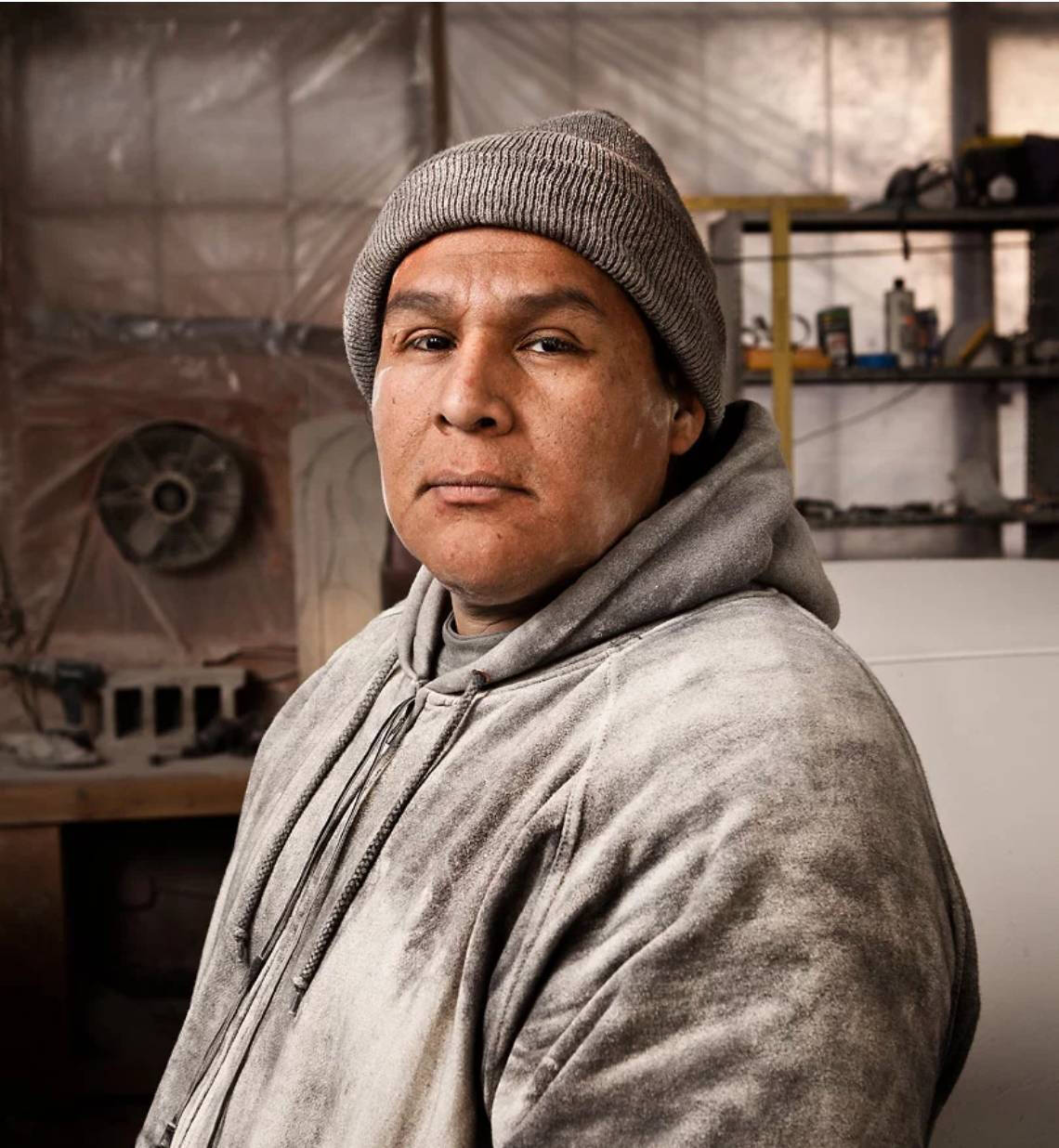
Jason Quigno
Anishinaabe, Mukwa Ndodem
Contemporary Stone Sculptor from the Great Lakes

Interview with Jason Quigno on curating Art of the People: Contemporary Anishinaabe Artists
The exhibiting artists were selected for their ongoing use of traditional techniques, materials, and imagery and for the ways in which their art shares the enduring stories of their culture. Many of the works on display tie directly to inherited methods of crafting and design, though with modern innovations and visual experiments unique to the artist. Others blend traditional imagery and design into contemporary art-making disciplines, revealing a different kind of continuity.
The Art of the People is an opportunity for the viewer to explore these varied points of view and discover the traditions that inspire them, bringing greater awareness and understanding of Anishinaabeg culture.
- Jason Quigno, Guest Curator
The Artists
Adam Avery
Multiple artists within the exhibition work in traditional ways but with today’s sensibilities, adapting contemporary art-making to their cultural practice. Adam Avery and Summer Peters work in the media of beadwork, a decorative art form that is a defining characteristic of Native American art and identity. Beadwork likely grew from earlier quillwork, where dyed porcupine quills were used to adorn clothing and other fabric and leather goods. With the arrival of European traders and settlers, small beads and fine needles became available and the art form flourished. Avery adapts traditional floral motifs in his work, adorning such objects as top hats, sashes, purses, and bags. Peters brings markedly contemporary imagery into her beaded pieces, rendering portraits and pop culture and comic-inspired pieces alongside more unusual objects such as beadwork bikinis.
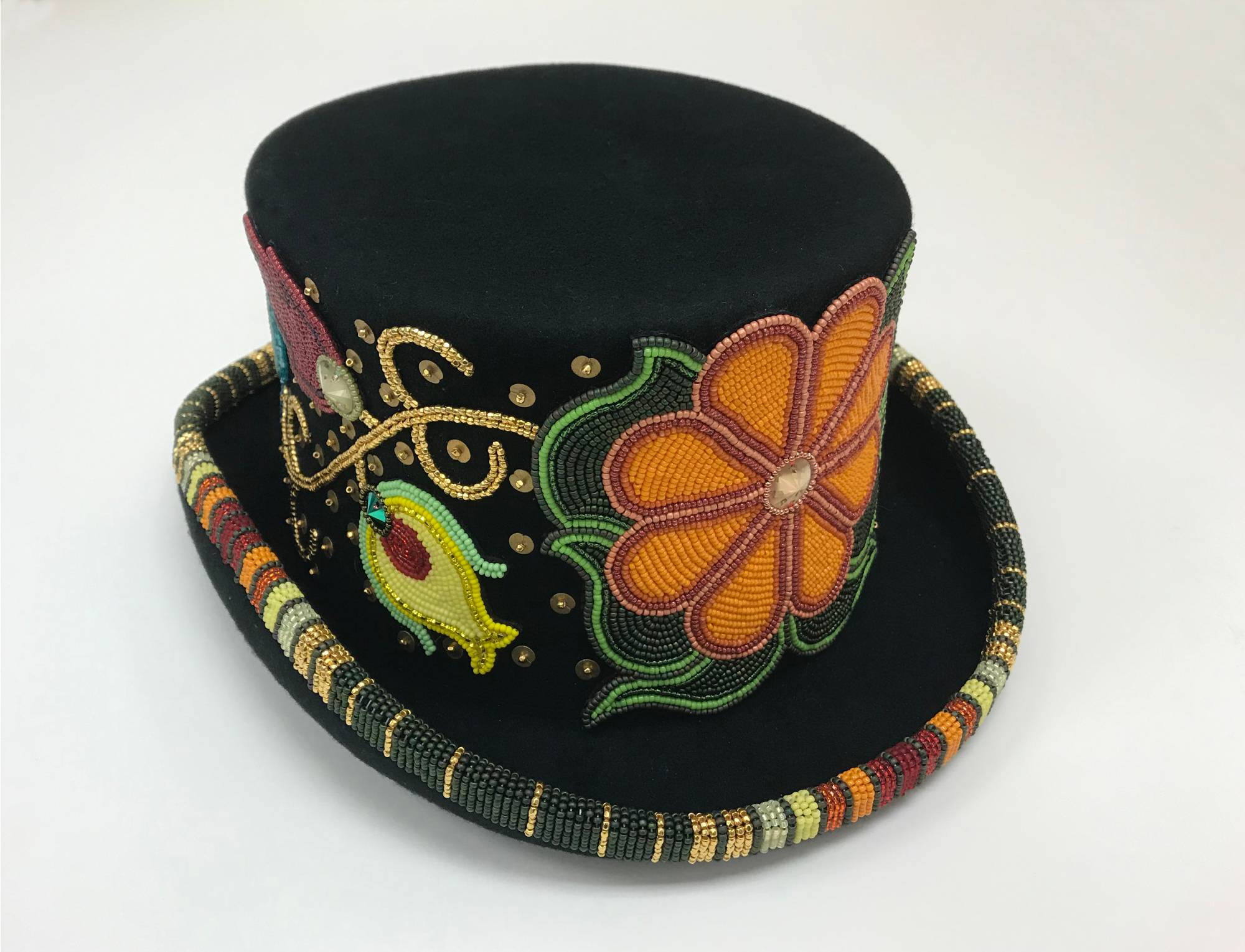
Naawikwegiizhig (Adam Avery), Wool Felt Top Hat, mixed media, 2021.20.1.
Shirley Brauker
Shirley Brauker continues the tradition of ledger art, paintings of geometric patterns and narrative events that emphasize foreground objects over sparse, even empty backgrounds. The term “ledger art” comes from the use of ledger books by Plains Indians beginning in the 19th century, and Brauker utilizes this traditional material to address contemporary issues and narratives. She also works extensively with ceramics, telling new stories and incorporating various cultural motifs into functional and decorative objects.
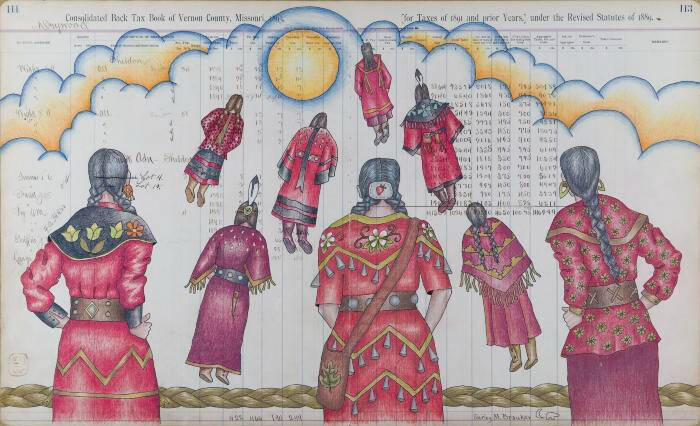
Shirley Brauker, Missing and Murdered, mixed media on ledger, 2021.21.2.
Kelly Church
Basketmaker Kelly Church comes from a generational line of Black Ash weavers. Her practice preserves the traditional means of making with Black ash splints (layers of wood split from the rings) while also innovating with her use of nontraditional materials, including vinyl blinds, metals, ribbon, and photographs. An expression of her contemporary artistry, this innovation is also made necessary by the environmental devastation caused by the emerald ash borer and the seemingly inevitable extinction of the black ash tree
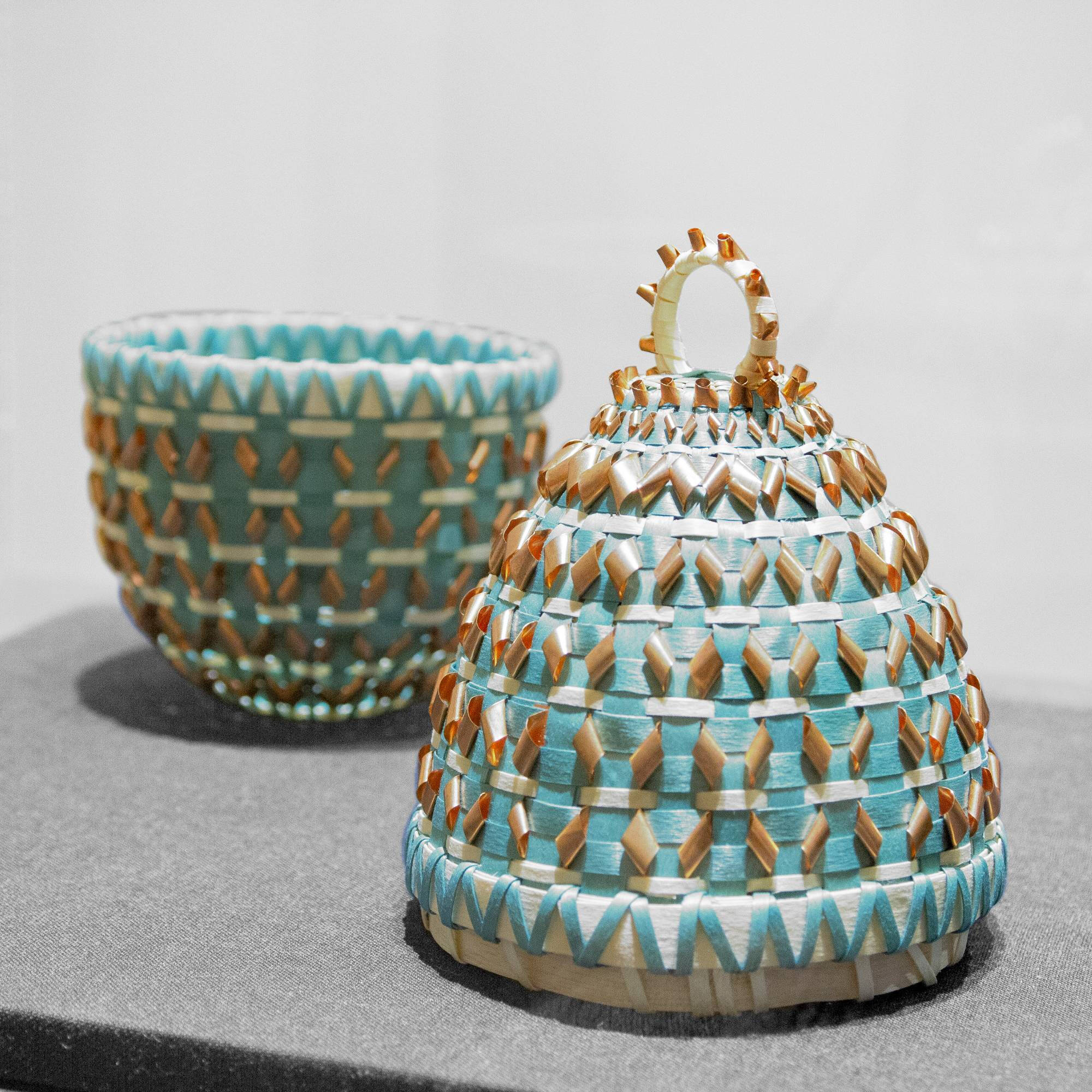
Kelly Church, Green Egg: Saving Traditions, Black ash, sweetgrass, copper, and dye, From the Collection of the Gun Lake Tribe.
Le’Ana Asher
Le’Ana Asher’s paintings showcase traditional Anishinaabe regalia (dance and ceremonial costuming), a celebration of enduring cultural practices now thriving once again after being banned by the U.S. Government for over a century.
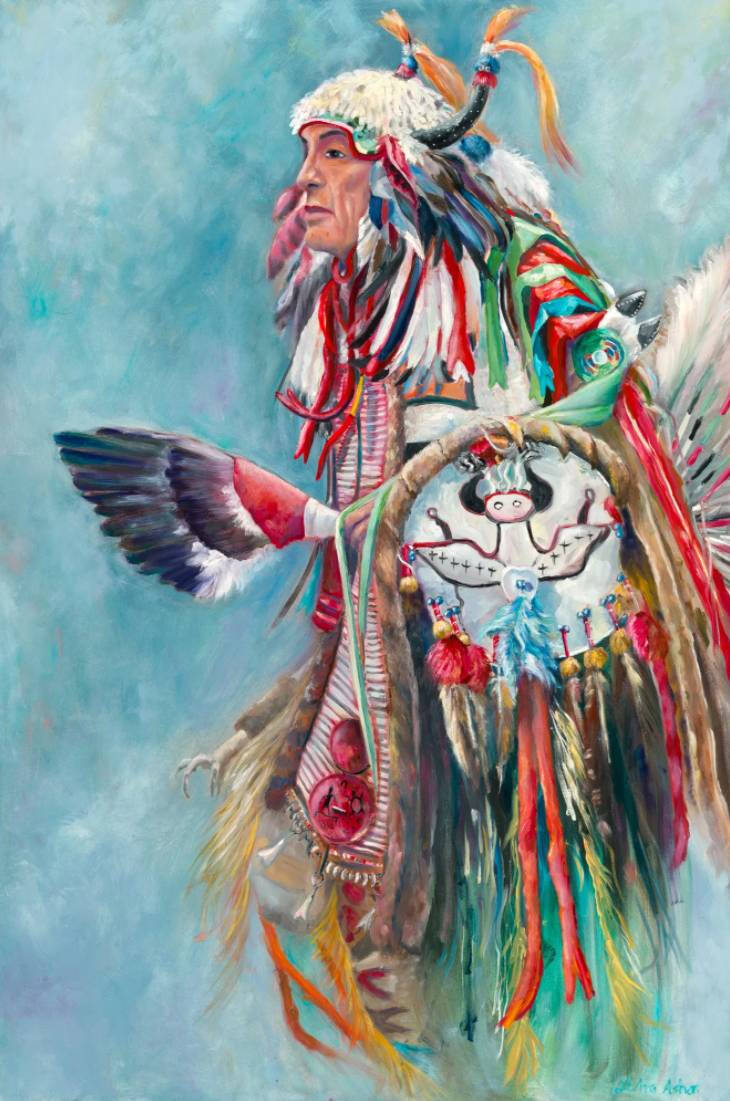
Le'Ana Asher, Buffalo Shield Medicine, oil on canvas.
Robin Waynee
Robin Waynee comes from a family of artists and brings her cultural motifs into jewelry making, creating nontraditional pieces that convey a clear sense of Native American identity.
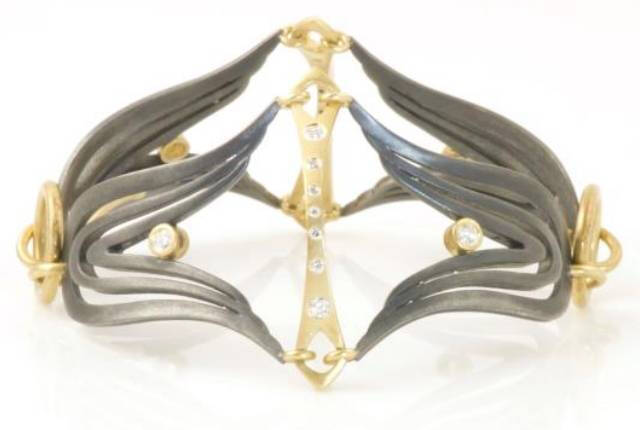
Robin Waynee, Tulip Link Bracelet, Sterling Silver & 18K Gold Tulip link Bracelet with VS1 Diamonds (.50ctw).
Jonathan Thunder
The vibrantly colored paintings of Jonathan Thunder are decidedly post-Modern, blending mainstream pop culture and cartooning with symbols of Native American identity and history to create new stories.
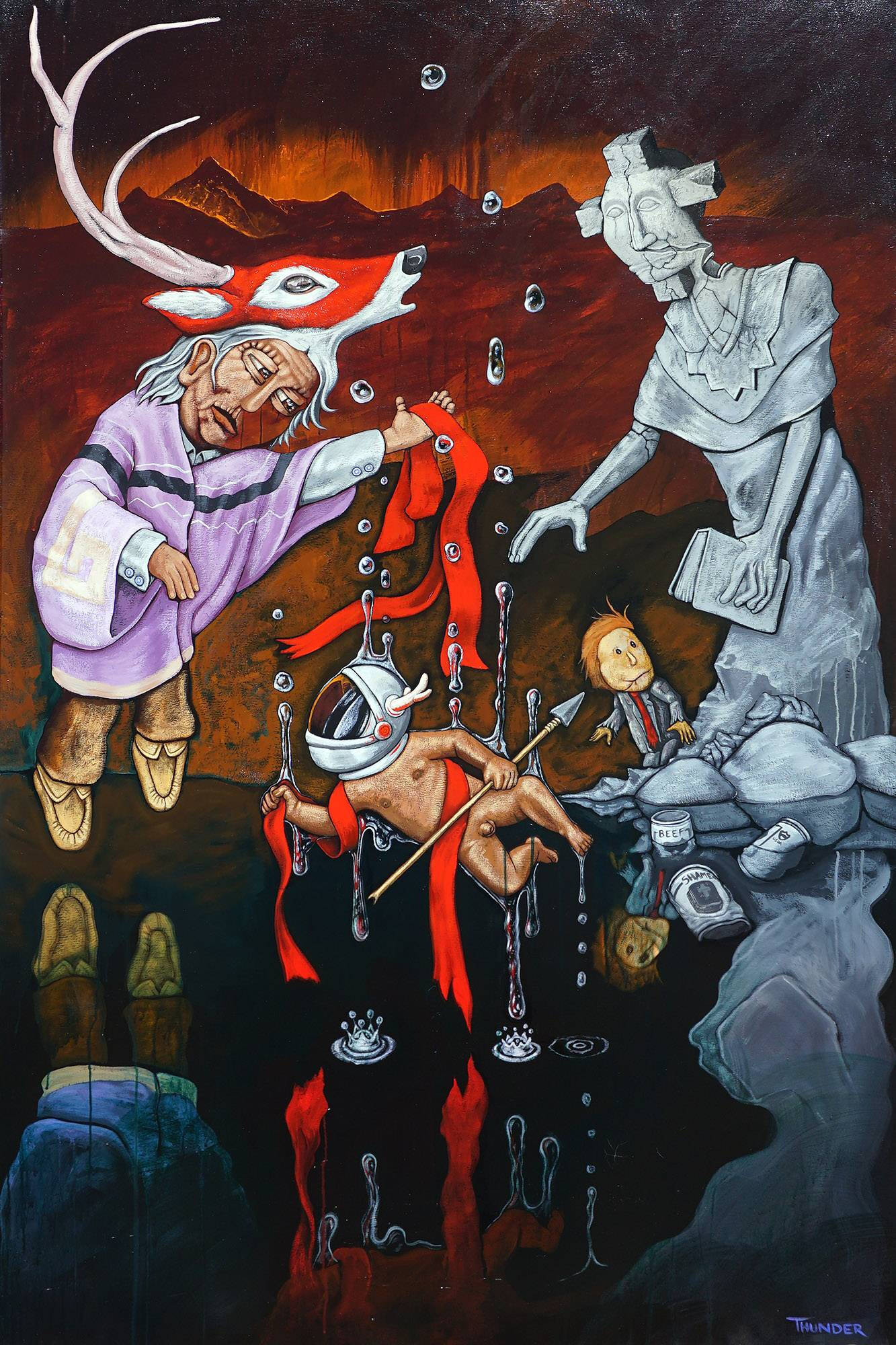
Jonathan Thunder, Doctrine of Rediscovery, acrylic on canvas.
Jason Wesaw
While ceramics are not traditional among the Potawatomi, Jason Wesaw has embraced the material to develop new forms and designs that speak to his heritage. Wesaw also draws, paints, and works in mixed media, with a focus on color, shapes, and geometry.
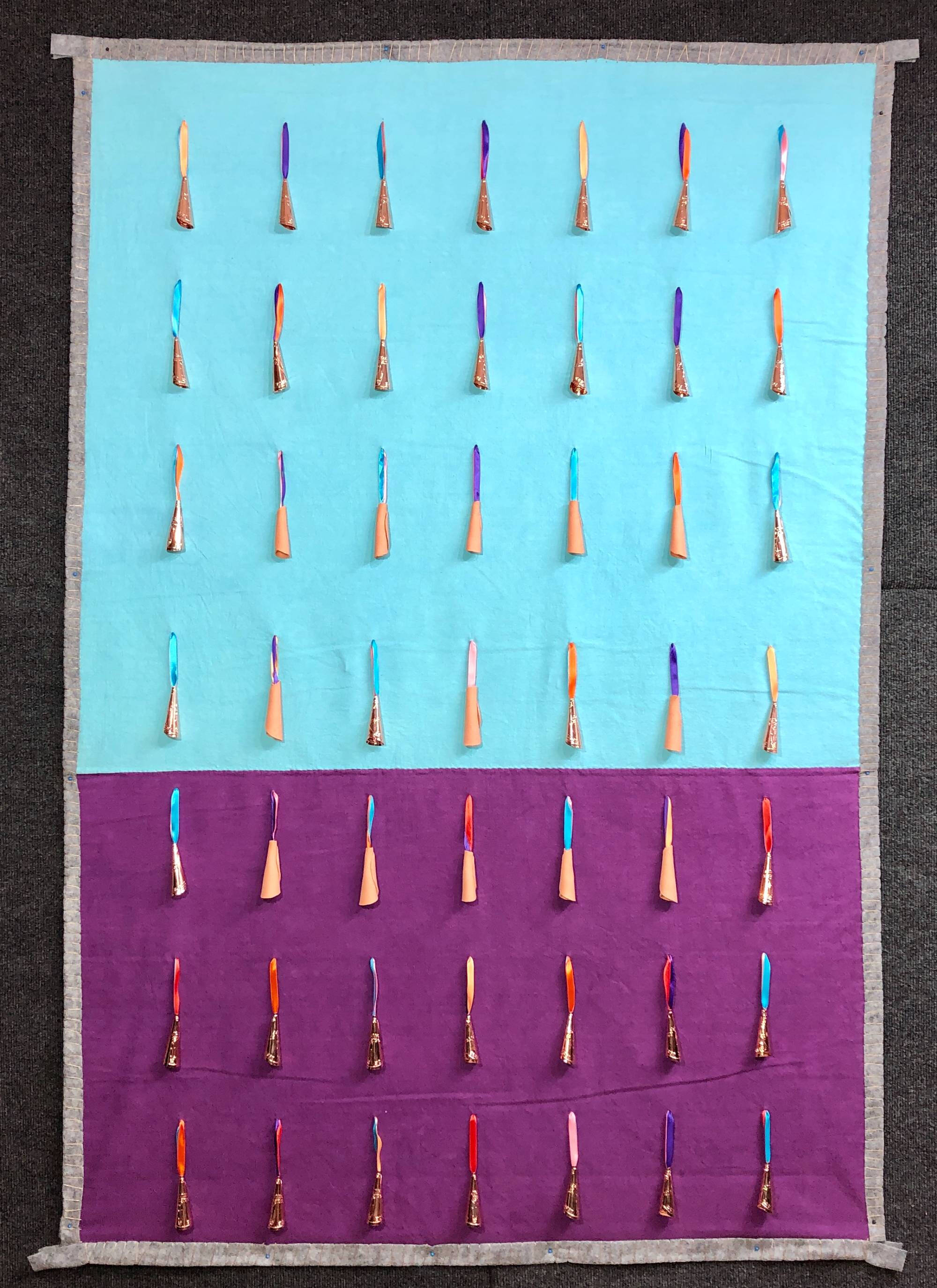
Jason Wesaw, Mobbish Waboyan (Water Blanket), hand-dyed and hand sewn cloth with mixed media.
Wally Dion
Wally Dion’s work uses a similar approach, adopting timeless motifs into thoroughly modern pieces in a host of media, including quilts made from circuit boards, painted portraits of contemporary Anishinaabe, mixed media sculptures, and intricate drawings and paintings that tell new craft stories using traditional images and fashion.
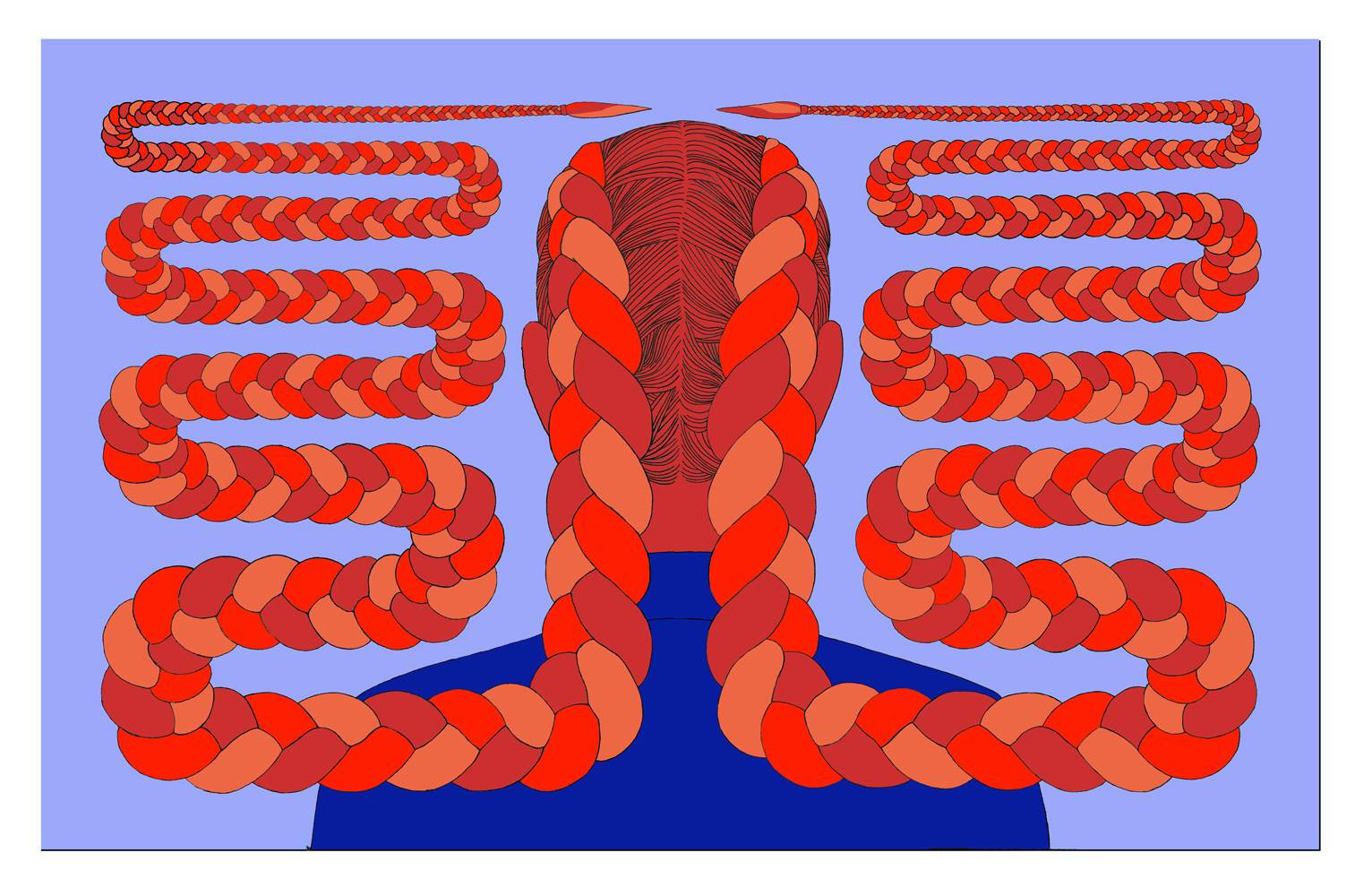
Wally Dion, Folding Braids 7, acrylic on paper.
Jason Quigno
Anishinaabe artist Jason Quigno was born in 1975 in Alma, Michigan. Jason works in a variety of stone – granite, basalt, marble, limestone, and alabaster – transforming raw blocks into flowing forms. His work has garnered significant recognition and awards, and he has completed numerous public commissions for communities and institutions around Michigan.
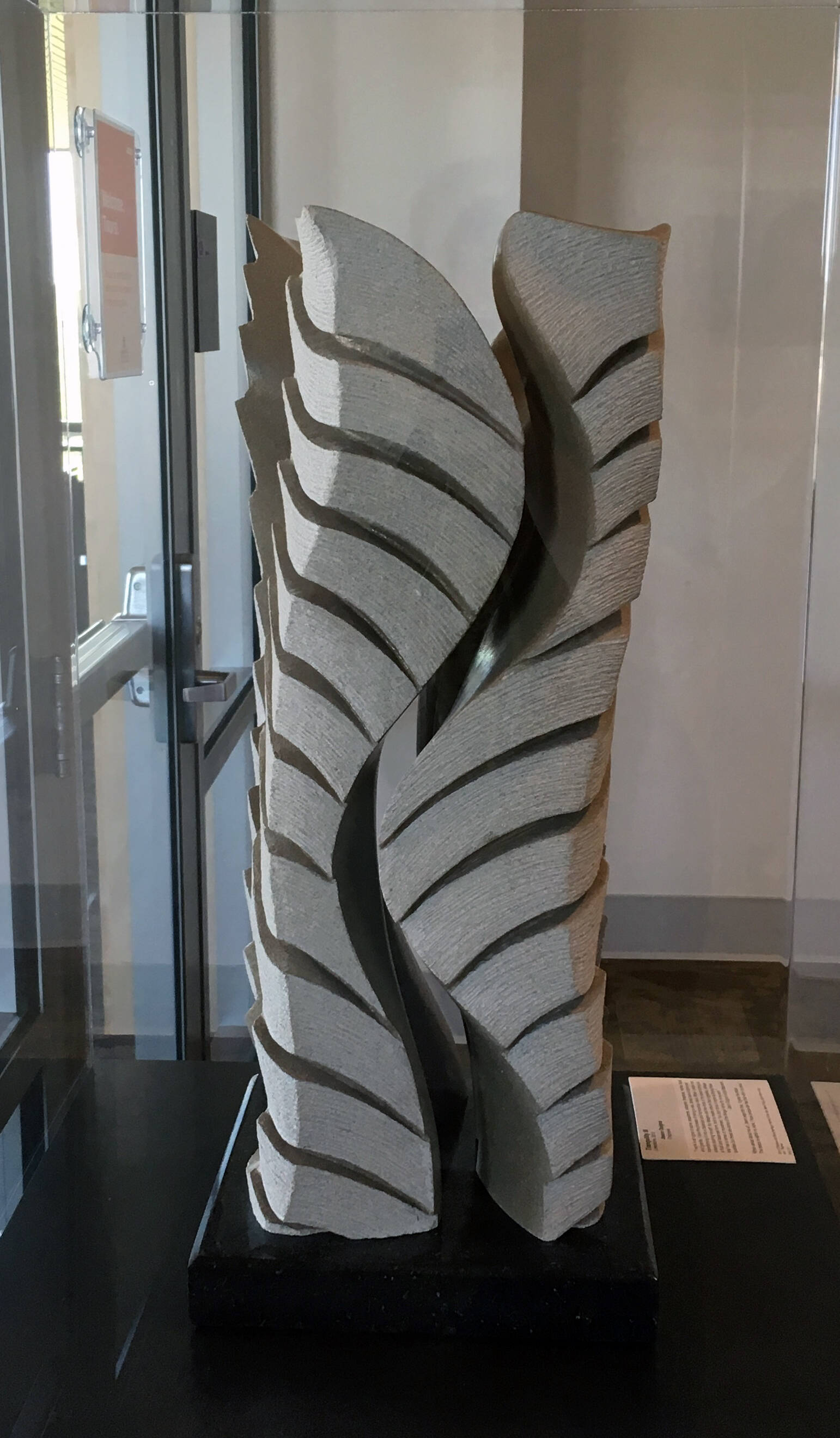
Jason Quigno, Tranquility III, limestone, 2012, 2012.131.1.
Exhibition Resources
This exhibition engages themes related to Native American studies, social justice, identity, and more. The GVSU Library subject guides listed below and the databases listed under "Additional Resources" help you find articles related to these themes. Download the Learning Guide (right) for more information about these themes.

Art of the People: Contemporary Anishinaabe Artists

Reading List for Art of the People: Contemporary Anishinaabe Artists
Explore more Indigenous Art in the Collection
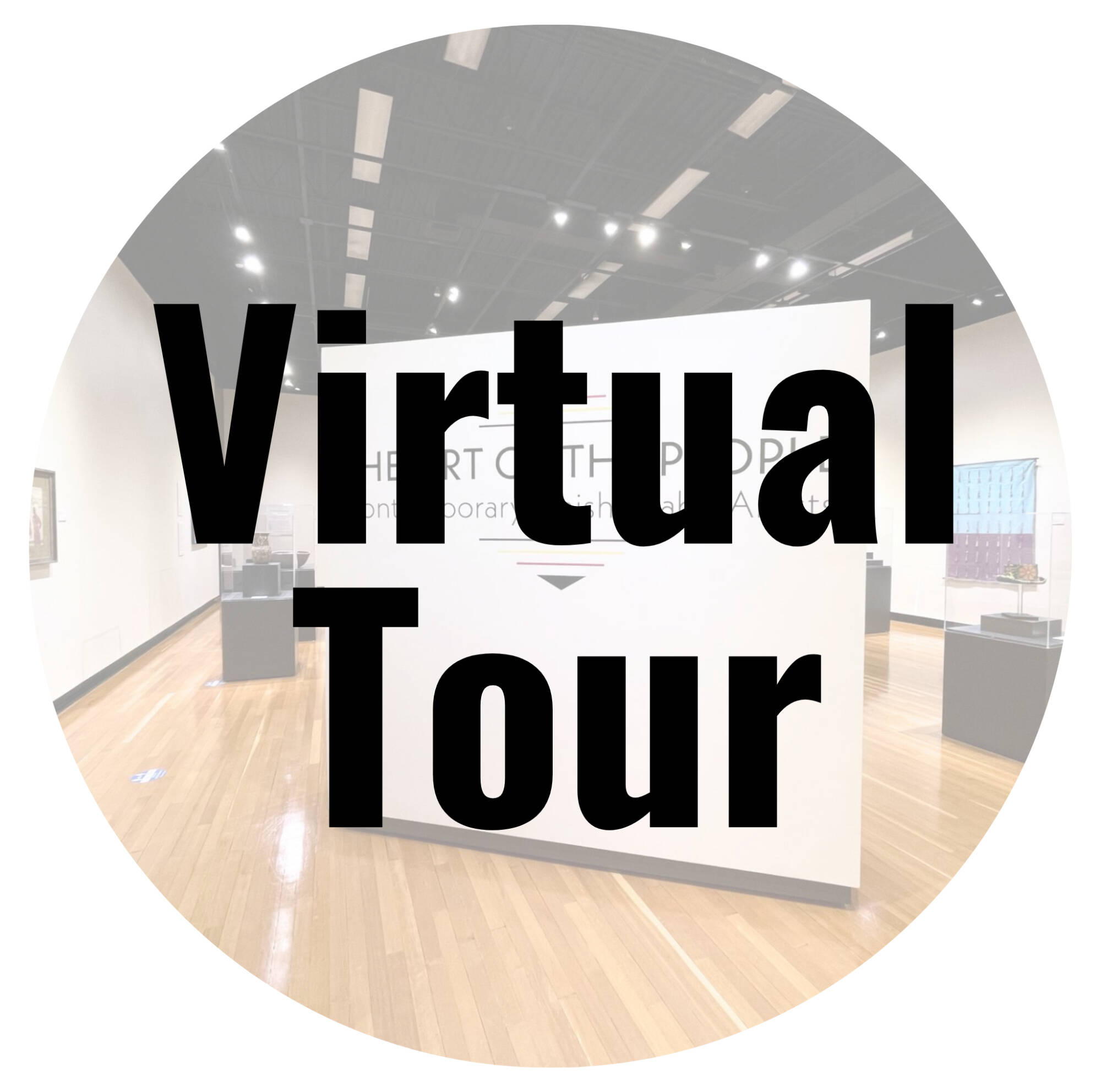
Virtual Tour of Art of the People: Contemporary Anishinaabe Artists
Films & Exhibitions
- Levi Rickert: Standing Rock, Photographs of an Indigenous Movement at the Muskegon Museum of Art
- “No, not even for a picture”: Re-examining the Native Midwest and Tribes’ Relations to the History of Photography at the William L. Clements Library, University of Michigan
- Online Exhibitions at the Smithsonian National Museum of the American Indian
History, Land, and Language
- Native American Oral Histories at the Grand Rapids Public Museum
- Our home on Native land: Anishinabewaki: This map includes the Ojibwe, Odawa, and overall Anishinaabe traditional lands and migrations. Native Land Digital is a Canadian, Indigenous-led, not-for-profit organization.
- First Nation Seeker: First Nations across North America at time of first contact: linguistically based
- Anishinaabemdaa: Anishinaabe language lessons, stories, jokes, culture & history lessons in Anishinaabemowin by Kenny Pheasant
- Native American Indian Studies, A Note on Names by by Peter d'Errico, Legal Studies Department, University of Massachusetts
Other Artists
Get Involved on Campus
- NASA: Native American Student Association
- Gi-gikinomaage-min Project: Defend Our History, Unlock Your Spirit - Gi-gikinomaage-min: gee-gi-ki-no-ma-gay-min. Translated from Anishinaabemowin, the original language of this area, Gi-gikinomaage-min means "We are all teachers." This is the name our project team choose to convey to the Native American community that through our stories and experiences, we are all teachers to someone. As we share those stories, we are allowing for our next generations to experience the past.
This exhibit is no longer on display.
GVSU Performing Arts Center Gallery, Allendale Campus
January 11, 2021 - February 26, 2021