

Grand River Bubble Barrier
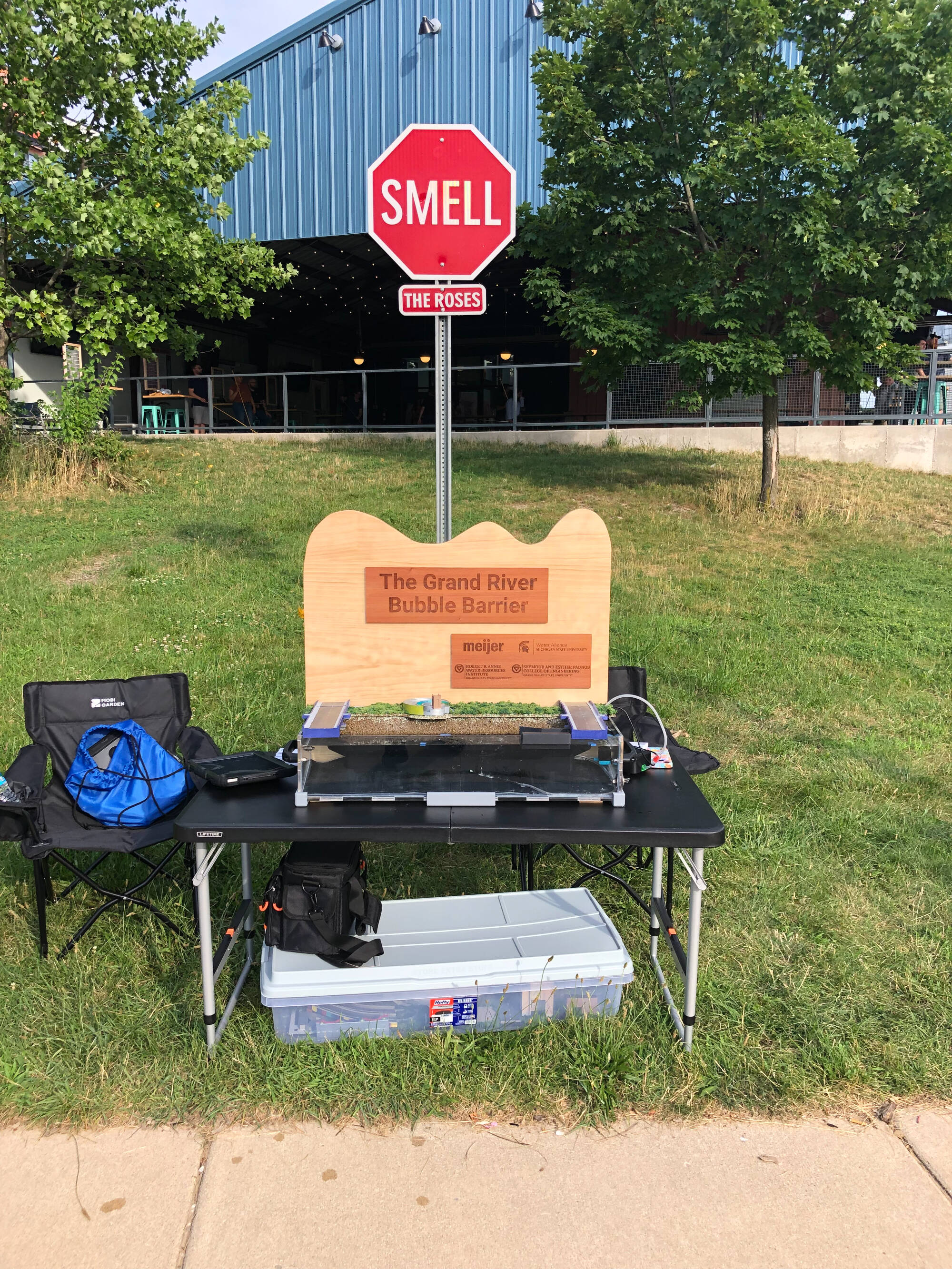
The Grand River Bubble Barrier replica debuts at the Lansing Center
Plastic pollution has become an increasingly visible concern in rivers and streams, affecting aquatic ecosystems, recreation, and the quality of life in surrounding communities. New technologies are being developed to intercept floating litter before it reaches downstream waterways, but their success also depends on how local communities understand and respond to them.
Researchers at Grand Valley State University's Annis Water Resources Institute (AWRI), in partnership with the Michigan State University Water Alliance, are studying public perceptions of a proposed Bubble Barrier installation in the Grand River in Lansing, Michigan. The project will establish baseline measures of public awareness and attitudes before any installation occurs and, if implemented, evaluate how the technology influences public perceptions of plastic pollution and river stewardship over time.
Our goal is to better understand how communities respond to innovative environmental technologies and identify communication strategies that support informed public engagement throughout the planning and implementation process.
Research Questions
This project addresses questions such as:
- How aware are Grand River users of plastic pollution in the river?
- How do residents and visitors perceive a proposed Bubble Barrier installation?
- What benefits and concerns do people associate with the technology?
- What information do community members need to evaluate the proposed project?
- Does a Bubble Barrier installation change public awareness of plastic pollution or support for river stewardship?
Study Area and Methods
The study focuses on the proposed Bubble Barrier installation site along the Grand River in Lansing, Michigan.
Researchers conduct on-site intercept surveys with residents and river users at parks and public events near the proposed installation. Before completing a brief survey, participants interact with a portable tabletop Bubble Barrier model, constructed by GVSU Engineering student Erin Jagger, that demonstrates how the technology diverts floating litter toward a collection point.
Survey topics include:
- Awareness of plastic pollution
- Perceived impacts of plastic debris
- Familiarity with Bubble Barrier technology
- Perceived benefits and concerns
- Information needs
- Support for river restoration technologies
- Demographics
By collecting data before and, if the project proceeds, after installation, researchers will evaluate how the technology influences community awareness and public acceptance.
Current Status
Public surveys are currently being conducted to establish baseline measures of community perceptions prior to any potential installation of a Bubble Barrier in the Grand River. Findings will help inform future communication and outreach efforts if the proposed project moves forward.
Future updates will include project reports, presentations, and publications.
Project Partners

Contact
Amanda Buday,
Associate Professor of Sociology,
Annis Water Resources Institute
(616)-331-3137