


Fishing for Purpose
Recreational fishing contributes substantially to the economy and quality of life in Great Lakes communities, yet relatively little is known about how anglers decide where to fish. While previous research has identified many factors that influence fishing site selection, anglers must often balance tradeoffs among environmental conditions, fishing opportunities, access, and amenities when selecting a location.
Funded by the Great Lakes Fishery Trust, this project examines how anglers evaluate fishing locations at drowned river mouth lakes along the eastern Lake Michigan shoreline in Michigan. Through on-site surveys conducted across multiple seasons, we are studying both the motivations that bring people to these fisheries and the site characteristics they prioritize when choosing where to fish.
Our goal is to better understand the full recreational fishing experience - from why people fish to how they select locations - in order to support fisheries management, recreation planning, and future public access improvements.
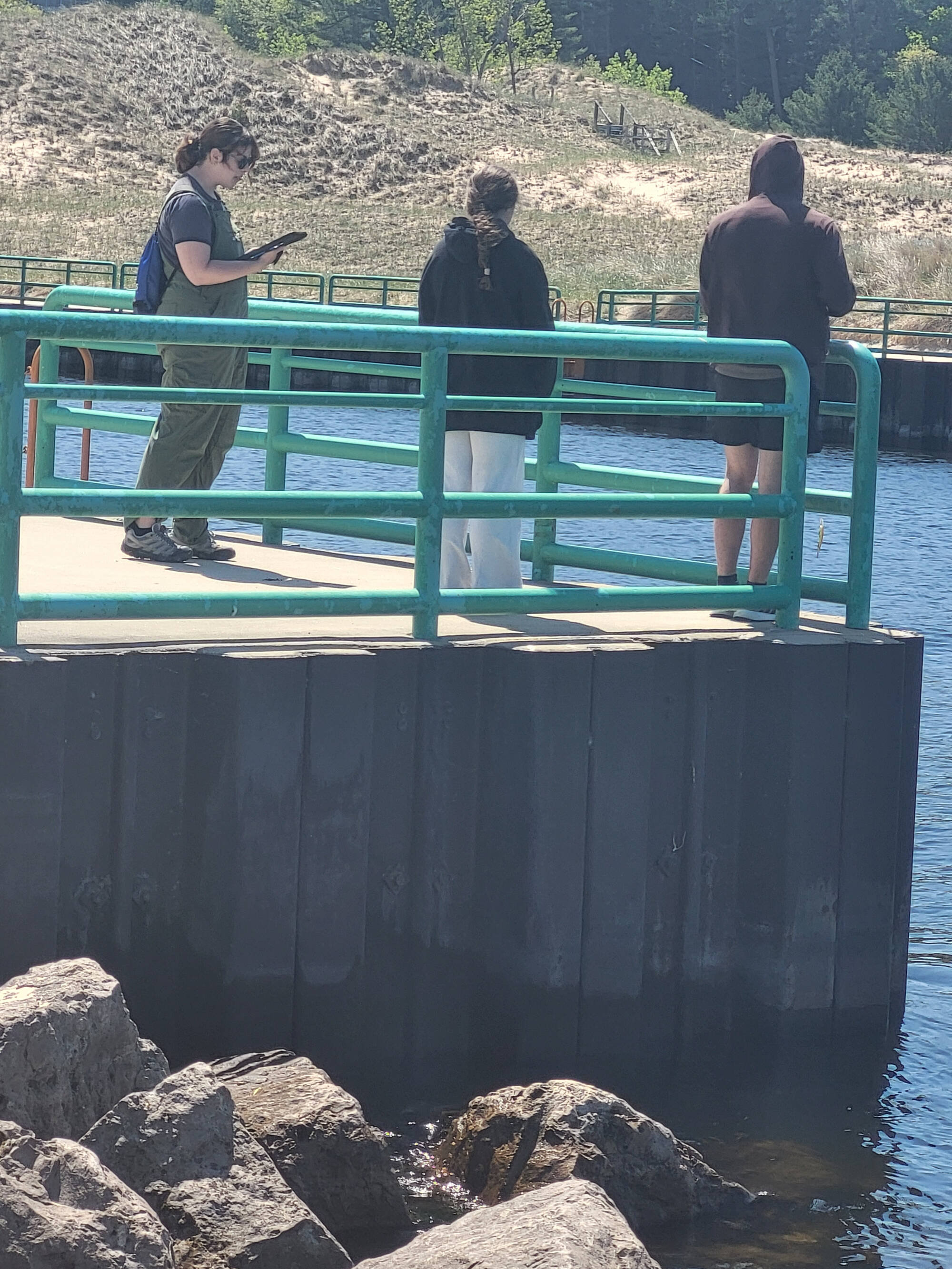
Piper Sluyter interviews anglers at the channel on Pentwater Lake
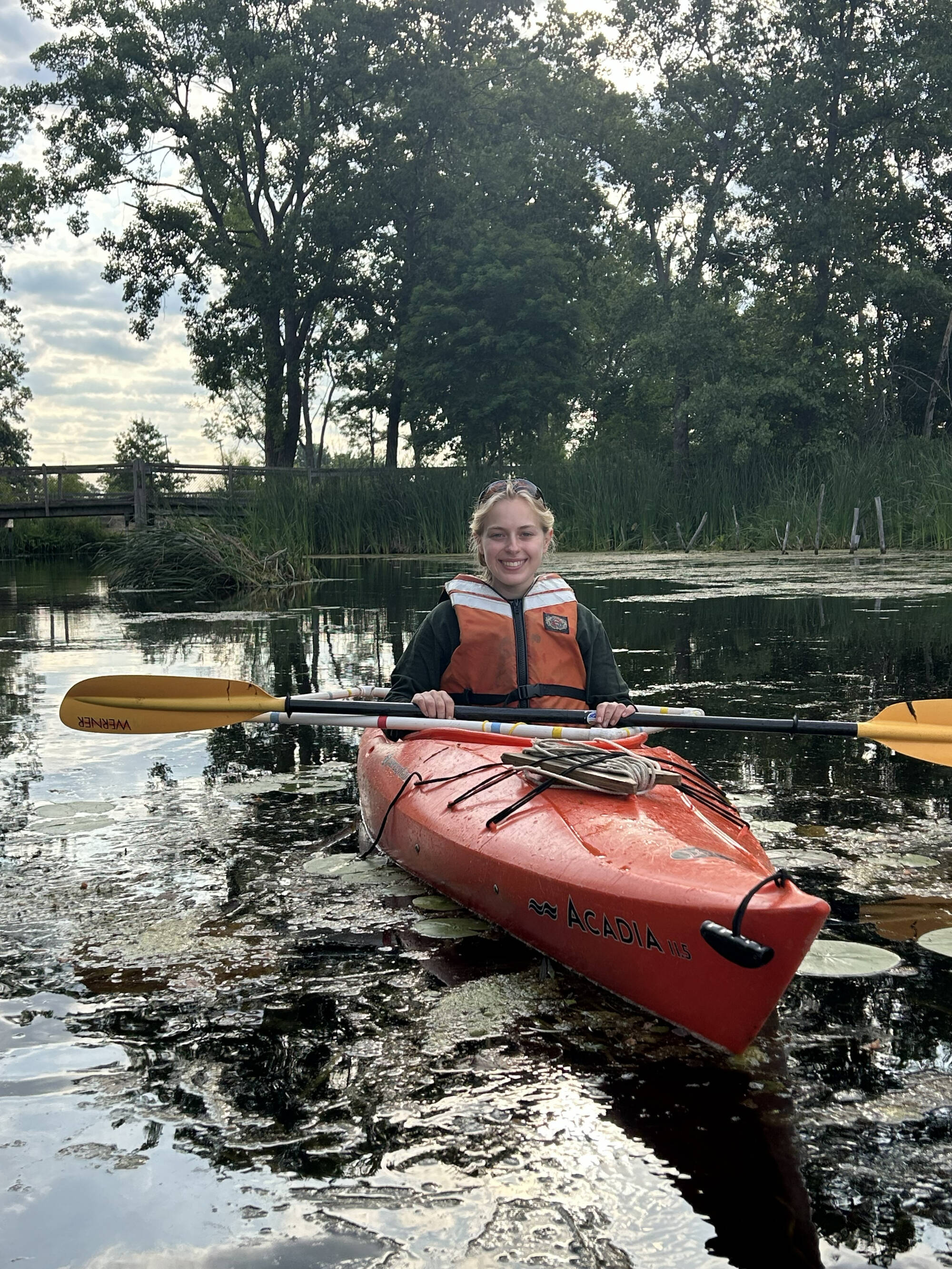
Madilyn Roy assesses habitat near the Muskegon Lake Nature Preserve
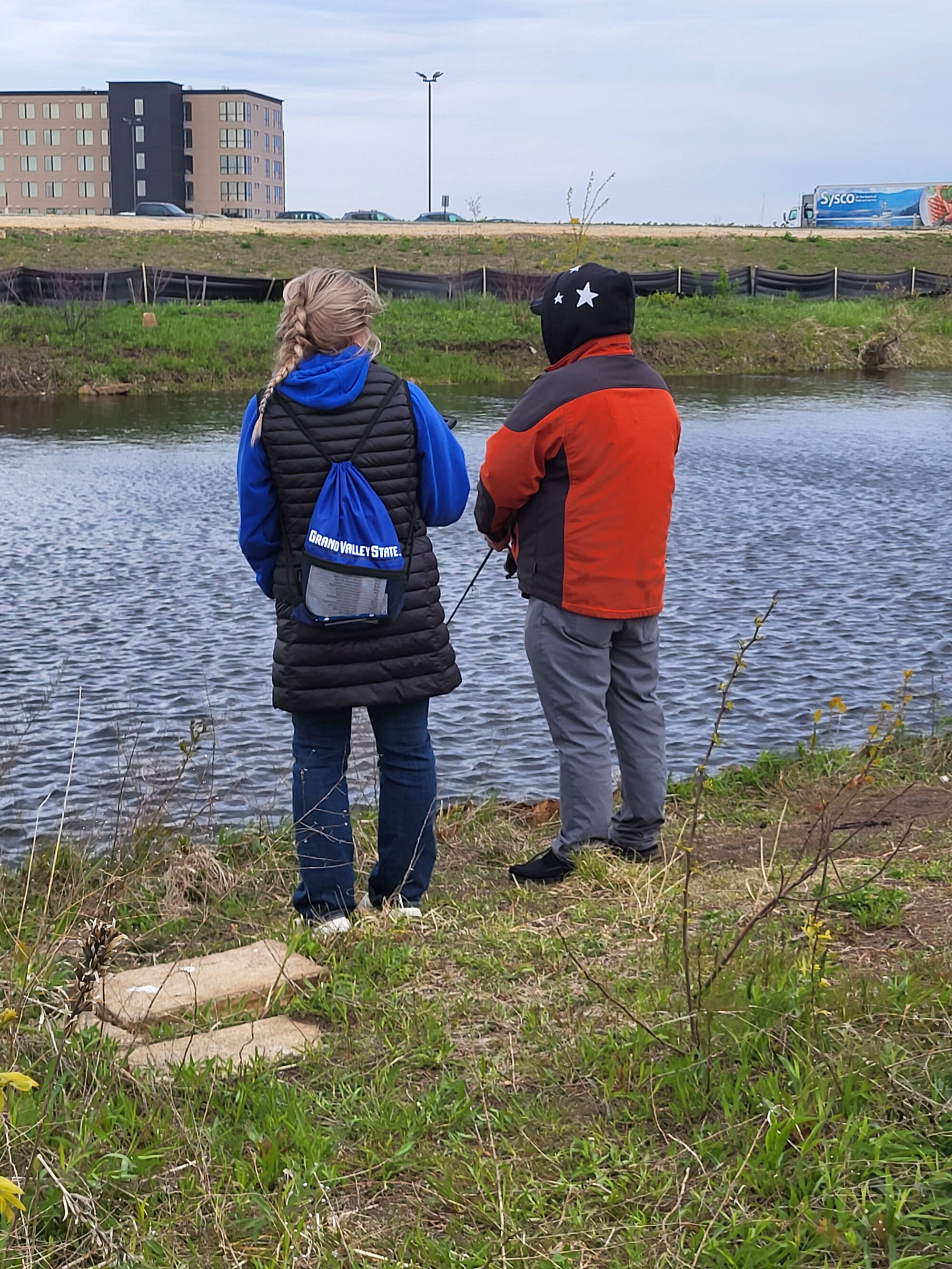
Emma Yonker interviews an angler on the Muskegon Lake shoreline
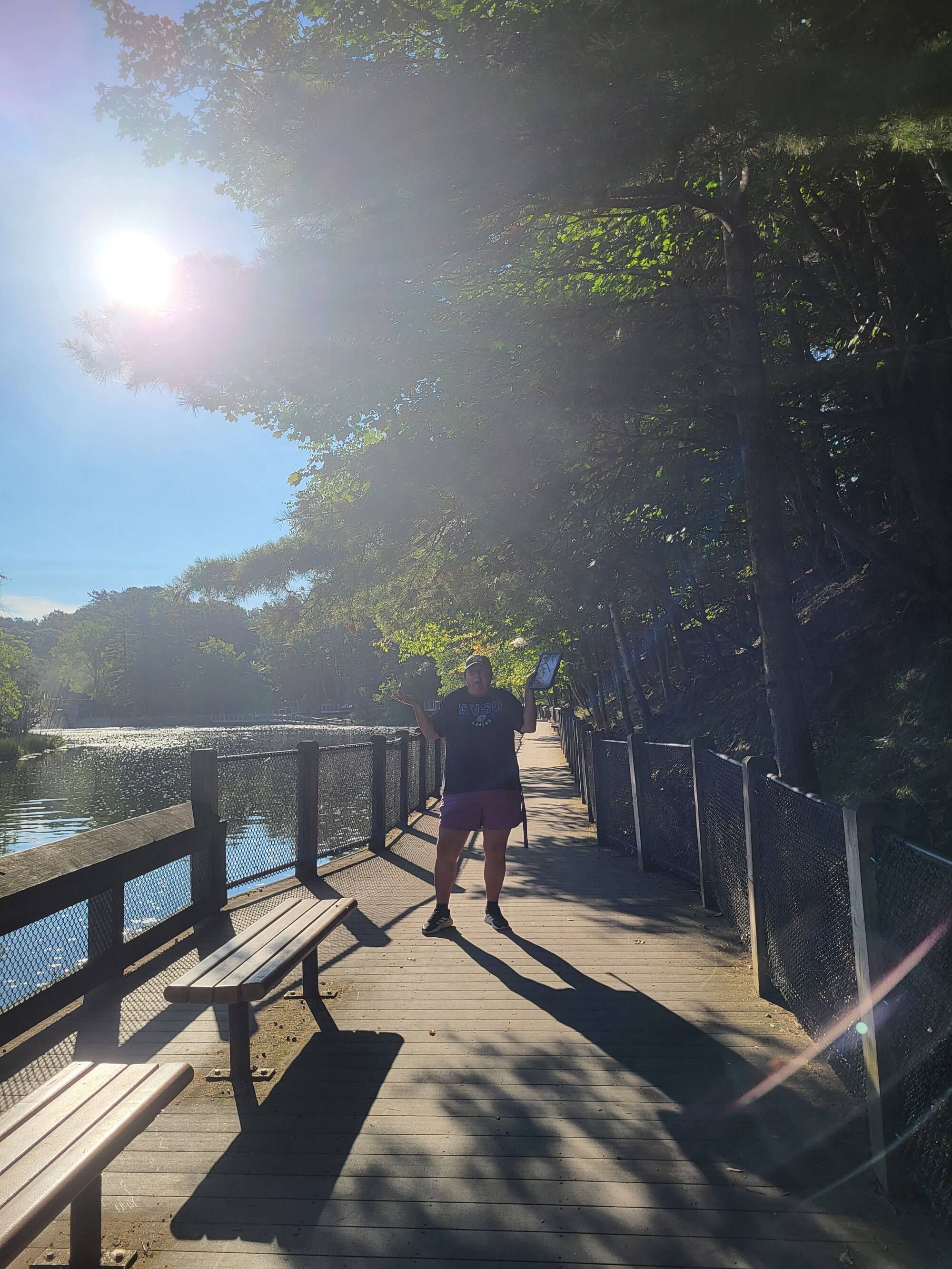
Jen Burfield looks for anglers at the Hamlin Dam in Ludington, Michigan
Research Questions
Our work addresses questions such as:
- What motivates anglers to fish at Great Lakes drowned river mouth lakes?
- How do anglers evaluate tradeoffs among environmental conditions, fishing quality, access features, and amenities?
- Do preferences differ across seasons, lakes, or types of anglers?
- How do fishing motivations relate to site selection and recreational experiences?
Study Sites and Methods
This project is being conducted at six drowned river mouth lakes along Michigan's eastern Lake Michigan shoreline:
- Pere Marquette Lake and the Lower Pere Marquette River
- Pentwater Lake
- White Lake
- Muskegon Lake
- Spring Lake
- Lake Macatawa
These systems provide diverse recreational fishing opportunities while representing an important and distinctive class of Great Lakes coastal ecosystems.
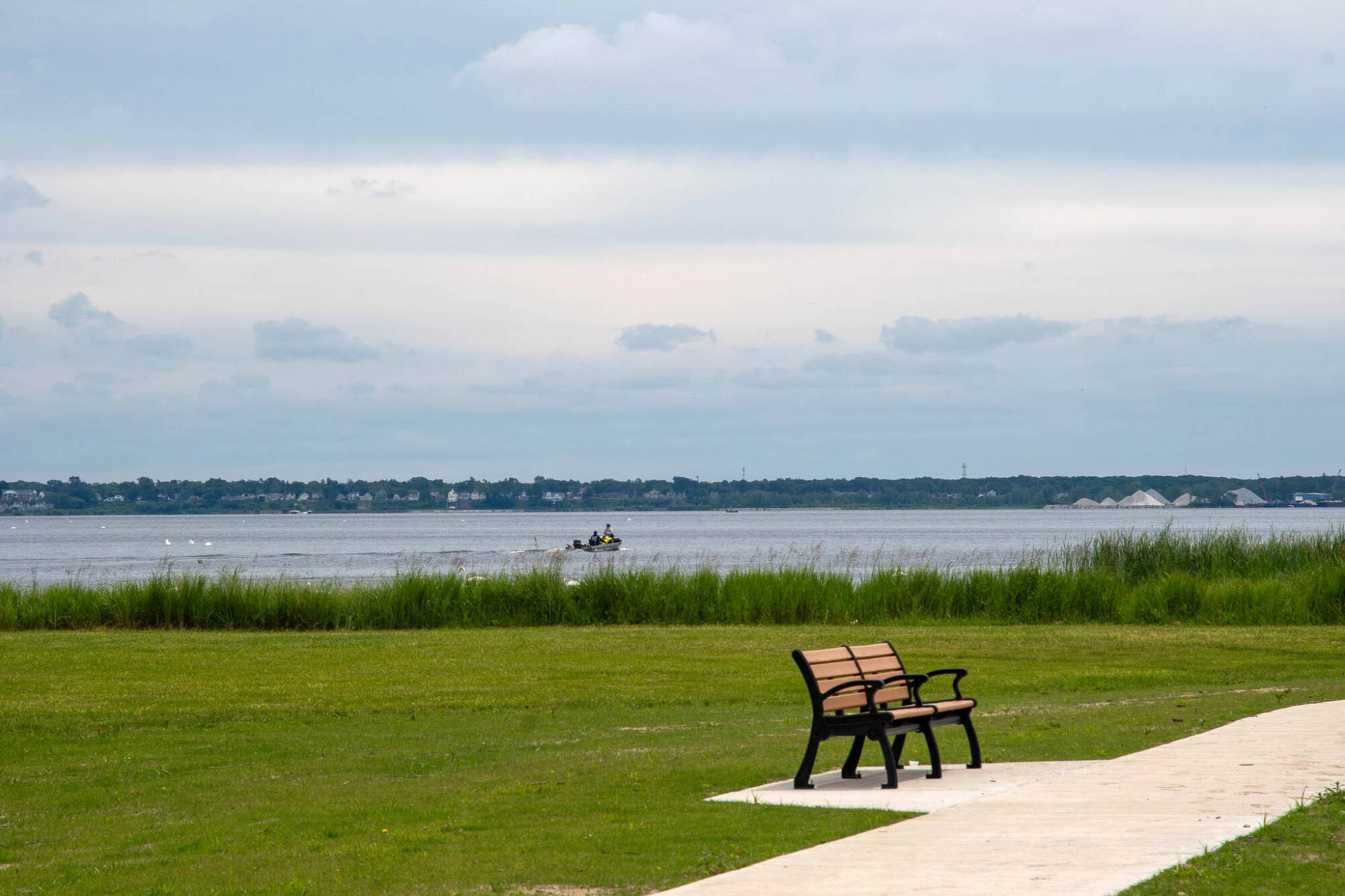
Leitsma Pier, Muskegon Lake by Todd Marsee
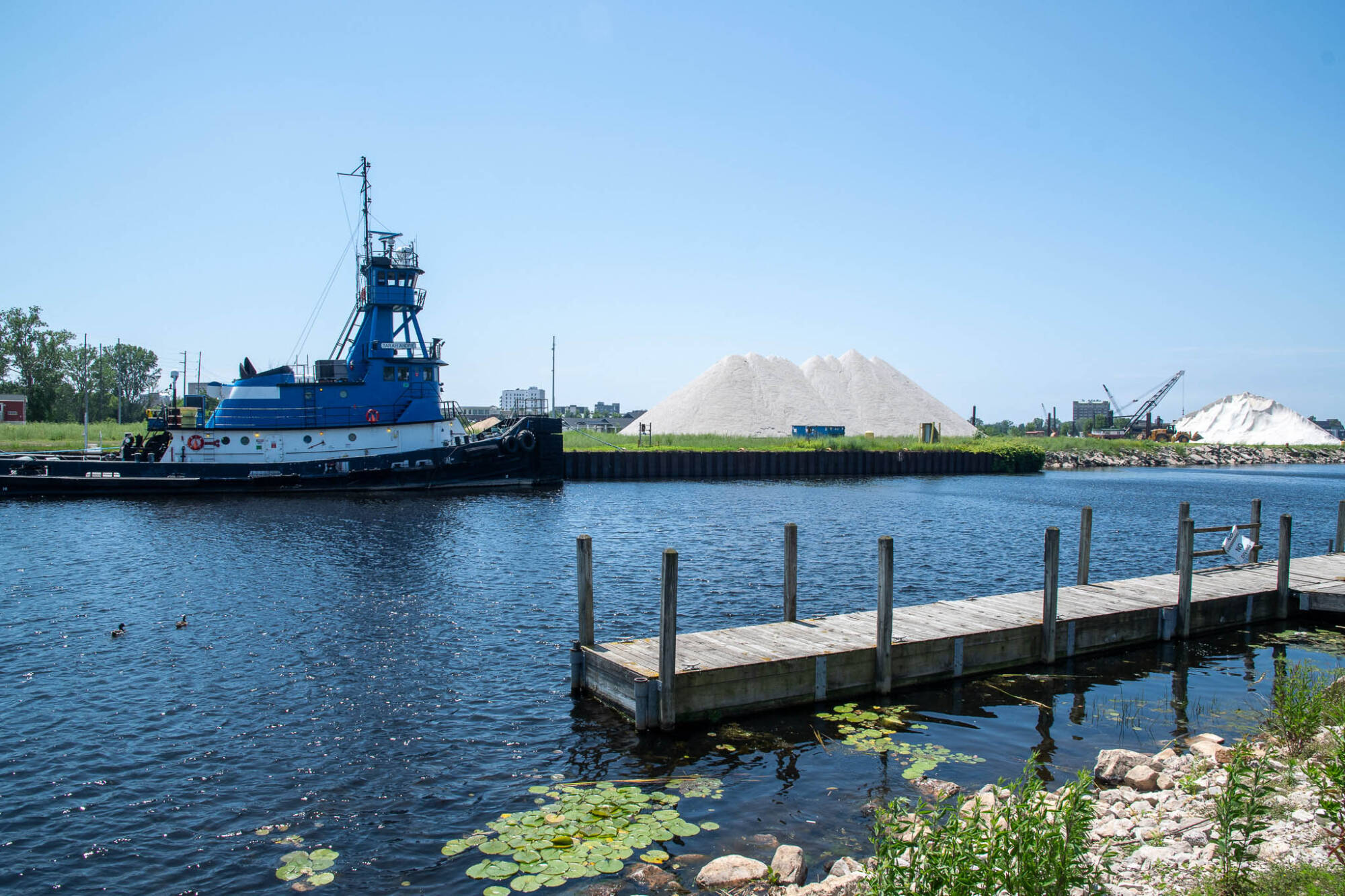
Fisherman's Landing, Muskegon Lake by Todd Marsee
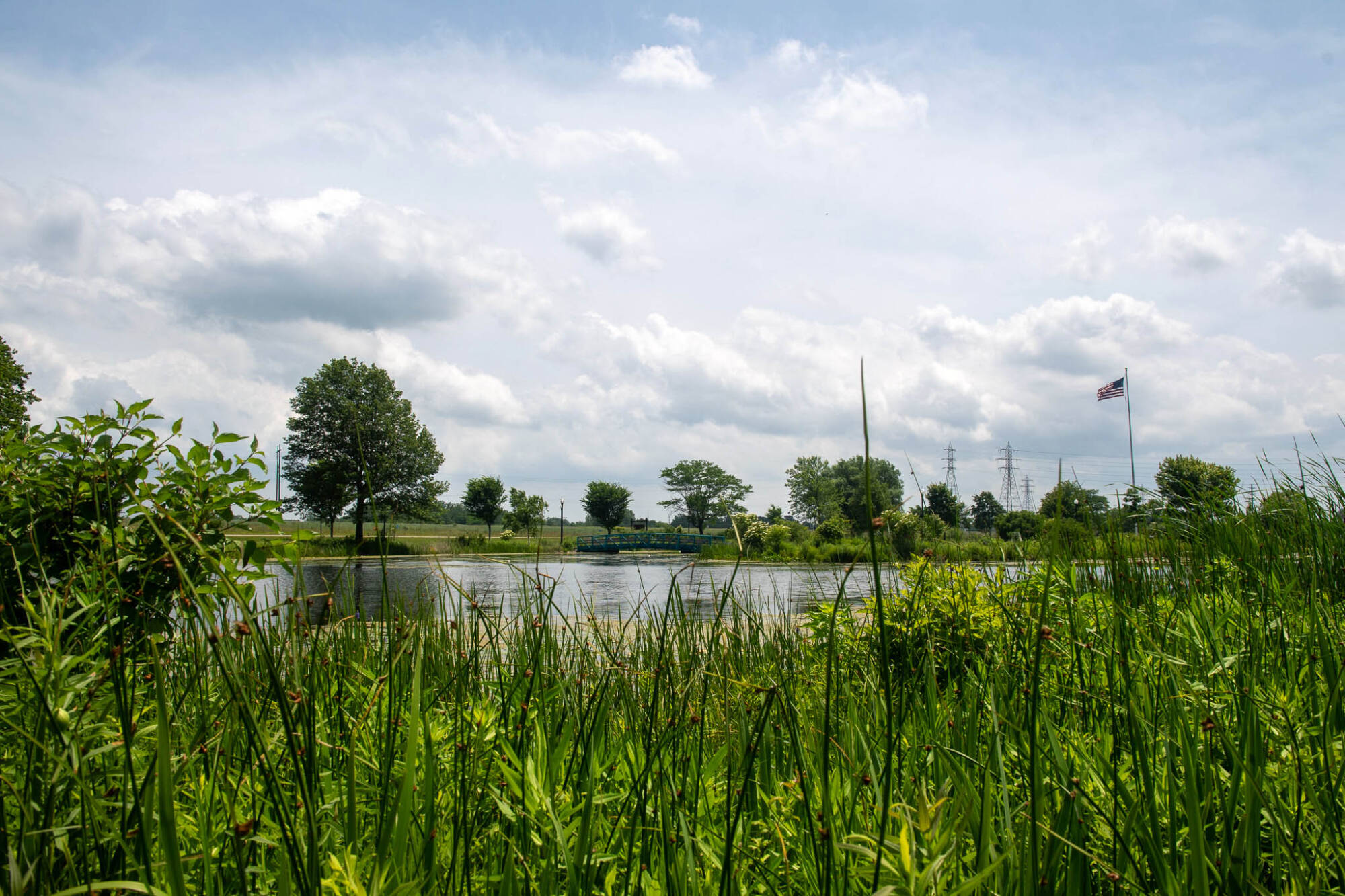
Veterans Memorial Park, Lower Muskegon River by Todd Marsee
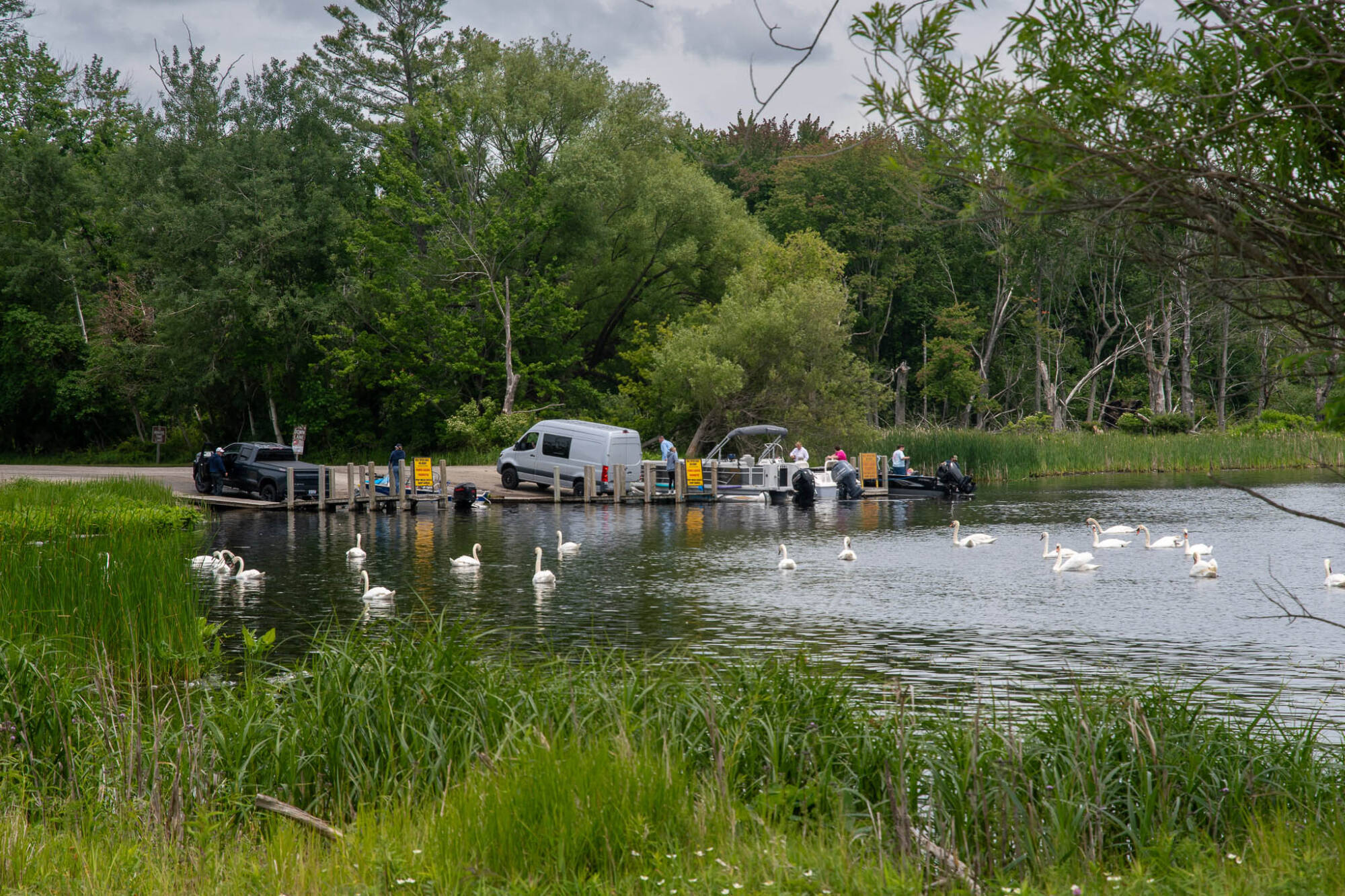
Snug Harbor, Muskegon Lake by Todd Marsee
Researchers conduct on-site intercept surveys with anglers throughout the year. Survey topics include:
- Fishing motivations
- Site selection decisions
- Environmental preferences
- Access and infrastructure
- Fishing experiences
- Trip experiences
- Demographics
Comparing angler preferences across lakes with different fishing opportunities and amenities allows us to provide the Great Lakes Fishery Trust with actionable information about what matters most to anglers.
Current Status
Field data collection is underway across all study lakes. More than 500 angler interviews have been completed during the first six months of the project, with data collection continuing through multiple fishing seasons.
Future updates will include publications, presentations, and project reports.
Project Partners

Contact
Amanda Buday
Associate Professor of Sociology,
Annis Water Resources Institute
(616)-331-3137