

International Virtual Exchange (IVE)

IVE
International Virtual Exchange (IVE) is a faculty-led instructional approach linking courses from universities from different global regions.
Students in the courses collaborate virtually with their international peers on assignments, activities, or projects. Virtual exchange can be integrated into courses in nearly all disciplines and is already used by faculty in more than 300 universities worldwide.
The two linked courses typically share some learning outcomes, but each course has its own syllabus and is credited by its home institution. IVE can take many forms and vary in terms of scope, technology tools, and level of involvement, from cultural sharing activities lasting a few class sessions, to collaborative projects lasting five or more weeks. While the focus of the project can be discipline specific, IVE also serves as a very useful platform for interdisciplinary projects and exchanges.
IVE for Faculty
Bring global collaboration into your classroom through International Virtual Exchange. Explore resources for planning an exchange, connecting with international partners, and supporting student learning.
IVE for Students
Connect with students around the world through International Virtual Exchange. Explore new perspectives, collaborate on shared projects, and build communication and teamwork skills—all through your GVSU coursework.
International Virtual Exchange (IVE) connects students in your course with peers at an international institution through online discussions, activities, or collaborative projects. Faculty partners design and guide the exchange together, combining course content with opportunities for intercultural learning.
Flexible across disciplines: Exchanges can connect courses in the same field or bring together complementary disciplinary perspectives.
Integrated into coursework: Each course retains its own syllabus, enrollment, and institutional credit.
Adaptable in length: Many GVSU exchanges last four to eight weeks, although shorter activities and semester-long projects are possible.
Varied in format: Students may participate in live meetings, asynchronous activities, or a combination.
Purposeful collaboration: Students learn with international peers through shared academic work and reflection.
Class size: IVE typically works best in classes with 35 or fewer students.
Flexible project formats: Students may create a joint project or use insights from international discussions in separate assignments for their own courses.
IVE also gives faculty opportunities to build international teaching partnerships and develop their teaching practice. Designing and facilitating an exchange can support professional development and provide examples of teaching innovation for personnel portfolios.
Explore the course examples below to see how GVSU faculty have incorporated IVE into their teaching.
A strong partnership begins with shared teaching interests and a willingness to design the experience together. Your partner does not need to teach an identical course; complementary expertise can create opportunities for students to approach a topic from different perspectives.
Where to begin
Consider international colleagues you already know through research, conferences, professional associations, or previous collaborations.
Explore GVSU’s international partner institutions.
Use virtual exchange networks such as COILConnect and the SUNY COIL Center.
Contact IVE coordinator Ellen Shupe for help exploring potential connections.
What to discuss with a potential partner
Share your course topic, student level, class size, proposed timeline, and initial project ideas. Discuss what each group of students could contribute and gain. Before committing, compare academic calendars, communication preferences, language needs, and the time each instructor can devote to planning.
An introductory video meeting can help you establish expectations and determine whether the partnership is a good fit.
Reach out directly
Identify universities in regions and disciplines that fit your course interests. Contact individual faculty members, academic departments, or international education offices to explore a potential collaboration.
GVSU partnership priorities
GVSU is particularly interested in developing exchanges with faculty in the Global South and at GVSU’s international partner institutions.
Begin planning at least one semester before you intend to implement the exchange. Allow time to establish your partnership, design meaningful activities, and prepare students.
Build your plan together
Identify learning goals. Decide what students should learn about the course content and intercultural collaboration.
Design the shared work. Choose a discussion, investigation, or project that benefits from students exchanging perspectives and working together.
Coordinate logistics. Compare calendars, time zones, class sizes, deadlines, and language needs. Agree on instructor responsibilities and communication routines.
Choose accessible tools. Confirm that students at both institutions can access and use the selected platforms.
Clarify assessment. Explain how participation, individual contributions, and completed work will be evaluated in each course.
Prepare students. Include introductions and relationship-building activities. Before students begin working with international peers, address cultural awareness, cultural humility, and respectful intercultural communication.
Include reflection. Ask students to consider what they learned, how their perspectives developed, and how they contributed.
Schedule regular check-ins with your partner throughout the exchange and discuss improvements afterward.
Choose an Exchange Format
International virtual exchange can take many forms and vary in terms of scope and level of involvement. Several common approaches are described below. While the list is not exhaustive, the descriptions illustrate the adaptability of virtual exchange and may serve as a springboard for course and project ideas. Note that regardless of the type of exchange, instructors should plan on spending time addressing issues of cultural awareness, cultural humility, and intercultural communication before their students begin working with their international peers.
Short-term cultural exchange (typically 1-4 weeks)
Students work in pairs or groups, engaging in discussions or asynchronously exchanging information related to their cultures, specific course content, and/or an SDG. Given their relatively short time period, these are best suited for cultural exchanges or exchanges between classes that are similar in terms of discipline, learning outcomes and primary language. This type of short-term exchange can also be incorporated into pre-departure sessions for a study abroad course.
Collaborative Online International Learning (COIL) with a joint project (4-8+ weeks)
Students from the partnering classes work together in teams, collaborating on joint projects, such as designing a computer program or global marketing campaign. COIL exchanges usually include an opportunity for teams to present their projects to the classes at the end of the collaboration. The collaborations typically include at least four components: 1) Introductions and icebreakers; 2) Group work on the relevant assignment or project; 3) Final meeting, including presentation of work; and 4) Student reflection.
Collaborative Online International Learning (COIL), with no joint project (4-8+ weeks)
Students from the partnering classes work in pairs or groups, collaborating on focused discussions and work related to their respective classes. While group members don’t collaborate on a joint project, they often incorporate what they’ve learned into projects or other assignments for their respective courses. The collaborations typically include at least three components: 1) Introductions and icebreakers; 2) Group work on the relevant assignment or project; and 3) Student reflection.
Language exchange/telecollaboration (typically 4 or more weeks)
Students practice conversational language skills in pairs or small groups. The exchange can be done in class, as a required assignment, or as an optional activity.
Can IVE work in my discipline?
IVE can be adapted to many disciplines. Start with a course topic that would benefit from international perspectives or collaborative investigation.
Do the partner courses need to be identical?
No. Courses can approach a shared task from related or complementary disciplinary perspectives.
Can I use IVE in an in-person course?
Yes. The exchange can be incorporated into an in-person, hybrid, or online course.
Is funding available to support IVE course development?
Potential funding sources include teaching innovation grants through the Pew Faculty Teaching and Learning Center and internationalization or faculty/staff exchange grants through the Padnos Center for Global Experiences. Contact IVE coordinator Ellen Shupe to discuss current opportunities, eligibility, and application timelines.
Do both classes need to meet live?
No. Asynchronous discussions and shared work can accommodate time differences. Live meetings may be included when feasible.
Do students need another language?
Most GVSU exchanges in non-language courses use English. Faculty should discuss language expectations and support needs during planning.
What if students don’t share a common language? Most exchanges in non-language courses use English. When language differences create barriers, instructors can explore appropriate translation tools and other communication supports during planning.
Is an international guest lecture considered COIL?
A guest lecture can enrich a course, but COIL includes intentionally designed interaction and collaboration between students.
Where can I get help getting started?
Contact IVE coordinator Ellen Shupe to discuss your course and available support.
Use these resources to explore exchange design, identify potential partners, and prepare students.
SUNY COIL Center: Introductions to COIL, course examples, and professional development opportunities.
COILConnect: A directory for exploring potential international teaching partnerships.
SUNY COIL Student Guide: Student-facing guidance on intercultural communication, collaboration, and describing the experience on a résumé.
GVSU course examples: See how faculty have designed exchanges across different disciplines below.
Support at GVSU: Faculty can seek guidance throughout exchange planning, design, and implementation from IVE coordinator Ellen Shupe, experienced IVE faculty mentors, and campus partners in international education, Instructional Design and eLearning (IDeL), and the Pew Faculty Teaching and Learning Center.
Faculty Guides and Readings
O’Dowd (2018): From telecollaboration to virtual exchange
Chapter 11 in The Guide to COIL Virtual Exchange (Rubin et al., 2022): An introduction for instructors and support staff.
Videos
10 Keys to Success for Collaborating Online
Project Examples at Other Universities
IVE brings international collaboration into your coursework. You may meet students whose experiences, perspectives, and approaches to the subject differ from your own.
Although each exchange is different, activities may include:
Introductions and conversations: Get to know your international classmates before beginning academic work.
Discussion and comparison: Explore how a course topic is understood in different communities or contexts.
Small-group collaboration: Work with international peers on an assignment, investigation, presentation, or other shared activity.
Online interaction: Participate through video conversations, written discussions, or collaborative documents.
Reflection: Consider how the exchange influenced your understanding of the topic and your own perspectives.
Your instructor will explain the project’s schedule, assignments, technology, and expectations. You do not need to arrive as an expert on another culture; be ready to listen, ask questions, and participate.
IVE gives you opportunities to connect academic learning with experiences beyond your own classroom.
Explore different perspectives. Discussing a topic with international peers can challenge assumptions, introduce unfamiliar approaches, and deepen your understanding of course material.
Build relationships across cultures. Learn about other people’s experiences through conversation and shared work while reflecting on your own cultural perspectives.
Practice professional skills. International teamwork provides opportunities to communicate clearly, coordinate responsibilities, solve problems, and adapt when plans change. Using online tools for a shared purpose also develops experience with virtual collaboration.
Describe your experience to employers. Your project can provide concrete examples for résumés and interviews. Explain what you contributed, how you collaborated, and what you accomplished. For example, describe how you coordinated across time zones or helped your group complete a shared deliverable.
Choose examples that accurately reflect your own participation.
Start with a conversation. Introduce yourself, learn teammates’ names, and make space for everyone to contribute.
Write down your team’s plan. Record responsibilities, deadlines, meeting times, and the next action each person will take.
Make scheduling specific. Include the date and time zone in invitations. Confirm that everyone understands when work is due.
Check understanding. Summarize decisions and invite questions. A brief written recap can prevent confusion after a meeting.
Ask before interpreting. If a response seems unexpected, seek clarification before deciding what someone meant.
Share responsibility. Contribute consistently, communicate delays early, and acknowledge others’ work.
Seek help early. Tell your instructor about unresolved participation, scheduling, or technology problems.
Keep a brief reflection record. Note a challenge, your response, and what you learned. These examples can support later coursework and career conversations.
For more guidance on intercultural communication and online teamwork, explore the SUNY COIL Student Guide.
How do I participate in IVE?
IVE is incorporated into participating GVSU courses. Explore the course examples on this page, then ask the instructor whether an exchange is planned for the semester and section you are considering. Register for your course through GVSU; you do not register at the international partner institution.
Do I need to speak another language?
Most exchanges in non-language courses use English. Language courses may include opportunities to practice another language. Your instructor will explain the language expectations. When communicating with teammates, allow time for questions and clarification rather than expecting everyone to communicate in exactly the same way.
Do I need previous international experience?
No. You can participate even if you have never traveled abroad or worked with international classmates. Your experiences and ideas contribute to the exchange. You participate as yourself—you are not expected to speak for an entire country or culture.
Will I need to travel or have a passport?
IVE activities take place online, so international travel and a passport are not required for the virtual exchange itself.
Will I have to meet outside my regular class time?
Possibly. Some exchanges include live meetings, while others use activities students complete at different times. Scheduling depends on the project and the partner institution’s time zone. Check the course expectations and tell your instructor early about scheduling conflicts.
What technology will I need?
Requirements depend on the activities your faculty partners select. Ask which devices, internet access, and communication tools you will need before the exchange begins. If you cannot access a required tool or need an accessible alternative, contact your instructor early so you can discuss options.
How will the exchange affect my grade?
Check your syllabus and assignment instructions for how the exchange contributes to your course grade. Ask your instructor how individual participation, group work, and any final project will be assessed.
Does IVE count toward my degree?
IVE is a learning experience within a course. Whether that course fulfills a particular major, minor, or general education requirement depends on your program. Check your degree requirements or speak with your academic advisor.
What if I have trouble communicating or working with my group?
Start by asking for clarification and checking your group’s understanding of responsibilities and deadlines. Differences in schedules or communication styles can cause misunderstandings. If problems continue, contact your instructor early and explain what has happened and what your group has tried.
Is there an additional cost?
IVE does not require international travel expenses. For questions about tuition, course fees, or required materials and technology, check the specific course information and ask your instructor.
Who can answer additional questions?
Contact your instructor about a specific exchange, assignments, scheduling, or participation needs. For general questions about IVE at GVSU, contact IVE coordinator Ellen Shupe.
Shared with permission. Excerpts from student reflections.
“A completely different learning experience, like studying abroad from my home office.”
—Sam, Writing Major
“This experience will help me work with different populations, different cultures, and navigate language barriers as a future physical therapist.”
—Addison, Behavioral Neuroscience Major
“Not only did I learn basic career skills, like adaptability and teamwork, but I learned how to interact with people who are different from me.”
—Regina, Psychology Major
Featured IVE Courses at GVSU

PSY 492: Psychology Capstone
Ellen Shupe | Psychology
Partners: Universidad de Sonora, Mexico; Universidad CEU San Pablo, Spain
Exchange: Five weeks | Winter 2024; Fall 2026
Students share proposed psychology-based programs with international peers and exchange feedback on cultural context, policy, and program design. They incorporate their teammates’ perspectives into final proposals, practicing how to adapt programs to serve people in different cultural settings.

SPA 306: Spanish for Business
Sarah Mather | Modern Languages
Partner: Universidad de Sonora, Mexico
Semester: Winter 2026
Working in English and Spanish, international teams developed marketing plans to introduce Mexican Bacanora to Michigan and Michigan coffee to Mexico. Students contributed cultural insights and pitched their proposals to company representatives, connecting language learning with international business practice.

INT/HRT/HST 319: Human Traffic and Human Trafficking
Max Counter | Interdisciplinary Studies
Partners: National Autonomous University of Chiapas; Autonomous University of the West, Mexico
Exchange: Eight weeks | Fall 2024
International teams researched forms of human trafficking, including forced marriage, child soldiers, and organ trafficking. Students translated scholarly research into public-facing fact sheets and presented their findings, combining international collaboration with research and communication about a complex global issue.
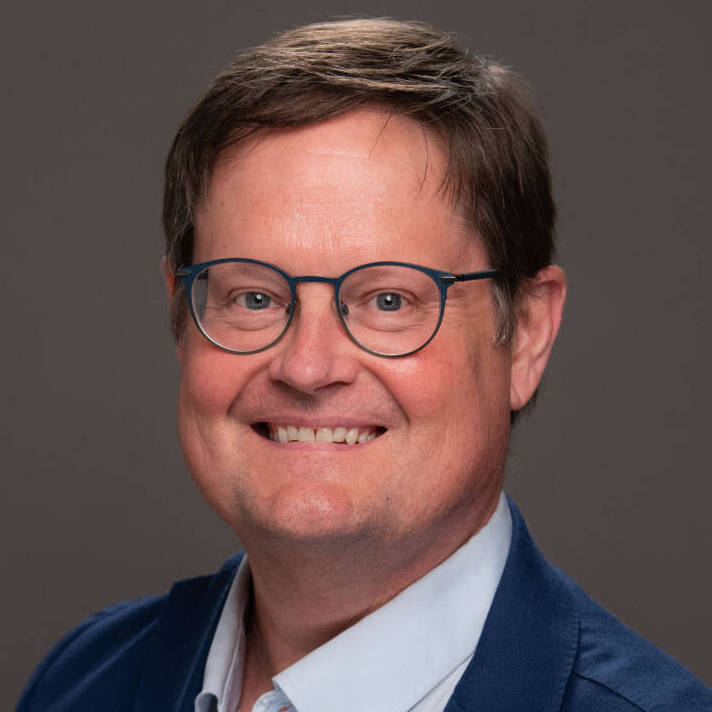
CIS 467: CS Capstone
Robert Adams | Computer Science
Partners: Uppsala University, Sweden; Turku University, Finland; Hochschule Hannover, Germany
Exchange: One semester
GVSU students joined international teams to design and develop software, complete project milestones, and deliver a final presentation. The collaboration introduced students to working on global teams. Alumni reported that the experience helped ease their transition into professional work.
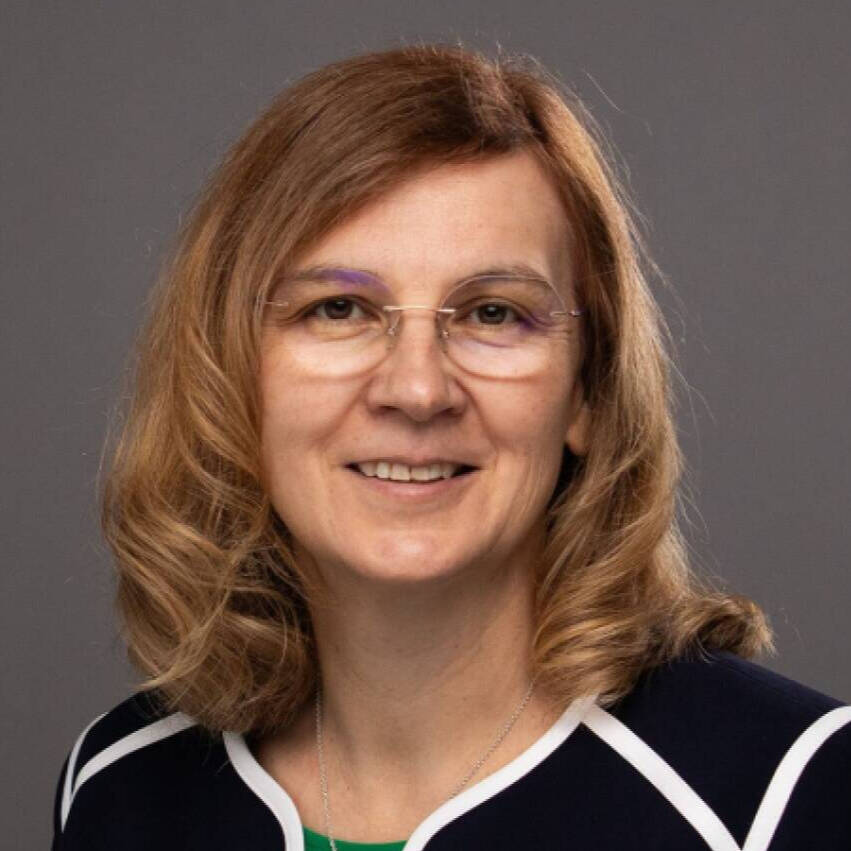
WRT 351: Writing for the Web
Zsuzsanna Palmer | Department of Writing
Partner: Budapest Business University, Hungary, with accessibility support from University of Washington students
Exchange: Eight weeks during the second half of the semester
GVSU students collaborate with international peers to create websites for businesses proposed by Hungarian students. University of Washington students provide accessibility guidance. Through online meetings and shared feedback, teams practice intercultural communication, accessible web design, and writing for clients.
Explore additional examples of international collaboration across GVSU courses. These descriptions highlight previous exchanges; offerings and projects may vary by semester.
SPA 201: Intermediate Spanish
Sarah Mather | Modern Languages
Cultural Conversations and Language Learning
International partner: Diana Tocaven, Universidad de Sonora, Mexico — Business English
Exchange length: Two to three weeks
Semester: Fall 2026
Students from GVSU and Universidad de Sonora met synchronously to practice language skills, explore one another’s cultures, and reflect on similarities and differences in daily life. Students discussed aspects of life they would like to experience in their partners’ country, then shared their experiences and reflections in a collaborative final presentation.
PSY 331: Adolescent Development
Mihaela Friedlmeier
Adolescence Across Cultures
International partner: Dr. Oana Benga, Babeș-Bolyai University
Exchange length: Four weeks
Semesters: Winter 2024; Winter 2026
GVSU and Babeș-Bolyai University students worked in international teams to conduct small-scale research projects examining adolescent experiences across cultures. Each team selected a topic, such as identity development, peer relationships, or risk-taking, and collaboratively designed a survey.
Students collected data in their communities and met synchronously to discuss the results and their interpretation. Teams wrote a research report and presented their findings to the other groups during a final synchronous session.
PSY 360: Social Psychology
Ellen Shupe | Psychology
Culture, Experience, and Social Psychological Perspectives
International partner: Dr. Erika Zavala Lopez, Universidad del Caribe, Cancún, Mexico
Exchange length: Five weeks
Semester: Winter 2025
GVSU and Universidad del Caribe students met in teams to explore how social psychological concepts applied to their own culturally informed experiences. Weekly Zoom discussions addressed topics including cultural norms, intergroup relations, and social influence.
Students completed individual reflections after their meetings. The exchange concluded with a collaborative video project in which team members shared what they learned from the experience.
LAS 210: Exploring Latin America
Max Counter | Interdisciplinary Studies
Intercultural Communication through Cultural Artifacts
International partner: Juan Martín Gil, Rosario University, Bogotá, Colombia — International Business
Exchange length: Four weeks
Semesters: Fall 2023; Winter 2024
GVSU students worked with Rosario University peers to exchange videos describing cultural artifacts—objects they considered culturally significant. Before the exchange, GVSU students read scholarship on Colombian history, politics, and art.
Teams of two to three students exchanged weekly videos using Flipgrid and asked and answered questions about their artifacts. The project gave students opportunities to engage with international peers and learn about Colombian culture.
HST 101: World Civilizations
Eric Covey | History and Interdisciplinary Studies
Exploring History through Reacting to the Past
International partner: Dr. Rachel Oluwafisayo Aluko, Lead City University, Nigeria — English and Literary Studies
Semester: Winter 2024
GVSU students worked with peers at Lead City University to explore colonialism and museum studies through the history of the Benin Bronzes, as part of a broader discussion of women’s history in Africa. Students first read a Nigerian comic book about the Benin Bronzes and met via Zoom with Nigerian publishing professionals Tunji Anjorin and Aysha Abdullahi.
Students then used Discord to participate in an asynchronous version of Jennifer DeSilva’s Repatriating the Benin Bronzes, a Reacting to the Past game. The activity examined the challenges of returning looted objects held in Western museums and collections.
EDF 316: Global Perspectives on Education
David Bair | Educational Foundations
Cultural Conversations about Education
International partner: Pädagogische Hochschule Schwäbisch-Gmünd, Germany
Exchange length: Eight weeks
Semester: Spring/Summer 2023
GVSU students partnered with students in Germany to explore the relationships between education and sociocultural contexts. Instructors facilitated three whole-group meetings to introduce the exchange and provide context for learning about one another’s experiences.
Partners also met weekly via Zoom for 30- to 60-minute cultural conversations. Suggested topics and student-initiated discussions helped GVSU students learn about Germany’s education system while providing their German partners with English-speaking practice. Many GVSU students described the exchange as the most effective and enjoyable element of the course.
ENS 300: Principles of Sustainability
Ramya Swayamprakash | Environmental and Sustainability Studies
Comparing Environmental Policy in the United States and Canada
International partner: University of Windsor, Canada
Exchange length: One class session
Semester: Fall 2022
This interdisciplinary exchange connected two online, synchronous sections of GVSU’s Principles of Sustainability with a history class at the University of Windsor. GVSU students prepared by reading about Great Lakes water policies, including policies concerning the Detroit River.
During the session, students participated in whole-group and breakout discussions guided by instructor-prepared questions. Students later expressed appreciation for learning about environmental policies and regulations alongside Canadian peers.
CJ 400: Qualitative Methods
Jacquelynn Doyon-Martin | Criminal Justice
Inter-Continental Law in Action Project
International partner: Eric Jean-Pierre, Kingston University, England — International and Comparative Law
Exchange length: Six weeks
GVSU students collaborated with international peers to compare English and U.S. laws and policies. International groups researched a shared legal or policy issue and created an approximately 10-minute video for a non-academic audience.
GVSU students explained English law and policy, while their international partners explained U.S. approaches. Projects could include public service announcements, evaluations of each country’s approach, or proposed policies that could serve both nations. The exchange encouraged critical analysis and consideration of another country’s perspective.
WRT 354: Writing in the Global Context
Zsuzsanna Palmer | Department of Writing
Comparing Job Applications Across Cultures
International partners: Budapest Business University, Hungary; Cracow University of Economics, Poland; Saxion University of Applied Sciences, the Netherlands
Exchange length: Five weeks during the second half of the semester
Students participated in asynchronous introductions on Padlet and four structured Zoom meetings with international teammates. Discussions examined job application processes across countries and the similarities and differences between résumés.
Students created an international version of their résumé suited to a particular country. The cultural diversity of the partner institutions gave GVSU students opportunities to learn from peers representing multiple countries and explore connections between culture and writing conventions.
Faculty Perspectives
Hear GVSU faculty describe their international collaborations and what students gained from the experience.

Professor Robert Adams
Professor Zsuzsanna Palmer
Professor Max Counter