
Jim Penn
Professor and Department Chair
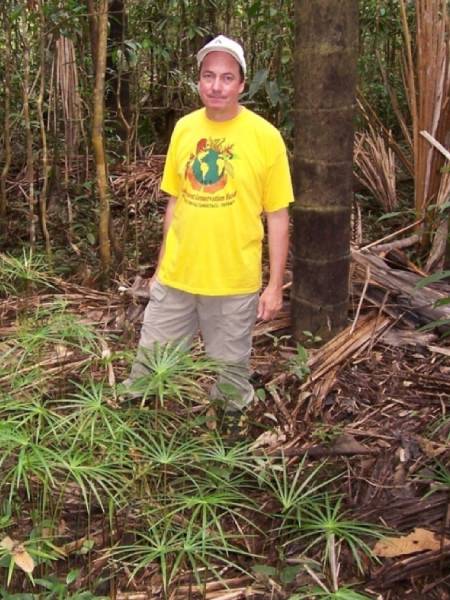
Ph.D. Geography, University of Florida
M.A. Latin American Studies, Tropical Conservation and Development Program, University of Florida
B.A. Political Science, Program in Arms Control, Disarmament and International Security, University of Illinois
Office: B-4-205 Mackinac Hall
Phone: (616) 331-8522
Email: [email protected]
Areas of interest: Amazonia, Latin America, non-timber forest products, ethnobotany, natural resource use and indigenous communities, agriculture and farmers, rural-to-urban migration, globalization and development, railroads and freight transportation.
Representative Publications:
-
Penn, J. 2024. Community-Based Field Research and Intercultural Student Experiences: Tropical Rainforest Experiential Learning in the Peruvian Amazon. Pp. 173-204 In: Wessell, J.E. (ed.) Experiential learning in geography: The world as our classroom. Switzerland: Springer Nature.
-
Penn, J. Rural-to-urban Migration. (Submitted) In: C. Pope (ed.) Modern Global Migration: An Encyclopedia of People on the Move. Santa Barbara: ABC-CLIO Publishers.
-
Lane, P.M., and J. Penn. 2018. Explorando la cultura Mayangna de Nicaragua através del FODA. Raíces: Revista Nicaragüense de Antropología 2 (4) 47 – 54.
-
Lane, P, Gómez, E., & Penn, J. 2018. Exploring a Culture with UNESCO 2030 Objectives and SWOT: The Mayangna of Nicaragua. Advances in Social Sciences Research Journal 5 (11), 589-602
-
Penn, J. W., Jr. 2017. Piassaba broom production and fiber harvest amid challenging conditions in the lower Andes: A case from Peru. Pp. 177 – 205 In: C. Allen (ed.) The Andes: Geography, diversity and sociocultural impacts. New York: Nova Science Publishers.
-
Delgado, C., Penn, J., and Couturier, G. 2016 Status of cacao trees following seasonal floods in major watersheds of the Peruvian Amazon. Agricultural Science 4 (2) 15-24.
-
Penn, J. 2012. The unconquered: In search of the Amazon’s last uncontacted tribes. (Book review) Journal of Latin American Geography 11(1): 188-90.
-
Penn, J. 2010. Domestication centers. In B. Warf (Ed.), Sage encyclopedia of human geography (pp. 374-378). Thousand Oaks, CA: Sage Publications.
-
Penn, J. W., Jr. 2008. Non-timber forest products in Peruvian Amazonia: Changing patterns of economic exploitation. Focus on Geography 51(2): 18-25.
-
Pinedo-Panduro, M. and J. Penn. 2008. Camu-camu: A sustainable option for agroindustry in the Peruvian Amazon. FAO Non-wood News 17: 52.
-
Penn, J. W., Jr. 2006. The cultivation of camu camu (Myrciaria dubia): A tree planting programme in the Peruvian Amazon. Forests, Trees and Livelihoods 16 (1): 85-101.
-
Miller, R.P., Penn, J.W., Jr, and J. van Leeuwen. 2006. Amazonian Homegardens: Their ethnohistory and potential contribution to agroforestry development. Pp. 43 -60 In: Kumar, B.K. and P.K. Nair (eds.) Tropical Homegardens: A Time-Tested Example of Sustainable Agroforestry. Advances in Agroforestry 3. Dordrecht: Springer Science.
-
Penn, J. and G. Neise. 2004. Aguaje palm agroforestry in the Peruvian Amazon. The Palmateer Vol. 24, No. 1, 15-18.
-
Meyer, D., and J. Penn. 2003. An overview of the Tamshiyacu-Tahuayo Communal Reserve. Rapid Biological Inventories 11: 176-177. Chicago: Field Museum of Natural History.
-
Bodmer, R.E., C.M. Allen, J.W. Penn, R. Aquino, and C. Reyes. 1999. Evaluating sustainable use of wildlife in the Pacaya-Samiria National Reserve, Peru. America Verdi No. 4a. 36 pp.
-
Bodmer, R. E., J. W. Penn, P. E. Puertas, L. I. Moya and T. G. Fang. 1997. Linking Conservation and Local People through Sustainable Use of Natural Resources: Community-Based Management in the Peruvian Amazon. Pp. 315-358 In: Curtis H. Freese (ed.), Harvesting Wild Species: Implications for Biodiversity Conservation. Baltimore, MD: John Hopkins University Press.
-
Bodmer, R. E. and J. W. Penn, Jr. 1997. Manejo de Vida Silvestre em Comunidades na Amazonia. Pp. 52-69 In: Claudio Valladares-Padua and Richard E. Bodmer (eds.), Manejo e Conservacão de Vida Silvestre no Brasil. Belém, Brasil, Instituto de Pesquisas Ecológicas.
-
Bodmer, R. E., J. W. Penn and Eduardo Durand. 1995. Costos y Beneficios del Establecimiento de una Extracción de Recursos más Sostenible en la Amazonia Occidental. Pp. 215-222 In: G. A. B. da Fonseca, M. Schmink, L. P. de S. Pinto and F. Brito (eds.), Abordages Interdisciplinares para a Conservacão do Uso de Terra no Novo Mundo. Belo Horizonte, Brasil: Conservation International do Brasil.
-
Penn, J. W., Jr. 1994. Agroforestería orientada a la fauna sivestre y necesidades humanas: Desafíos y realidades de la Reserva Comunal Tamshiyacu-Tahuayo. Kanatari 490: 6-7 and 493: 5, 11.
-
Penn, J. W., Jr. and Jose A. Alvarez. 1990. Comunidad Campesina Protege sus Cochas. Kanatari 258: 3, 10.
-
Bodmer, R. E., T. G. Fang, L. I. Moya, and J. W. Penn, Jr. 1990. Management Programmes and Protected Areas: The Case of the Reserva Comunal Tamshiyacu-Tahuayo. Parks 1(1): 21-25.