

Mentoring Students into the Literacy Profession Program
Literacy Studies Resources Homepage
The Mentoring Students into the Literacy Profession program connects GVSU students with faculty mentors in Literacy Studies, Teaching and Learning and English as well as with professional literacy communities across Michigan. Through mentorship, professional conference participation, collaborative inquiry, and presentation opportunities, students are supported in developing their identities as literacy educators and becoming active members of the literacy profession.
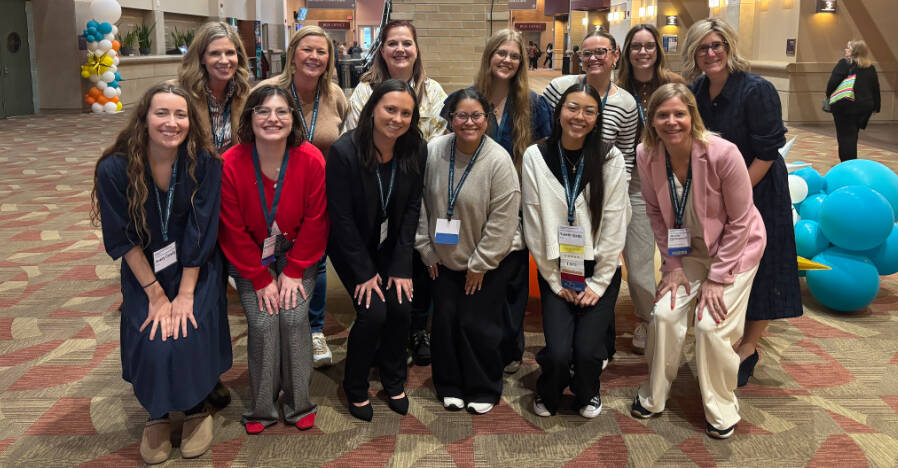
Who is invited to participate?
The program invites undergraduate and graduate students at GVSU who are interested in deepening their engagement with literacy education beyond their coursework.
Each year, a cohort of students join a small mentoring group supported by faculty mentors in Literacy Studies, Teaching and Learning, and English. Funded through the Academic and Professional Enrichment Fund, Academic Conference Fund, and department funds, mentees participate in professional learning together and work collaboratively toward sharing their work with professional audiences.
Apply to be a mentee
Applications for Cohort 4 are now being accepted. Prospective mentees in secondary English language arts education who are interested in attending the Michigan Council of Teachers of English Conference on October 16, 2026 should submit their applications by September 14, 2026. Prospective mentees in elementary literacy education who are interested in attending the Michigan Reading Association Conference from March 13-14, 2027 should submit their applications by January 29, 2027.
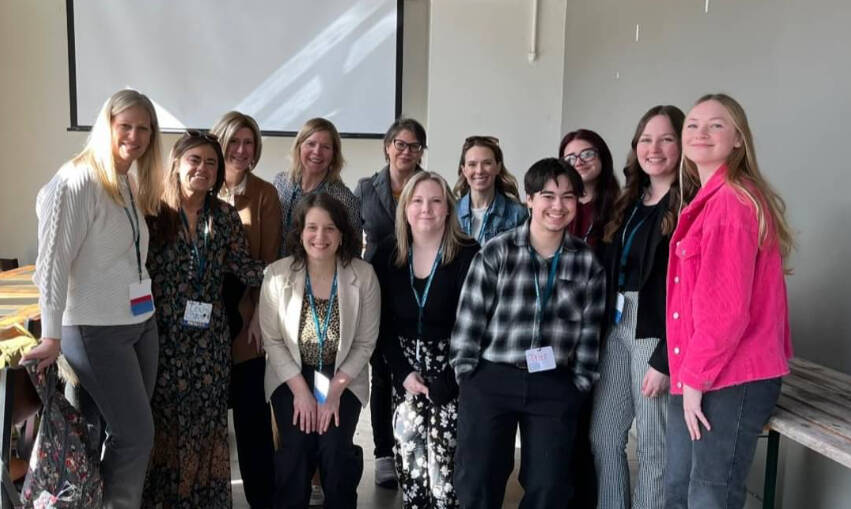
GVSU Graduate Students and faculty pose at the 2025 Michigan Reading Association Annual Conference.
Why should I participate?
As a participant in Mentoring Students into the Literacy Profession, you will have opportunities to:
- Build relationships with faculty mentors who can support your growth as a literacy educator and professional.
- Join a professional literacy community by attending Michigan Reading Association (MRA) and/or Michigan Council of Teachers of English (MCTE) conferences.
- Learn from practicing educators and literacy scholars through conference sessions, conversations, and professional networking.
- Connect your coursework to professional practice by exploring how ideas from your Literacy Studies, Teaching and Learning and English university courses are taken up in K-12 schools and other literacy settings.
- Develop your expertise and professional identity by identifying questions and topics in literacy education that matter to you.
- Collaborate with GVSU students and faculty to develop and share your own ideas about literacy teaching and learning.
- Develop and submit a conference proposal for a future MRA or MCTE conference.
- Prepare and present your work at a subsequent MRA or MCTE professional conference with the option to also present at GVSU's Student Scholars Day or Graduate Showcase.
- Build professional relationships and networks that can continue to support your learning throughout your career.
- Gain experiences that set you apart professionally by developing skills and accomplishments you can highlight on your CV, in interviews, and in future professional opportunities.
What will I do as part of the program?
- Connect: You will meet with a faculty mentor and participate in a small community of students who share an interest in literacy education.
- Learn: You will attend a professional literacy conference with your peers and mentors, participate in conference sessions, and engage with practicing educators and literacy scholars.
- Develop: You will reflect on your professional learning and work with your peers and faculty mentors to identify questions, interests, and ideas that you would like to explore further.
- Contribute: You will develop your own literacy-focused presentation and submit a proposal to present at a future MRA or MCTE conference; you can also share your work at GVSU's Student Scholars Day or Graduate Showcase.
- Reflect: Throughout the experience, you will reflect on your development as a literacy professional and provide feedback to help us strengthen the program for future cohorts.
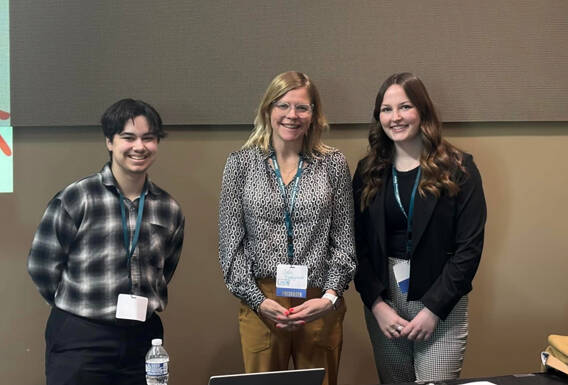
Undergraduate students Tyler Peery and Ellie Esman pose with co-presenter and Mentor Jennifer Vanderground at the 2025 Michigan Reading Association Annual Conference.
What will my mentoring experience look like?
Mentoring will take place through individual and small-group conversations, collaborative planning, proposal development, presentation preparation, and reflection.
Faculty mentors in Literacy Studies, Teaching and Learning, and the English Department will support students throughout the experience by helping them:
- navigate and participate in professional conferences;
- identify and pursue areas of interest in literacy education;
- connect professional learning to their coursework and experiences as educators;
- develop ideas into proposals and presentations;
- practice communicating their work to professional audiences;
- prepare for the expectations and opportunities of professional conferences; and
- reflect on their growth as literacy educators and members of the profession.
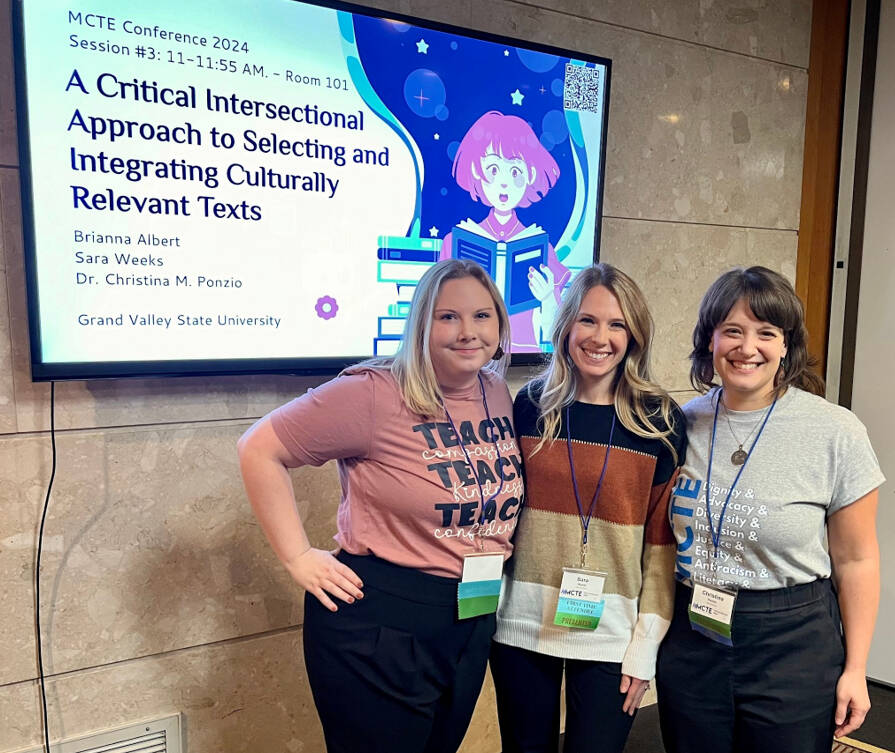
Graduate students Brianna Albert and Sara Weeks celebrate their presentation with Dr. Christina M. Ponzio at the Michigan Council of Teachers of English Conference 2024.
Meet our Mentors
Click their photos to learn more about them!
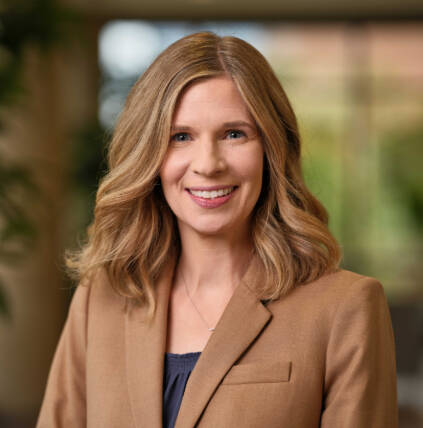
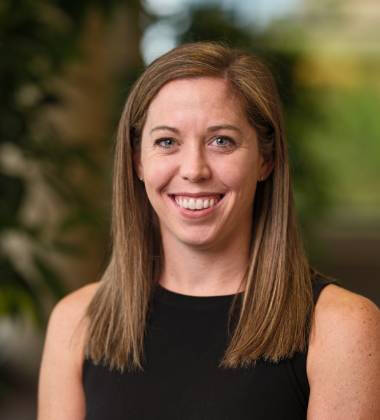
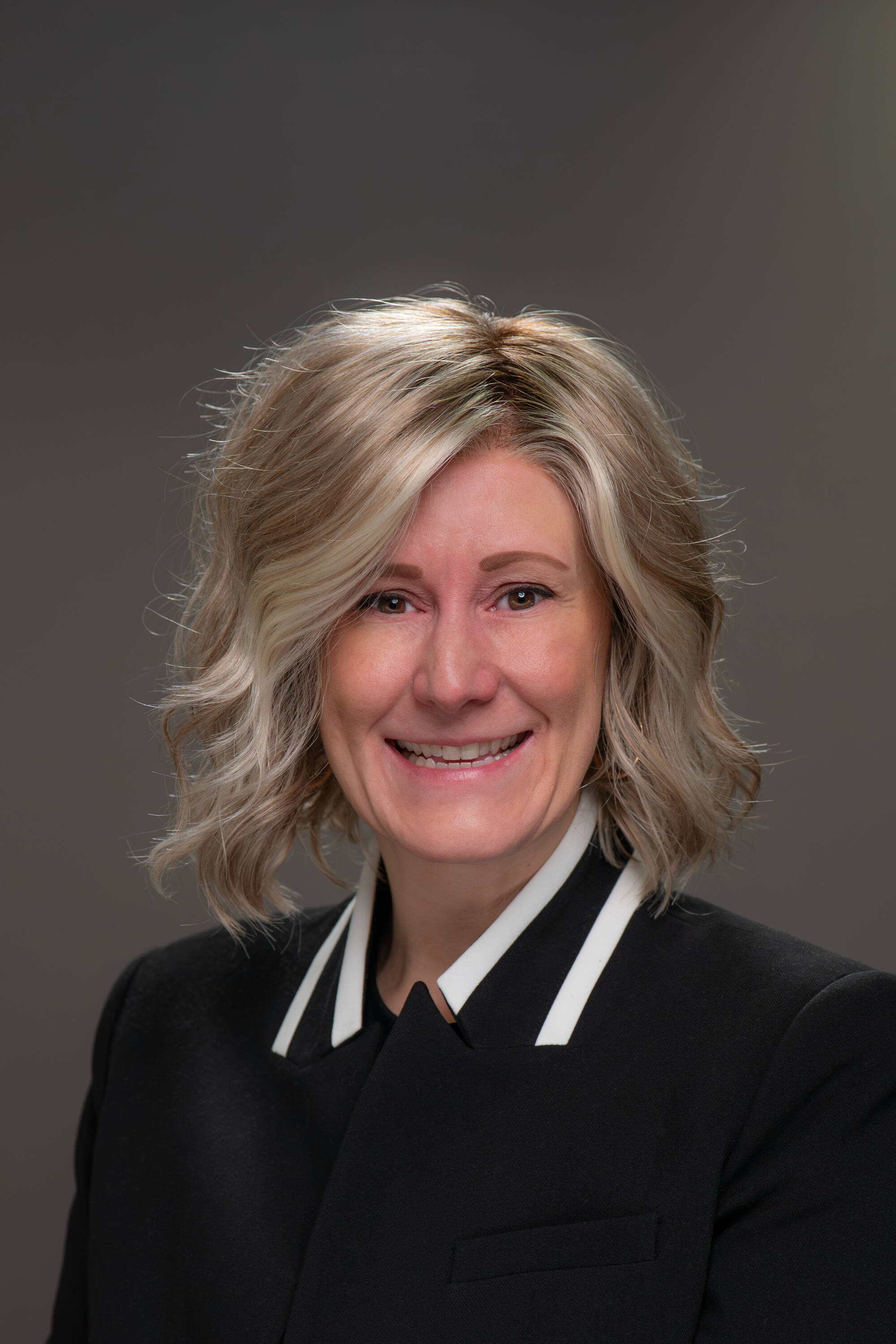
Emily Bishop
Literacy Studies
Allison Phillippe
Teaching and Learning
Christina M. Ponzio
Literacy Studies
Lindsay Stoetzel
Literacy Studies
Elizabeth Petroelje Stolle
Literacy Studies
Jennifer L Vanderground
Literacy Studies
Lindsay Ellis
English Department
Celebrating our Mentees
|
Year & Conference |
Presenters |
Presentation Title & Link |
Presentation Abstract |
|---|---|---|---|
|
2026 MRA |
Lauryn Pogliano Lauren Peterson Amaya Farhat Lindsay Stoetzel |
In this session, we will examine challenges to the design and implementation of phonics instruction including use of blending strategies, integration of dictation work, alignment of phonemic awareness skills, the role of decodable texts, and the pacing of lessons. Drawing from research and real world examples, we will collaboratively explore possibilities to adapt practice moving forward. |
|
|
2026 MRA |
Melanie Avila Lindsey Springer Elizabeth Stolle |
Vocabulary for All: Differentiating Instruction to Meet the Needs of Diverse Learners |
This interactive session will equip educators with inclusive, research-based strategies for differentiating vocabulary instruction across two key learner populations: students with disabilities and multilingual learners. Attendees will engage directly with concrete tools and techniques, drawn from current research and inclusive pedagogical frameworks, that they can use immediately to ensure vocabulary instruction is equitable, effective, and engaging for all students. |
|
2026 MRA |
Kylie Brigham Emmie Scheffler Elizabeth Stolle |
From Reading to Writing: Empowering K-5 Students through Nonfiction Literacy |
Discover practical, research-based strategies to boost nonfiction literacy in K–5 classrooms. This interactive session equips educators with tools for teaching vocabulary, comprehension, and writing using informational texts. Learn how to support students as critical thinkers, readers, and writers through engaging, classroom-ready practices. |
|
2026 MRA |
Lindsay Bowen Hadley Halterman Kiersten Christner Jennifer Vanderground |
This presentation will explore the design and implementation of effective literacy interventions for Pk-6 students with learning disabilities or ADHD with a focus on inclusive practices within general education settings. It will explore effective instructional approaches and strategies that enhance both decoding and encoding abilities, fostering collaboration between general education (GE) and special education (SE) teachers. |
|
|
2025 MCTE |
Esther Belli Becca Walsh Christina M. Ponzio |
This session explores critical moves white English-dominant educators can make to center students’ meaning-making of diverse texts. Participants will learn about middle schoolers’ investigation of racism and xenophobia in the graphic novel Huda F Are You and high schoolers’ analysis of how female hip hop artists “clap back” at misogyny. |
|
|
2025 MRA |
Tyler Peery Ellie Esman Jennifer Vanderground |
Maximizing Phonics Success: Practical Strategies for Multisensory Engagement and Orthographic Mapping |
Embracing multisensory approaches while teaching phonics is crucial for enhancing students' ability to orthographically map phonics concepts, supporting reading, spelling, and writing. The session aims to deepen understanding of approaches and impact on student learning. Moreover, we’ll share practical ideas that educators can seamlessly integrate into their classrooms next week |
|
2025 MRA |
Lexi Marzolf Angela Gonzalez-Urbina Matilyn Mumm Lindsay Stoetzel |
In this session, educators will explore approaches to integrating social emotional learning (SEL) within daily writing opportunities. The presenters will share research-based strategies to embed SEL within writing practices alongside real-world examples including connecting to students’ funds of knowledge, fostering positive environments, and promoting self-awareness and self-regulation. |
|
|
2024 MCTE |
Brianna Albert Sara Weeks Christina M. Ponzio |
A Critical Intersectional Approach to Selecting and Integrating Culturally Relevant Texts |
In this workshop-style session, we model how to critically and strategically build text sets that complement one-size-fits-all curriculum while amplifying diverse voices in literacy/ELA education. Attendees will articulate their criteria for selecting texts and explore example text sets and adaptable instructional strategies to center students’ meaning-making processes with texts. |
|
2024 MCTE |
Hannah Denbow Austin Kienutske Deanna Lazorka Christine Meyer Christina M. Ponzio |
This session will explore how to bridge together students’ rich language/literacy backgrounds with their expanding disciplinary literacies based on a partnership between a university in West Michigan and a middle school outside Detroit. Connections will be made to Michigan Department of Education’s newly adopted Disciplinary Literacy Teacher Preparation Standards. |
Questions?
If you have questions about the Mentoring Students into the Literacy Profession, please contact:
- Elizabeth Petroelje Stolle, Ph.D.Professor in Literacy StudiesLiteracy, Educational Foundations, & Technology
- Phone: 616-331-6242 Email: [email protected]