


Digital Credential Wallet
Testing the infrastructure for learner-owned, verifiable records of learning.
This initiative focused on building and testing the technical infrastructure needed to issue portable, machine-readable credentials across educational systems.
Project Summary
The Digital Credential Wallet initiative explored how institutions can create learner-owned, verifiable records of skills and learning across K–12 and higher education. Designed as a technical proof of concept, the project focused on building and testing the infrastructure required to issue portable, machine-readable digital credentials at scale.
Through this work, Grand Valley State University successfully developed and deployed a credentialing system aligned with emerging national standards and interoperable credentialing frameworks, including exploration of blockchain-based verification, translating academic experiences into a large-scale set of credential-ready learning records and piloting implementation with both university students and K–12 partners.
The initiative concluded after successfully demonstrating that digital credential infrastructure can operate at scale, positioning GVSU to better understand how learning might be recognized beyond traditional transcripts.
What We Built
Through cross-functional collaboration, the GV NextEd Co-Lab led the development and testing of the core components of a scalable digital credentialing ecosystem, including:
A secure platform for issuing machine-readable digital credentials aligned with W3C Verifiable Credentials and 1EdTech standards, with exploration of blockchain-based verification through networks such as Velocity Network Foundation.
The full undergraduate course and certificate catalog was translated into a structured, credential-ready format, enabling system-wide scalability.
Credential generation was integrated with institutional data systems, enabling automated issuance tied to student academic records.
Credentials were issued to student users based on completed coursework, validating end-to-end functionality from data to learner-facing record.
Pilot programs with regional high schools tested credential onboarding, activation strategies, and early use cases in secondary education settings.
Institutional protocols were established to support data privacy, credential integrity, and learner ownership.
At-A-Glance
Credential-able learning experiences enabled through system infrastructure.
Students included in pilot implementation.
K–12 partner school districts engaged.
University units involved in implementation.
Why This Work Mattered
Traditional academic records capture only a portion of what students know and can do. Skills developed through coursework, co-curricular experiences, and applied learning often remain fragmented across systems or invisible altogether.
The Digital Credential Wallet initiative explored how these learning experiences might be captured, verified, and shared in more transparent and portable ways. By focusing first on infrastructure, the project addressed a foundational challenge: before credentials can be meaningfully used, institutions must be able to reliably generate, manage, and validate them across systems.
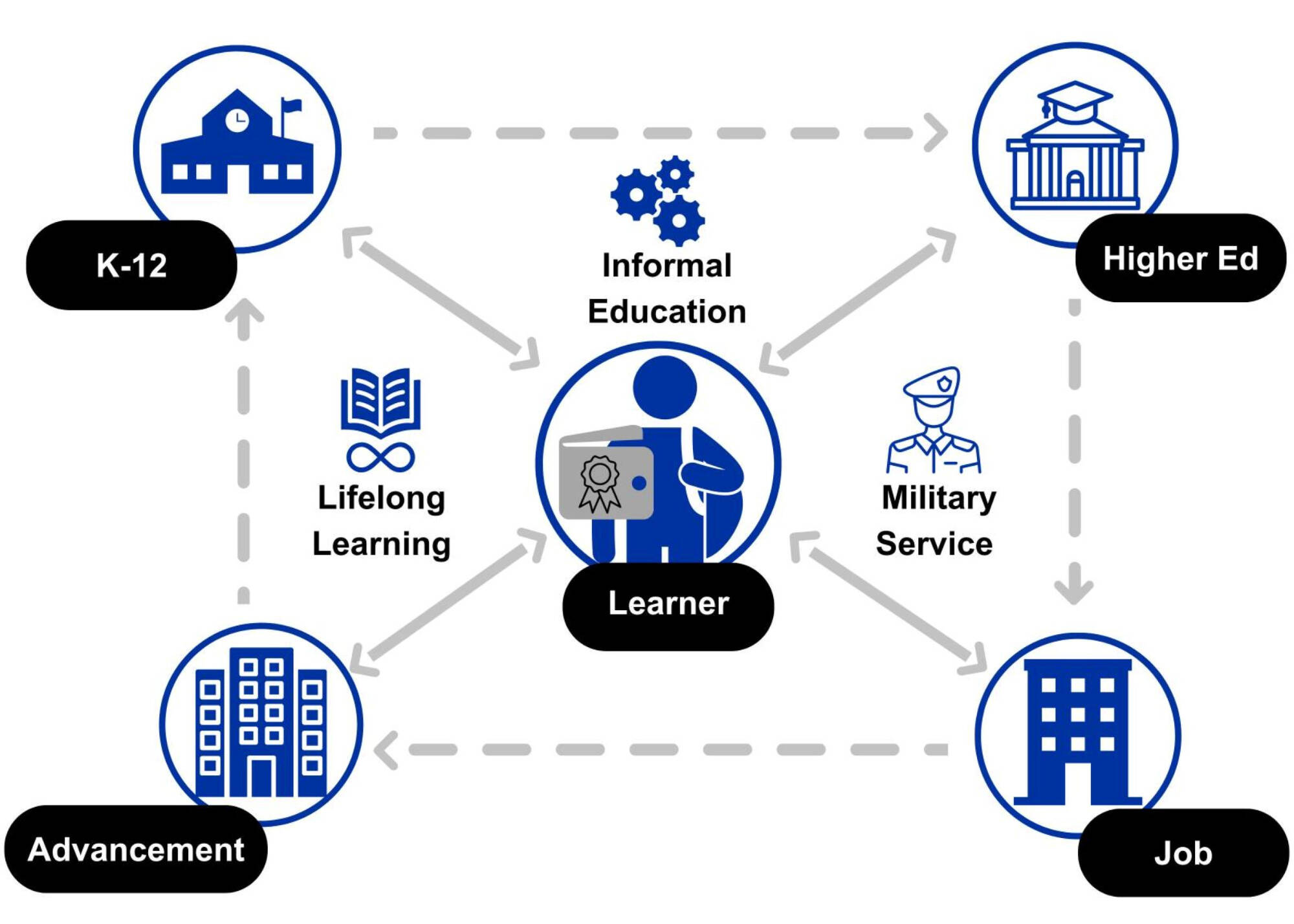
This work positioned GVSU to better understand how learner-owned records could support clearer pathways between K–12, higher education, and the workforce, while expanding how student achievement is recognized beyond the traditional transcript.
Key Insights
The Digital Credential Wallet initiative generated several key insights about how digital credentials function in practice:
Technical capability does not drive adoption. Even when credentials are available at scale, engagement depends on how they are introduced and used within the student experience.
Students were most likely to engage with digital credentials when guided by teachers, advisors, or administrators. Context and credibility mattered more than access alone.
When, where, and how credentials were introduced significantly influenced participation. Embedded, high-touch implementations led to stronger outcomes than broad, low-touch rollouts.
The value of digital credentials emerges only when they are connected to advising, curriculum, or meaningful student milestones. Without integration, credentials remain peripheral to the student experience.
Students who interacted with the system often continued to claim multiple credentials, suggesting strong perceived value once relevance was established.
Accessing Your Digital Credentials
As the Digital Credential Wallet initiative concludes, learners will continue to have access to their credentials through the platform.
Information about how to access your wallet, retrieve credentials, and next steps can be found here: success.territorium.com
If you need further assistance, please contact Territorium at [email protected].