

Transition Planning: Early Childhood Through Adulthood for Autistic Students
This article originally appeared in START Connecting in October 2025.

Why start transition planning early? The transition from high school to adulthood is a vital process for young autistic adults, and preparing for this transition can begin in early childhood. Focusing on elements of self-determination throughout primary and secondary education can improve preparation for high school, facilitate transition planning, and increase satisfaction in adulthood.
Research has demonstrated there is a strong relationship between self-determination abilities and both positive in-school and post-school outcomes for individuals with intellectual and developmental disabilities (IDD). It further suggests that starting transition planning earlier is important to ensure students have the needed skills to be independent and self-determined into adulthood (Williams et al., 2024).
The following self-determination elements are defined by I'm Determined, and can increase over time (Burke et al., 2024):
- Self-Advocacy
- Self-Awareness
- Self-Regulation
- Self-Efficacy
- Choice Making
- Decision Making
- Problem Solving
- Goal Setting
- Internal Locus of Control
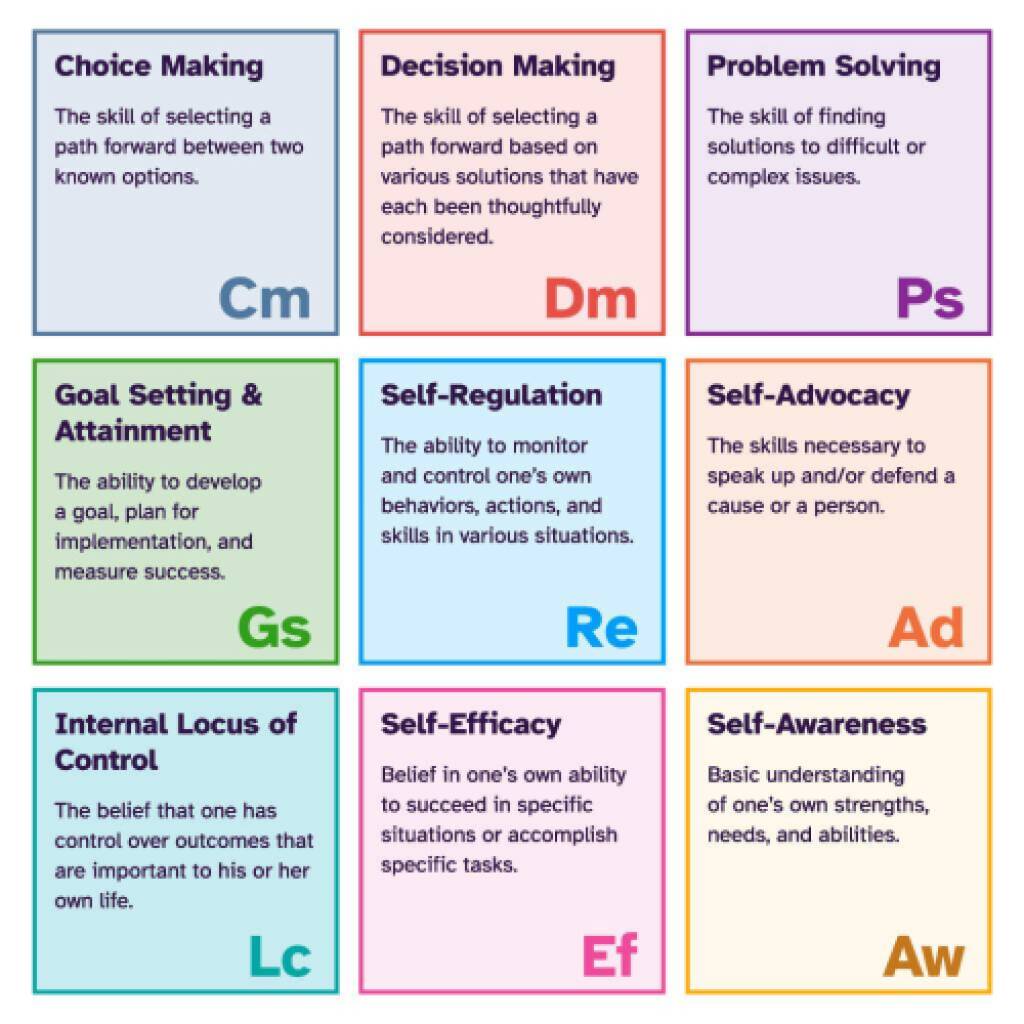
A Place to start: I'm Determined: Toolbox for Self-Determination is an excellent research-based place to start for including self-determination in programming for younger children through high school age. This resource is user-friendly for all, and includes brief self, parent, and educator assessments of the student's self-determination; an educator assessment on how integrated self-determination is in the class or schools; resources such as videos, printables, and guidance for implementing self-determination at home and school!
Self-Advocacy: An Important Self-Determination Skill
Self-advocacy is defined as the individual having the ability to recognize and communicate their own needs, preferences, and feelings and being involved in decisions that affect them. It also involves knowing about their own legal rights. Empowering individuals with autism to advocate for themselves is essential for increasing their self-awareness, physical and emotional safety, self-confidence, independence, autonomy, and recognizing interdependence.
An article from the Child Mind Institute indicates that the benefits of teaching essential self-determination and self-advocacy skills at an early age compound over time, leading to increased self-awareness, social communication, and independence skills. At young ages, autistic children may play small roles in their Individualized Education Program (IEP), by providing input on their own strengths, preferences, and areas of need. Eventually, a more active or lead role can be taken by the individual during the IEP process. For example, the student might define their own transition and employment goals (Lee et al., 2022; Test et al., 2005). Early self-advocacy planning should be a coordinated effort by the IEP team, the family, and the student to help ensure a smoother transition from primary through secondary education (Anderson et al., 2020).
Williams et al. (2024), support the importance of preparing children early for transition planning. They found positive outcomes when opportunities to practice self-advocacy, decision-making, self-awareness, self-care, and independent living were emphasized throughout a child's education versus waiting until “transition age.” These practices can also be consistently integrated into transition programming as the student moves from elementary and middle school into high school. This approach increases the likelihood of students with disabilities achieving significant milestones before graduation, such as paid employment, college acceptance, or participation in inclusive community activities (Williams et al., 2024).
Teaching and Supporting Self-Advocacy Skills
Self-advocacy also applies to physical and emotional safety. Autistic students may be bullied in person or online, may need to learn appropriate use of the internet, practice basic safety skills in the community, or learn how or what to communicate with their doctor and with others.
Some examples of topics to teach to promote self-advocacy includes:
- Understanding personal boundaries and privacy
- Knowing how and when to say “no” to unwanted touch or requests
- Recognizing unsafe situations, including recognizing trusted adults
- Knowing how to interact with emergency responders
- Recognizing and expressing feelings
- Knowing how to ask for help (Anderson et al., 2020).
To effectively self-advocate, it is essential that students learn to communicate needs, preferences, pain, disagreement, fear, discomfort and other moods or emotions. Teaching self-advocacy skills to children with autism is a foundational part of supporting their growth and independence (TN-TAN). Working on social communication skills help students navigate everyday challenges, communicate effectively about their needs and feelings, and participate meaningfully in decisions that impact their lives (Watson Institute). Key concepts such as understanding social cues, practicing self-care, and building self-awareness should be introduced early and reinforced throughout a child's educational journey. Research highlights that early opportunities to develop self-advocacy and decision-making skills lead to improved outcomes in adulthood, including higher rates of employment, college enrollment, and involvement in community activities (Williams et al., 2024; Anderson et al., 2020; Lee et al., 2022; Test et al., 2005; Qin et al., 2024).
Written By: Stacie Rulison, MS, M.Ed, BCBA, LBA, Consultant and Lisonn Delcamp, Ed.S., Autism Education & Intervention Specialist

Resources
- A Transition Guide to Postsecondary Education and Employment for Youth with Disabilities (August 2020), US Department of Education Office of Special Education and Rehabilitation Services (OSERS)
- Transition Planning for Students with Disabilities Guidance Document, Michigan Department of Education (MDE), Office of Special Education OSE
- START Home and School Independence Goals
References
- Anderson, K. A., Shattuck, P. T., Cooper, B., Roux, A. M., & Wagner, M. (2020). Prevalence and Correlates of Postsecondary Educational Participation among Young Adults with an Autism Spectrum Disorder. Autism, 24(3), 603–613.
- Burke, K. M., Shogren, K. A., Parente, A., Alsaeed, A., Myers, A. M., & Aleong, S. (2024). Self-determination research: Current and future directions. Behavioral Sciences 14(7), 613.
- Child Mind Institute. (n.d.). Learning disabilities and self-advocacy. Retrieved from https://childmind.org/article/learning-disabilities-and-self-advocacy/
- Lee, G. K., Chen, J. L., & Shogren, K. A. (2022). The role of parental advocacy in addressing service disparities for transition-aged youth on the autism spectrum. Journal of Autism and Developmental Disorders, 52(5), 2132–2143.
- Qin, L., Wang, H., Ning, W., Cui, M., & Wang, Q. (2024). New advances in the diagnosis and treatment of autism spectrum disorders. European Journal of Medical Research, 29(1), 322.
- Test, D. W., Fowler, C. H., Wood, W. M., Brewer, D. M., & Eddy, S. (2005). A conceptual framework of self-advocacy for students with disabilities. Remedial and Special Education, 26(1), 43–54.
- Williams, C. S., & Price, R. A. (2024). The case for early transition-planning for students with significant support needs: Implications for policy and practice. Inclusive Practices, 3(1-2), 34-38.