

About the START Project
Who We Are
The Statewide Autism Resources and Training (START) Project strengthens educational practices and builds expertise in schools across Michigan through collaborative partnerships, professional learning, coaching, and creating and sharing resources.
We partner with schools, families, and community organizations to support inclusive learning environments where autistic and neurodivergent students are valued members of their school communities.
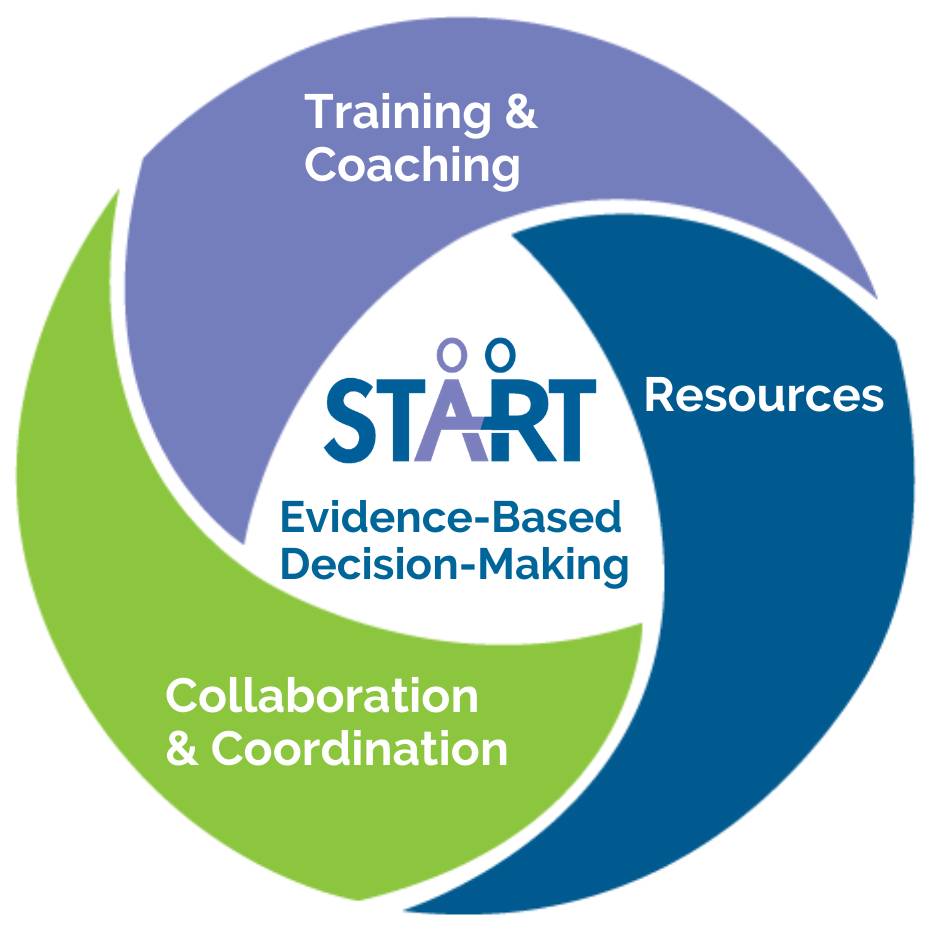
Supporting students means supporting the people and systems around them. We partner with schools to translate evidence into everyday practice and build the knowledge, skills, and systems needed to create and sustain effective learning environments. By strengthening educational practices and school systems, we support greater access to learning, meaningful inclusion, connection with peers, and self-determination, leading to more choices and opportunities for students throughout their lives.
START is housed in the Grand Valley State University Autism Education Center and has been funded by the Michigan Department of Education Office of Special Education since 2001.
What We Do
Regional Collaborative Networks (RCN)
START connects educators, school leaders, families, and community partners across Michigan through the RCN. These networks provide a structure for sharing expertise and resources, coordinating efforts, and building regional and local capacity. By connecting leaders and teams across regions, the RCN expand access to expertise and strengthen educational opportunities for autistic and neurodivergent students throughout Michigan.
Professional Learning
START provides professional learning to strengthen the knowledge and skills of educators and teams supporting autistic and neurodivergent students. Areas of focus include:
- Early childhood practices
- Neuroaffirming practices
- Communication
- Academic engagement
- Positive behavior support
- Peer support
- Teaming and collaboration
- Secondary transition
Building Local Expertise and Coaching
START prepares trainers, coaches, and other educational leaders to support educators within their own schools and regions. This builds local expertise and helps effective practices become part of everyday school systems and routines.
Resources and Tools
We develop and share practical, evidence-based resources and tools that help educators reflect on current practices, make informed decisions, plan for improvement, and implement effective programs and supports.
What Values Guide Our Work
Capacity Building
Inclusion
Collaboration
Evidence-Based Practice
Increasing the knowledge and skills of educators, coaches, and teams to build local expertise, strengthen systems, and support the implementation and sustained use of effective practices.
Creating communities where autistic and neurodivergent students are valued members, feel a sense of belonging, and have opportunities to learn and participate alongside their peers.
Partnering with families, schools, community organizations, and state initiatives to share ideas and resources, coordinate efforts, and work toward common goals.
Using the best available research, professional knowledge, and information about students and school contexts to guide decisions and practices that support positive outcomes for students.
START-isms are the pithy phrases that represent the values that guide our work.
Where We Focus Our Work
START works across educational settings from early childhood through secondary transition, with an emphasis on inclusive education, evidence-based practices, and collaboration among educators, families, and other partners.
START provides professional learning, coaching, and resources that help early childhood teams create inclusive learning environments and use evidence-based practices from the start. Areas of focus include engagement in learning and play, following classroom routines, communication, peer interaction, positive behavior support, regulation, and early independence.
START helps schools strengthen inclusive educational practices so autistic and neurodivergent students have access to the general education curriculum, instruction, and learning alongside their peers. Areas of focus include academic engagement, communication, positive behavior support, peer relationships, independence, and self-determination.
START helps school teams strengthen transition planning and prepare students for greater autonomy, independence, and participation in adult life. This includes a focus on self-determination, social connections, employment, community participation, and coordination between schools, families, and adult service systems.
START provides information and resources that help families understand educational practices, participate in school planning and decision-making, and collaborate with educators and school teams. Family perspectives are also important to START’s work in developing resources and strengthening educational practices.
START works with schools, Regional Collaborative Networks, state initiatives, and community partners to connect efforts across Michigan, share expertise and resources, and expand access to evidence-based practices.
Why START Matters
START invests in the people who support students by building local expertise through professional learning, coaching, and evidence-based resources. This approach helps make evidence-based practices part of everyday systems and routines, creating meaningful and lasting change in schools.