

Independence Facilitators in Instruction
When looking closely at the paraeducator's role in instruction, it centers on supporting students' access and active participation in grade-level learning. Under the guidance and direction of the instructional professional/teacher, paraeducators create access to the general curriculum using supports and strategies that align with their IEP (Individual Education Program) goals.
The Role of Paraeducators in Promoting Engagement
Promoting meaningful student engagement is primary. Paraeducators support engagement by connecting with content, participating in learning experiences, and interacting with classmates and materials in ways that work for them. In this role, paraeducators become Independence Facilitators and partners in engagement. Students are presumed competent and included in the learning.
Did you know that under the direction of a supervising teacher, paraeducators can promote engagement and independence by supporting grade-level curriculum development and instruction? These include:
- Assisting in the development of materials for instruction
- Complementing instruction by assisting with individualized support during instruction
- Supplementing instruction by assisting with a follow-up activity with a small group or an individual
- Reinforcing the instruction by assisting the teacher with an activity
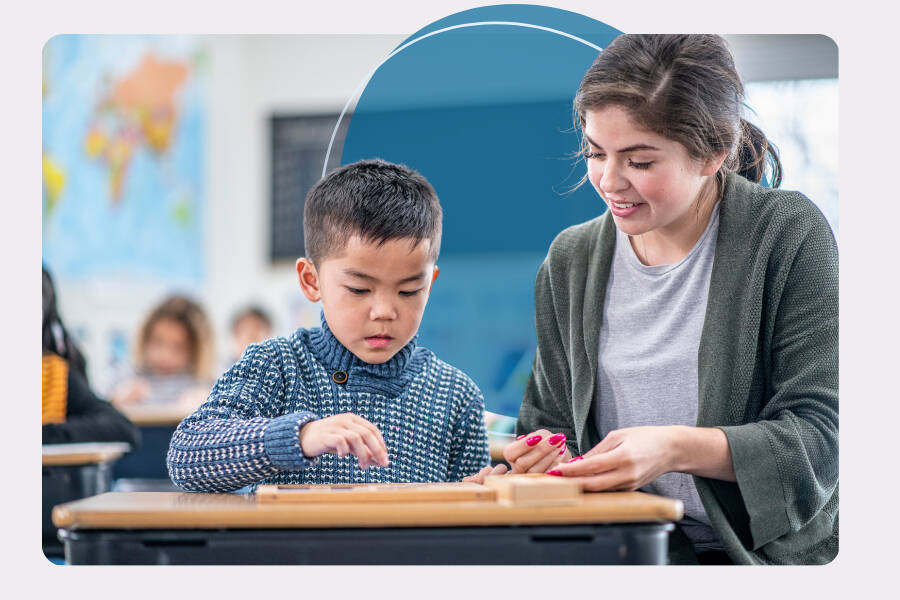
Supporting Engagement and Independence with Academics
1. Maintain high expectations and build relationships
Students are more likely to engage when adults presume competence, communicate high expectations, and build trusting relationships that support participation and learning.
2. Use a variety of strategies for engagement
Intentional engagement strategies help promote interactions, create opportunities to respond, and support meaningful access to the grade-level curriculum.
3. Monitor engagement and provide specific feedback and praise
Ongoing observation and specific feedback help reinforce learning, support independence, and guide decisions about when to adjust or fade supports.
START Tools and Resources
Paraeducator Academic Support Schedule and Organization Tool
This tool is designed to support paraeducators and their supervising teacher/educator in clarifying the paraeducator's daily responsibilities for providing academic support to students.
Related Bites
Presume Competence - Adult Support (coming soon!)
Tools and Resources
- Michigan Department of Education (MDE):
- Vanderbilt Kennedy Center: Communicating with Families: Tips for Paraprofessionals
References
Foster, S. (2023, January 23). Facilitating and assessing student engagement in the classroom. Center for Teaching & Learning, University of Colorado Boulder. https://www.colorado.edu/center/teaching-learning/2023/01/23/facilitating-and-assessing-student-engagement-classroom
Michigan Department of Education. (n.d.). Privacy and access to records fact sheet [PDF]. Michigan.gov. https://www.michigan.gov/mde/-/media/Project/Websites/mde/specialeducation/familymatters/FM1/Privacy_FactSheet.pdf?rev=a21402ae6b5144d3ab6c808742c04544
Michigan Department of Education. (n.d.). Utilization of noncertified personnel. Michigan.gov. https://www.michigan.gov/mde/services/ed-serv/ed-cert/permits-placement/noncertified
U.S. Department of Education. (n.d.). FERPA. StudentPrivacy.Ed.Gov. https://studentprivacy.ed.gov/ferpa
Vanderbilt Kennedy Center. (n.d.). Communication with families: Paraeducator tips [PDF]. https://vkc.vumc.org/assets/files/triad/tips/Communication_w_families_para.pd
START presents these resources for informational purposes only; no endorsement or recommendation is expressed or implied. Any use of these materials must be premised on the user's own professional judgment as to the appropriateness for their district, community, and student(s), and be undertaken in accordance with all applicable district policy.