

Maintaining High Expectations and Using Least Intrusive Supports
Research shows that students learn best when they are valued, supported, and held to high expectations, regardless of how they communicate or how their abilities have traditionally been measured.
This approach emphasizes presuming competence, maintaining high expectations, and fostering independence, with paraeducators acting as Independence Facilitators who support students in accessing grade-level learning and participating fully in general education classrooms. This perspective challenges common assumptions and replaces them with research-based perspectives that support authentic inclusion in general education classrooms.
Many educational practices are built on assumptions that unintentionally restrict student learning. Common examples include:
- Assumption: Students who are not able to learn the general education curriculum should only learn functional life skills, because the curriculum is not seen as beneficial to them.
- Assumption: If a student cannot communicate effectively, educators make judgments about their abilities based solely on what they currently know.
- Assumption: Intelligence can be measured, which also means that significantly subaverage intelligence can be measured.
- Assumption: Students with significantly subaverage intelligence cannot access the general education curriculum and therefore do not need to be included in general education classrooms.
Shifting Our Thinking: New Assumptions
Research and evidence support a more inclusive and strengths-based understanding of students and their learning potential.
- Intelligence is not a single, fixed measurable characteristic.
- Students have different talents and strengths.
- Students learn best when they feel valued, are supported intentionally, and are held to high expectations.
- When students cannot currently communicate, presume competence and design programs based on that belief.
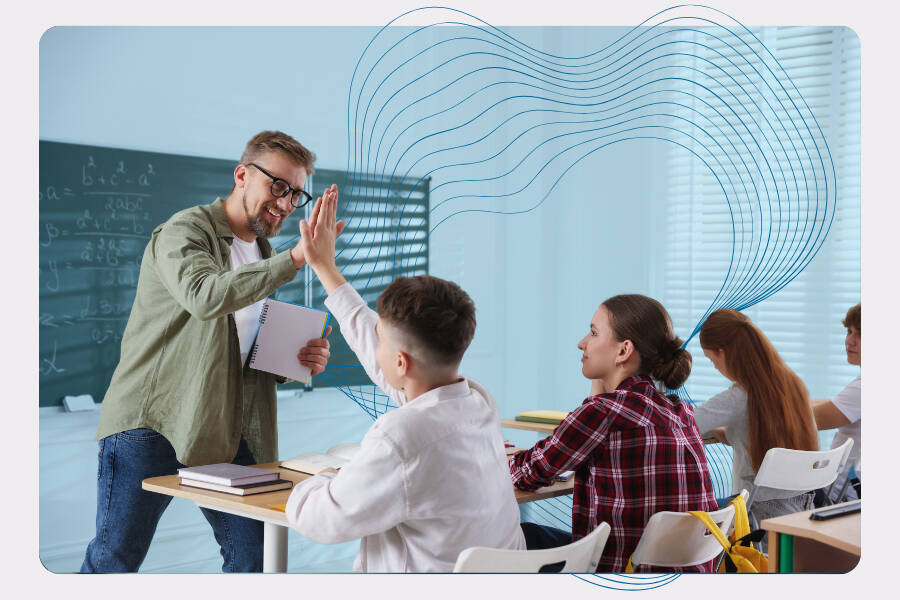
Why This Matters
When educators and paraeducators embrace these new assumptions, students experience:
- Greater engagement: Students participate actively when they feel capable and supported.
- More meaningful instruction: Lessons connect to students' strengths, interests, and potential.
- Authentic inclusion: Students are included in general education in ways that matter, not just symbolically.
- Expanded learning opportunities: Holding high expectations and fostering independence creates pathways for growth and skill development across all domains.
Paraeducators, acting as Independence Facilitators, play a key role in helping students access learning, develop self-reliance, and fully participate in classroom experiences.
By consistently applying these assumptions, schools create learning environments where all students have meaningful access to the general education curriculum.
Supporting Student Communication
Presuming competence includes being open to learning about the unique ways each student communicates. Taking the time to understand each student's communication style allows you to create more opportunities for engagement and participation. By supporting academics with intentional, respectful interactions, we can simultaneously promote communication and foster meaningful learning for all students.
Resource:
National Joint Committee for the Communication Needs of Persons with Severe Disabilities (NJC): Communication Bill of Rights
- How might these rights apply to supporting students academically?
- How might this list guide or remind you of best practices in your work as a paraeducator?
START Tools and Resources
- Classroom Environment and Teaching Assessment (CETA) - Adult Support and Interactions Section
- Presume Competence - Adult Support (coming soon!)
Tools and Resources
- Texas Complex Access Network: Fidelity Checklist and Reflection Tool: Presuming & Constructing Competence
- TEDx Talks - Shelley Moore: The Importance of Presuming Competence
- National Joint Committee for the Communication Needs of Persons with Severe Disabilities (NJC): Communication Bill of Rights
References
Jorgensen, C. M. (2018). It's more than “just being in”: Creating authentic inclusion for students with complex support needs. Paul H. Brookes Publishing Co.
Moore, S. (2016, January). Under the table: The importance of presuming competence [Video]. TEDxLangleyED. YouTube. https://youtu.be/AGptAXTV7m0?si=NVQe1GfbQOmMCCSQ
National Joint Committee for the Communication Needs of Persons with Severe Disabilities. (2024). NJC Communication Bill of Rights (3rd ed.). https://www.asha.org/njc
Texas Education Agency. (2021). Fidelity checklist and reflection tool: Presuming and constructing competence [PDF]. https://spedsupport.tea.texas.gov/sites/default/files/2023-07/fidelity_checklist_and_reflection_tool_presuming_constructing_competence.pdf
Vanderbilt Kennedy Center. (n.d.). Communication with families: Paraeducator tips [PDF]. https://vkc.vumc.org/assets/files/triad/tips/Communication_w_families_para.pd
START presents these resources for informational purposes only; no endorsement or recommendation is expressed or implied. Any use of these materials must be premised on the user's own professional judgment as to the appropriateness for their district, community, and student(s), and be undertaken in accordance with all applicable district policy.