

Promoting Inclusion and Belonging
What is meaningful inclusion?
Meaningful inclusion is demonstrated when people with disabilities are involved in natural, everyday activities and given opportunities to be involved in ways similar to their peers who do not have a disability. The goal is to make society more inclusive for everyone. Inclusion is not a time of day or a place. It is a sense of belonging in your community.
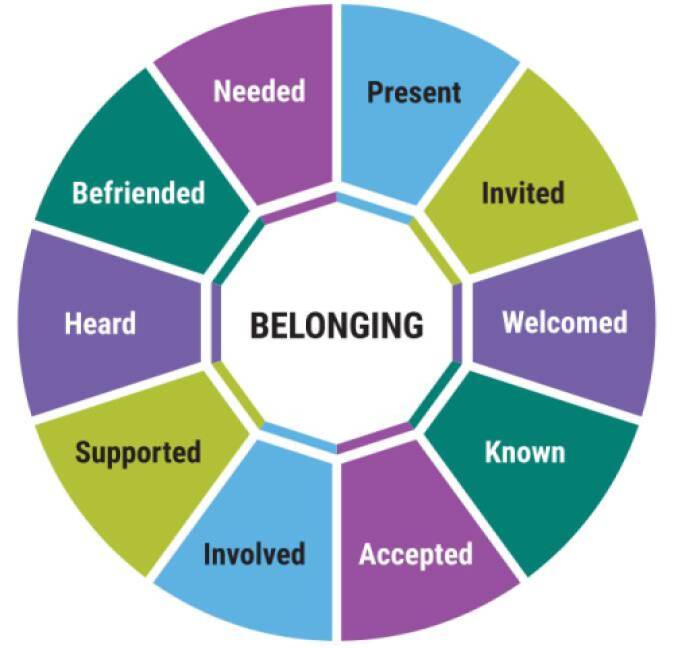
Dimensions of Belonging
(Image from Ties Center)
What is belonging?
A sense of belonging is the psychological feeling of belonging or connectedness to a group or a community. There is a feeling of being comfortable as part of a particular group and having a positive relationship with the other members of the group because they welcome and accept you. A sense of belonging is one of humanity's most basic needs.
What is inclusive education?
Inclusive education is an educational system that welcomes all students and supports them to learn across all environments in the school setting. “Inclusive Education means we no longer accept that separate classrooms, separate schools, and separate lives are in the best interest of any student. Separating people by ability disadvantages everyone. Belonging is a human need. Our educational system, practices, and spaces, need to be reimagined” (Inclusive schooling).
→ Use the Belonging Reflection Tool to explore your school community's strengths and areas for growth to promote true belonging in your school.
What are the benefits of inclusion?
Inclusion has benefits for all students with and without disabilities. It enhances the ability of non-disabled students to work together, understand and value different perspectives, and think critically. (Benefits of inclusive education from UCS)
How do we move toward successful inclusive education?
To achieve successful inclusion requires a comprehensive approach and a fully engaged school staff, IEP team, and administrative leadership.
- Systems change – commitment of resources and prioritization; ongoing monitoring
- Support – teachers acquire skills and use resources to create an inclusive classroom; students to learn how to be successful across learning settings including access to technologies and skills
- Culture change – change in attitude and beliefs, respect for diversity, high expectations, and inclusive mindset to promote acceptance and safety
- Partnerships – administrators, teachers, parents, students, community
“It is important to note that one part of inclusion involves creating true accessibility, rather than simply providing accommodations.
A way to accomplish this is through universal design, which includes designing products and environments to be useable to the greatest extent possible by everyone, regardless of age, ability, or status in life” (youth.gov).
The Individuals with Disabilities Education Act (IDEA) is a civil rights law that provides protections and entitlements to students with disabilities. Most importantly students with IEPs are entitled to a free appropriate public education (FAPE) in the least restrictive environment (LRE). Although FAPE is the hallmark of the IDEA that must never be compromised or denied, LRE is the vehicle that ensures a student with a disability can receive meaningful educational benefit and a FAPE.
The IDEA is clear that students with disabilities have a right to be educated alongside their nondisabled peers, to the maximum extent appropriate, in the building they would have been educated in if not for their disability. IDEA presumes general education is the LRE for each student with a disability. Therefore, annually LRE considerations must start with general education.
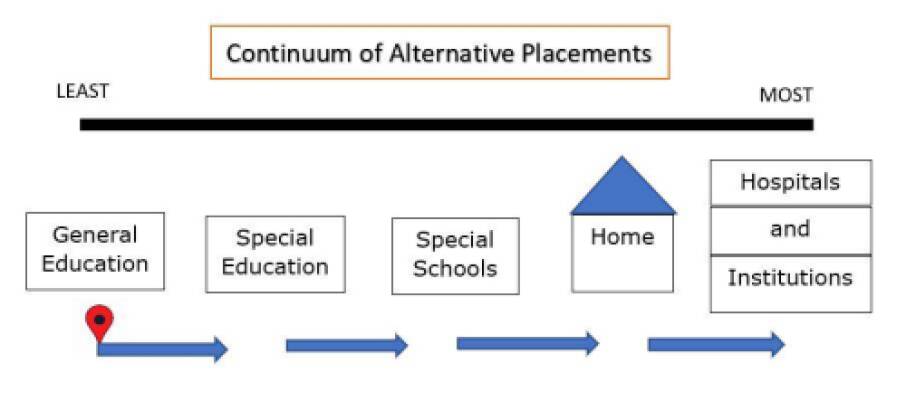
The IDEA requires state education agencies (SEAs) to carry out activities to ensure teachers and administrators in all public agencies are fully informed about their responsibilities for implementing the LRE requirements under 34 CFR §300.114 and are provided with technical assistance and training necessary to assist them in implementing LRE requirements. LRE requirements include the availability of a continuum of alternative placements under 34 CFR §300.115, placement determinations under 34 CFR §300.116, nonacademic and extracurricular activities under 34 CFR §300.117, and placements in public and private institutions under 34 CFR §300.118.
MDE OSE is committed to ensuring students with disabilities, as defined under the IDEA, receive a meaningful educational benefit in their LRE, interact with their typical peers, and access the general education curriculum. MDE OSE believes this leads to meaningful outcomes where adults with disabilities have the opportunity to live independently, exert control and choice over their own lives, and fully participate in and contribute to their communities. Therefore, MDE OSE maintains compliance and monitoring efforts while simultaneously collaborating with partners across the state to identify and support best practices related to ensuring students with an IEP receive a FAPE in the LRE.
The emphasis on LRE as an ongoing priority area includes the development and implementation of training materials and tools to build awareness of LRE requirements, ensuring LRE decisions are being made consistent with IDEA, and each student receives a FAPE in the LRE. These materials are intended for public agencies to use with general education and special education teachers, providers, administrators, board of education, and other educational personnel.
- START Project: FAPE in the LRE
- Least Restrictive Environment (LRE) Continuum
- MDE Case Study: LRE
- Individualized Education Program Development: Present Level of Academic Achievement and Functional Performance (PLAAFP) (michigan.gov)
- Individualized Education Program (IEP) Development: Special Education Programs and Services (michigan.gov)
- Individualized Education Program (IEP) Development: Supplementary Aids and Services (michigan.gov)
- IEP Team Consideration of the Need for Extended School Year Services (michigan.gov)
- Family Matters: Educational Placement and the Least Restrictive Environment (LRE)
- IEP Development
- Michigan Alliance for Families: The Individualized Education Program Inclusion: FAPE in the LRE
- Michigan Alliance for Families: LRE and Placement
- Special Populations: Diversity, Equity, and Inclusion
Featured Inclusive Practice Leaders:
- Erik Carter
- Jenny Kurth - Selected inclusion research
- Julie Causton - Inclusive Schooling
- Paula Kluth - Inclusion Rules and YouTube Channel
- Shelley Moore - 5 Moore Minutes
- Torrie Dunlap - Kids Included Together
- Dan Habib - Disabling Segregation TED Talk
- Special Olympics and Unified Champion Schools (UCS)
- Think inclusive
Resources
- Institute for Community Inclusion
- Maryland Commission for Inclusive Education (MCIE)
- PACER's National Bullying Prevention Center - Inclusion Ideas
- SWIFT Education Center
- TASH
- Think inclusive Podcasts
- TIES Center
- Inclusive Instruction
- Core Values & Outcomes
- 10 reasons to support inclusive school communities for all students
- Belonging Reflection Tool
- Foundations of Inclusion TIPs
- TIES Lessons for All: The 5-15-45 Tool
- Comprehensive Inclusive Education: General Education & the Inclusive IEP
- Developing IEPs that Support Inclusive Education for Students with the Most Significant Cognitive Disabilities
- Inclusive IEP planning worksheet
- Michigan Preschool Inclusion Collective Action Plan
- Policy Statement: Inclusion of Children with Disabilities in Early Childhood Programs
- US Department of Education Dear Colleague Letter on Preschool Least Restrictive Environments (2017)
- NAEYC Preparing Young Children for the Inclusion of Children with Disabilities into the Classroom
- Inclusion Strategies for Child Care Programs
- Pacer Center - Inclusive Postsecondary Education for Students with Intellectual Disabilities
- Think College Institute for Community Inclusion - Embracing Dignity of Risk in Inclusive Postsecondary Education Programs
- The Inclusive Education Checklist, A Self-Assessment of Best Practices by Villa and Thousand
- The Inclusion Toolbox by Kurth & Gross
- Inclusive education in a strengths-based era by Wehmeyer and Kurth
- Reimagining Special Education: Using Inclusion as a Framework to Build Equity and Support All Students by Rufo and Causton
- Don't We Already Do Inclusion?: 100 Ideas for Improving Inclusive Schools by Kluth and Fiutak
- You're Going to Love This Kid!": Teaching Students with Autism in the Inclusive Classroom, Second Edition by Kluth and Marcus (Third Edition coming soon!)
- Your students My students Our students: Rethinking equitable and inclusive classrooms by Jung, Frey, Fisher, and Kroener
- Beyond Inclusion: How to Raise Anti-Ableist Kids by Carrie Hahn
- 100-ish Inclusive Children's Books on Autism and Neurodiversity