

Peer Friendship Formula
The Peer Friendship Formula is the core of Peer to Peer. This program brings students with and without disabilities and their classmates together to engage in shared activities. These activities may occur inside or outside the classroom; they may be academic or social. Within the context of Peer to Peer, these opportunities occur regularly over time, and with repetition, they foster connections.
The Peer to Peer experience must also be nested in sufficient support and valued roles. These parentheses ensure that the program is framed in a participation model. While Peer to Peer is a program about and for kids, adults must still provide ongoing sufficient support. They model language, provide feedback, respond to questions, and offer flexible options to meet individual student needs.
As participants in the program, all students have valued roles. Their voices are engaged and respected. No group is better or less than others, no group is identified as helpers while others are helpees. Students are equally valued and they recognize and appreciate what they learn from one another.
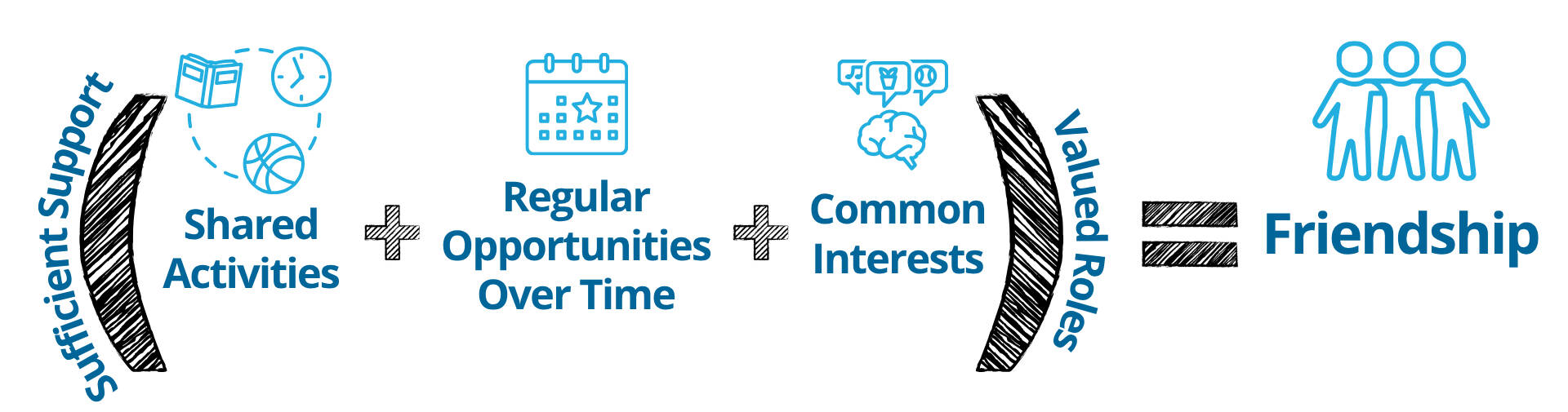

Using this equation, peer friendships are likely to develop and flourish exponentially.
This structure may seem artificial at first, but it is similar to how families enroll their young children in extracurricular activities. As their child engages in these repeated, shared experiences with other children, they find commonalities and begin to build friendships. The process is similar for Peer to Peer. With repeated opportunities together, students find they share common interests, including topics they both enjoy, classroom experiences they have in common, and mutual interests in games and extracurricular activities. The sum of these experiences is the potential for authentic friendships.