

Curriculum Strategies, Accommodations, and Modifications
Paraeducators support student learning by helping students develop strategies that build independence and engagement. Instead of completing tasks for students, the goal is to support students in learning strategies they can use to solve problems, monitor their progress, and reflect on their learning.
Rather than only providing a curriculum strategy, support the teaching of the strategy so students can learn to use the strategy to become more independent and enhance their own engagement.
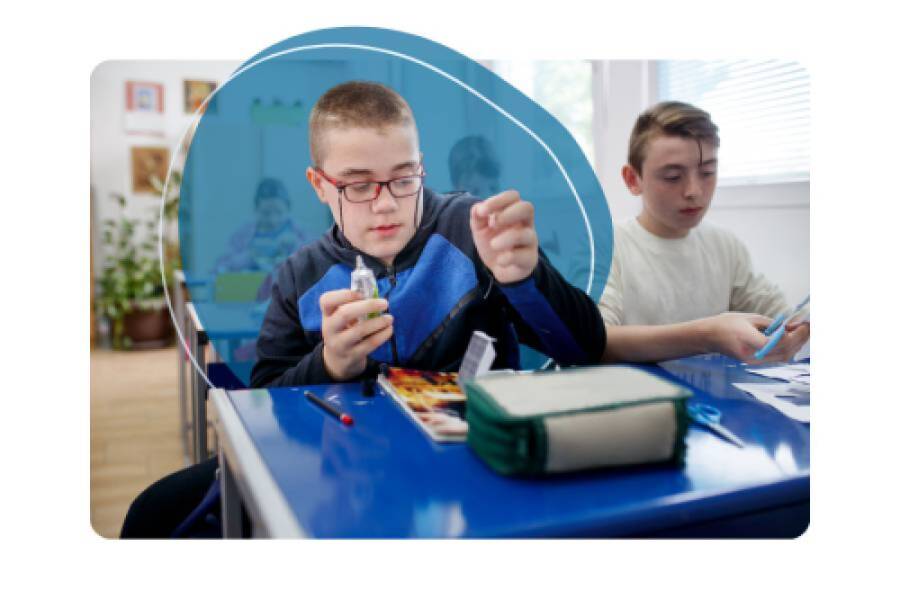
Supports and Strategies: Fade or Keep?
Not all supports serve the same purpose. Some are temporary, while others become long-term strategies that students use throughout their lives.
Temporary supports are used while students are learning a new skill or process. As students gain confidence and independence, these supports may gradually be reduced. Examples of temporary supports include:
- Step-by-step checklists
- Guided prompts
- Temporary visual reminders
- Structured practice supports
Long-term strategies become valuable tools students continue using in school and everyday life. Examples of long-term strategies include:
- Visual schedules
- Communication supports
- Organizational tools
- Maps or directions
These strategies may evolve as students grow but continue to support independence.
→ Paraeducator Tip
Observe and record how the student responds to each support, and share what you notice with the teacher. The teacher and educational team include this information when deciding whether a support can be reduced, adjusted, or should remain as a long-term strategy.
Common Academic Supports
Many classrooms use universal supports that help students access instruction and stay engaged in learning. These supports make learning more accessible for a wide range of learners. Examples of common supports include:
- Sentence starters
- Graphic organizers
- Visual aids and pictures
- Manipulatives
- Breaking directions into smaller steps
- Math reference charts or notes
- Assignment checklists
- Timers
- Digital accessibility tools such as speech-to-text or text-to-speech
- Extended time for assignments
Scaffolded Supports
Scaffolding provides structured assistance that helps students complete tasks and understand new concepts while building independence.
Effective scaffolded supports are flexible and adaptable so they can meet the changing needs of students during learning. They are designed to promote active participation and help students engage more deeply with the task or concept being taught. Scaffolded supports can be used during individual, small-group, or whole-class instruction depending on the learning situation. As students gain confidence and independence, these supports are gradually reduced. Examples of scaffolded strategies include:
- Think-alouds
- Visual supports
- Response cards
- Graphic organizers
- Sentence stems
- Anchor charts
- Guided note-taking
- Opportunities for students to discuss and share ideas
→ Paraeducator Tip
Scaffolded supports should help students build confidence and independence, not create long-term dependence.
Why Visual Supports Matter
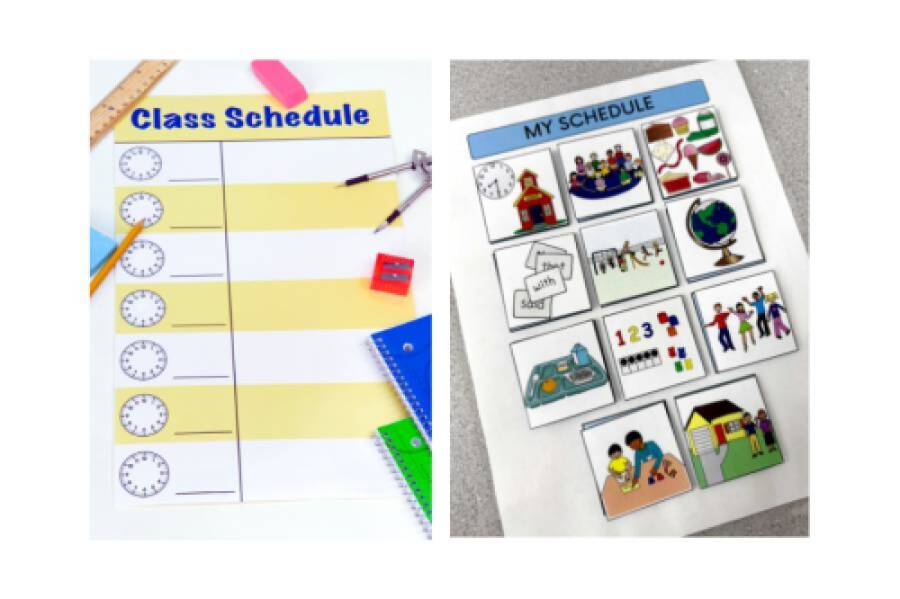
Visual supports can help students better understand expectations and organize their thinking.
Visual supports can:
- Capture and maintain attention
- Provide clear directions
- Organize information
- Increase predictability in routines
- Reduce anxiety and cognitive load
- Support independence
Examples include visual schedules, diagrams, charts, and step-by-step visuals.
Providing Effective Feedback
Feedback helps students understand what they are doing well and what steps they can take to improve. Effective feedback should be:
- Goal-directed – connected to the learning objective
- Specific – clearly explains what worked and what could improve
- Timely – provided while the student is still engaged in the task
- Respectful and positive – encourages continued effort
Accommodations and Modifications
Accommodations and modifications are both academic adaptations that support student learning, but they serve different purposes.
Accommodations
Accommodations change how students learn or demonstrate learning without changing the learning goals or grade-level expectations. Examples include:
- Extended time
- Alternative response formats (speech-to-text, oral responses)
- Changes to the learning environment
- Breaking assignments into smaller steps
Modifications
Modifications change what students are expected to learn or adjust the performance expectations. Examples include:
- Reduced assignments that remove key concepts
- Alternate learning goals for a class activity
- Different assessment expectations
The Role of Paraeducators
Teachers are responsible for planning instruction and introducing new learning. Paraeducators support students by reviewing and reinforcing the instruction provided by the teacher.
This support may include reviewing essential concepts, reinforcing strategies and skills, and connecting learning to students' interests and strengths. Reviewing and reinforcing learning helps students build confidence, stay engaged in learning, and develop independence over time.
Reflection
Take a moment to reflect on your role in supporting student learning:
- What strategies have helped you stay organized or understand new information?
- When might scaffolded supports help a student become more independent?
- What type of feedback helps students stay motivated while improving their work?
- How might student interests be used to strengthen engagement?
Tools and Resources
- Understood for All: 7 Ways to Praise Students
References
Kennedy, M. J., Cook, L., & Morano, S. (2020). HLP 14: Use Cognitive and Metacognitive Strategies. https://highleveragepractices.org/2017-first-edition-materials/hlp-14-use-cognitive-and-metacognitive-strategies
Kennedy, M. J., Peeples, K. N., Romig, J. E., Mathews, H. M., & Rodgers, W. J. (2018). High-leverage practices #8 & #22: Provide positive and constructive feedback to guide students' learning and behavior. https://highleveragepractices.org/2017-first-edition-materials/hlps-8-and-22-provide-positive-and-constructive-feedback-guide-students-learning-and-behavior
Kennedy, M. J., Romig, J.E., & Peeples, K. (2021). HLP 15: Use Scaffolded Supports. https://highleveragepractices.org/2017-first-edition-materials/hlp-15-use-scaffolded-supports
Paroff, H., Novak, K., & Poling, A. (n.d.). How all teachers can support students with disabilities in general education classrooms. Washington Association of School Administrators & Novak Education. https://www.novakeducation.com/hubfs/Supporting%20Students%20with%20Disabilities%20in%20Comprehensive%20MTSS%20Systems.NovakEducation.pdf
Reed, D. K. (2016, August 17). Providing specific feedback. Iowa Reading Research Center. https://irrc.education.uiowa.edu/blog/2016/08/providing-specific-feedback
Understood for All, Inc. (2024). 7 ways to praise students. https://cdn-assets.understood.org/p0qf7j048i0q/5LrzD1fCvTE3Ej1eZa0og2/ed82d2caeb2aac44bfe1420c1406fb16/7_ways_to_praise_students_Understood_Accessible.pdf
START presents these resources for informational purposes only; no endorsement or recommendation is expressed or implied. Any use of these materials must be premised on the user's own professional judgment as to the appropriateness for their district, community, and student(s), and be undertaken in accordance with all applicable district policy.