

Print and Drawing Cabinet: José Guadalupe Posada
José Guadalupe Posada (1852-1913) was a printmaker and engraver who lived and worked in a period of Mexican history characterized by social and political upheaval. In 1888, he moved to Mexico City, where he quickly established himself and created some of his most important works. Posada illustrated historic scenes, board games and commercial items, religious images, various books, and newspapers.
He is most famous for his use of calaveras (depictions of skulls and skeletons) to satirize and mock the corruption of the wealthy and political elite. La Calavera Catrina (Skull of the female dandy), his most iconic image, was created in 1910 at the start of the Mexican Revolution. The image shows a grinning skeleton wearing a woman’s feathered hat, pointing out that death comes to everyone, even those in the upper class.
Posada died in 1913, before the end of the Mexican Revolution, poor and relatively unknown. It wouldn’t be until the 1920s and later that he would become recognized as one of Mexico’s greatest printmakers of all time.
The GVSU Art Museum Print and Drawing Cabinet includes over 350 images by Posada, including original prints and restrikes. The restrike prints were created using the original plates and press used by Posada, today owned by the family of Antonio Vanegas Arroyo, a publisher and printer with whom Posada worked.
Explore José Guadalupe Posada prints
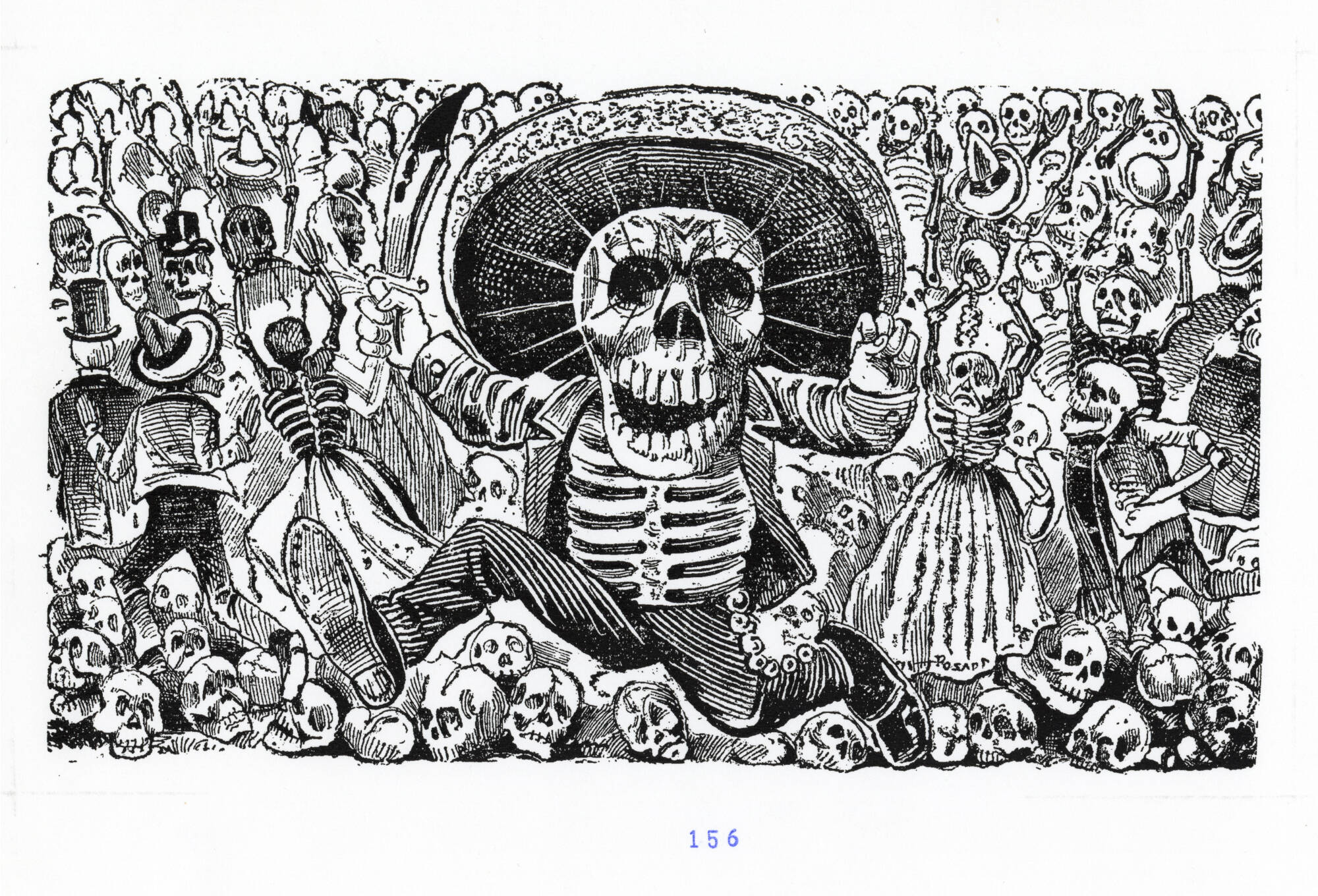
José Guadalupe Posada, Calavera Oaxaqueña, restrike print, 2004, 2005.00156.1.
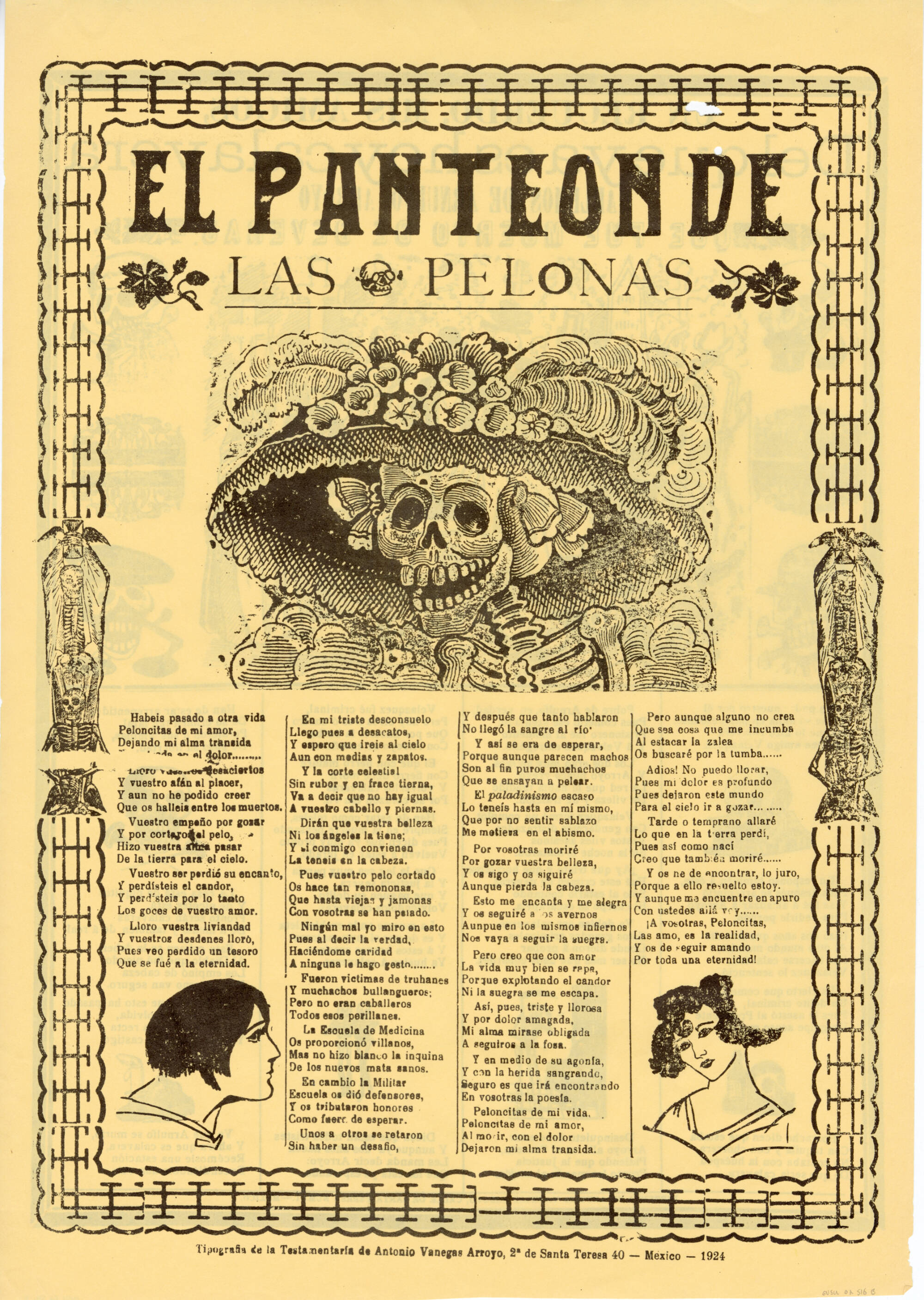
José Guadalupe Posada, El Panteón de las Pelonas, newsprint, ca 1900, 2002.516.1b.
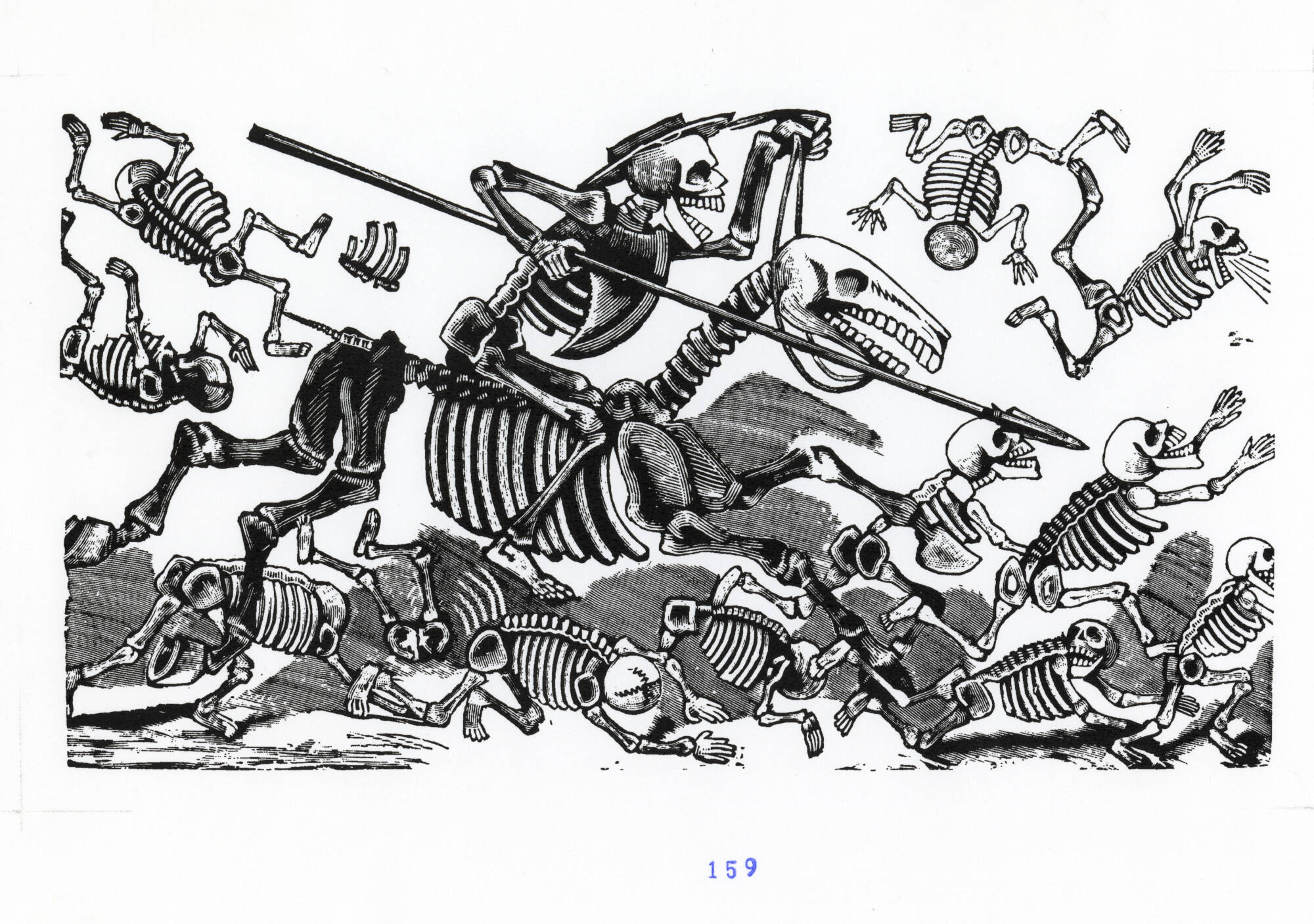
José Guadalupe Posada, Calavera de Don Quijote, restrike print, 2004, 2005.00159.1.
Resources in the Collection

José Guadalupe Posada
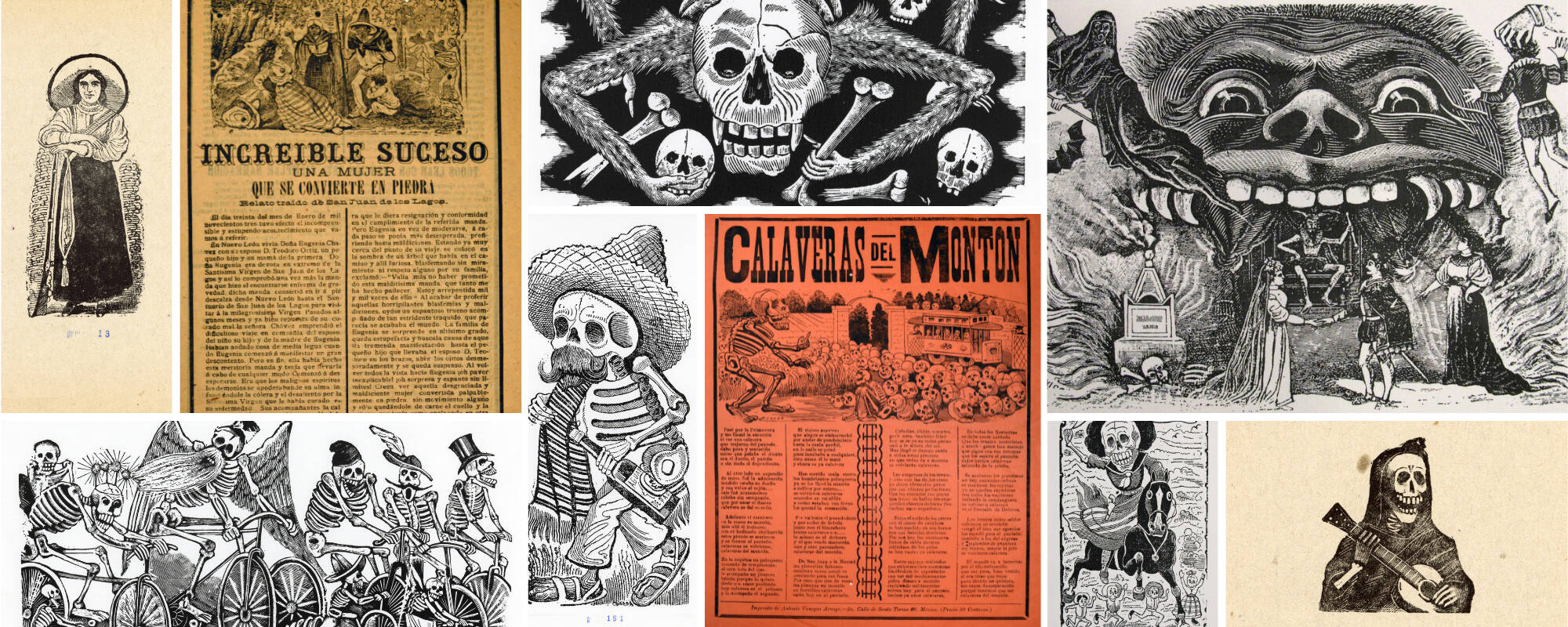
Header Images
Left
José Guadalupe Posada, Revolucionaria, restrike print, 2004, 2005.0013.1.
José Guadalupe Posada, Increible Suceso. Una Mujer que se convierte en Piedra, print, 2002, 2002.511.3a.
José Guadalupe Posada, Las Bicicletas, restrike print, 2004, 2005.00161.1.
Center
José Guadalupe Posada, Calaveras Huertista, restrike print, 2004, 2005.00164.1.
José Guadalupe Posada, Calavera de Fransisco I. Madero, restrike print, 2004, 2005.00151.1.
José Guadalupe Posada, Calaveras del Montón, restrike print, 2004, 2002.525.1.
Right
José Guadalupe Posada, ¡Illusiones fantásticas!, restrike print, 2004, 2005.0038.1.
José Guadalupe Posada, Calavera Revolucionaria, restrike print, 2004, 2005.00152.1.
José Guadalupe Posada, Calavera Guitarrista, restrike print, 2004, 2005.0005.1.