

Shelter and Style: Umbrellas in Art
Published April 1, 2025 by Nicole Webb

While the proverb “April showers bring May flowers” is a metaphor for spring, nature’s renewal, and better days to come, it also suggests opening those umbrellas (outside only, of course) and preparing for Michigan’s wet season.
Umbrellas, also known as parasols, have been used since ancient times as protection against the sun and rain. One of the first documented umbrellas originated in China around 3500 B.C.E. and was made of bamboo sticks and animal skin. At the time, umbrellas symbolized status and power, as only emperors and high-ranking officials owned or used them.
This story remains true for depictions of umbrellas in art. By the early 1600s, parasols were showing up in European engravings, and most often still depicted as being carried by an attendant over the head of a wealthy patron. As umbrellas became lighter and more fashionable, women became more interested in carrying and using them. The transition from a luxury item to a personal accessory is depicted in many famous paintings by Pierre-Auguste Renoir, John Singer Sargent, Gustave Caillebotte, Claude Monet, and others. While these painted umbrellas may appear to be just practical accessories, they are actually still symbols of elegance, wealth, protection, and leisure.
The next time you open an umbrella—whether for rain or shine—let it serve as a reminder that the weather has bothered humankind for ages and that some of history’s greatest artistic masterpieces capture the umbrellas as a symbol of life’s simple luxuries.
As spring approaches, explore artwork featuring umbrellas in the GVSU Art Museum’s Collection.
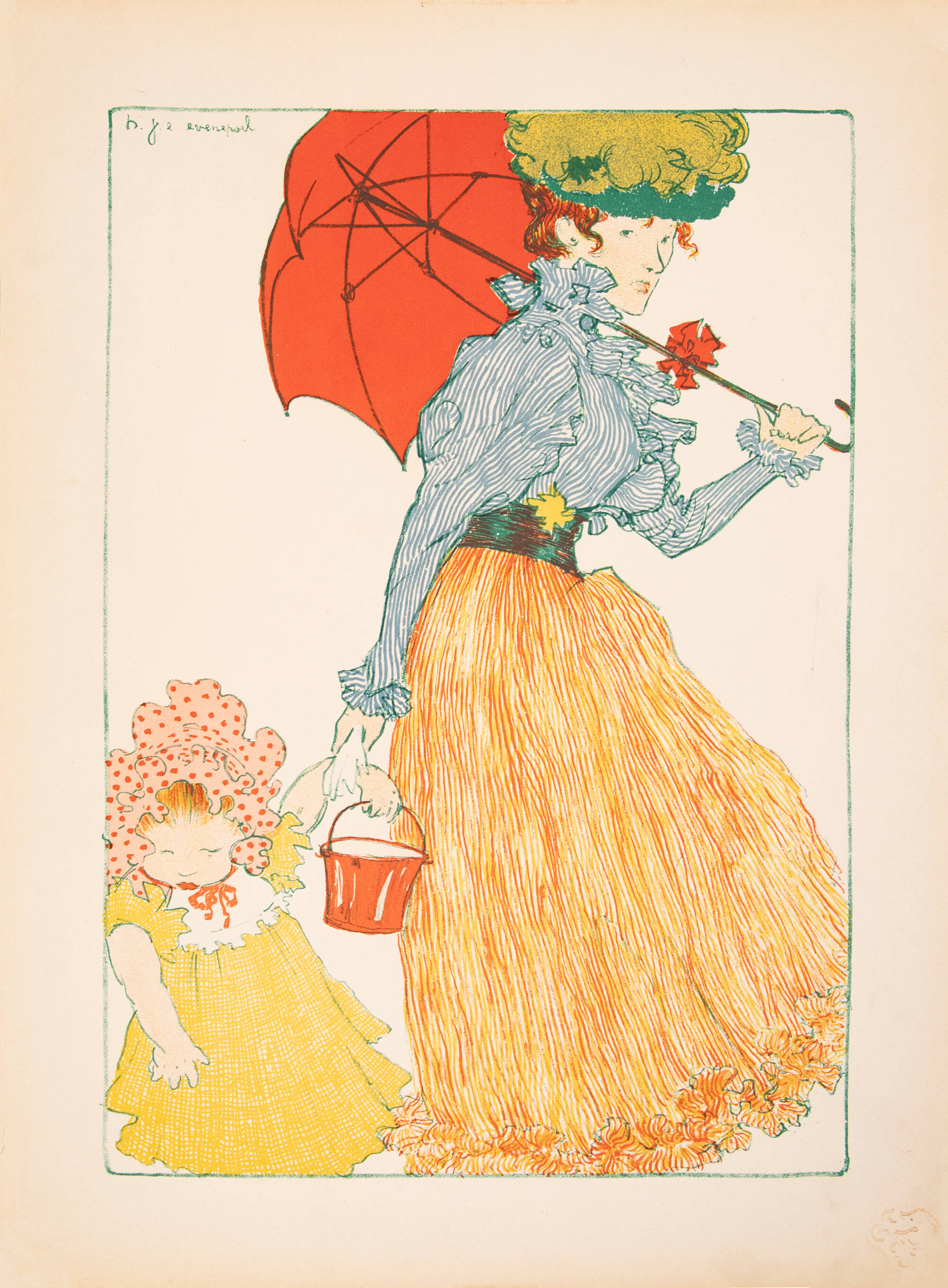
Henri-Jaques Edouard Evenpoel, Au Square (To the Square), color lithograph, 1897, 2008.487.206.
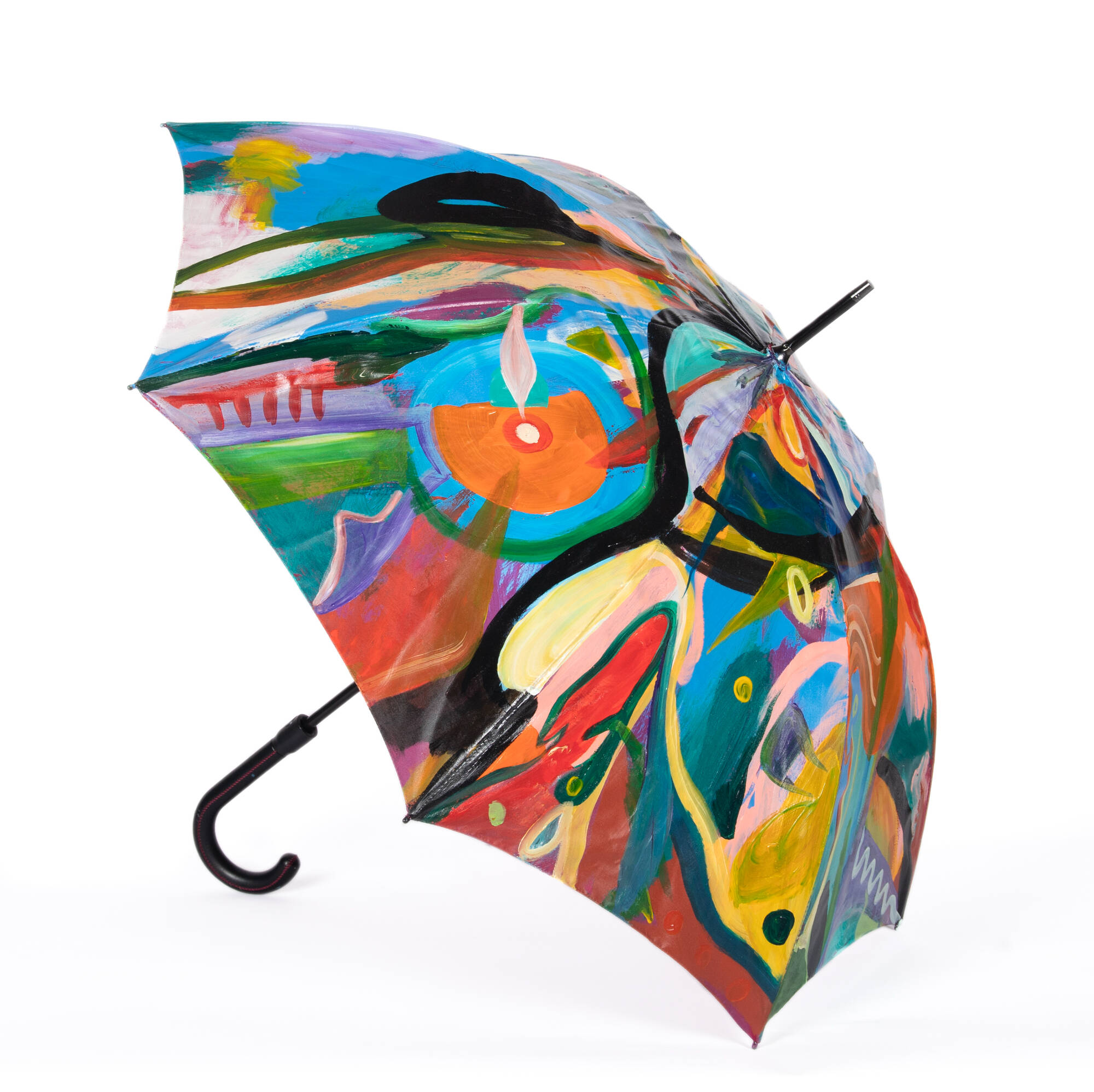
Erick Picardo, Umbrella, acryllic paint on umbrella, 2020.19.1.
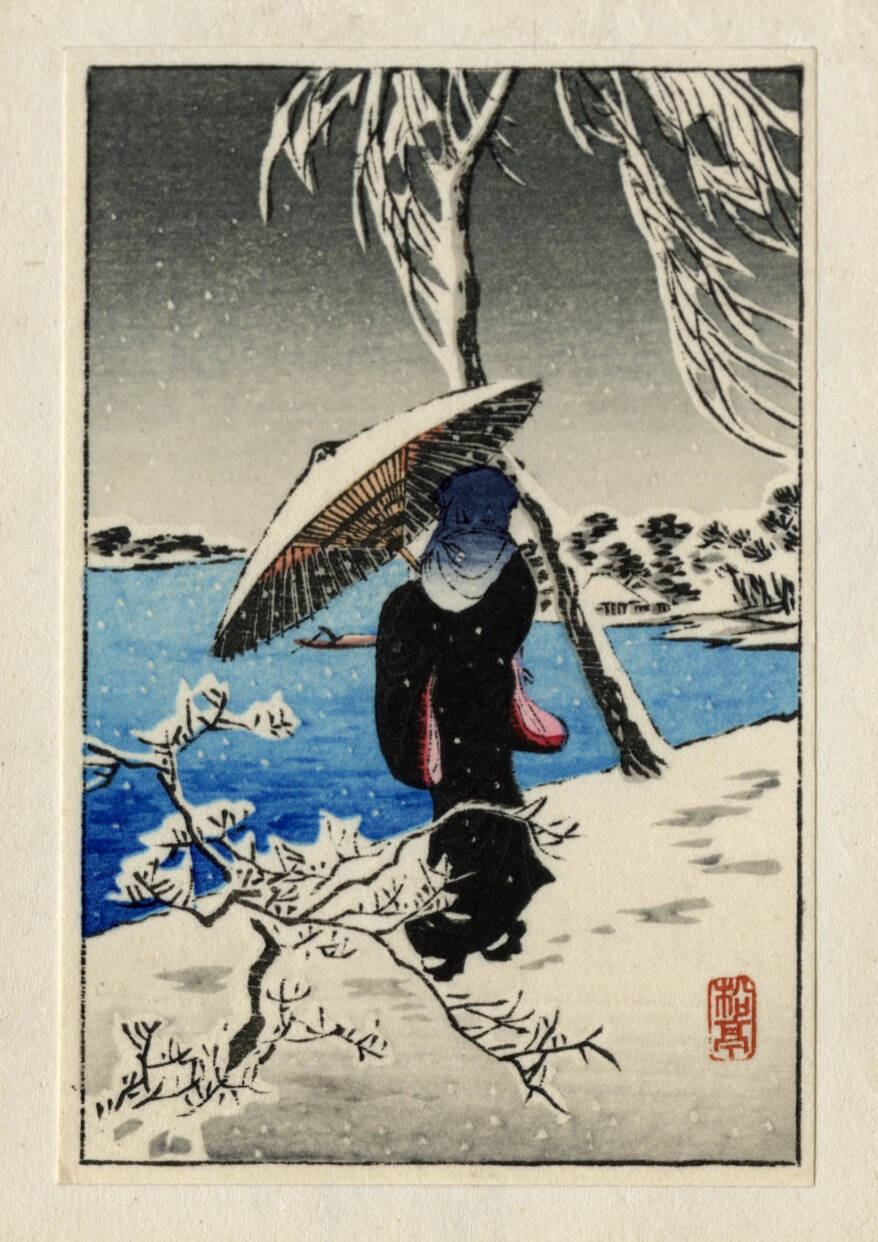
Artist Unknown, Untitled (Woman with Umbrella), Japanese woodblock print, ca 1910, L11.2022.1002.
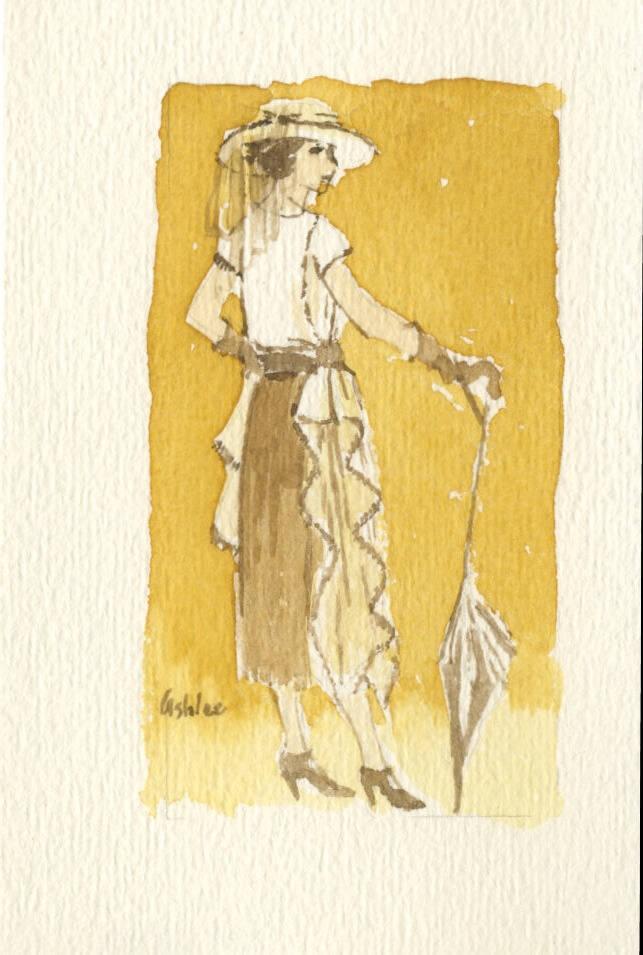
Stewart Ashlee, Untitled (Woman in Yellow), watercolor on paper, 2019.68.66.
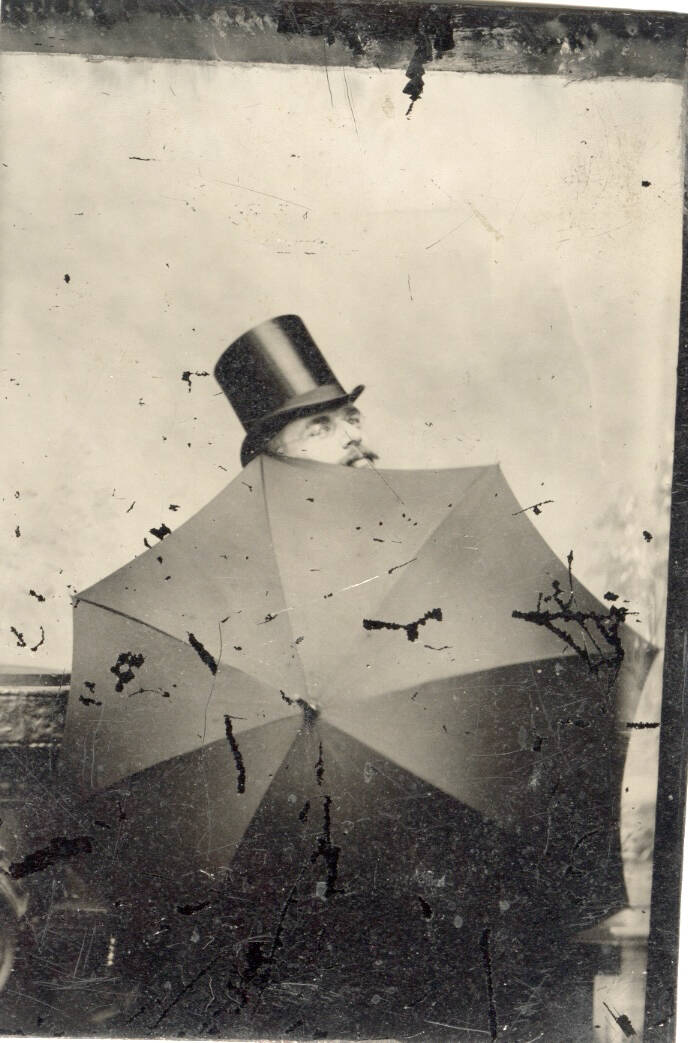
Artist Unknown, Untitled (Man with Umbrella), tintype, ca 1855, L11.2022.120(7).