

Medium: Watercolor
Watercolor, referring both to the medium and the resulting artwork, is a painting method in which the paints are made of pigments suspended in a water-based solution. The pigment dissolves when water is added, allowing the pigment to be spread with a brush, creating a translucent effect. Watercolors are easy to mix and dry quickly, allowing the painter to easily layer colors, creating different shades and hues. Yet watercolors can be unforgiving, as the paint needs to be laid the first time perfectly, as any attempt to paint over can change the darkness of a color or create a muddied effect.
Historically, watercolor paintings have been found on cave walls, papyrus, plastics, and fabrics like silk and leather. Watercolors became popular in Egypt and China before emerging in Europe during the Renaissance Period. A similar technique was used for fresco wall painting, with pigments later being applied to paper. It also became a popular way to create topographical maps. Today, the most popular surface for watercolor paints is watercolor paper, a type of paper made entirely or partially from cotton with a slightly textured surface that minimizes distortion of the paint by absorbing excess water.
Explore watercolor paintings in the collection
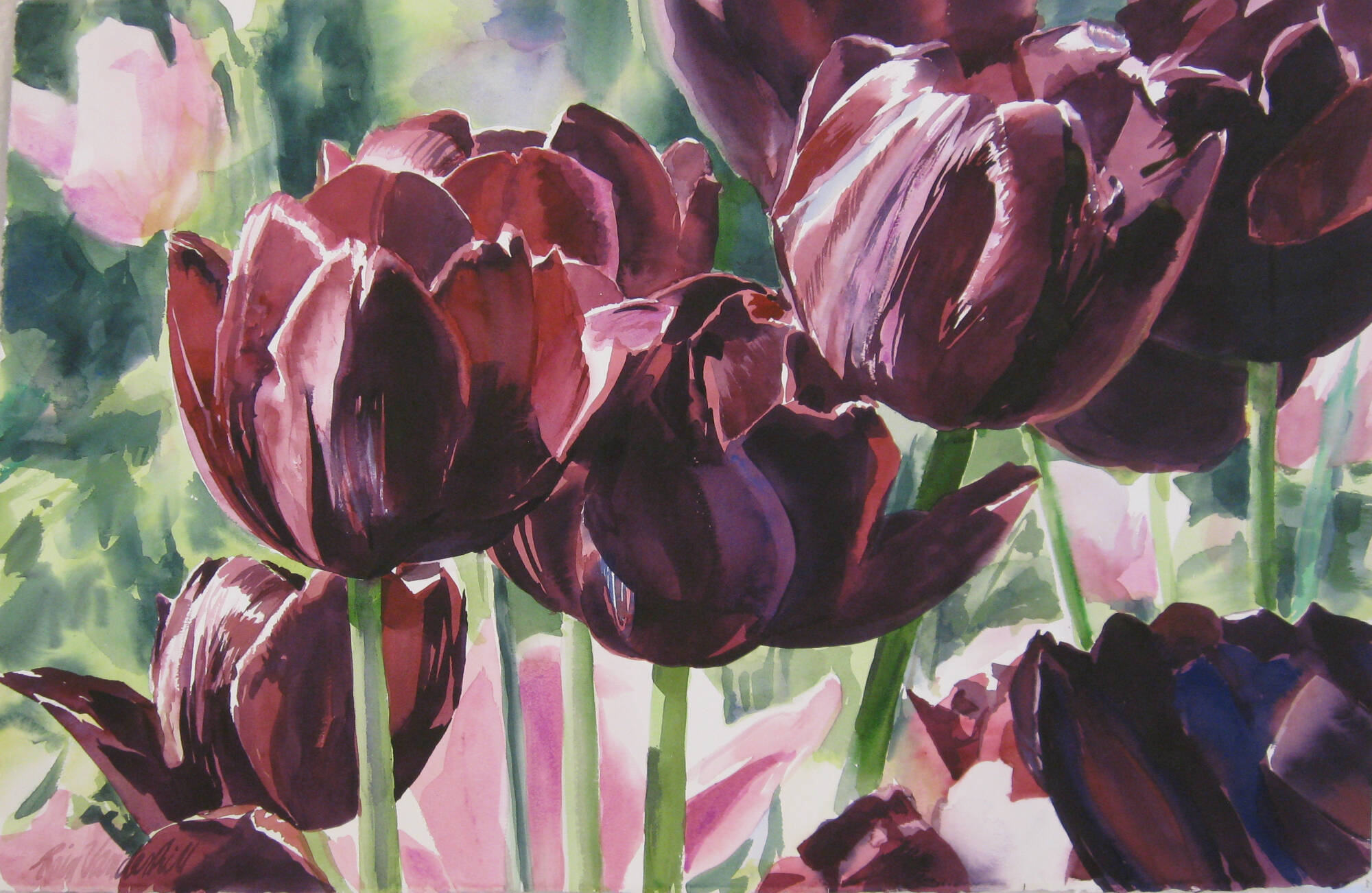
Rein Vanderhill, Untitled, watercolor, 2014.113.2.
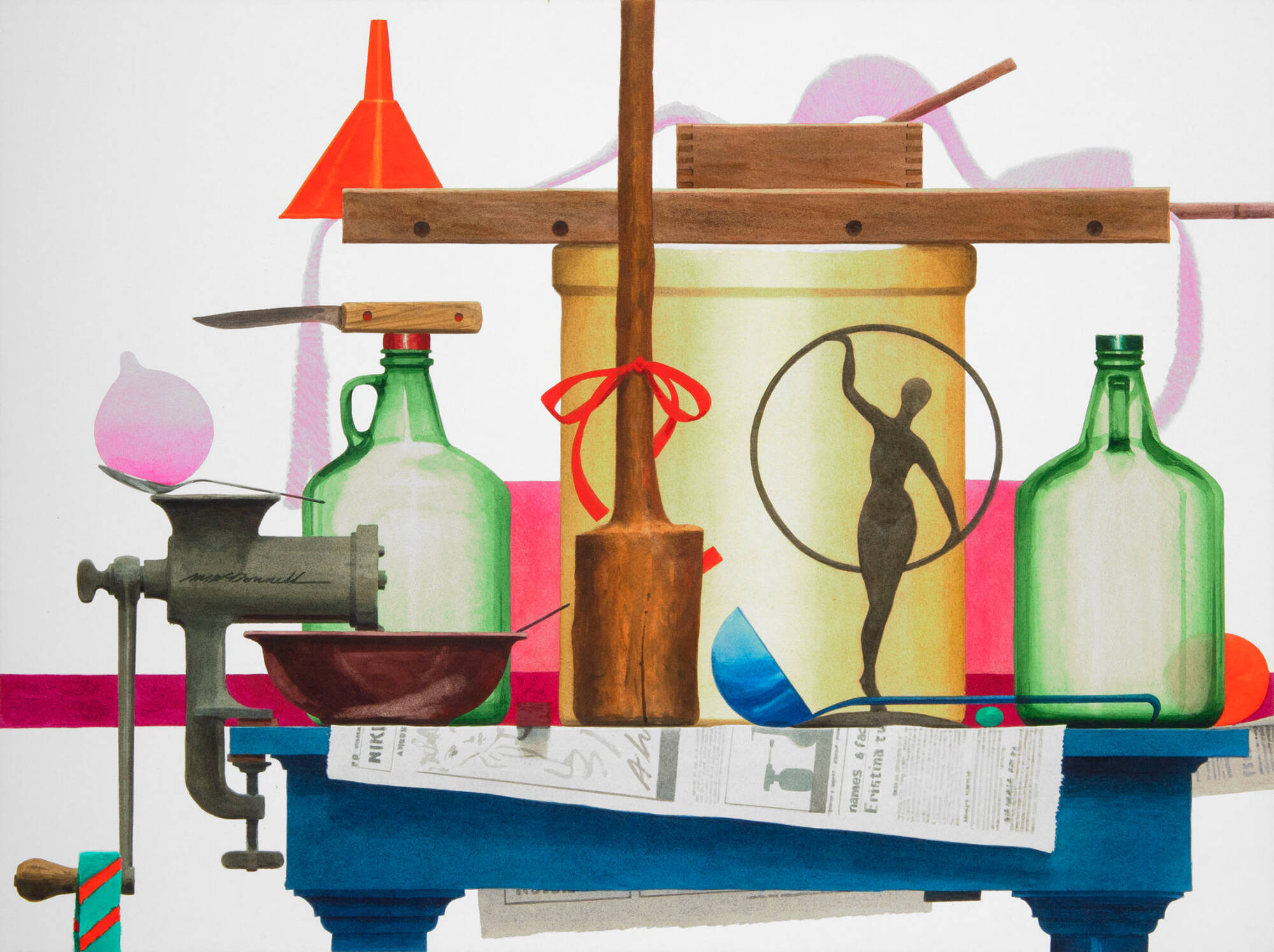
Mike McDonnell, Our Lady of Perpetual Responsibility, watercolor, 1983, 2013.2.48.
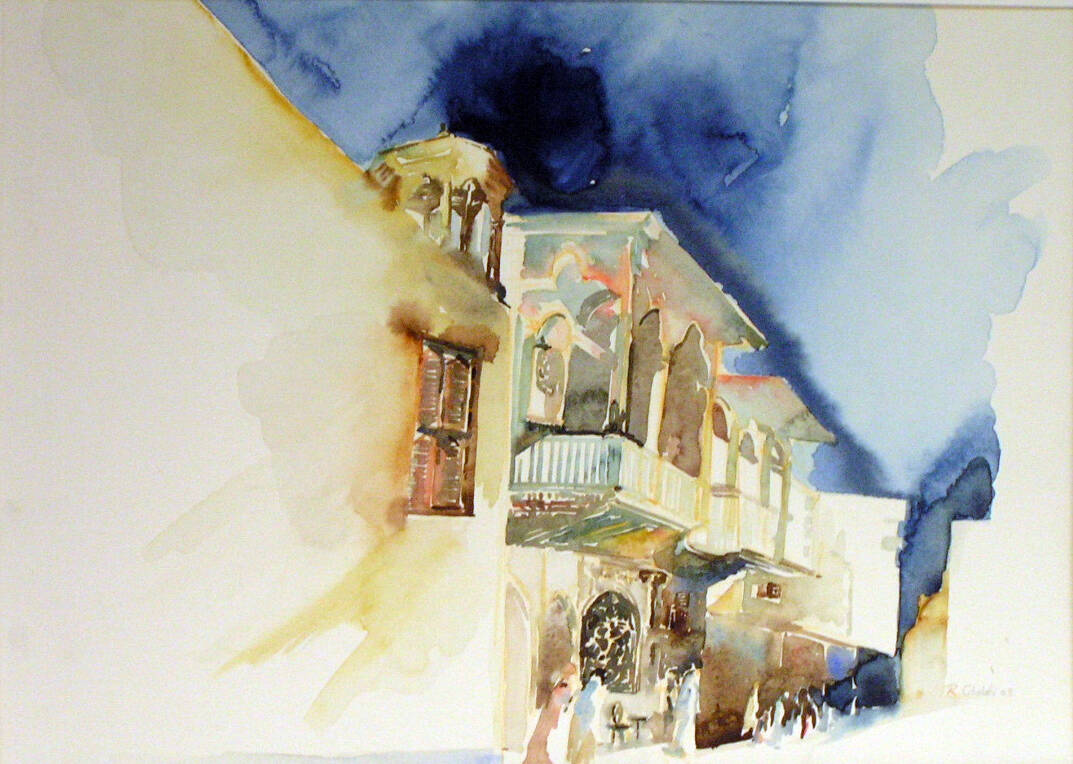
Rana Chalabi, Balcony of Old Palace Facing Sidna El Hussein, watercolor, 2003, 2005.196.1.
Resources in the Collection
Mathias Alten
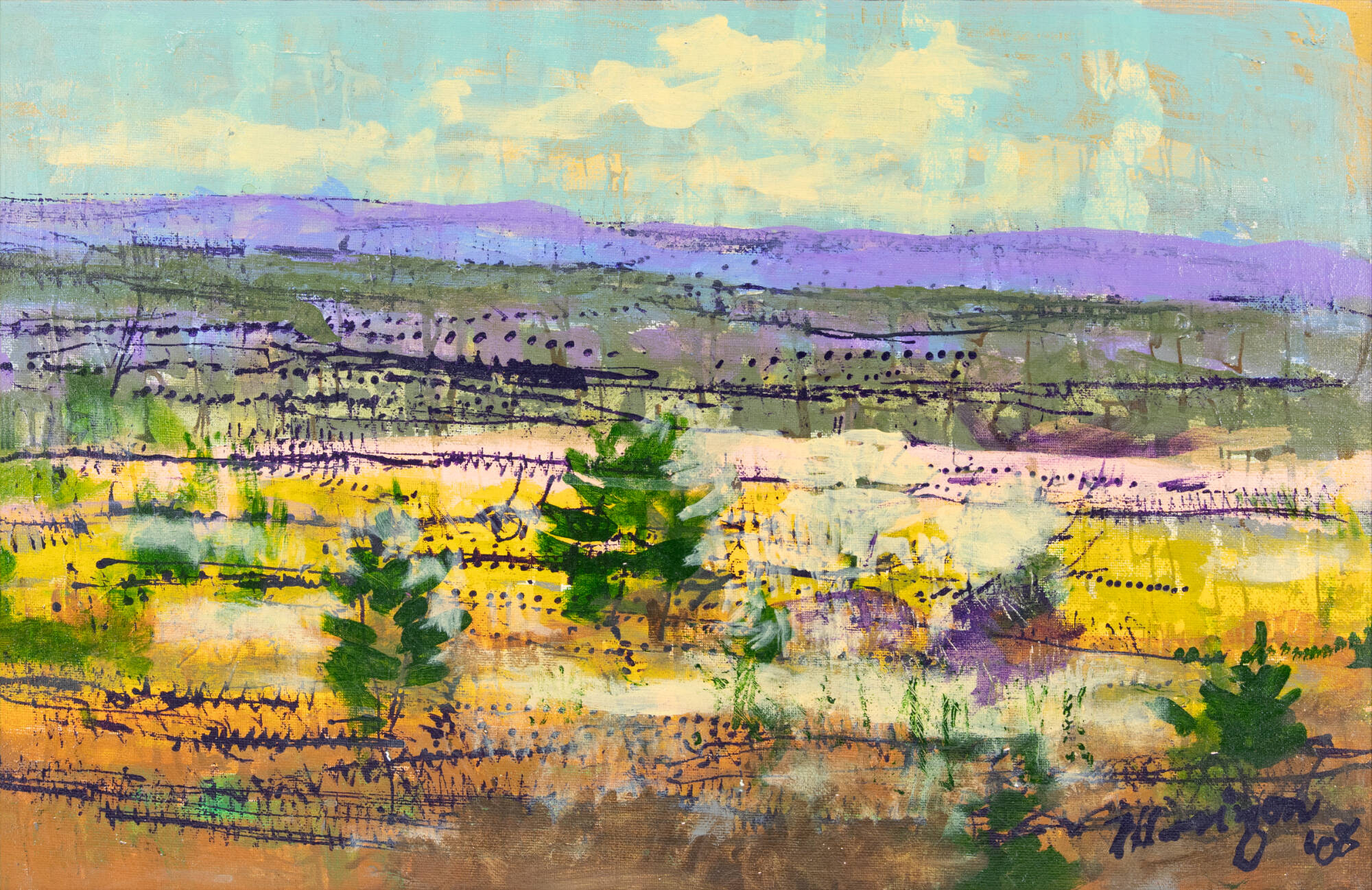
Artist Profile: Armand Merizon
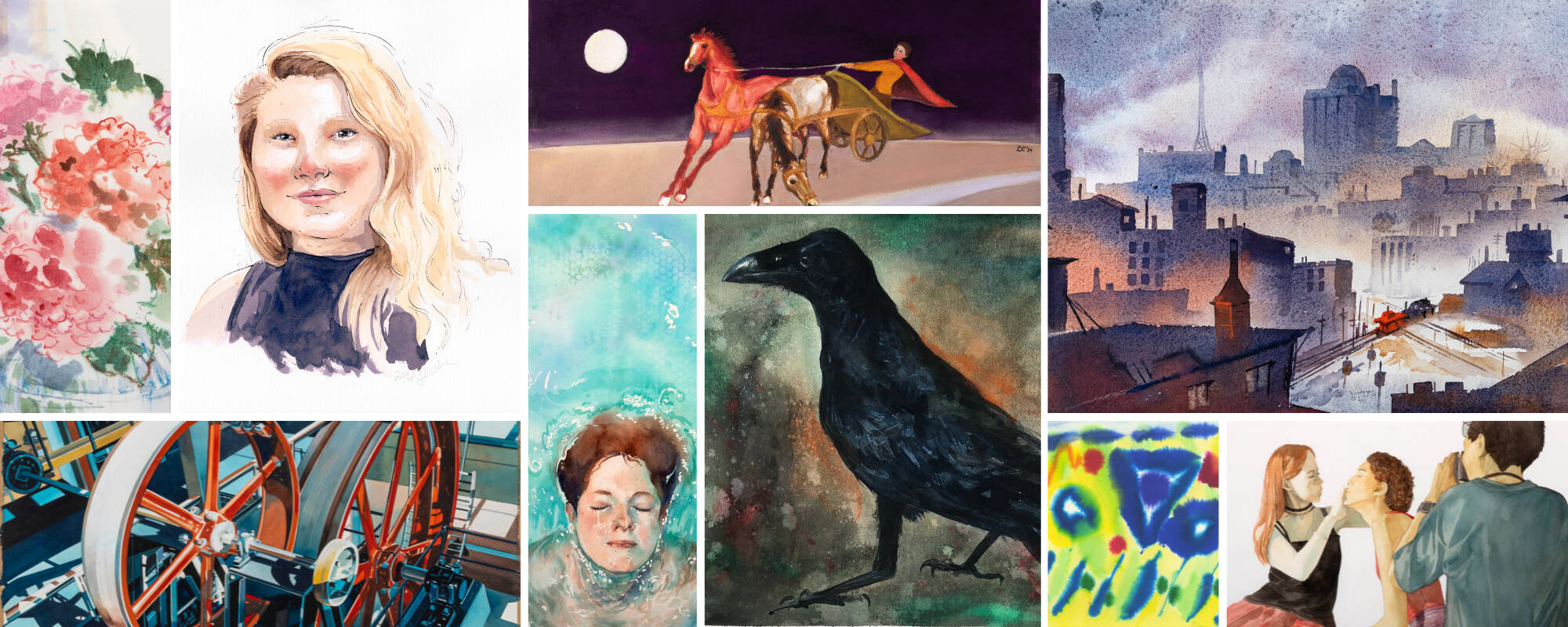
Header Images
Left
Sylvia Krissoff, Geraniums, watercolor, ca. 2000, 2001.113.1.
Ellie Lubbers, Untitled, watercolor on paper, 2016, 2019.28.2.
Bruce McCombs, Van Andel Museum, Steam Engine, watercolor, 1999, 2002.00112.1.
Center
Leon Lou, Allegories of the Mind: A Charioteer Attempting to Harness Two Horses of Different Temperaments, watercolor on handmade paper, 2022, 2024.13.1.
Deborah Lass, Liquid Days (Self Portrait in Pool), watercolor, 1993, 2016.56.1.
Mark Wilkens, Raven, watercolor on paper, 1994, 2019.27.9.
Right
Reynold Weidenaar, View of Downtown Grand Rapids, watercolor, 1959, 2006.206.1.
Jay Lefkowitz, Flippin' Out, watercolor on paper, ca. 1990, 2013.92.111.
Lorelle Otis Thomas, Visions/Vision, watercolor on paper, 1998, 1999.746.1.