

Medium: Tintypes
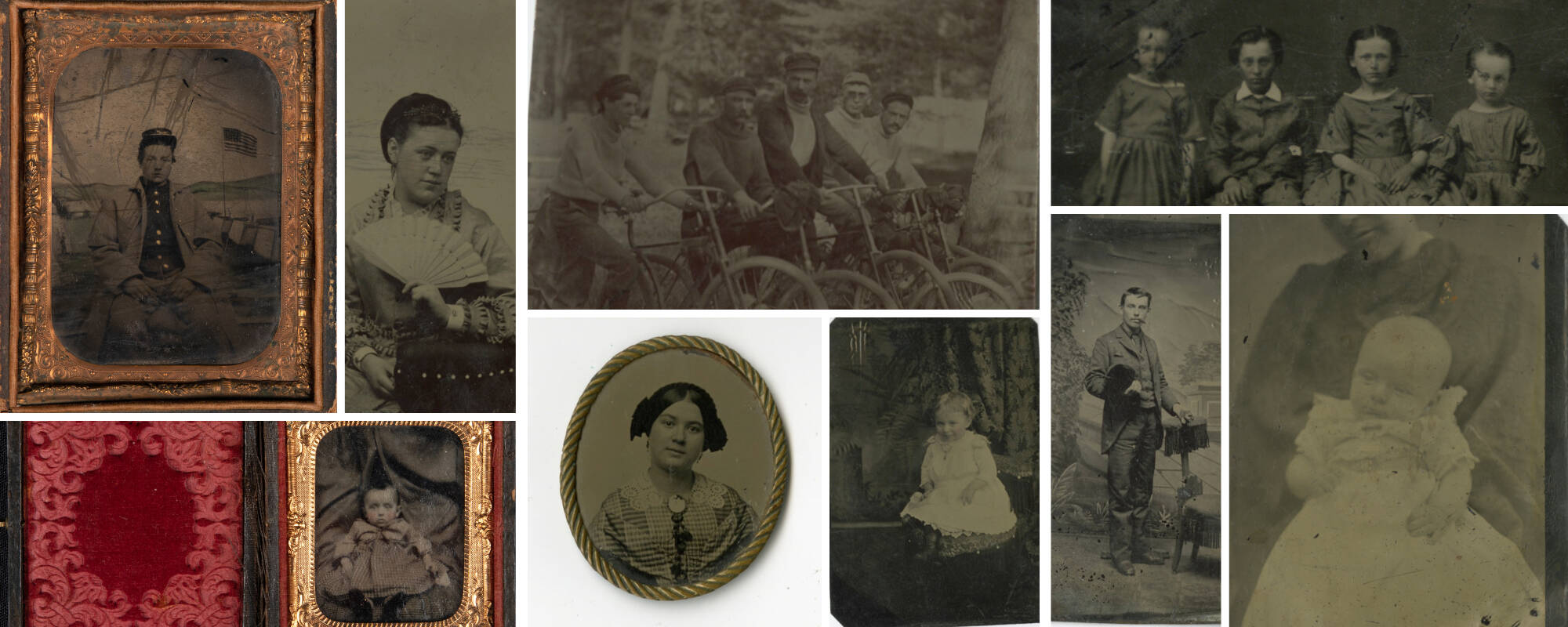
The tintype was essentially a variant of the ambrotype, using a dry or wet collodion emulsion process, replacing the glass plate with a thin sheet of iron (tin was never actually used). Tintypes were very durable, inexpensive, and relatively easy and quick to make. Like its predecessors, tintype portraits were at first created in formal photographic studio settings, but because the process was quicker, more resilient, and did not require a drying time, a tintype could be developed, fixed, and handed to the customer only a few minutes after the picture was taken. This quicker process took the camera out of the studio and onto the streets of a quickly changing America. Photographs were no longer just for portraiture, but for documenting the world around the photographer.
Explore Tintypes in the collection
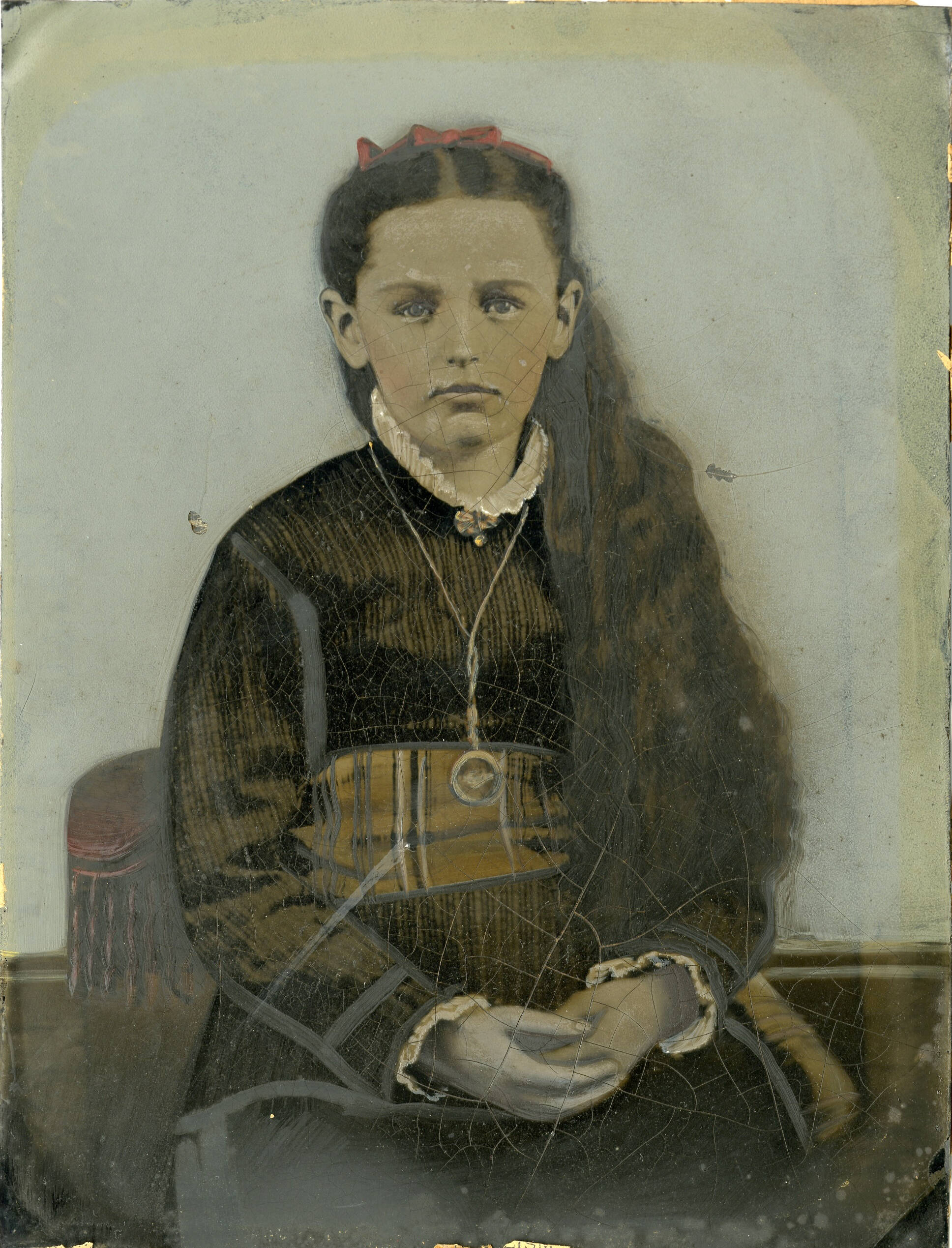
Artist Unknown, Untitled (Portrait of a Young Woman), tintype, ca. 1894, 2020.1.160.
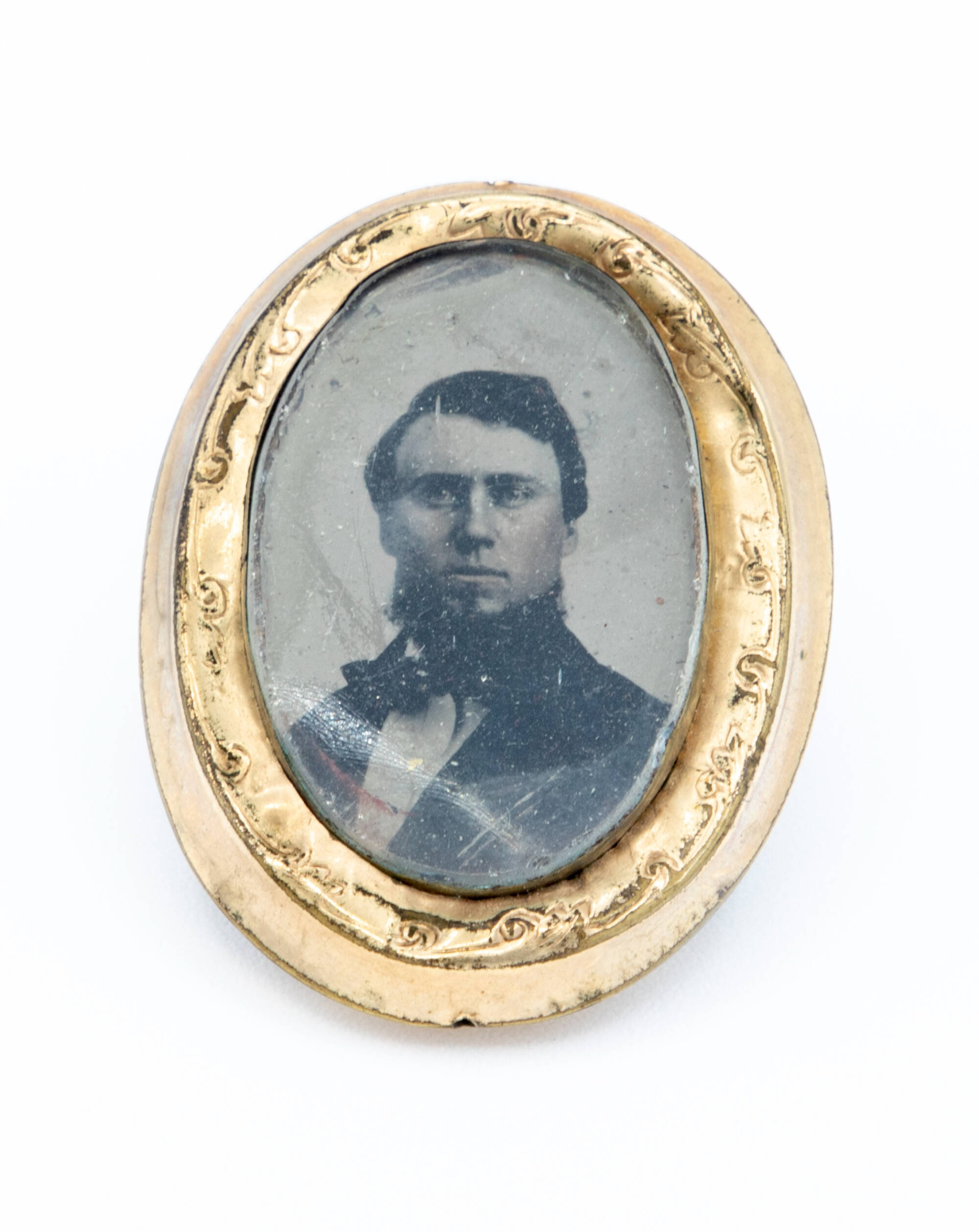
Artist Unknown, Mourning Jewelry: Broach with Tintype, tintype in gold, ca. 1865, 2021.33.1619.
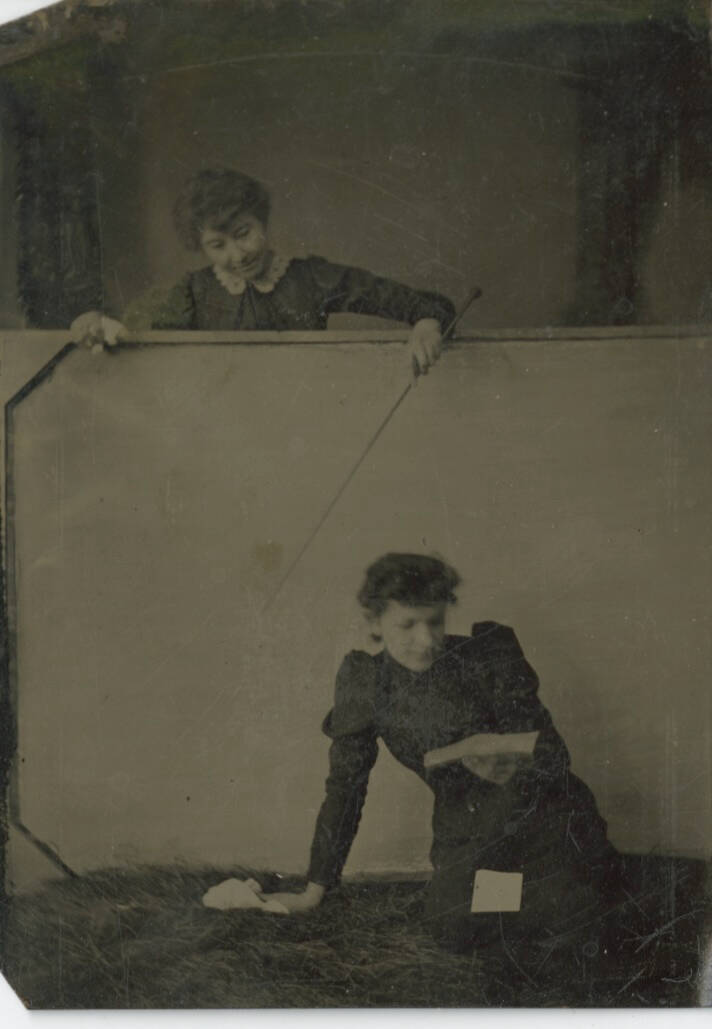
Artist Unknown, Untitled (Portrait of Two Women with a Wall), tintype, ca. 1890, 2021.33.171.
Resources in the Collection
Header Images
Left
Artist Unknown, Untitled (Union Soldier with Painted Military Scene Background), tintype, ca. 1860, L11.2022.918.
Artist Unknown, Untitled (Portrait of a Woman with Fan), tintype, ca. 1885, 2021.33.89.
Artist Unknown, Untitled (Young Child), tintype, ca. 1860, L11.2022.933.
Center
Artist Unknown, Untitled (Portrait of a Group of Men with Bicycles), tintype, ca. 1895, 2021.33.90.
Artist Unknown, Untitled (Portrait of a Woman), tintype in pin, ca. 1870, 2020.1.214.
Artist Unknown, Untitled (Portrait of a Young Girl), tintype, ca. 1900, 2021.33.8.
Right
Artist Unknown, Untitled (Portrait of Children), tintype, ca. 1875, 2020.1.519.
Artist Unknown, Untitled (Portrait of a Man with Cigar), tintype, ca. 1885, 2021.33.108.
Artist Unknown, Untitled (Portrait of a Woman and Baby), tintype, ca. 1880, 2020.1.533.