

Medium: Pastel
Pastels have been used by artists since the Renaissance, but gained popularity in the 18th century when artists like Edgar Degas and Mary Cassatt began to use pastels as one of their primary mediums. Pastels usually come in the form of a stick consisting of a powdered pigment and a binder. While sometimes called pastel painting because of its use of a binding agent, the color effect and techniques used with pastels are closer to those of dry pigments like charcoal and graphite. Unlike paint, which can be mixed before application to the surface, pastels must be blended and layered directly on the paper. The line quality a pastel creates depends on the type of binder used. For example, oil pastels have a softer consistency but are more difficult to blend than chalk pastels, which have a higher portion of pigment and less binder. The application technique, type of pastel, and texture of the paper can all drastically change how a pastel looks once applied to the paper.
Explore pastel drawings in the collection.
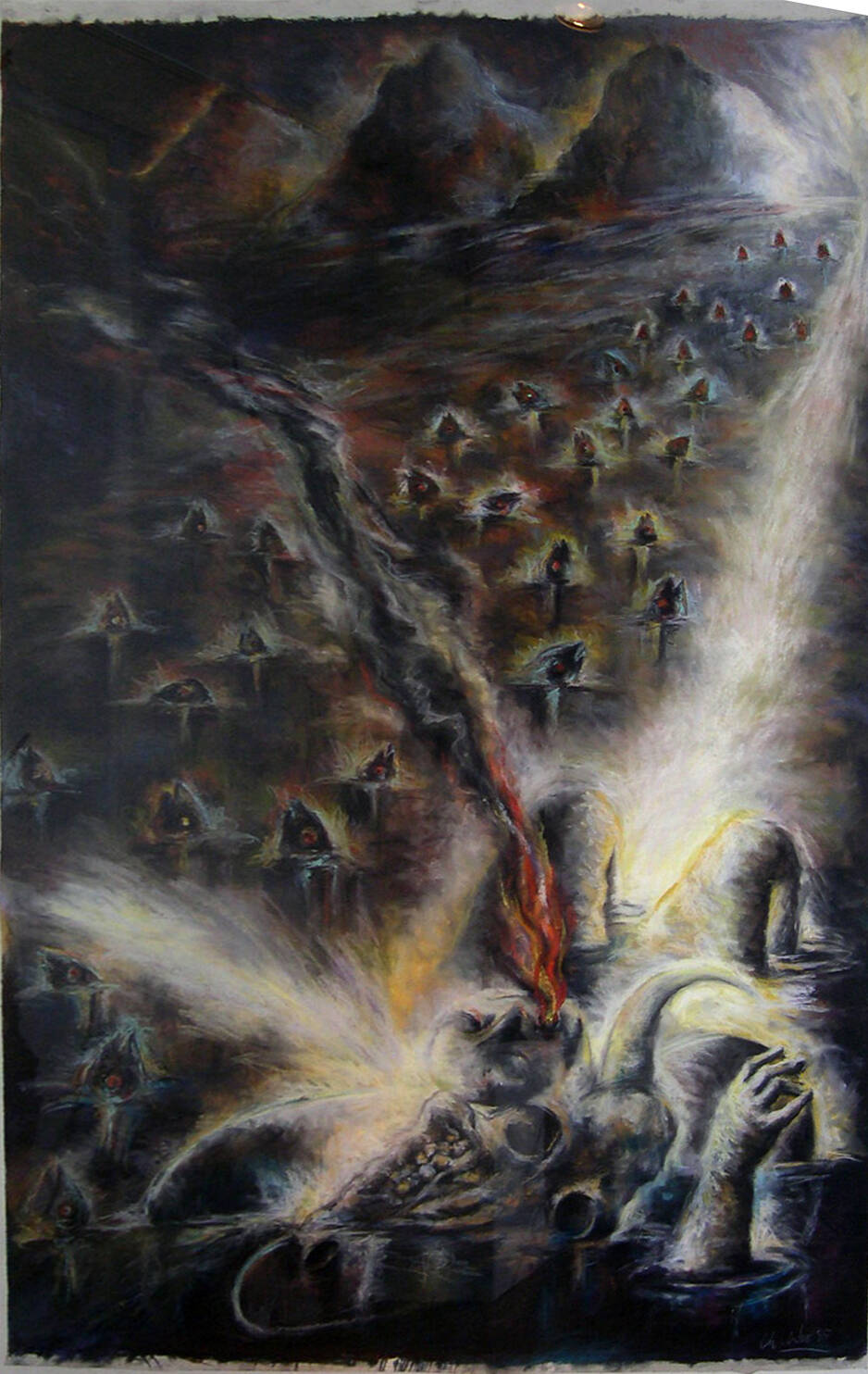
Chema Cobo, Untitled, pastel on paper, 1985, 2008.481.1.
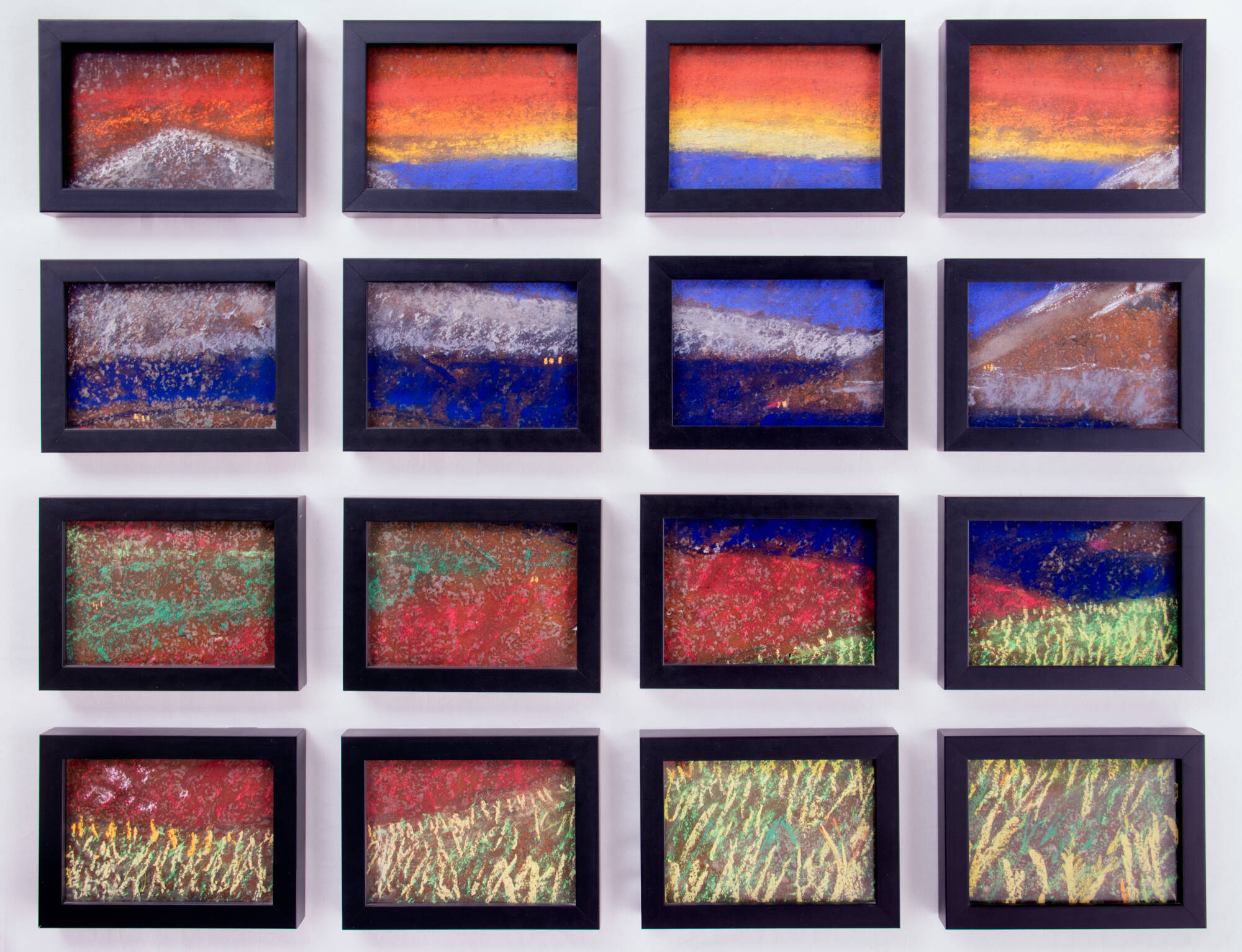
Paul Karsten, You're Not Alone, pastel on sheet metal, 2013, 2013.11.1a-f.
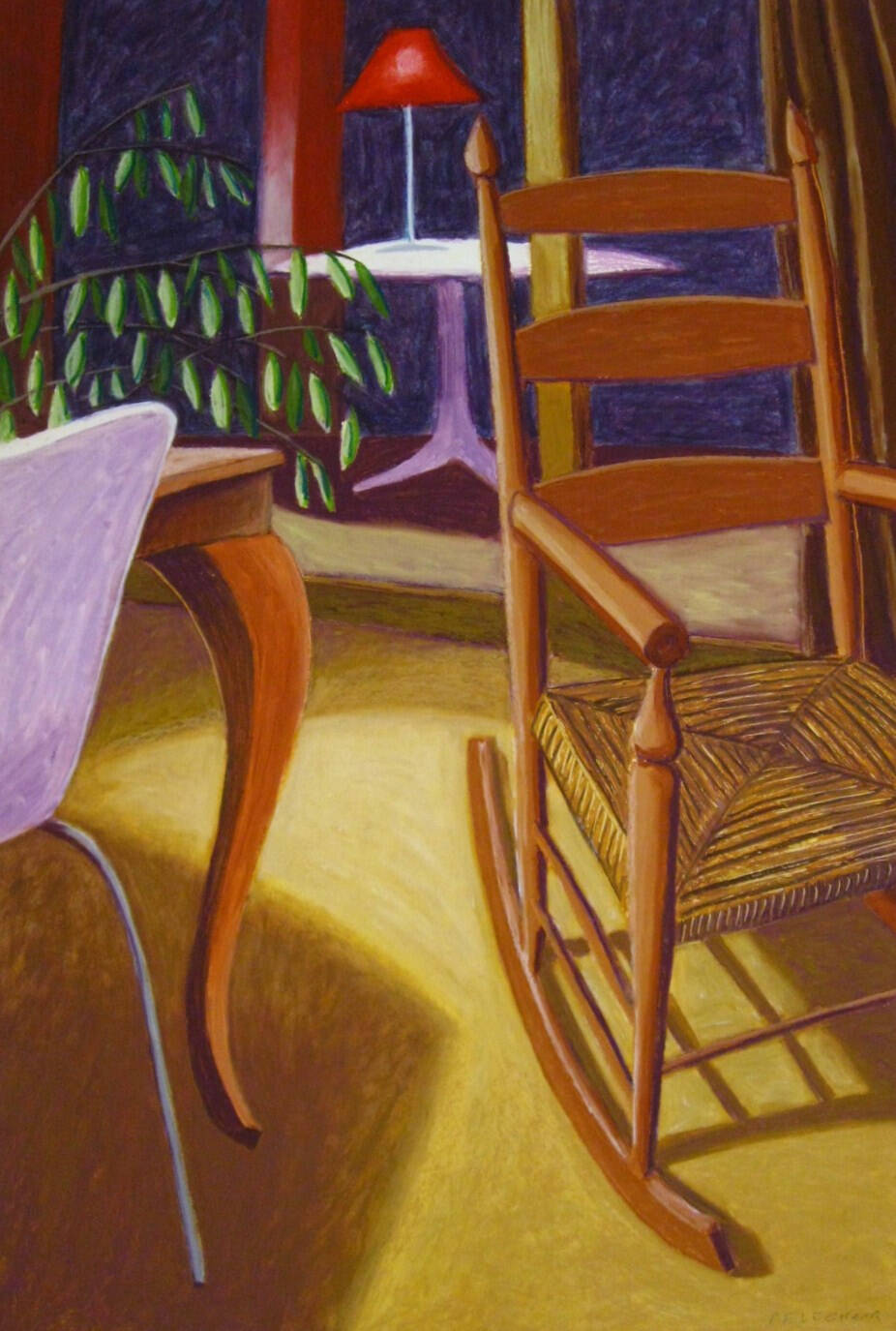
Michael Pfleghaar, Rocker, Table, and Chair, oil pastel, 1997, 2011.131.4.
Resources in the Collection
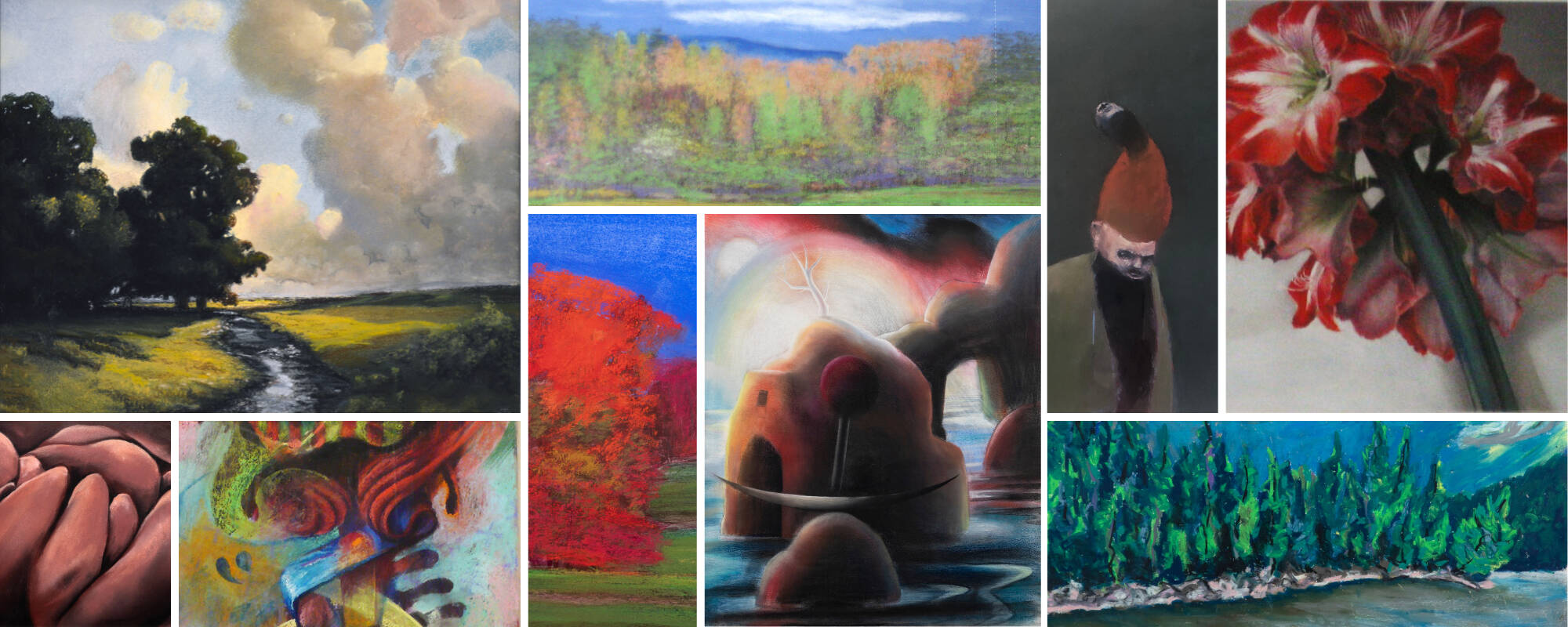
Header Images
Left
Mathias Alten, Landscape with Stream, pastel on paper, 1915, 2021.86.40.
Mary Lamson-Burke, Untitled #421, pastel, 2008, 2008.257.1.
Jarrett Huddleston, Untitled, pastel on paper, ca. 1980, 2008.228.3.
Center
Jane Everhart, Northern Michigan Fields and Tree Line, pastel on paper, 1998, 1999.736.1.
Jane Everhart, Autumn Treeline, pastel on paper, 1999, 1999.613.1.
Steve Heyman, Cliff Through the Past, pastel on paper, 1986, 2008.0228.2.
Right
Michael Alderson, Untitled, oil pastel on paper, 1995, 2020.20.2.
MaryBeth Koeze, Sixteen Pleasures, pastel, 2001, 2001.215.1.
Mariel Versluis, Northern Woods Lake, oil pastel, ca. 1995, 1998.357.1.