

Medium: Oil Paint
The artist likely used oils extracted from walnuts or poppies mixed with ground organic materials to create their painting. In Europe, oil painting as a medium is recorded as early as the 11th century, with major advancements in canvases, types of paints, and easels improving the oil painting process that emerged out of the Renaissance. Before oil paint, artists used tempera paint. Tempera paint was made by mixing pigments with egg yolk. This resulted in a mixture that dried fast but was hard to achieve fine details. The colors were often dull and faded.
Oil paint is created by combining ground pigments with an oil, most commonly linseed oil. Oil paints offered the artist more flexibility and depth, and a range of colors. They can be applied in different ways and are slow to dry, so the artist can continue to work with them for much longer than other paint forms. Early oil paint had to be mixed by hand daily, making it difficult to travel with or store. In 1841, American artist John G. Rand introduced the first paint tube, which made oil painting an even easier and more popular form of painting.
Explore oil paintings in the collection
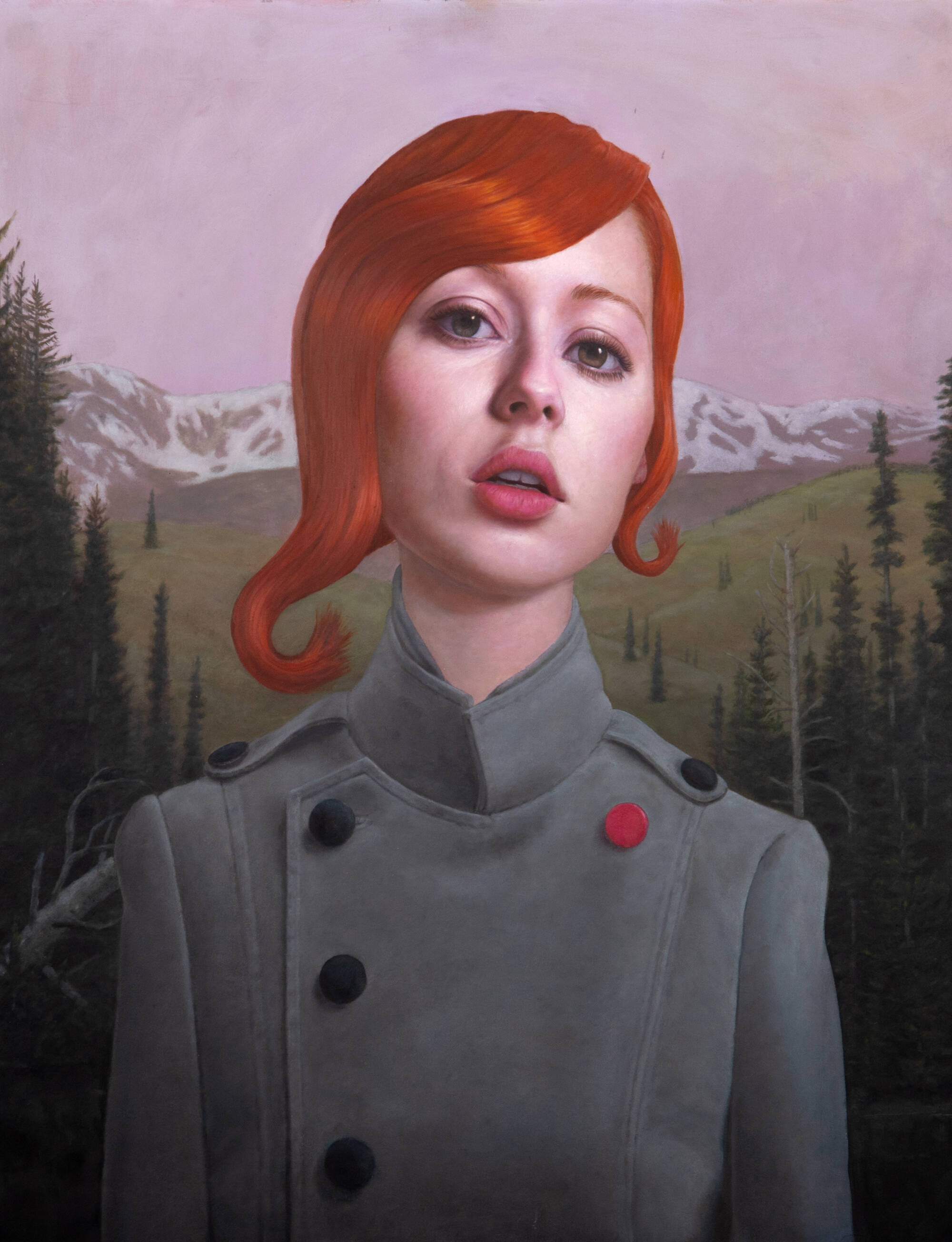
Kris Lewis, Stand Guard, oil on board, 2010, 2025.22.4.
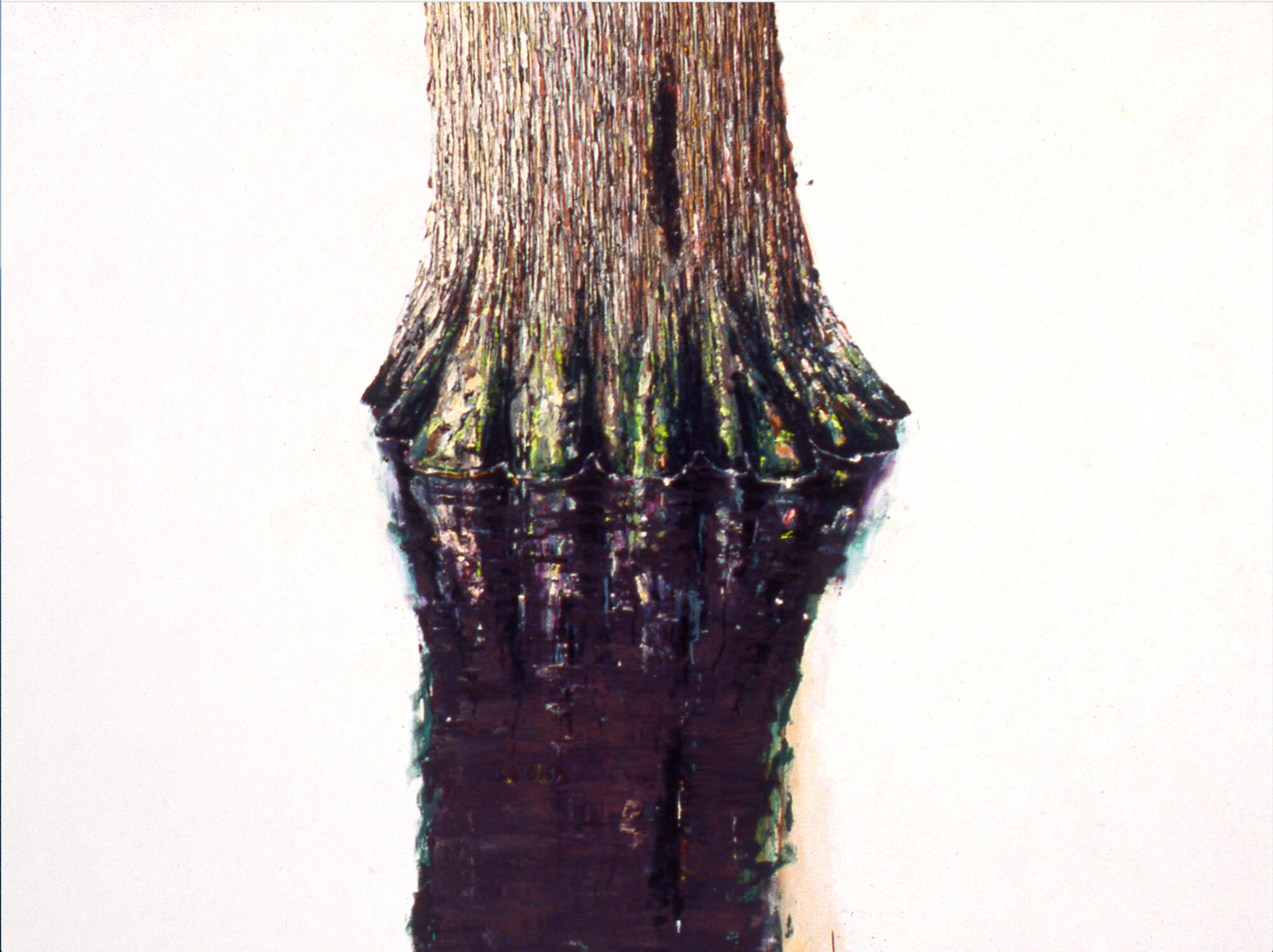
Vera Klement, Narcisse #2, oil on canvas, 1999, 2021.29.3.
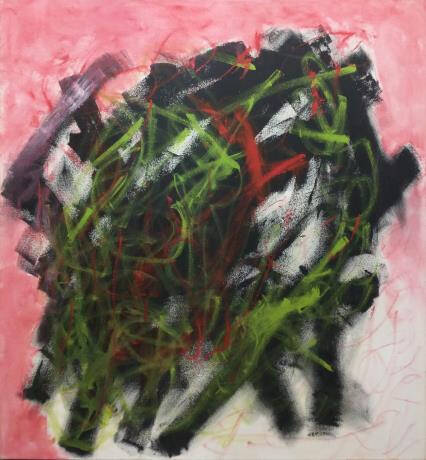
Stanley Krohmer, Grief Again, oil on canvas, 2014, 2023.36.1.
Resources in the Collection
Mathias Alten
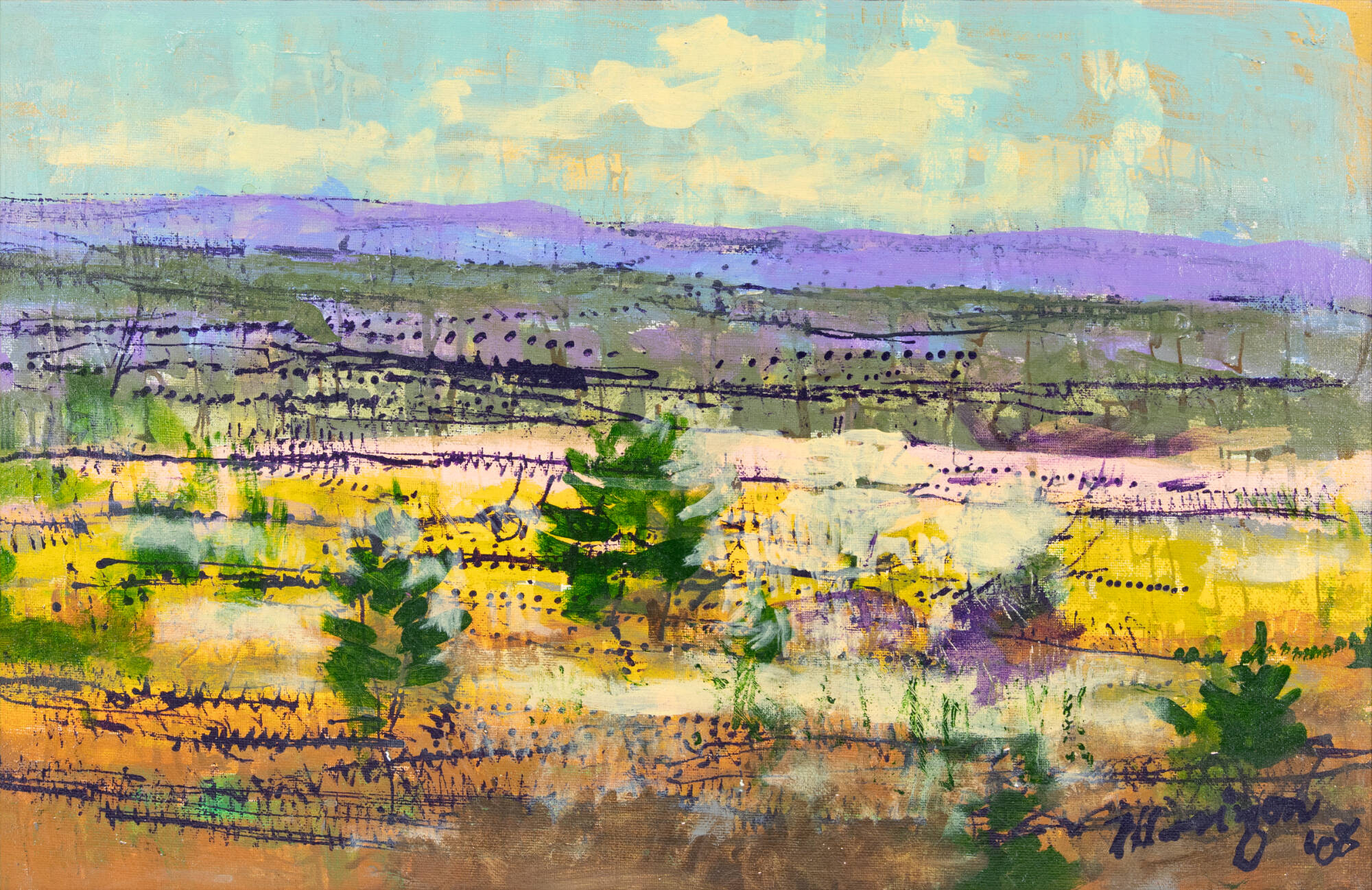
Artist Profile: Armand Merizon
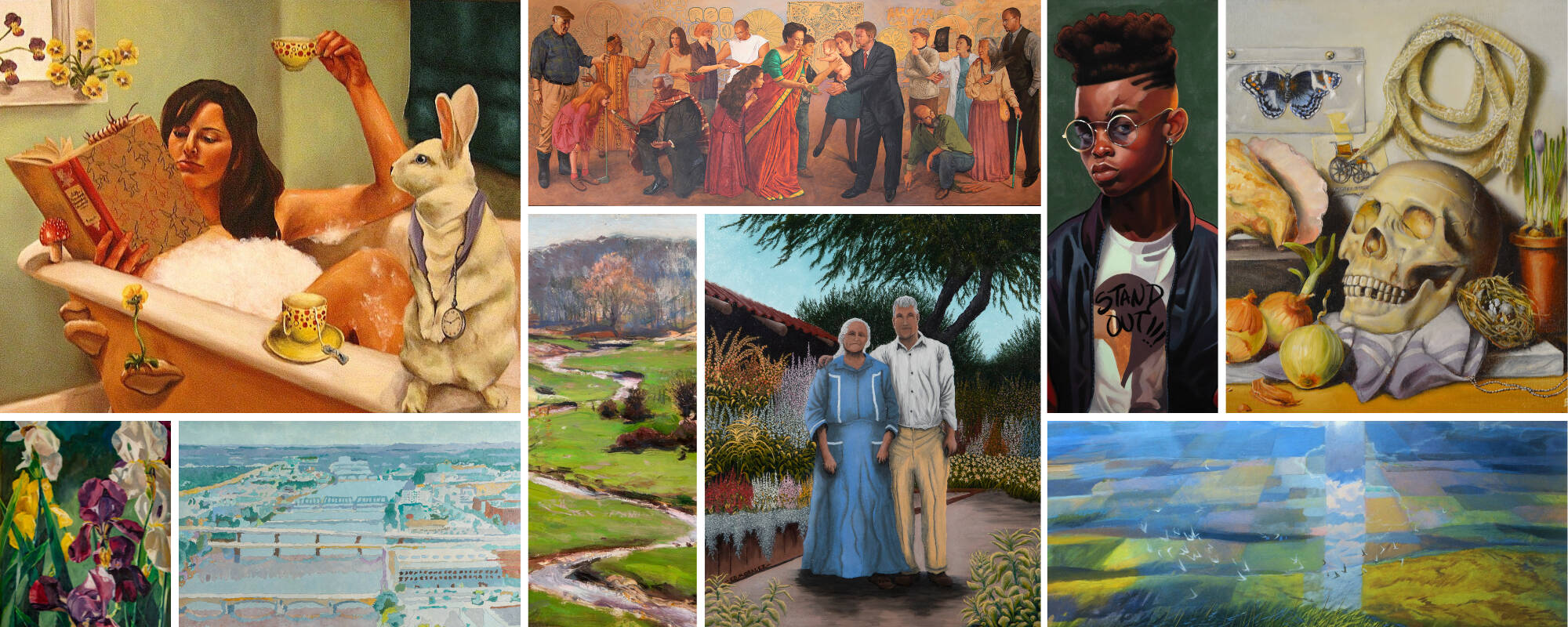
Header Images
Left
Lindy Patterson, Tea with the White Rabbit, oil on board, 2008, 2008.200.1.
Zephra Weber, Iris Afternoon, oil on canvas, ca. 2000, 2003.071.1.
Don Kerr, Grand Valley Suite: Grand Rapids, North, oil on canvas, 1988, 1998.081.1g.
Center
Ed Wong-Ligda, Reunion, oil on canvas, 2000, 2000.030.1.
Mathias J. Alten, Early Spring Landscape with Meandering Stream, oil on board, 1914, 1998.599.1.
Ed Moralez, Covenant Keepers, oil on canvas, 2012, 2023.11.1.
Right
DeAnthony Carter, Powerline, oil on canvas, 2025.29.1.
Beverly Adams, Oh That We Could Shed Our Skin and Begin Again, oil on linen, 2017, 2018.10.1.
Armand Merizon, Land and Sky, oil on canvas, 1988, 2019.11.1.