

Medium: Glass
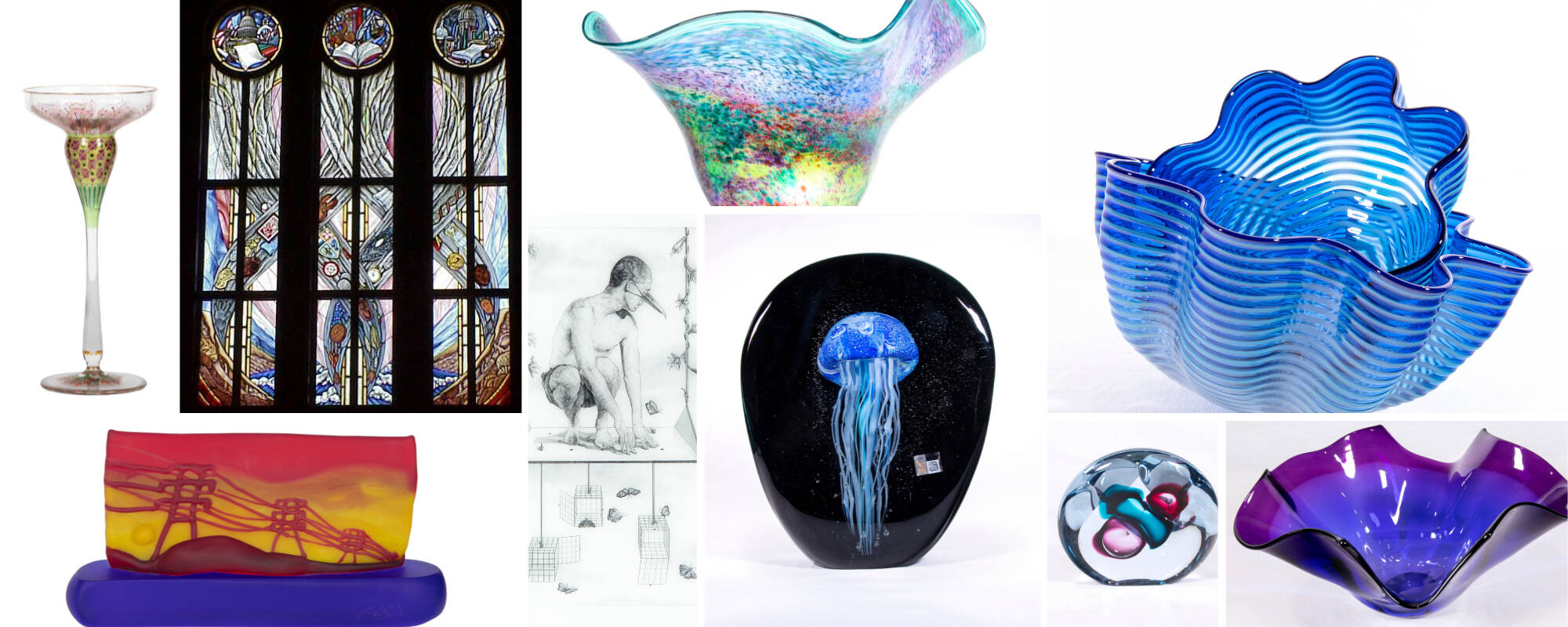
While glass art owes much of its sustained creation to the studio glass movement in the early 20th century, the history of glass art can be traced back as far as the Roman Empire in the first century BCE, when Syrian craftsmen first invented the techniques used to create molded and blown glass vessels. These early examples included goblets and pitchers, often decorated with painted or etched designs. By the Renaissance, glass was being produced throughout Europe. Stained glass depicting Christian and Jewish symbols were particularly popular. During this time, Venice, Italy, emerged as a prominent glass manufacturing center, though later Italian laws required all furnaces used in glass making be moved to Murano, a city still known for its glass production today.
There are several ways to produce glass art, including blowing, kiln-casting, fusing, slumping, hot-sculpting, and cold-working. These techniques are often put under three main categories, hot, warm, and cold, based on the temperatures used to shape the glass. Once shaped, glass can also be engraved, polished, cut, and etched to further the level of decoration.
Explore Glass in the Collection
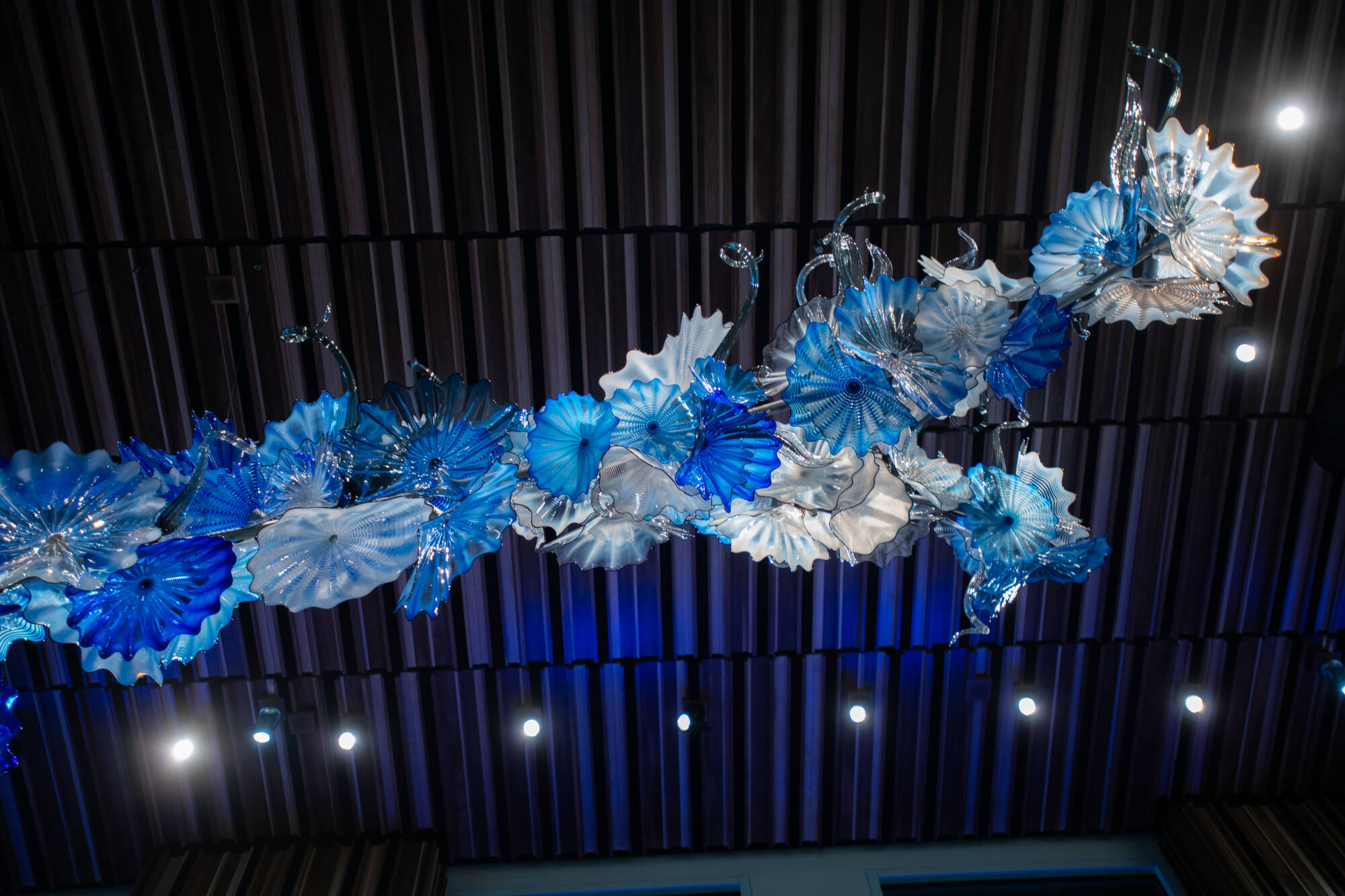
Dale Chihuly, Laker Blue and Opaline Persian Chandelier, blown glass, 2020, 2021.36.1.
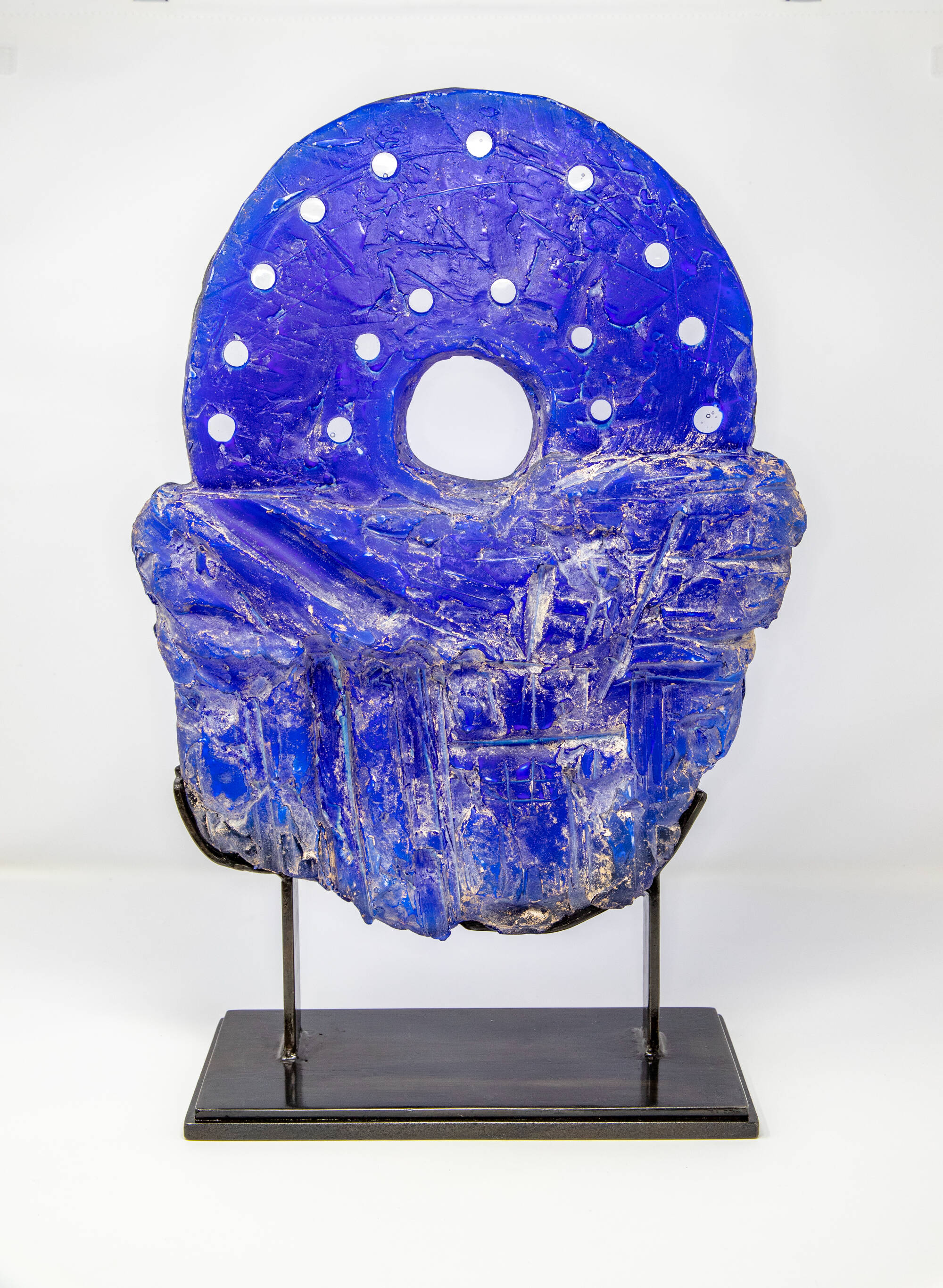
Herb Babcock, Tablet, cast glass and steel, ca. 1995, 2003.158.1.
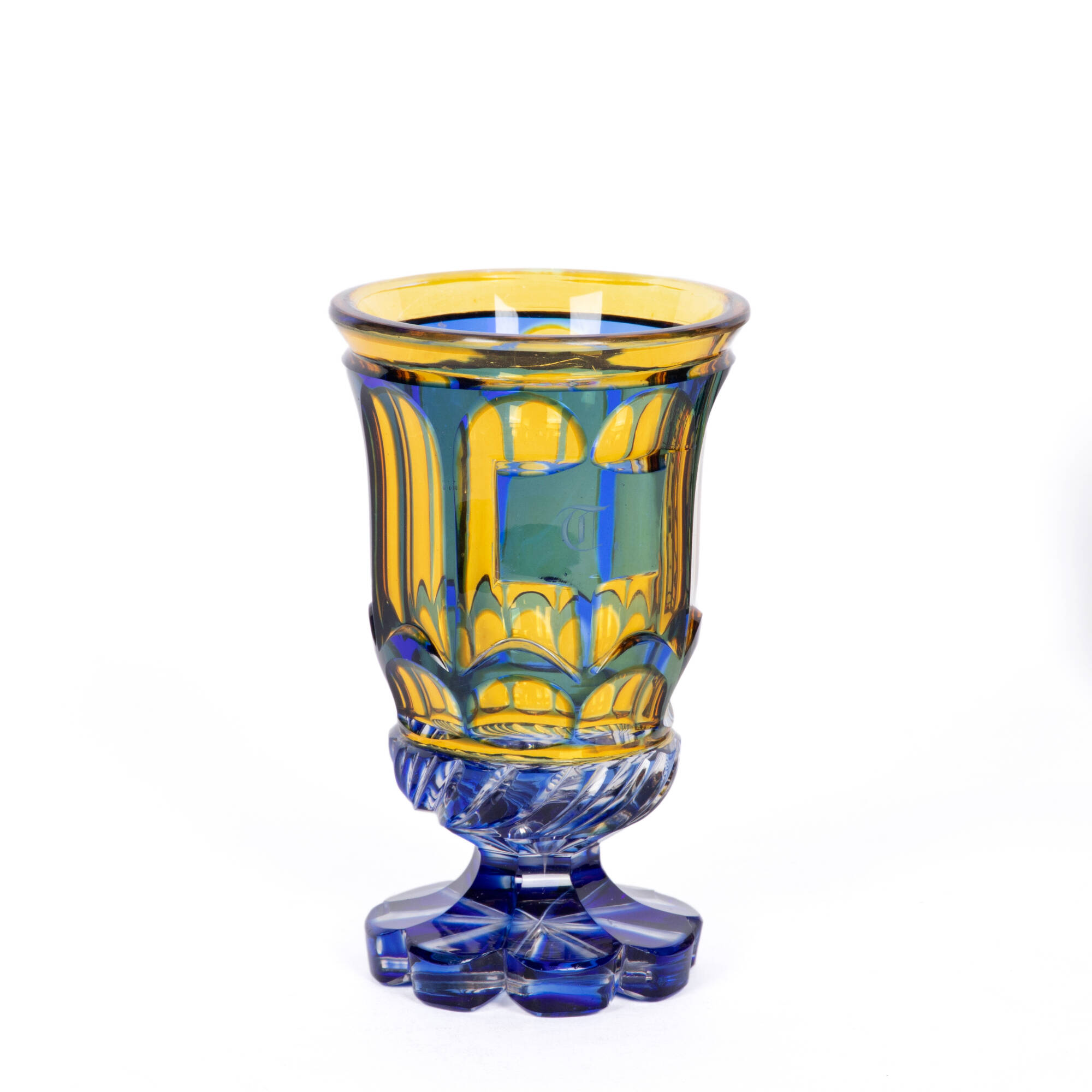
Franz Zach and Harrach Glass, Goblet, amber and cobalt glass, ca. 1920, L11.2022.764.
Resources in the Collection
Artist Profile: Jason Quigno
Artist Profile: Maureen
Header Images
Left
Meyr's Neffe, Candleholder, glass with enamel, ca. 1900, L11.2022.1294.
Tom Woodruff, Allegory for Education, stained glass, 2000, 2000.601.1a.
James Breed, Landscape, glass, ca. 2014, 2025.38.82.
Center
Harry Boyer, Untitled, glass, 2000, 2020.32.1.
Leah Renee Gregoire, Garden Series: Awaiting Flight, pencil drawing on glass, 2018.62.13.
Cristian Onesto, Jellyfish Aquarium, Murano Artistic glass, ca. 2019, 2019.61.1.
Right
Dale Chihuly, Capri Blue Seaform, handblown glass, 2018, 2021.5.1.
Judi Weilbacher, Untitled, glass, 1998, 2017.18.44.
Artist Unknown, Fine Fly, glass, 1997, 2017.18.42.