

Medium: Daguerreotypes
Early cameras worked more like projectors, projecting a reversed image through a small opening onto an opposite surface, a natural phenomenon known as camera obscura or pinhole images. Such devices were used through the 16th century to study optics and astronomy when new lens technology allowed for brighter and sharper images.
This early technology could not become a photographic image until the use of light-sensitive materials, such as bitumen, became part of the process. Many scientists played a role in the development of using light-sensitive materials to record images that eventually led to the first photograph being developed by Nicéphore Niépce in 1826. It was made on a polished sheet of pewter covered in bitumen. The sheet was exposed to light for days, creating areas of unhardened bitumen that could be removed with a solvent, leaving behind an image, the first recorded photograph.
Niépce suddenly died in 1833, leaving behind his notes to Louis Daguerre, who became more interested in a silver-based photographic process. To make the image, a daguerreotypist polished a sheet of silver-plated copper to a mirror finish. They then treated it with chemicals to make the surface light-sensitive. After it was exposed to light to capture the image, it was given a chemical bath to end its sensitivity to light, rinsed, dried, and sealed behind a protective piece of glass.
This process created a mirror-like silver-surfaced plate that appears either positive or negative depending on the angle at which it is viewed. “Daguerreotypes” were introduced worldwide in 1839 as the first publicly available photographic process and were the primary photographic process until the late 1850s.
Explore daguerreotypes in the collection
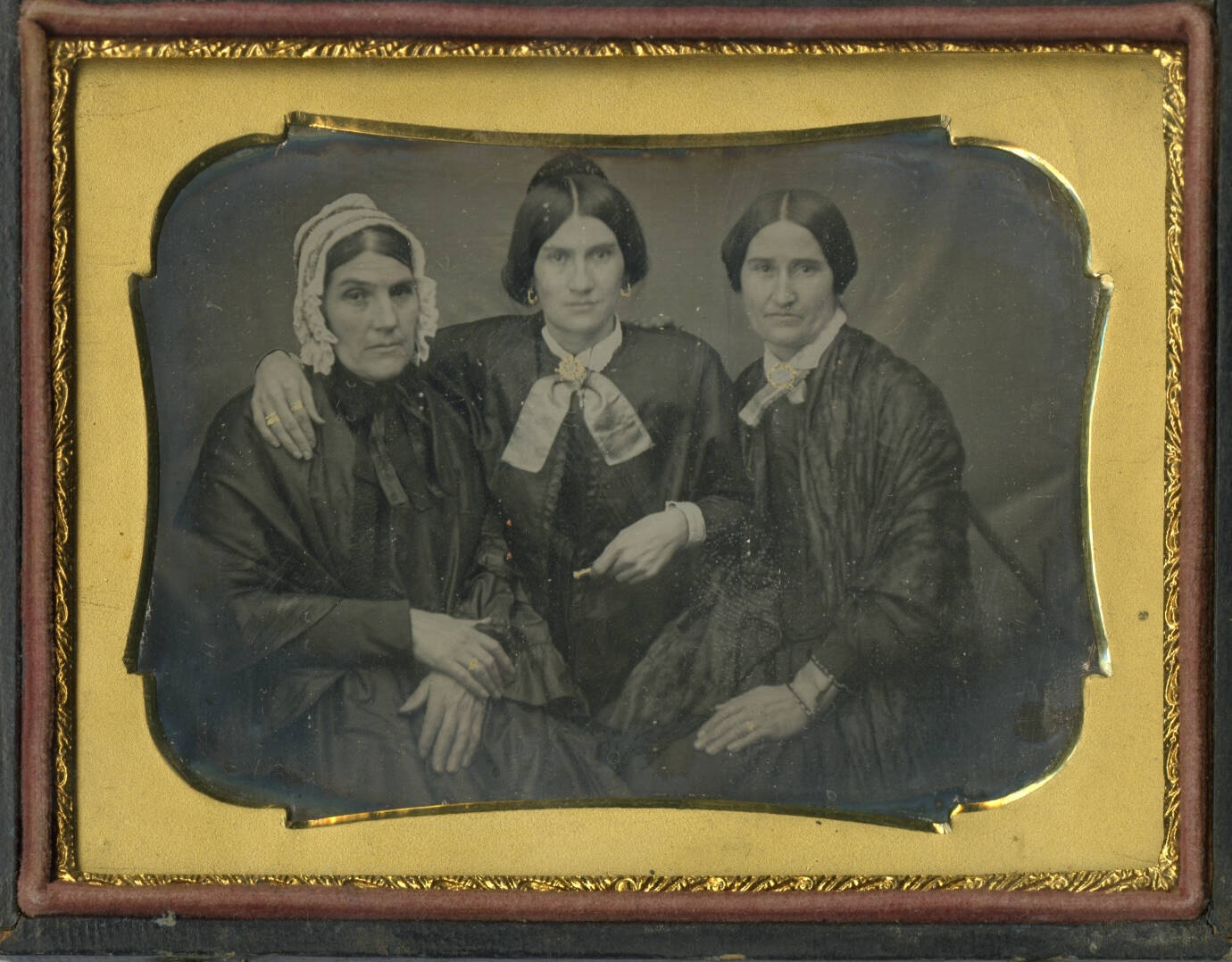
Artist Unknown, Untitled (Portrait of Three Women), Daguerreotype, ca. 1860, 2021.33.24.
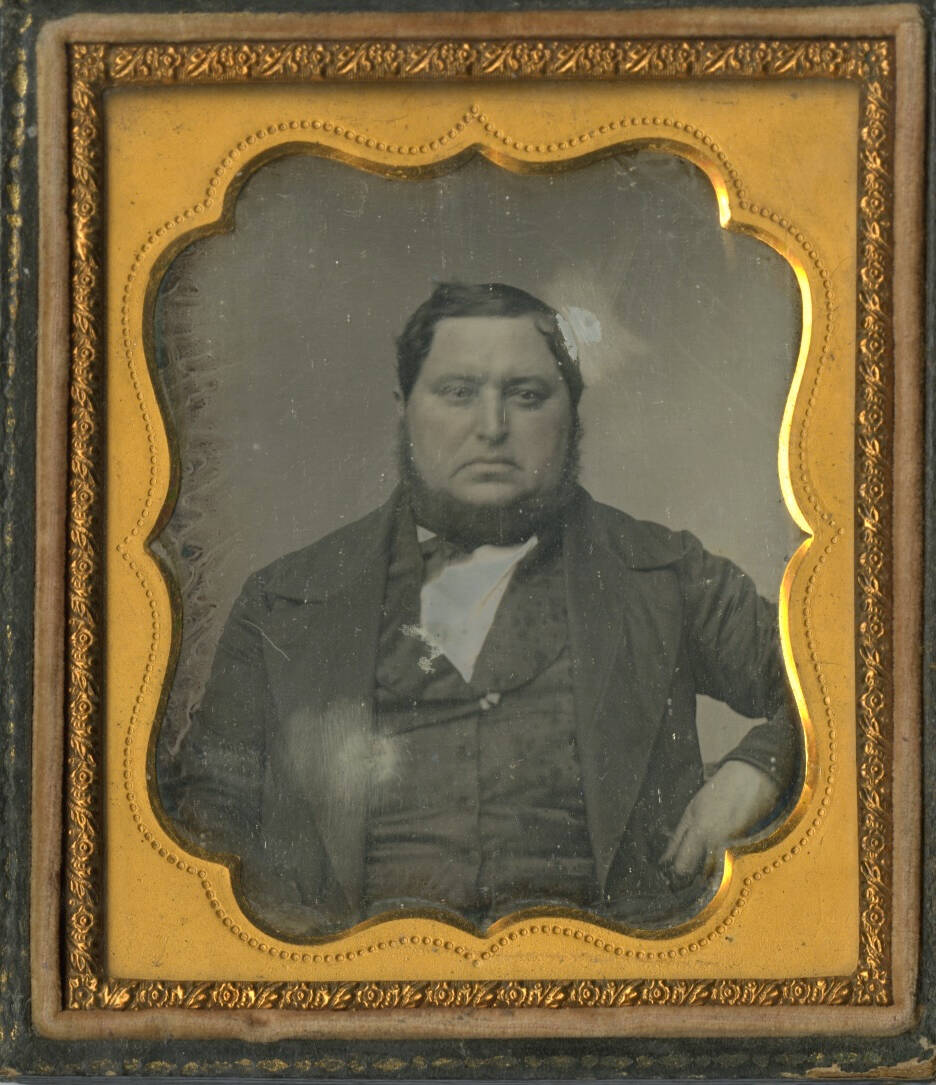
Artist Unknown, Untitled (Portrait of a Man), daguerreotype, ca. 1870, 2021.33.59.
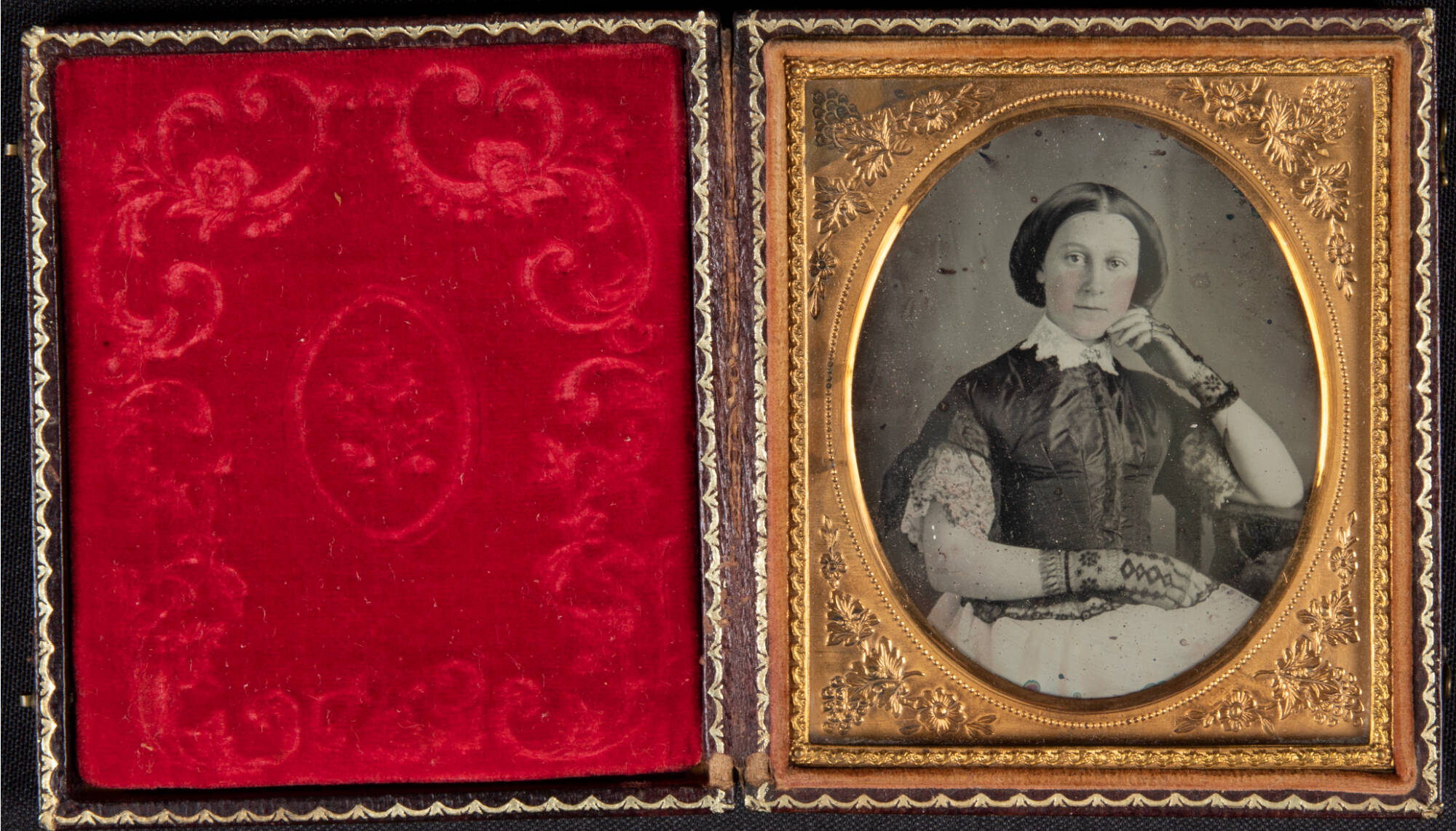
Artist Unknown, Untitled (Woman with Gloves), daguerreotype in case, ca. 1855, L11.2022.881.
Resources in the Collection
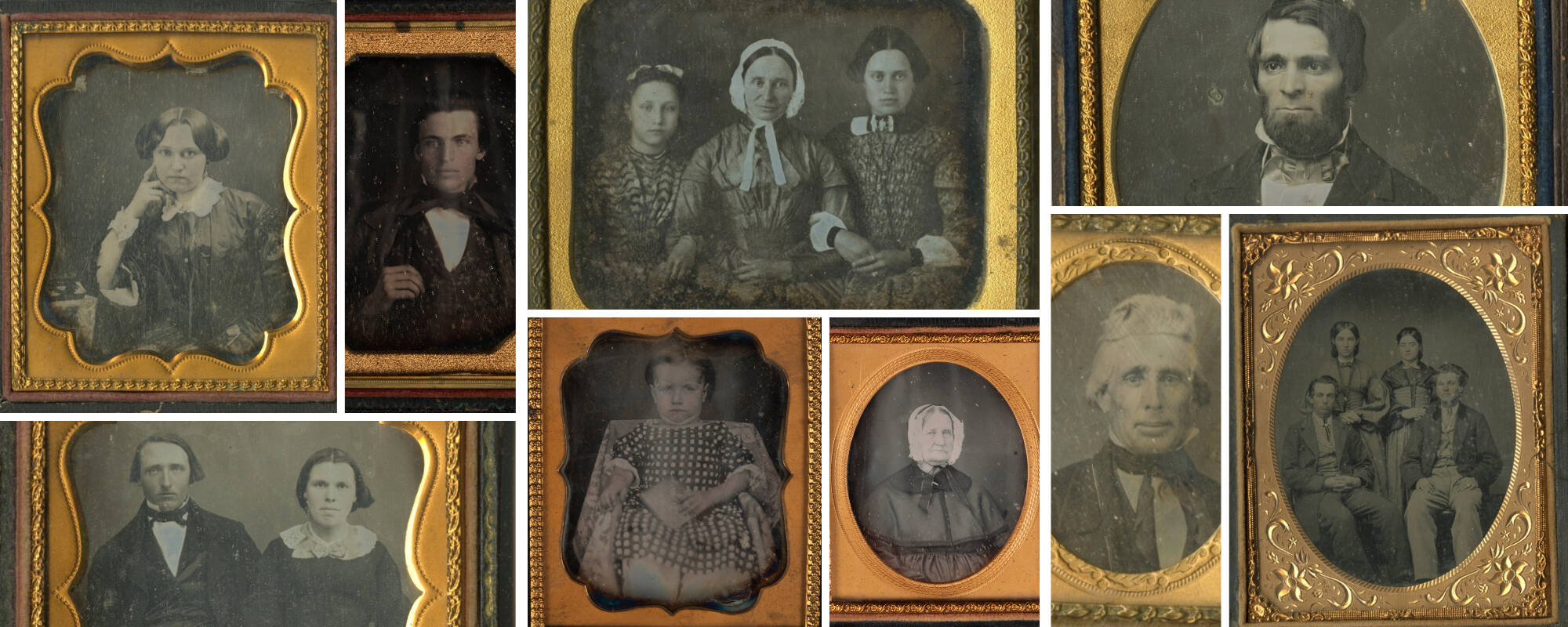
Header Images
Left
Artist Unknown, Untitled (Portrait of a Woman), daguerreotype, ca. 1870, 2021.33.58.
Artist Unknown, Untitled (Man with Floral Vest), daguerreotype, ca. 1860), L11.2022.911.
Artist Unknown, Untitled (Portrait of Man and Woman), daguerreotype, ca. 1860, 2021.33.34.
Center
Artist Unknown, Untitled (Portrait of Three Women), daguerreotype, ca. 1860, 2021.33.27.
Artist Unknown, Untitled (Young Girl with Plaid Dress and Book), daguerreotype, ca. 1860, L11.2022.919.
Artist Unknown, Untitled (Older Woman with Bonnet), daguerreotype with case, ca. 1860, L11.2022.907.
Right
Artist Unknown, Untitled (Portrait of a Man), daguerreotype, ca. 1865, 2021.33.31.
Artist Unknown, Untitled (Portrait of a Man), daguerreotype, ca. 1865, 2021.33.26.
Artist Unknown, Untitled (Portrait of Four Adults), daguerreotype, ca. 1860, 2021.33.33.