

Medium: Cartes de Visite
The albumen print was first published in 1847 by Louis Désiré Blanquart-Evrard as the first commercial method of producing a photographic print on a paper base from a negative. It used albumen found in egg whites to bind the photographic chemical to the paper, which is then dipped in silver nitrate, making the surface sensitive to UV light. This paper is set under the negative that the negative is exposed to light until the desired image is achieved. This process was the dominant form of photography from 1855 until the start of the 20th century.
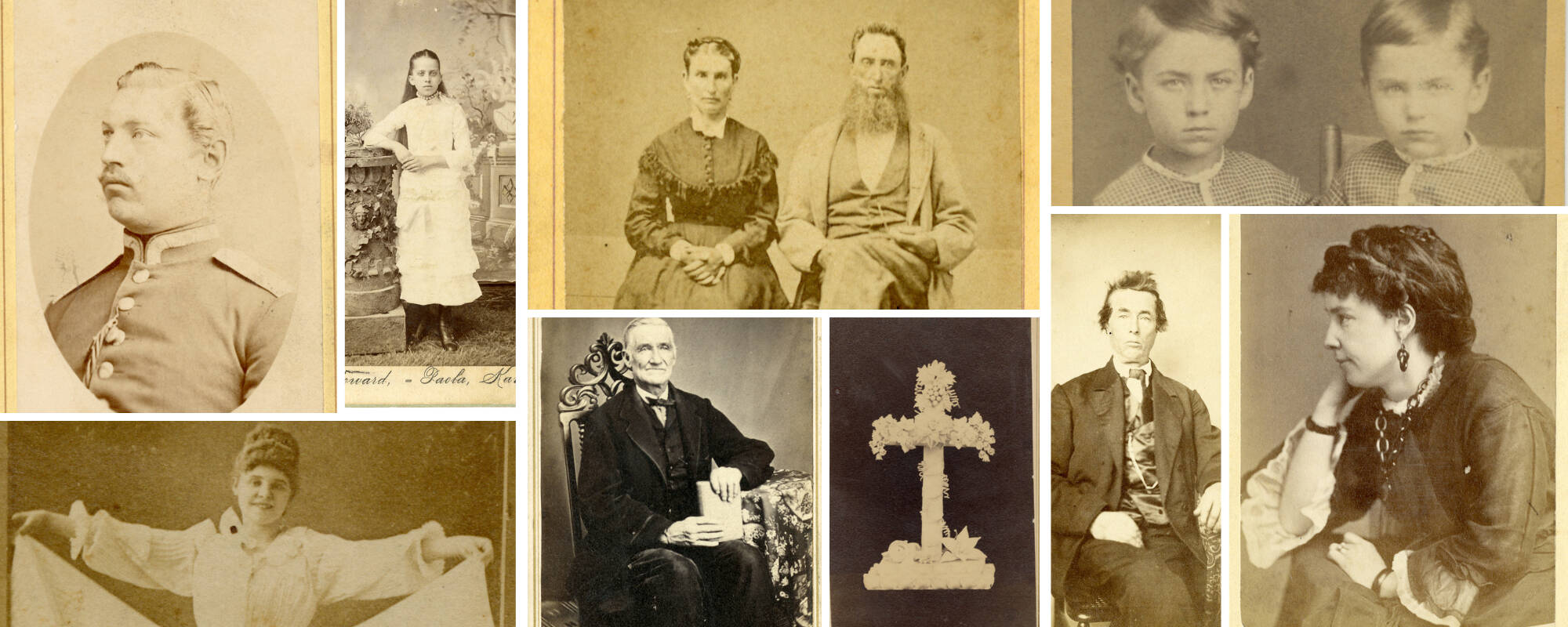
Cartes de visite are small photographs that used the albumen print process, where the thin paper photograph is attached to a thicker paper card. Each card is the size of a visiting or calling card, slightly larger than today’s business cards. The photographic cards were commonly traded among friends and visitors in the late 1860s. The popularity of these cards also led to the publication and collecting of photographs of prominent and famous individuals at the time.
Explore Cartes de visite in the collection
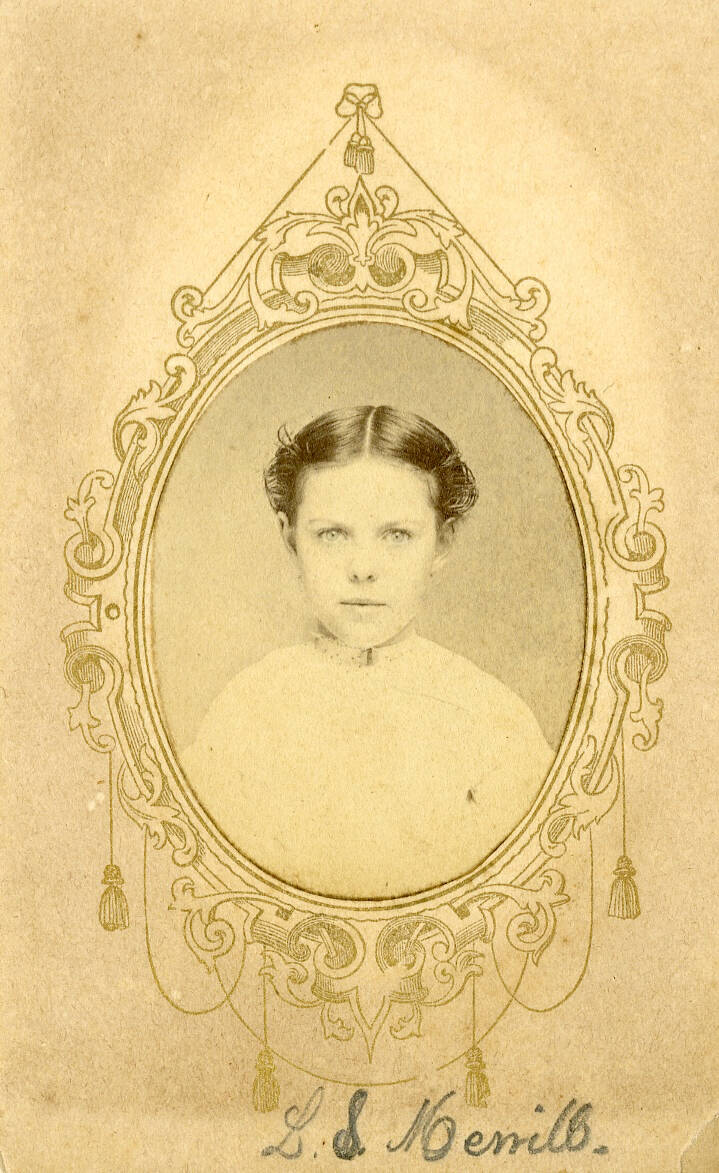
Artist Unknown, Untitled (Lizzie), carte de visite, ca. 1865, 2020.1.67.
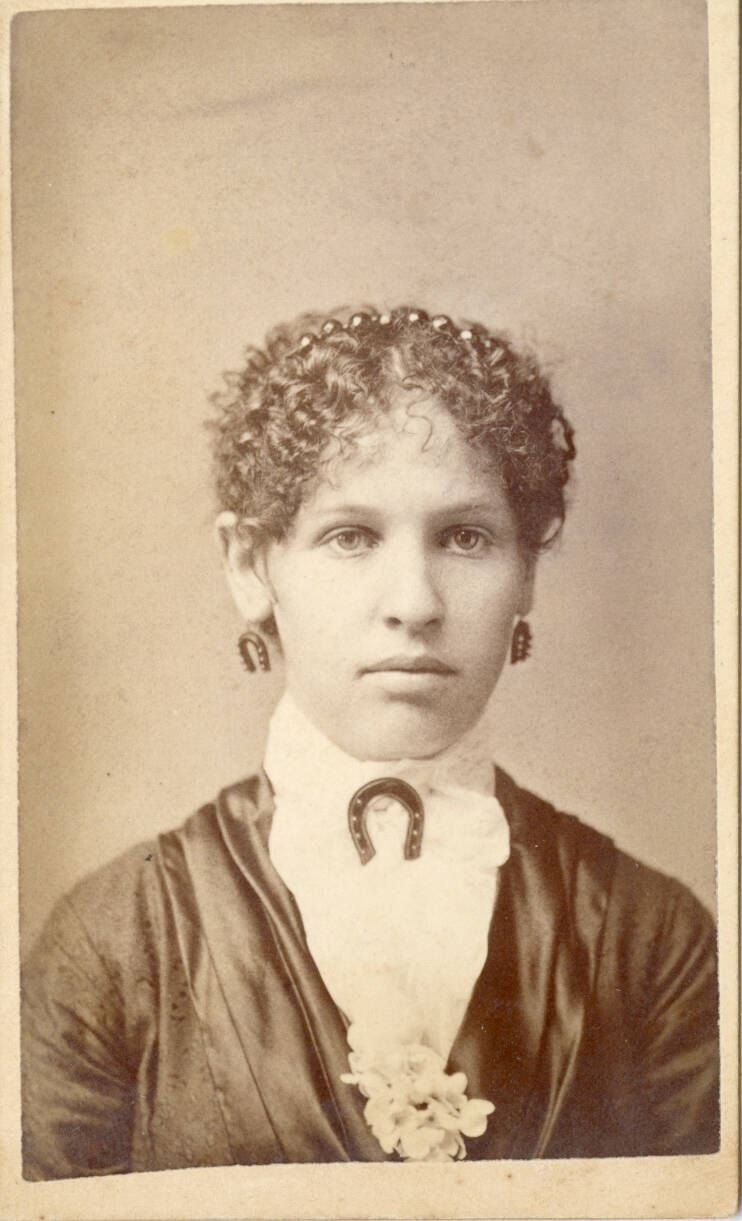
Artist Unknown, Untitled (Portrait of a Woman) (back), carte de visite, ca. 1900, L11.2022.126 (8).
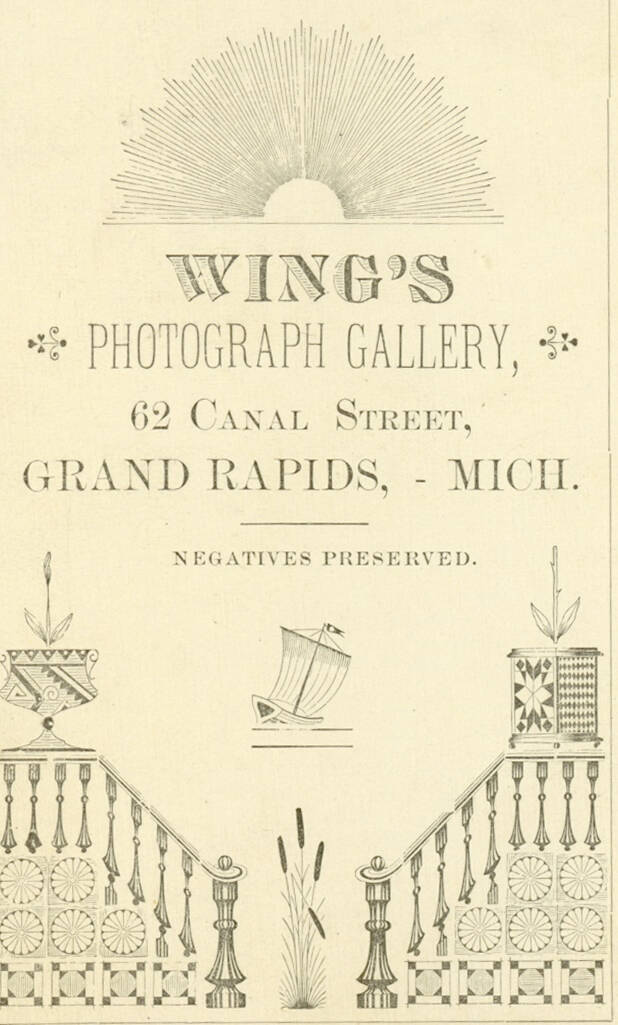
Artist Unknown, Untitled (Portrait of a Woman) (back), carte de visite, ca. 1900, L11.2022.126 (8).
Resources in the Collection
Header Images
Left
Artist Unknown, Untitled (Man Looking to the Left), carte de visite, ca. 1900, L11.2022.126 (88).
Artist Unknown, Untitled (Fannie E. Young), carte de visite, ca. 1880, 2020.1.77.
Artist Unknown, Untitled (Woman Holding Dress), carte de visite, ca. 1870, L11.2022.278 (106).
Center
J.F. Wyant, Untitled (Seated Man and Woman), carte de visite, ca. 1870, 2020.1.76.
J.B. Momeyer, Untitled (Seated Man with Book), carte de visite, ca. 1875, 2020.1.66.
E.G. Weld & Son, Untitled (Cross), carte de visite, ca. 1870, L11.2022.278 (68).
Right
Artist Unknown, Untitled (Portrait of Two Children), carte de visite, ca. 1870, 2021.33.347.
H.D. Cole, Untitled (Seated Man), carte de visite, ca. 1880, 2020.1.68.
Ludwig Melhorn, Untitled (Seated Woman with Full Dress), carte de visite, ca. 1865, 2020.1.71.