

Medium: Graphite
Graphite has been a common drawing tool in Europe since the 16th century, but its use became more widespread during the late 18th century. The mineral graphite is a crystalline form of the element carbon, which occurs naturally in different rock formations. In early uses, it was cut into sticks and wrapped in twine or a porte-crayon, a tool designed to hold small pieces of chalk or charcoal. Nicolas-Jacques Conté later invented pencils, a word derived from the Latin word for brush, which were fabricated from clay or wood and lower-quality graphite. Today’s pencils are very similar but come in diverse qualities that help artists control both the texture and tonal value of a drawn line. While many artists choose to use graphite as their primary medium, it is also common for artists to sketch with graphite as a preliminary drawing for works completed in other mediums.
Explore graphite drawings in the collection.
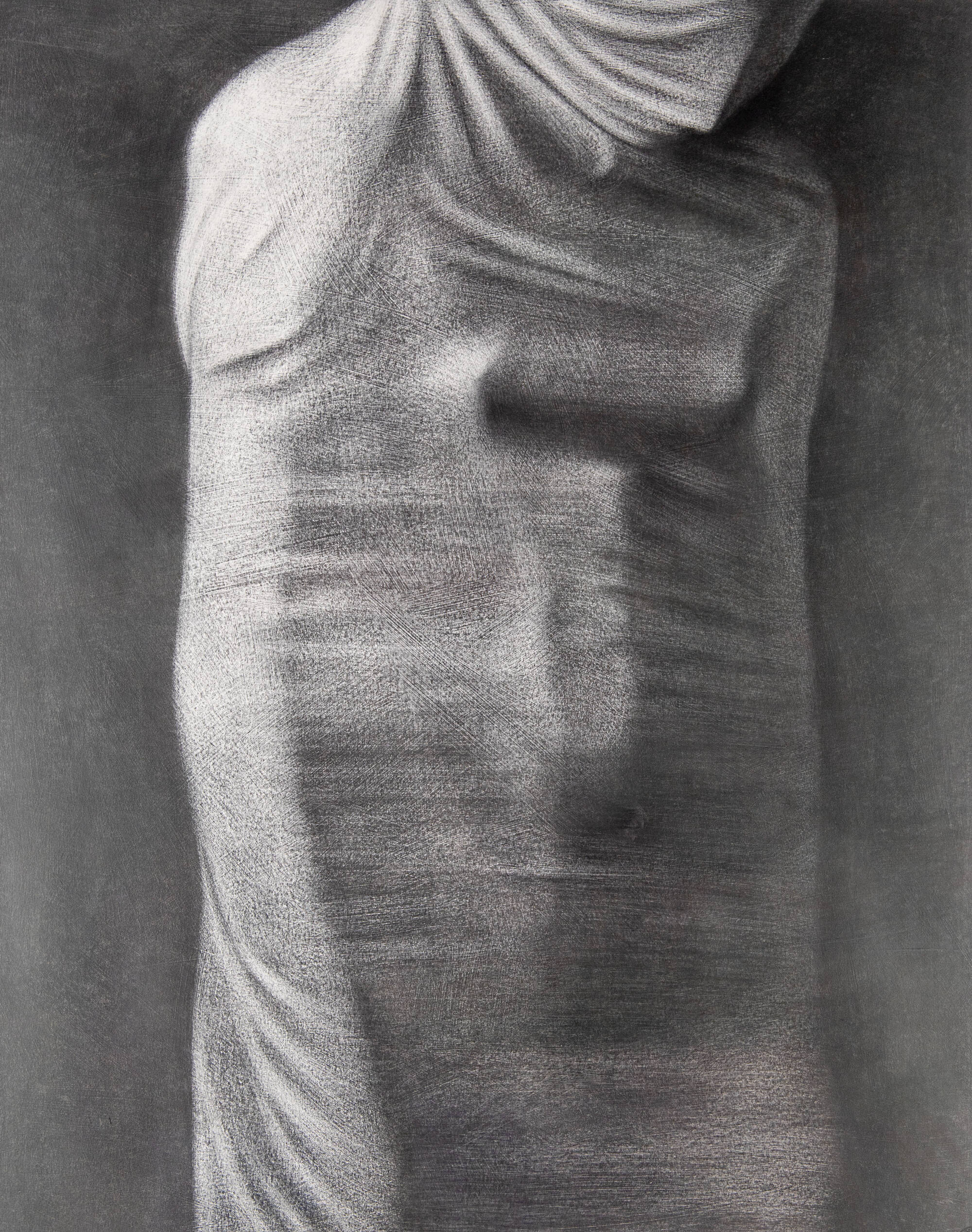
Deborah A. Rockman, Study for Death Dream, graphite on paper, circa 2002, 2002.540.1
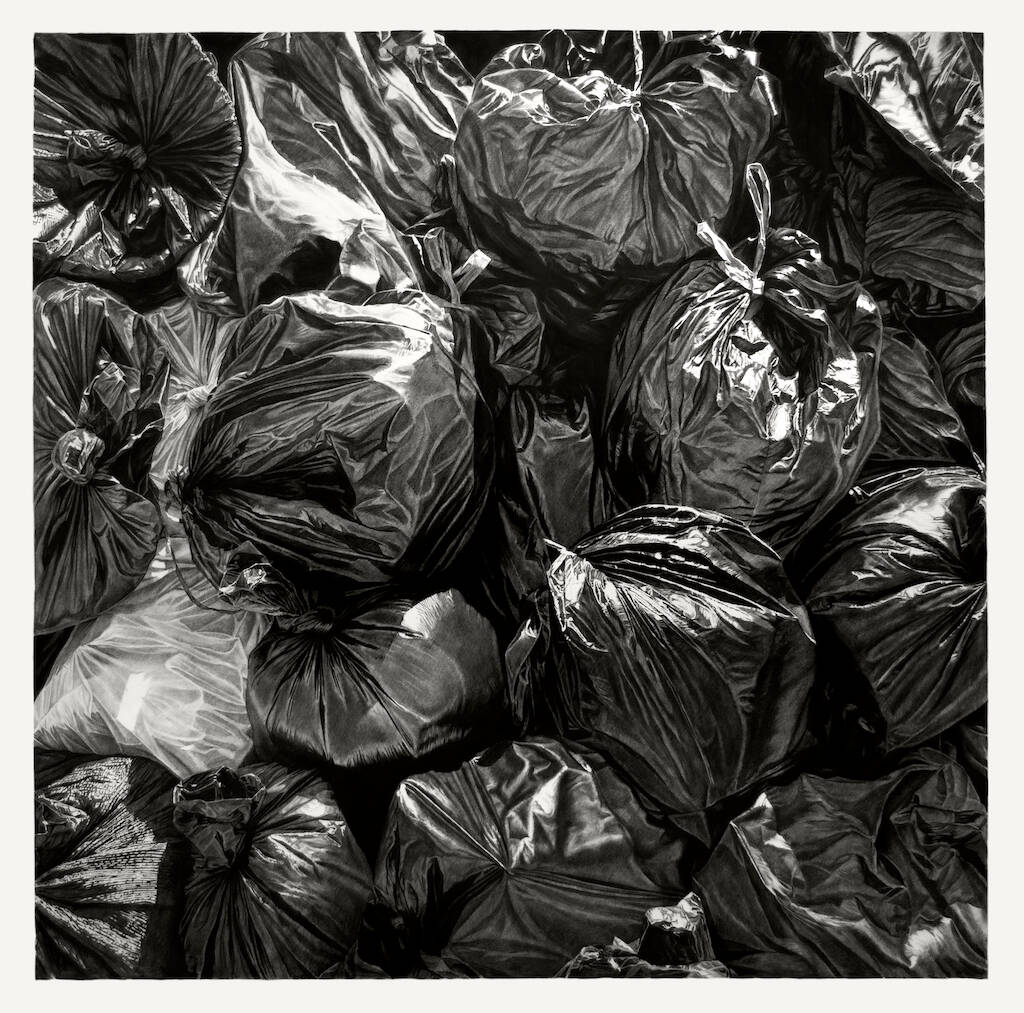
Joel Daniel Phillips, Neighborhood Still Life #2, charcoal and graphite on paper, 2017, 2025.48.2.
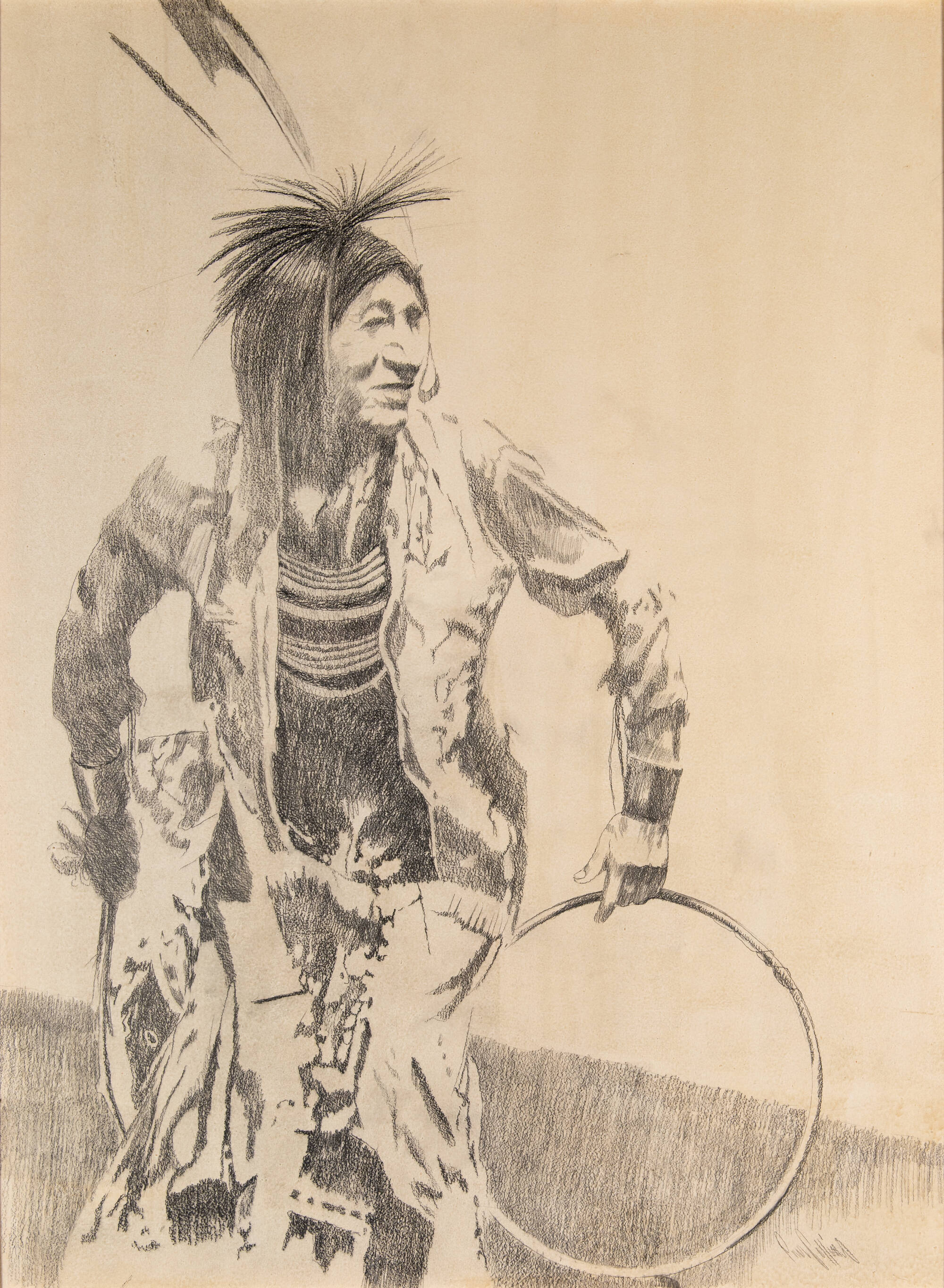
Paul Collins, Sun Dance, graphite on masonite, circa 1973. 2003.416.1
Resources in the Collection

Artist Sketches and Studies

Paul Collins
Header Images
Left
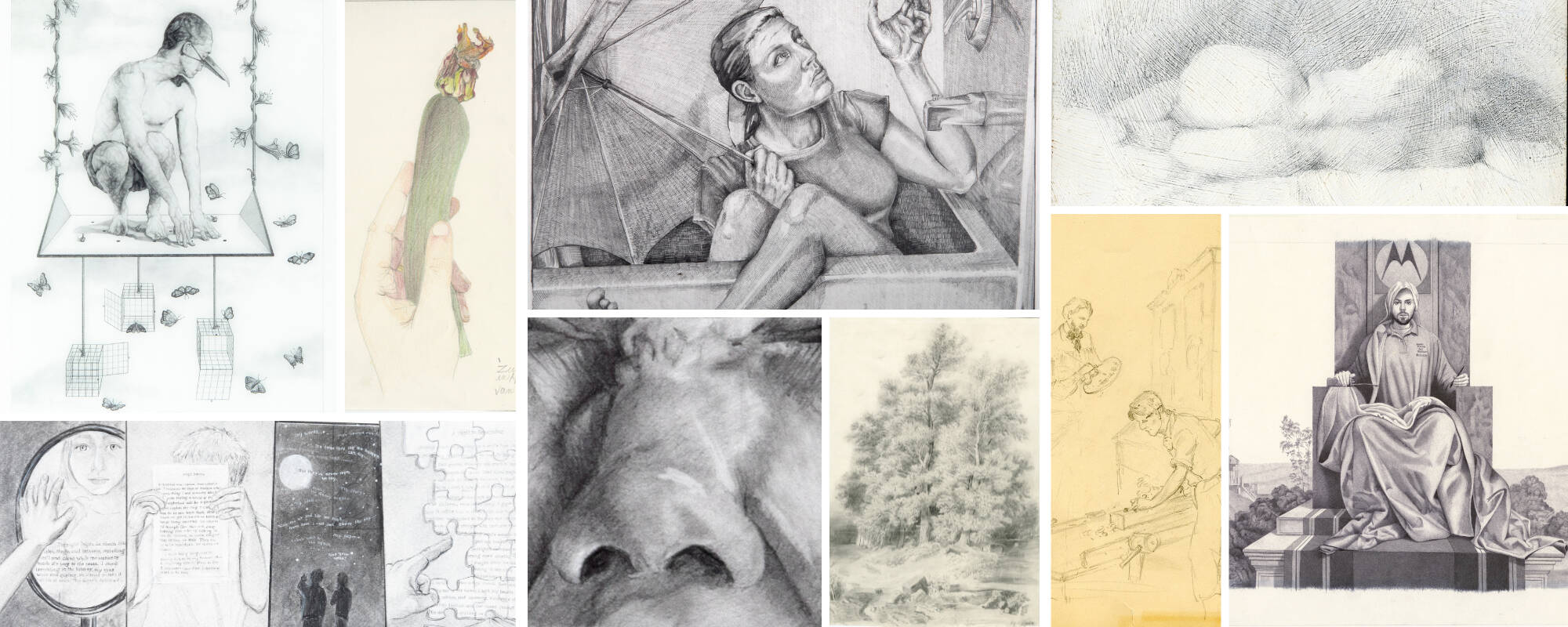
Leah Renee Gregoire, Garden Series: Awaiting Flight, pencil on glass, 2018.62.13.
Beth Van Hoesen, Zucchini in Hand, pencil and colored pencil, 1977, 2012.52.28.
Julie Feutz, Snapshots, charcoal and pencil, 2002, 2003.133.1.
Center
Kimberly Crawford, Self-Portrait, graphite, 2004, 2004.105.1.
Jen Jary, Untitled, graphite, 2004, 2004.115.1.
Artist Unknown, Untitled, graphite, 1853, 2020.1.405.
Right
Stewart Ashlee, Untitled, graphite, 2019.68.20.
Mathias J. Alten, Sketches of Furniture Workers, graphite, ca. 1920, 2013.4.31b.
Adam Tetzlaff, Grand Rapids Art Museum Security, graphite, 2005.0175.1.