

Exhibit- Stephen Duren: A Life of Painting
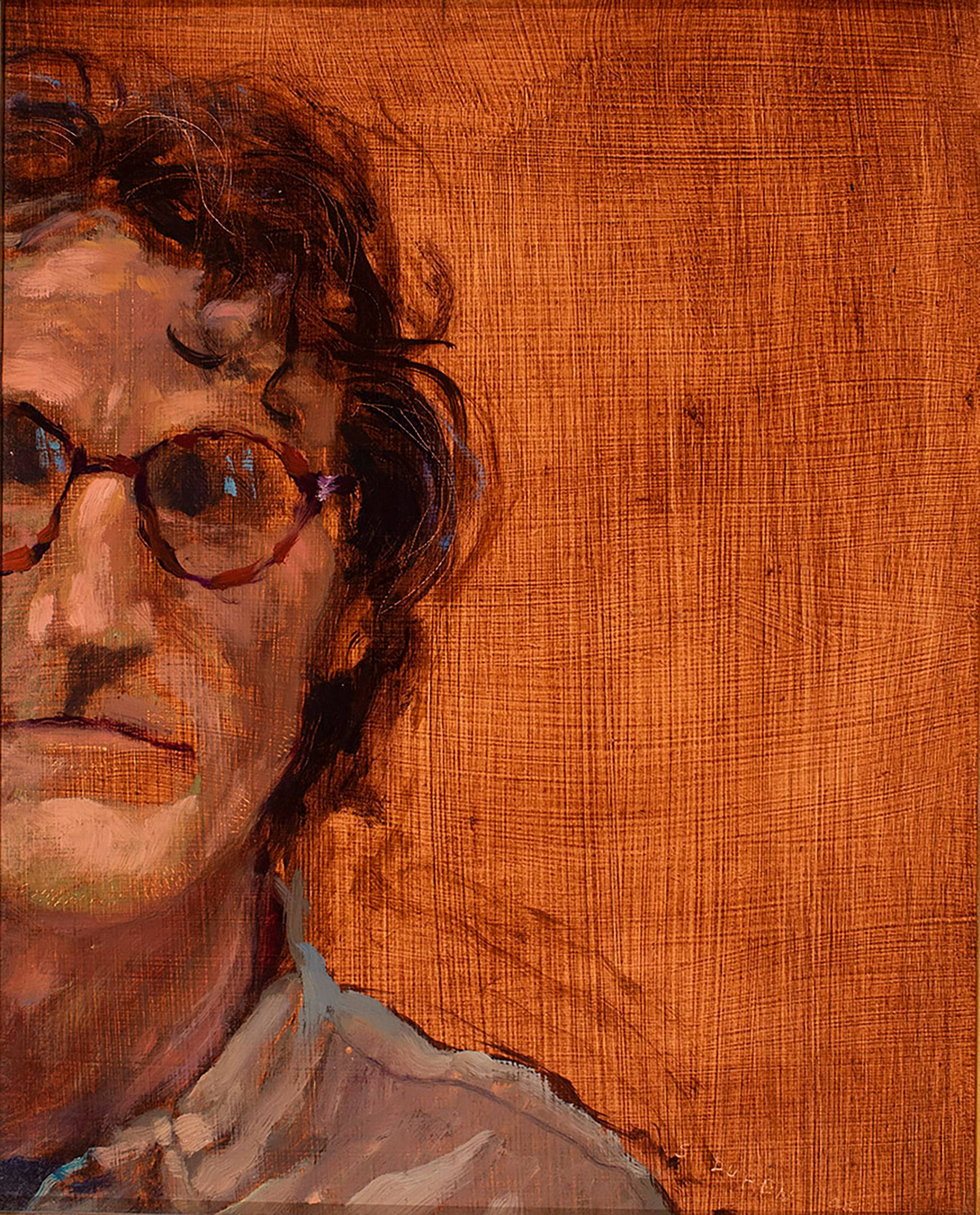
Stephen Duren, Self, oil on canvas, Collection of the Artist.
Stephen Duren: A Life of Painting
Stephen Duren was born in 1948 in Fairfield, a community set amidst the Coastal Ranges of California and located halfway between San Francisco and Sacramento. Growing up he would spend time on his grandfather’s ranch in nearby Vacaville, slowly being wooed by the light and landscape of the foothills. His time alone with the land would prove to be both formative and foundational in his approach to art and life. It drove him to paint outdoors, to seek solace from loneliness in nature, and to filter much of his painting through the land and amber light of Northern California.
At age 14, inspired by his uncle’s artwork that hung on the walls of his grandfather’s home, Duren began to paint and has never stopped. After high school he joined the Navy, serving a four-year tour and eventually becoming a staff artist and broadcast journalist. He returned home in 1972 and completed degrees at the San Francisco Art Institute and Sacramento State University, often eschewing the classroom and instruction for the outdoors. In 1978 he moved to West Michigan and began teaching, an endeavor that lasted six years before the lure of full-time painting drew him back into the field.
Sixty years have passed since Duren first took up a paintbrush. During this time, his work has experienced a push and pull between realism and abstraction, resulting in an evolving stylistic approach. Some of his works are direct renderings of nature from his experience painting plein-air (outdoors), while others are reductions of natural and artificial spaces into forms, lines, and colors. Stephen Duren: A Life of Painting explores this evolution, his extensive career, and his deep connection to the landscape in California, Michigan, and abroad. Organized by the Grand Valley State University Art Gallery and hosted concurrently with the Dennos Museum Center, the exhibition draws from several public and private collections. Between both venues, the exhibition consists of over 90 works of art, including landscapes, abstractions, self-portraits, still lifes, allegories, sketches, prints, and plein-air pieces.
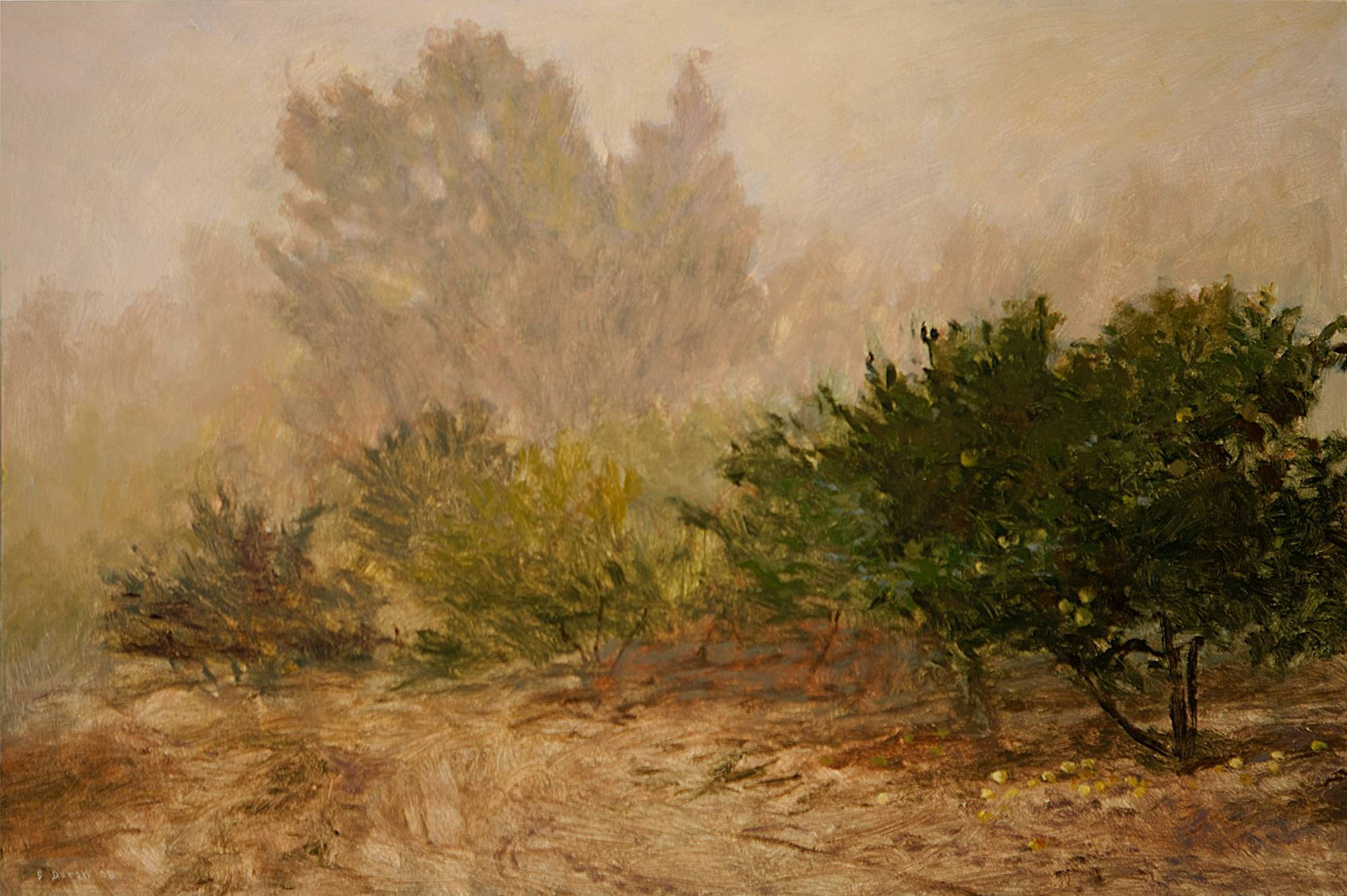
Stephen Duren, Orchard in Fog, California, oil on board, 2006, Collection of the Artist
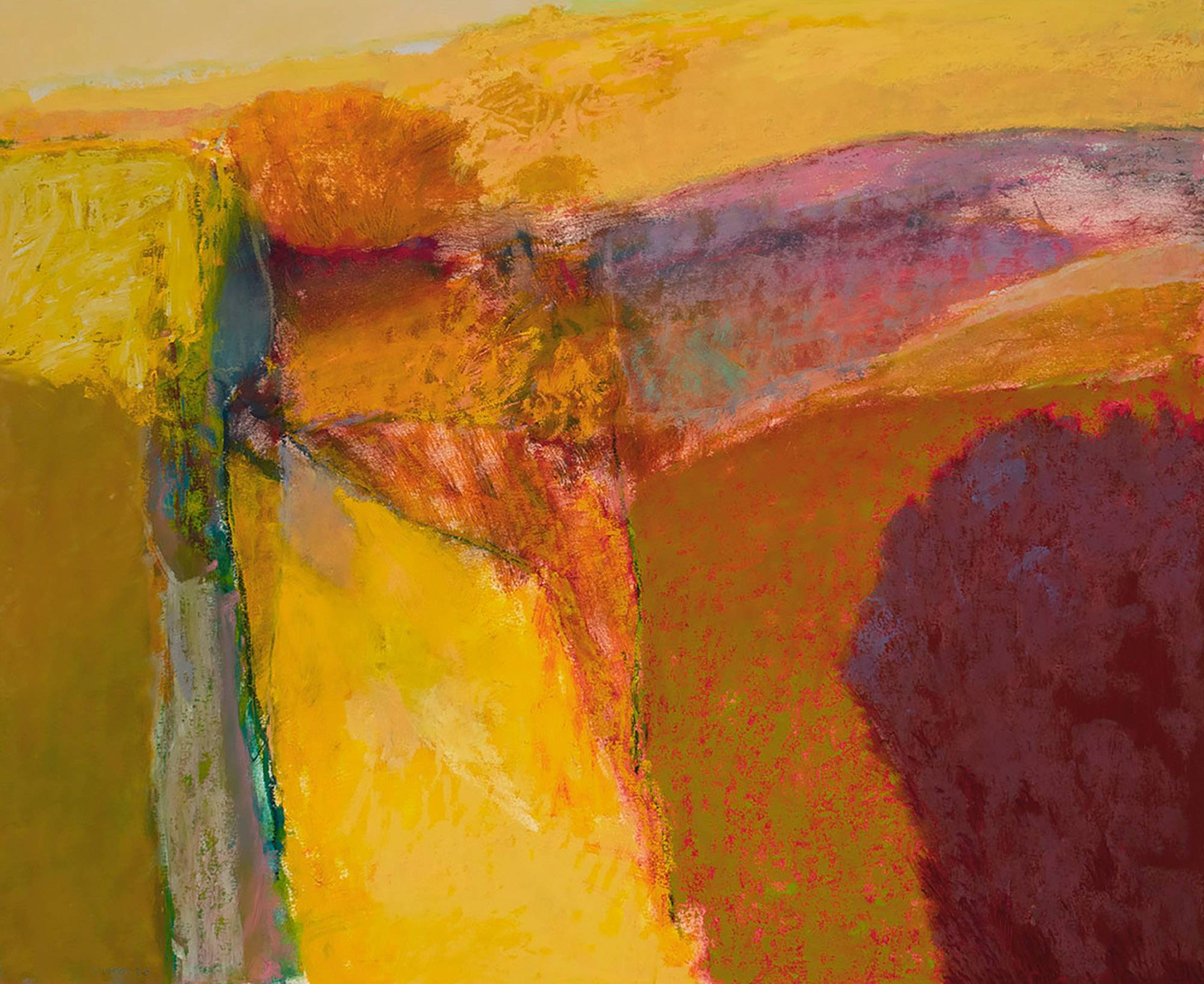
Stephen Duren, Untitled Landscape (620), oil on paper, 2020, Collection of Rosanna and John Nelson.
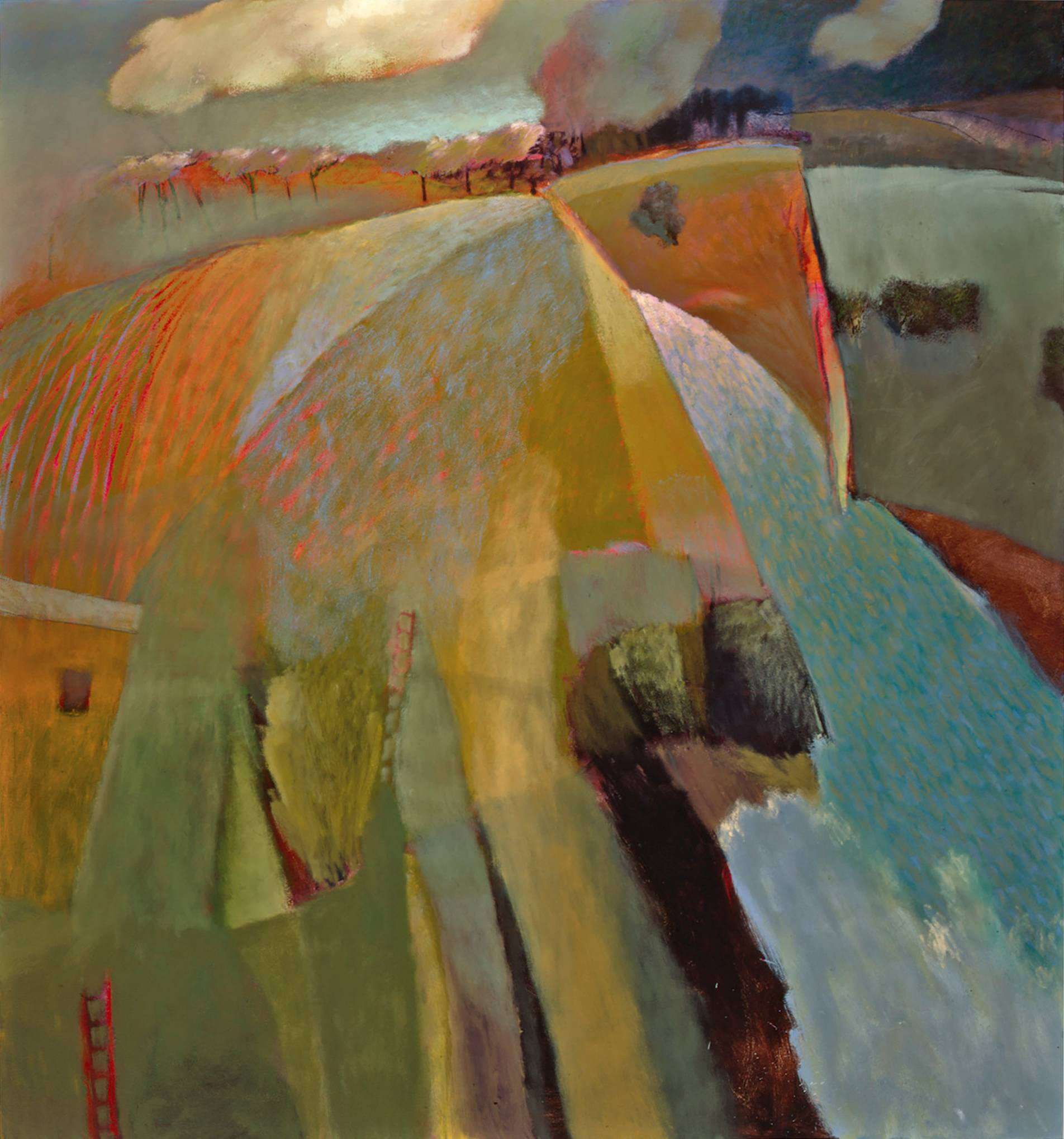
Stephen Duren, Untitled Landscape (G407833), oil on canvas, 1998, Collection of Steelcase Inc.
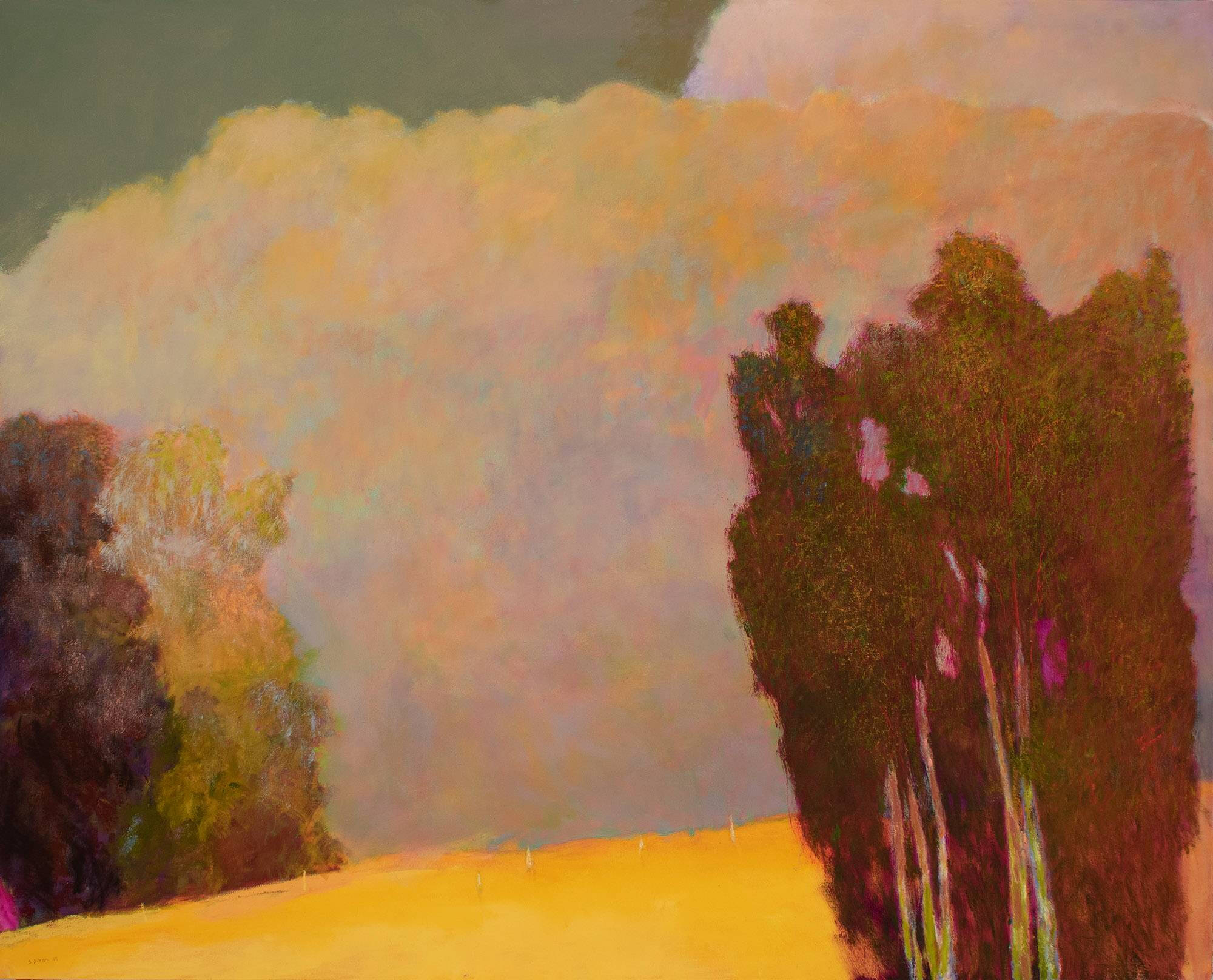
Stephen Duren, Untitled Landscape (4519), oil on canvas, 2019, Collection of Julie Duisterhof and Randy Damstra.
Artist Statement
My little granddaughter once asked, "Why do you have a pencil here?" I responded, "Why do you think I have a pencil here?" She replied, "Because you want to see what it does to the paper." After a pause, I said, "Exactly."
Maddie's refreshing perspective on the purpose of a pencil pretty much describes how I work. I make a mark and watch to see what it does to the paper (or canvas), similar to the approach of the abstract expressionists of the 1940s and 1950s. I rarely know a painting's end until I get there.
My work does not evoke strong insights into the human condition or display uncommon originality. Rather, it falls into a category that the iconic critic Robert Hughes described as "…distinct from propaganda, complaint or 'cutting edge' ephemera."
I am a late bloomer. After a stint in the Navy, I enrolled at the San Francisco Art Institute and did not begin to mature as a painter until my early 40s. Except for a brief cathartic exploration into figurative allegories in the 1980s, my main painting interests have ranged from total abstraction to stylized realism inspired by the landscape.
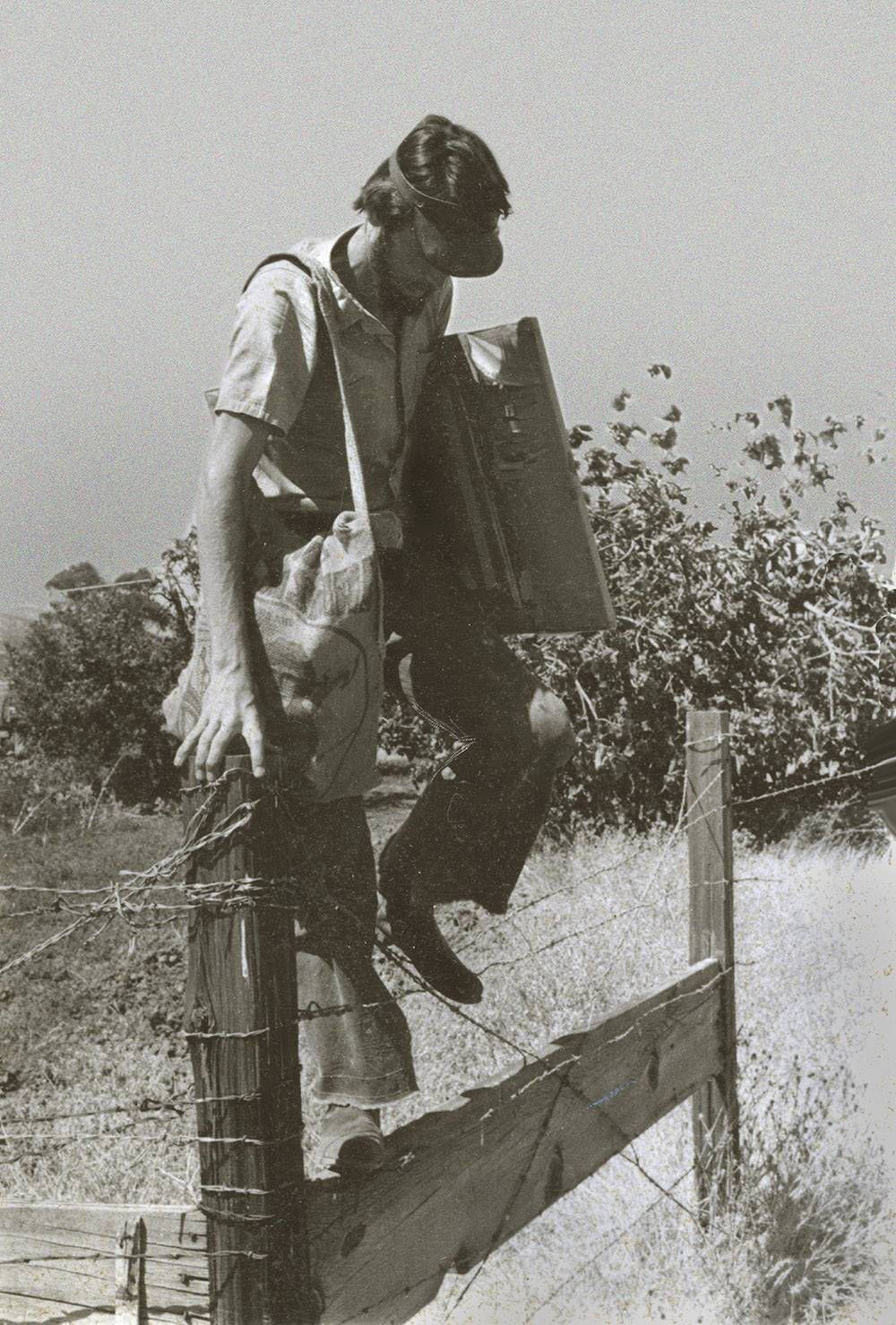
Stephen Duren fence hopping in California, 1972, Courtesy of the Artist
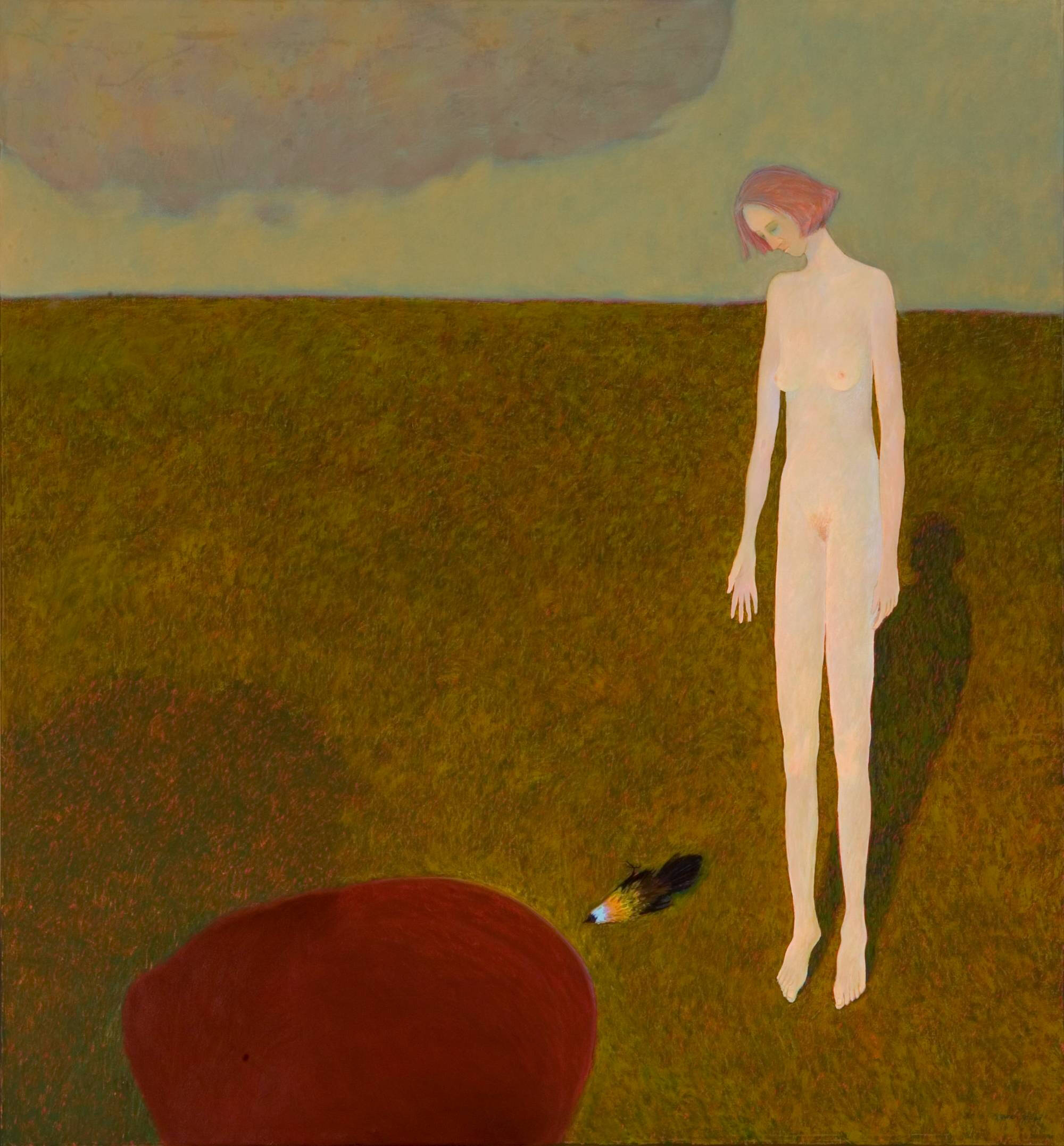
Stephen Duren, Figure with Bird, oil on canvas, 1988, 2023.51.1.
I occasionally leave my studio to paint outdoors directly from nature (plein air) and indulge in the romance of impressionistic realism. The challenge here, of course, is the avoidance of clichés. How does a painter of nature sidestep visual platitudes? Does it even matter? Are we less enriched viewing an image of rolling pastoral fields for the millionth time?
The paradox is obvious; a cliché points to an essential truth that we want to revisit again and again, and then jades us to that truth through its repetition. Still, I am willing to risk creating a potentially mundane painting to enjoy an intimate conversation with nature and immerse myself in the sensuous and mystical ambiance of the outdoors.
Michigan's Leelanau Peninsula offers me that transcendent conversation. Its rolling hills are similar to the terrain of my youth in northern California, where roads curved and undulated through wonderfully patterned orchards, vineyards, and cow pastures bathed in amber light. As a child, those elements of the countryside served as a kind of surrogate parent for me, which might explain why they remain integral to much of my work.
At the time of this writing, I have not picked up a brush since losing my sight in one eye several months ago. My depth perception and peripheral vision are gone, and I am experiencing hand tremors. These constraints have me reflecting on the possibility that my best work may be behind me, and at 75, this retrospective exhibition could be my swan song.
And then I am reminded of the maxim, The greatest roadblock to creativity is the lack of restrictions. I wonder what Auguste Renoir would have thought about this adage. For the last 30 years of his life, he suffered from crippling arthritis, forced to paint sitting down while others placed a brush in his gnarled hands. I suspect he would have preferred to work without these constraints and would have been just as creative. Me too.
For now, my joy of painting has been replaced with the pleasure of gardening, grandparenting, and working on a book –– mainly a visual memoir that will include numerous paintings not seen in this retrospective. Maybe as I continue to reflect upon 60 years of painting, my physical restrictions will spark a fresh approach and renewed curiosity about what a pencil can do to paper. Or brush to canvas.
- S. Duren
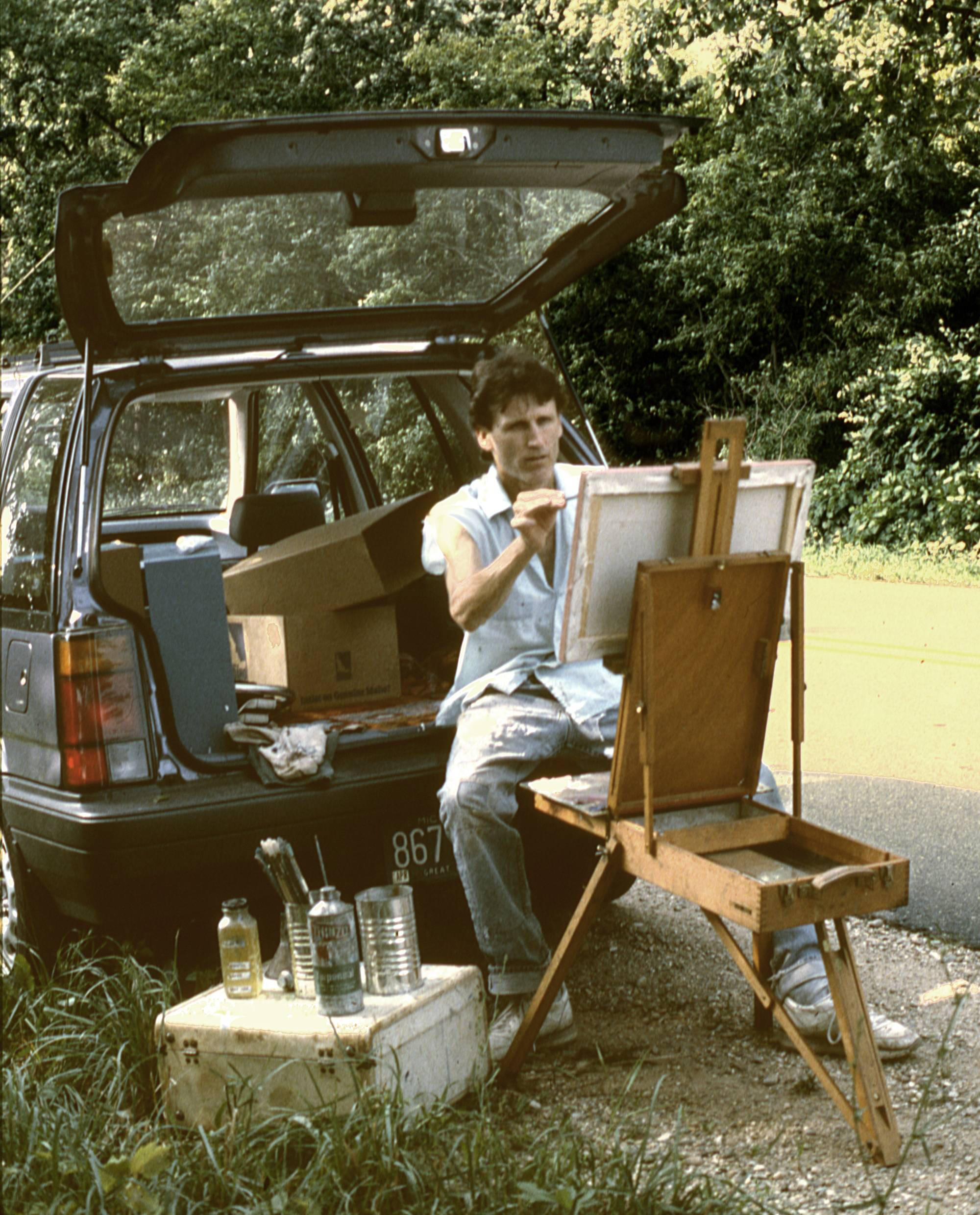
Stephen Duren, plein-air painting out of the back of his car, 1987, Courtesy of the Artist.
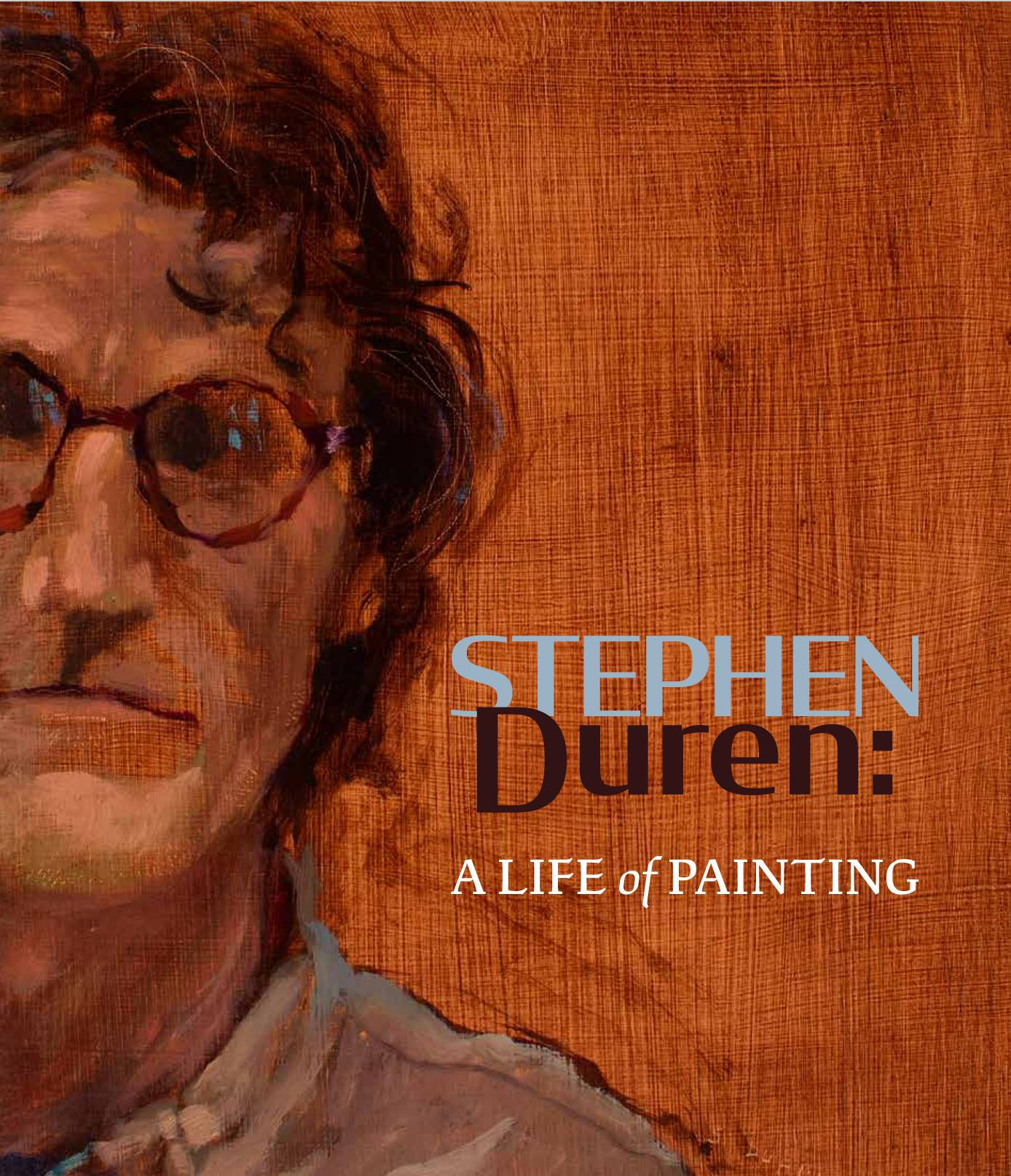
Exhibition Catalogue
Title: "Stephen Duren: A Life of Painting"
Authors: Joel Zwart, Stephen Duren, Henry Luttikhuizen, Sigrid Danielson, Ellen Adams
Sixty years have passed since Duren first took up a paintbrush. During this time, his work has experienced a push and pull between realism and abstraction, resulting in an evolving stylistic approach. Some of his works are direct renderings of nature from his experience painting plein-air (outdoors), while others are reductions of natural and artificial spaces into forms, lines, and colors. Stephen Duren: A Life of Painting explores this evolution, his extensive career, and his deep connection to the landscape in California, Michigan, and abroad. This 84-page catalog, published in conjunction with the exhibition, includes all the works from both exhibition venues and a number of essays.
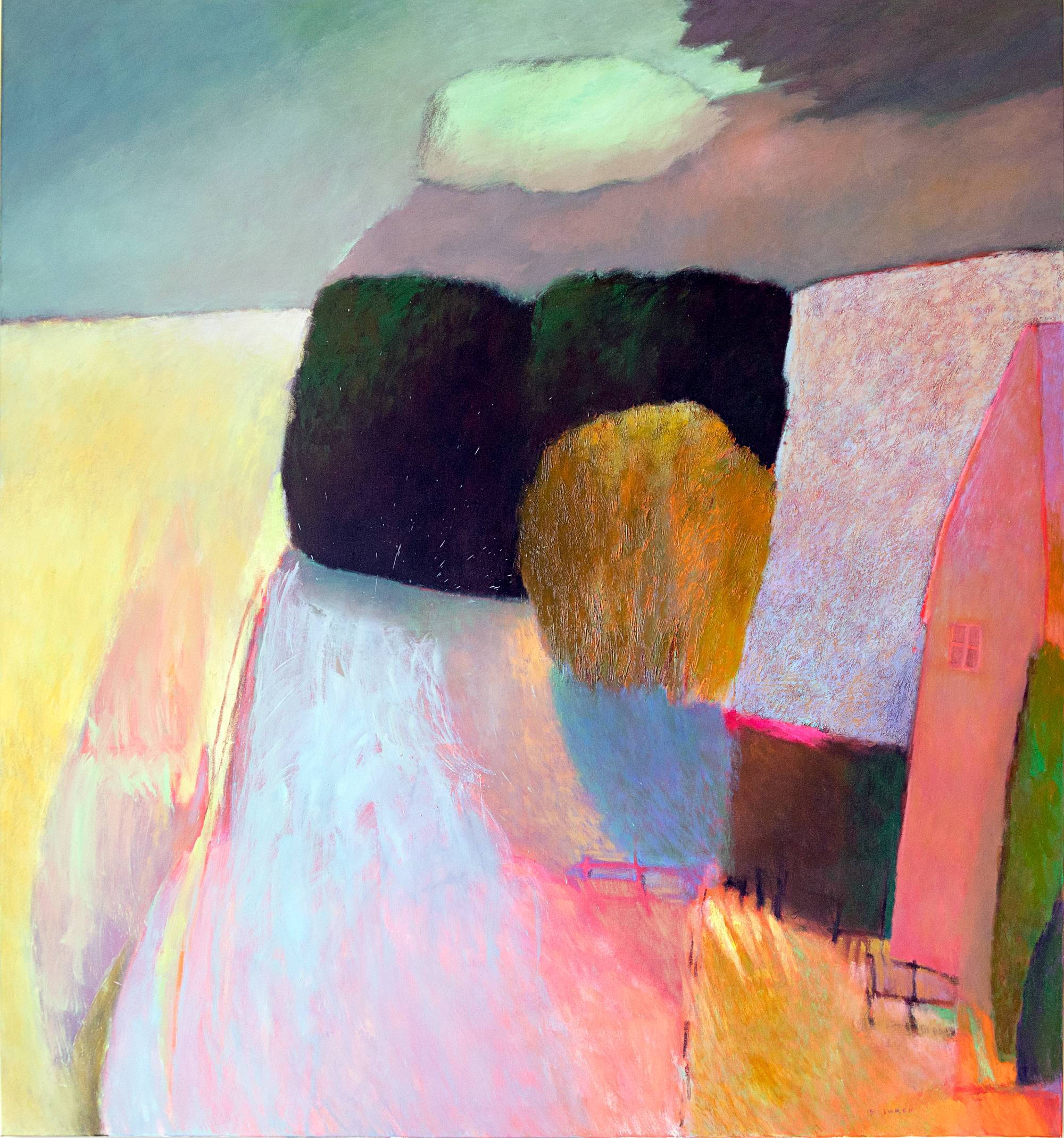
Stephen Duren, Untitled, oil on canvas, ca 1990, 2007.004.1.
Stephen Duren at GVSU
We are proud to be the largest public collection of Stephen Duren's work, with over 150 and counting. To view them and find locations throughout our campus, please visit our online collection of Stephen Duren.
This exhibit is no longer on display.
GVSU Performing Arts Center Gallery, Allendale Campus
August 28 - November 3, 2023
For this exhibition, the GVSU Art Museum partnered with the Dennos Museum Center in Traverse City, Michigan to co-host a special collaborative exhibition at their location from September 17 to January 7, 2024.