

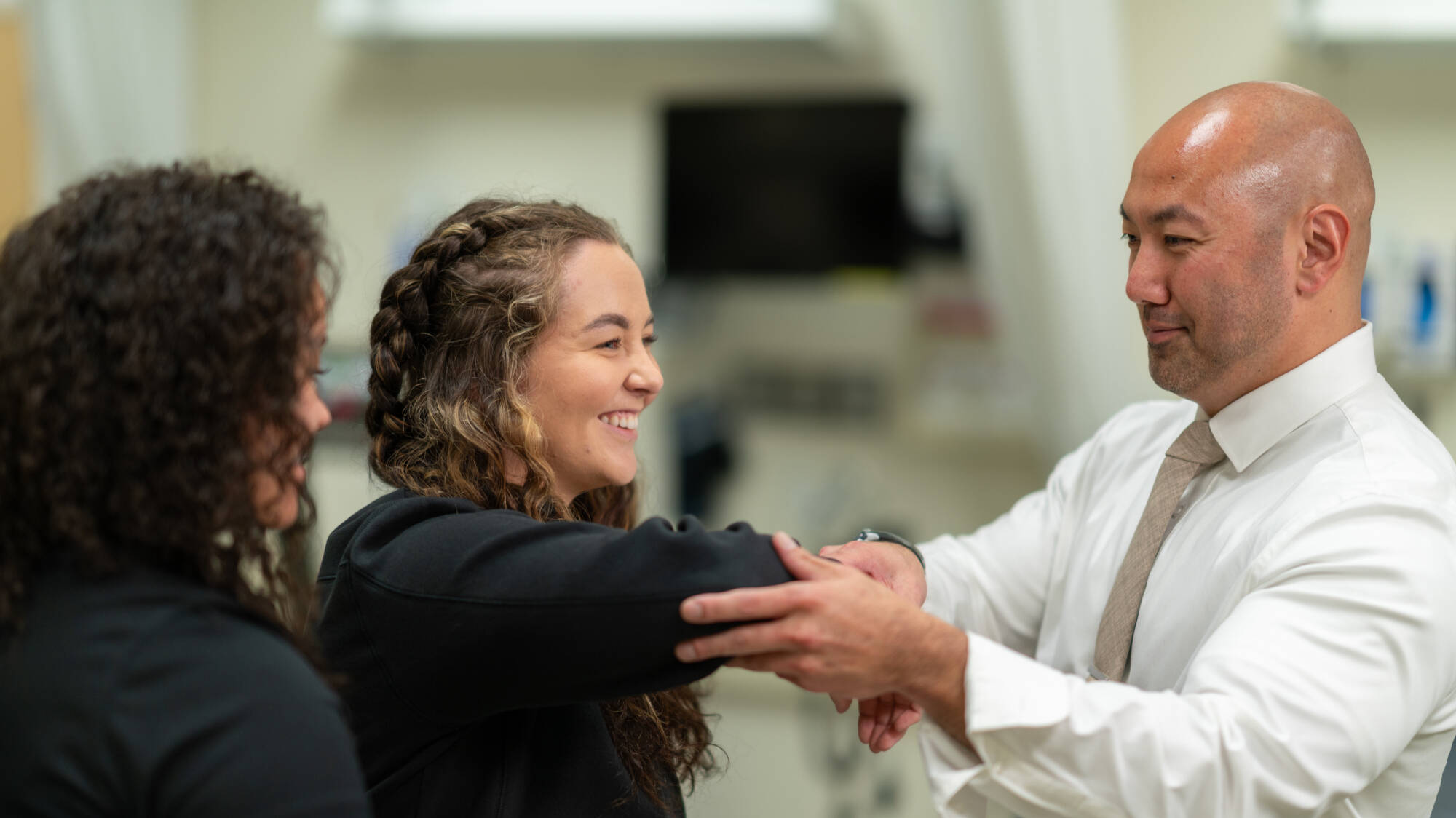
Physical Therapy Labs
The Charles and Gladys Saur Assessment Lab
Equipment
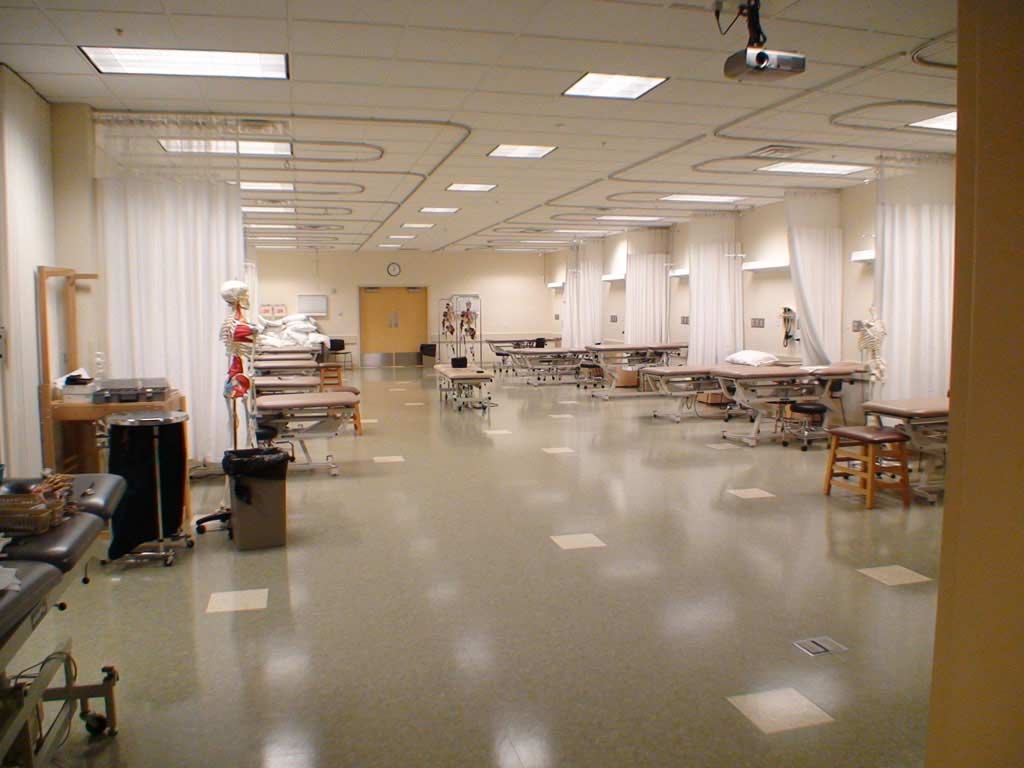
- The cubicles are set up to simulate hospital and outpatient examination room. They are fully functional with compressed air and suction available as in a hospital setting and can be used in case of emergency.
- Video technology and monitor at each station enhance the hands-on activities performed by the instructor such that all students can easily see the techniques on the monitors.
- The treatments tables are adjustable in height to permit student practice while using good body mechanics. Some of the tables are modified to add devices for lumbar traction.
- Anatomical models include a variety of skeletons, shoulders, elbos, hips, knees, ankles, spines, skulls, brains, hearts, and lunch to assist students in learning anatomical landmarks.
- For rehabilitation purposes, modalities include cryotherapy, superficial heat, deep heat (ultrasound and diathermy), laser, traction, mechanical compression and electrical stimulator (AC and DC) that include interferential, pre-modulated, medium frequency, biphasic, hi-volt and micro-current options.
- Patient cardiopulmonary signs are monitored with ECG, stethoscopes, sphygmomanometers, pulse oximeters and the spirometer.
Outcomes
Student become versatile in physical therapy patient examination, evaluation, diagnosis, prognosis, and intervention. Skills include alleviating patients' movement impairments and functional limitations by designing, implementing and modifying therapeutic interventions to help patient return to function. Students are also prepared to educate patients and families, to promote fitness, health and quality of life in all age groups, and to consult with community members and organizations.
The David and Michelle Bottrall Therapeutics Laboratory
The Therapeutics laboratory supports teaching in-depth skills to Physical Therapy students in the neuromuscular and musculoskeletal systems. Students learn management of patients following musculoskeletal injury, surgical procedures, central nervous system pathologies (stroke, traumatic brain injury), spinal cord injury, amputation, chronic conditions and various kinds of temporary debilitation.
Equipment
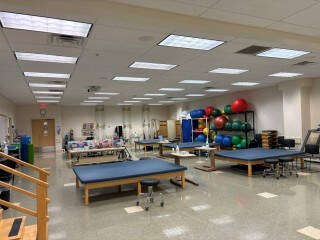
- Mat table height allows simulation of househoud furniture such as a bed or living room chair.
- Ambulation devices such as crutches, walkers, canes and wheelchairs assist patients with movement in their own environment.
- Examples of orthoses and protheses are available for students to understand their function and appropriate use.
- Exercise equipment includes benches, free weights, cuff weights, pulleys, Thera-Band, total gym, rebounder, cicycles and treadmills.
Outcomes
- Within the neuromuscular and musculoskeletal areas of Physical Therapy practice, students become versatile in helping children, teen-agers, adults and seniors recover their movement abilities. Students are prepared to design customized PT plans of care.
- Students learn to provide education to patients and families about their condition and their special needs at home.