
Plant Cover
One of the most common ways to track ecosystem change is to look at changes in the cover of plant species.
The tundra is a treeless desert by definition. Rather than trees and large plants, tundra ecosystems typically contain small, low growing plants and lots of open space across the landscape. Historically, these open spaces have been dominated by moss and lichen.
The generalization described above was true when we started measuring, but as the data show, it is much less true today.
Each year, our crews have measured the same plots across several tundra sites to track how vegetation is shifting over time.
We make these measurements with the help of a point frame. A point frame is a simple metal frame measuring 75x75cm with a 100 point grid spread across. At each point in the grid, we lower a ruler to the ground and record each type of plant, their height, and whether they are alive or not.
This is a common method to monitor cover for ecosystems with low stature vegetation such as tundra and grasslands.
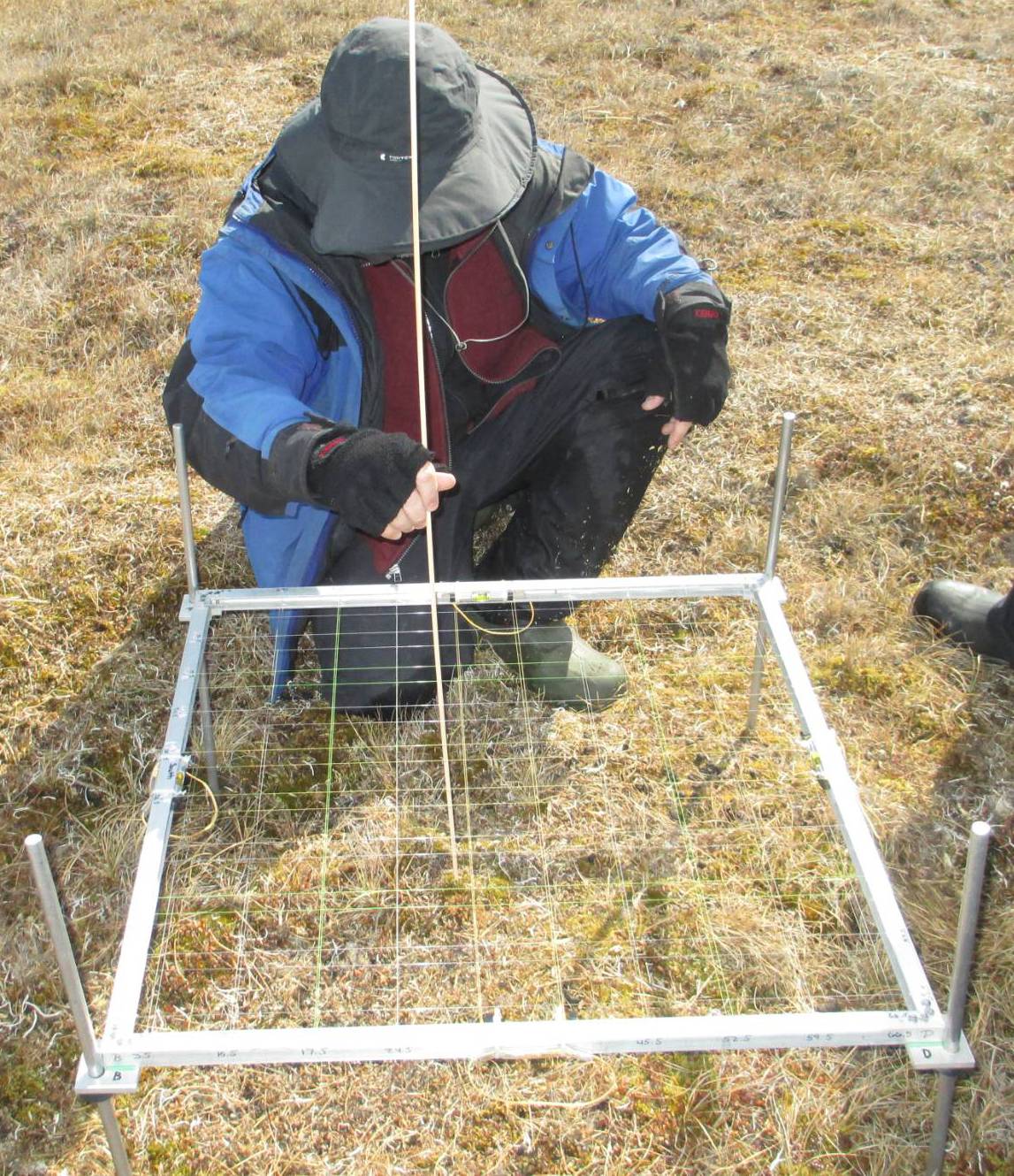
Bob recording cover data with a pointframe
Cover Change at ITEX-AON Sites
By collecting and combining this data each year, we can track how plant cover is changing over time.
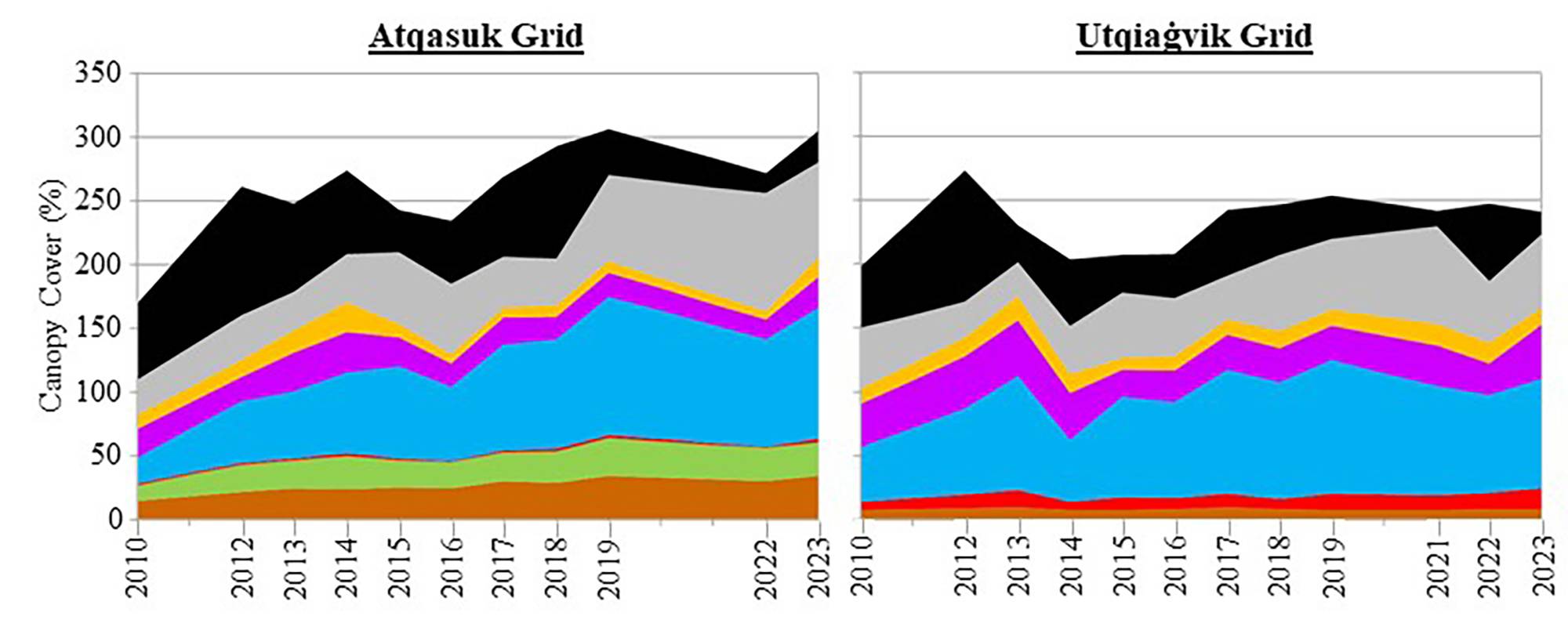
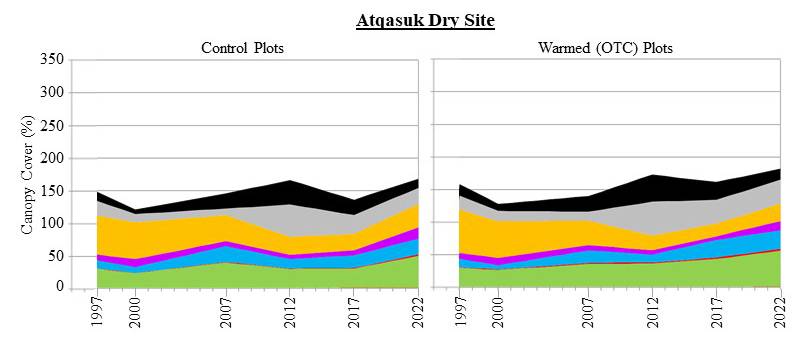
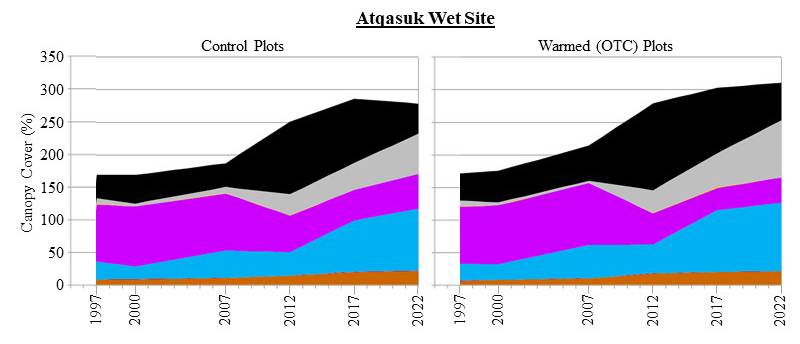
The graphs below show show these changes at several ITEX-AON research sites. The years when the vegetation was sampled is listed on the x-axis of each.
The Atqasuk and Utqiaġvik Grids contain only control plots (meaning no passive warming experiment taking place). The plots at these locations span a wide moisture gradient but are predominantly moist acidic tundra.
The control and warmed sites are at locations with long-term experimental warming taking place.
If you look across years you will see that the cover of vascular plants has increased greatly, going from less than 50% at most locations to as much as 150% at the Atqasuk Grid. You might ask how you can have more than 100%? The answer is simple: at each point on the pointframe, we record each "layer" of plants encountered. Since we may hit multiple layers of plants, cover percentages can rise above 100% as more layers appear through the years. Plants growing taller and closer together are what accounts for these dramatic increases.
[1702593689].jpg)

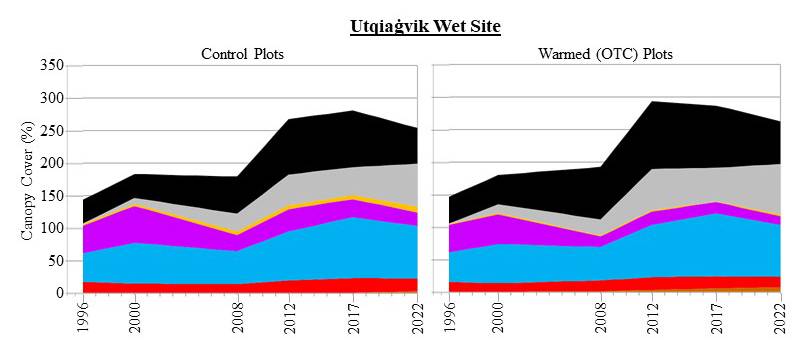
Color Key


click to see plants by growth form
Learn More
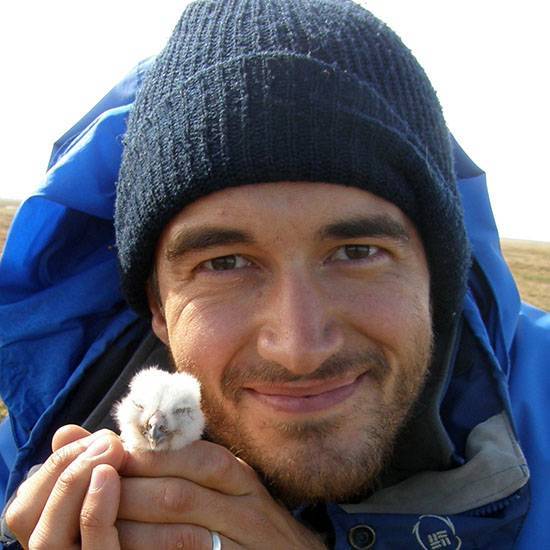
Jeremy May - Plant Community Changes In Northern Alaska Over The Past 12 Years

Tim Botting - Masters Thesis Defense
[1703012302].jpg)
Katlyn Betway - International Tundra Experiment (ITEX) Update
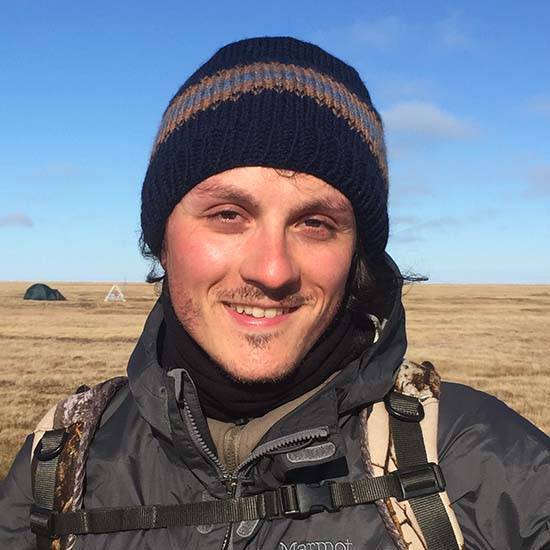
Jacob Harris - Annual veg change on the ARCSS subplots at Atqasuk and Utqiaġvik, Alaska
Related Papers
Elmendorf, S.C., G.H.R. Henry, R.D. Hollister, R.G. Björk, A.D. Bjorkman, T.V. Callaghan, L.S. Collier, E.J. Cooper, J.H.C. Cornelissen, T.A. Day, A.M. Fosaa, W.A. Gould, J. Grétarsdóttir, J. Harte, L. Hermanutz, D.S. Hik, A. Hofgaard, F. Jarrad, I.S. Jónsdóttir, F. Keuper, K. Klanderud, J.A. Klein, S. Koh, G. Kudo, S.I. Lang, V. Loewen, J.L. May, J. Mercado, A. Michelsen, U. Molau, I.H. Myers-Smith, S.F. Oberbauer, S. Pieper, E. Post, C. Rixen, C.H. Robinson, N.M. Schmidt, G.R. Shaver, A. Stenström, A. Tolvanen, Ø. Totland, T. Troxler, C.-H. Wahren, P.J. Webber, J.M. Welker, and P.A. Wookey. 2012a. Global assessment of experimental climate warming on tundra vegetation: Heterogeneity over space and time. Ecology Letters 15:164–175. 10.1111/j.1461-0248.2011.01716.x.
Elmendorf, S.C., G.H.R. Henry, R.D. Hollister, R.G. Björk, N. Boulanger-Lapointe, E.J. Cooper, J.H.C. Cornelissen, T.A. Day, E. Dorrepaal, T.G. Elumeeva, M. Gill, W.A. Gould, J. Harte, D.S. Hik, A. Hofgaard, D.R. Johnson, J.F. Johnstone, I.S. Jónsdóttir, J.C. Jorgenson, K. Klanderud, J.A. Klein, S. Koh, G. Kudo, M. Lara, E. Lévesque, B. Magnússon, J.L. May, J.A. Mercado-Dı´az, A. Michelsen, U. Molau, I.H. Myers-Smith, S.F. Oberbauer, V.G. Onipchenko, C. Rixen, N. Martin Schmidt, G.R. Shaver, M.J. Spasojevic, Þ.E. Þórhallsdóttir, A. Tolvanen, T. Troxler, C.E. Tweedie, S. Villareal, C.-H. Wahren, X. Walker, P.J. Webber, J.M. Welker, and S. Wipf. 2012b. Plot-scale evidence of tundra vegetation change and links to recent summer warming. Nature Climate Change 2:453–457. 10.1038/nclimate1465.
Harris, J.A., R.D. Hollister, T.F. Botting, C.E. Tweedie, K.R. Betway, J.L. May, R.T.S. Barrett, J.A. Leibig, H.L. Christoffersen, S.A. Vargas, M. Orejel, and T.L. Fuson. 2022. Understanding the climate impacts on decadal vegetation change in northern Alaska. Arctic Science 8:878–898. 10.1139/as-2020-0050.
Hollister, R.D., J.L. May, K.S. Kremers, C.E. Tweedie, S.F. Oberbauer, J.A. Liebig, T.F. Botting, R.T. Barrett, and J.L. Gregory. 2015. Warming experiments elucidate the drivers of observed directional changes in tundra vegetation. Ecology and Evolution 5:1881–1895. 10.1002/ece3.1499.
Hollister, R.D., P.J. Webber, and C.E. Tweedie. 2005. The response of Alaskan arctic tundra to experimental warming: Differences between short- and long-term responses. Global Change Biology 11:525–536. 10.1111/j.1365-2486.2005.00926.x.
Walker, M.D., C.H. Wahren, R.D. Hollister, G.H.R. Henry, L.E. Ahlquist, J.M. Alatalo, M.S. Bret-Harte, M.P. Calef, T.V. Callaghan, A.B. Carroll, H.E. Epstein, I.S. Jónsdóttir, J.A. Klein, B. Magnusson, U. Molau, S.F. Oberbauer, S.P. Rewa, C.H. Robinson, G.R. Shaver, K.N. Suding, C.C. Thompson, A. Tolvanen, O. Totland, P.L. Turner, C.E. Tweedie, P.J. Webber, and P.A. Wookey. 2006. Plant community responses to experimental warming across the tundra biome. Proceedings of the National Academy of Sciences of the United States of America 103:1342–1346. 10.1073pnas.0503198103.