

The Hauenstein Center will continue to sponsor free copies of books to currently enrolled students at GVSU.
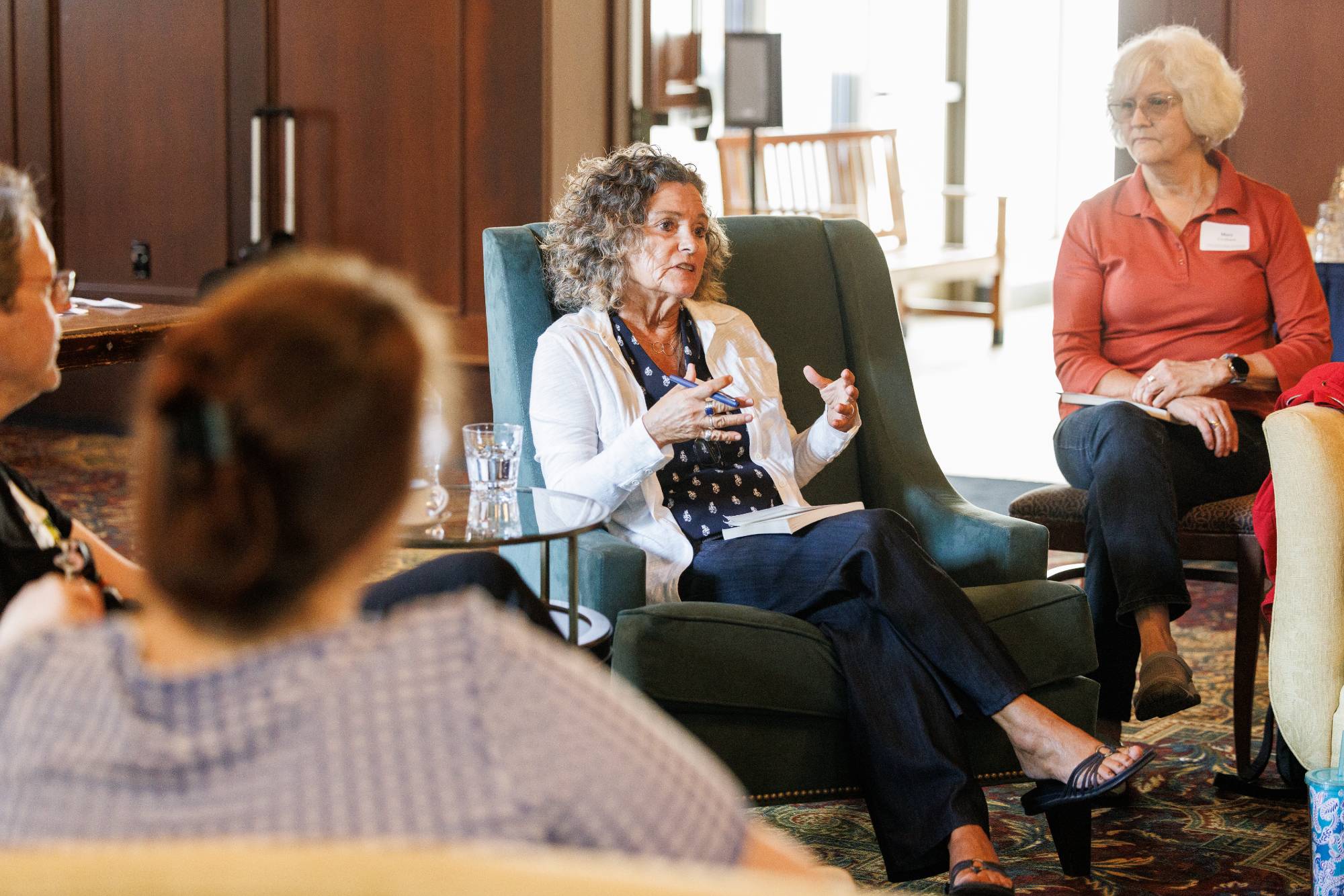
The Open Minds Book Club invites thoughtful participation from GVSU students, faculty and staff, Hauenstein Center members, and community members. Kahler Sweeney, program manager of the Common Ground Initiative, and Brian Bowdle, associate professor of psychology, will host discussions on books that seek to understand and serve the needs of our democratic society.
Our Winter Reads
February 2026
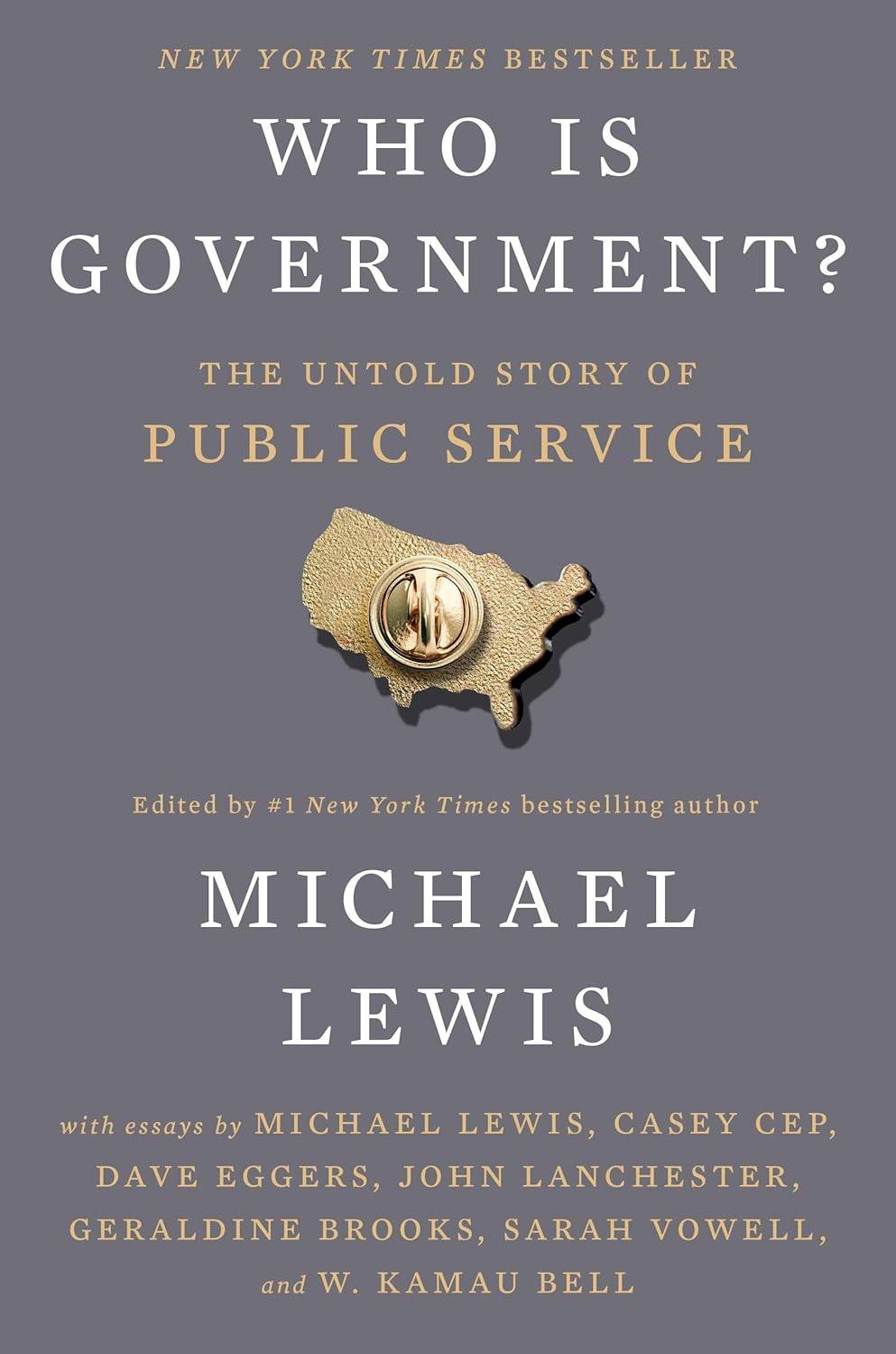
For the February 2026 session of Open Minds, we will be reading and discussing Who is Government : The Untold Story of Public Service edited by Michael Lewis.
"Michael Lewis invited his favorite writers, including Casey Cep, Dave Eggers, John Lanchester, Geraldine Brooks, Sarah Vowell, and W. Kamau Bell, to join him in finding someone doing an interesting job for the government and writing about them. The stories they found are unexpected, riveting, and inspiring, including a former coal miner devoted to making mine roofs less likely to collapse, saving thousands of lives; an IRS agent straight out of a crime thriller; and the manager who made the National Cemetery Administration the best-run organization, public or private, in the entire country. Each essay shines a spotlight on the essential behind-the-scenes work of exemplary federal employees."
The discussion for this book will be held on Wednesday, February 18, from 4:00 to 6:00 pm in the Richard M. DeVos Center’s Meijer Regency Room located on the GVSU City Campus.
Books for GVSU students will be mailed to those who register by midnight on January 21.
April 2026
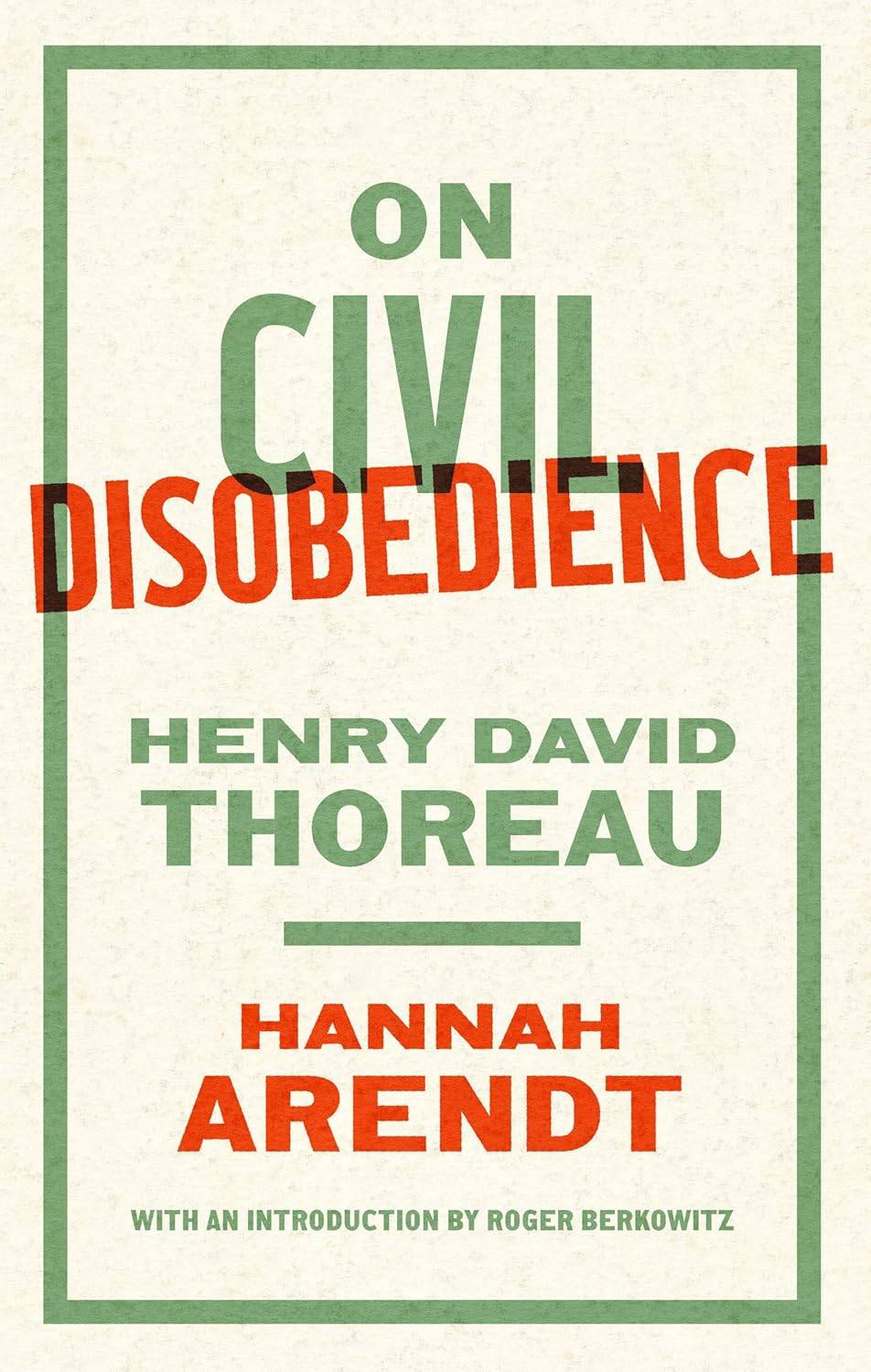
For the April 2026 session of Open Minds, we will be reading and discussing On Civil Disobedience, edited by Roger Berkowitz and featuring essays from Hannah Arendt and Henry David Thoreau.
"Together for the first time, classic essays on how and when to disobey the government from two of the greatest thinkers in our literature. In Resistance to Civil Government (1849), Henry David Thoreau recounts the story of a night he spent in jail for refusing to pay poll taxes, which he believed supported the Mexican American War and the expansion of slavery. His larger aim was to articulate a view of individual conscience as a force in American politics. No writer has made a more persuasive case for obedience to a “higher law.” In Civil Disobedience (1970), Hannah Arendt offers a stern rebuttal to Thoreau. For Arendt, Thoreau stands in willful opposition to the public and collective spirit that defines civil disobedience. Only through positive collective action and the promises we make to each other in a civil society can meaningful change occur."
The discussion for this book will be held on Wednesday, April 1, from 4:00 to 6:00 p.m. in the Richard M. DeVos Center’s Meijer Regency Room located on the GVSU City Campus.
Books for GVSU students will be mailed to those who register by midnight on March 3.
Past Reads
2025
January — Out of the Melting Pot, Into the Fire: Multiculturalism in the World's Past and America's Future by Jens Kurt Heycke
February — The City and The City: A Novel by China Miéville
March — Don't Label Me: An Incredible Conversation for Divided Times by Irshad Manji
September — The Pursuit of Happiness : How Classical Writers on Virtue Inspired the Lives of the Founders and Defined America by Jeffrey Rosen
October — The Omni-Americans: Some Alternatives to the Folklore of White Supremacy by Albert Murray
November — Mission, Tribe & Grace: How Veterans Can Lead Change, Find Their Tribe, and Build a Meaningful Life by Jill Wolfe
2024
January — Rescuing Socrates: How the Great Books Changed My Life and Why They Matter for a New Generation by Roosevelt Montas
February — The Screwtape Letters by C.S. Lewis
April — Rooted: Life at the Crossroads of Science, Nature, and Spirit by Lyanda Lynn Haupt
September — The Life-Changing Science of Detecting Bullshit by John V. Petrocelli
October — The Practice, the Horizon, and the Chain by Sofia Samatar
November — The End of Race Politics: Arguments for a Colorblind America by Coleman Hughes
2023
January — The White Mosque by Sofia Samatar
March — This View of Life: Completing the Darwinian Revolution , by David Sloan Wilson
April — The Lathe of Heaven by Ursula K. Le Guin
September — How to Educate a Citizen: The Power of Shared Knowledge to Unify a Nation by E.D. Hirsch Jr.
October — Becoming Kin: An Indigenous Call to Unforgetting the Past and Reimagining Our Future by Patty Krawec.
November — The Myth of Left and Right: How the Political Spectrum Misleads and Harms America by Hyrum Lewis and Verlan Lewis.
2022
January — No One is Talking About This by Patricia Lockwood
April — Suspicious Mindsby Robert Brotherton
October — Liberalism and its Discontents , by Francis Fukuyama
November — War Is A Force That Gives Us Meaning by Chris Hedges
2021
March — Speak Freely: Why Universities Must Defend Free Speech by Keith E. Whittington
June — Self Portrait in Black and White by Thomas Chatterton Williams
September — Mistrust: Why Losing Faith in Institutions Provides the Tools to Transform Them by Ethan Zuckerman
Goals of the Open Minds Book Club
Initiating the kinds of conversations necessary for fostering an informed citizenry and wise leadership
Bridging cultural, ideological, and generational divides through civil discourse
Growing a shared sense of belonging in our West Michigan community