News from Grand Valley State University

Critical hope: Research integrated into classes to launch the next generation of environmentalists

How do you teach a class about an obstinate problem like climate change? How do sustainability educators engage students who might feel hopeless? 

Becky Williams, assistant professor of interdisciplinary studies, found a pathway that she now integrates into several of her classes. Williams said it began when she read a book, "Critical Hope: How to Grapple with Complexity, Lead with Purpose, and Cultivate Transformative Social Change," by Kari Grain. In the book, Grain introduces seven principles for practicing critical hope, described as a belief that transformation is vital and possible.

Williams has advanced Grain's principles with research on educators who teach environmental studies and sustainability courses. She led a workshop on critical hope in June at the Beaver Island Field School , and was a co-author of an article, "Teaching in a Time of Climate Collapse: From 'An Education in Hope' to a Praxis of Critical Hope," with Grain that was published in the journal Sustainability.

Becky Williams in a field of flowers
Becky Williams, assistant professor of interdisciplinary studies, is pictured at the Sustainable Agriculture Project. Williams has researched principles of critical hope and incorporates those into her classes.
Image credit - Cory Morse

"Students today feel worse about climate collapse because they have grown up with this and heard all about it," Williams said. "People who work in environmental fields know the implications. They need to have the ability to sustain themselves because they feel defeated. 

"Educators want to figure out how to impart critical hope so students who get jobs in this field can go out and do this important work."

In her classes, Williams incorporates systems thinking and the critical hope principles. 

"We talk about systems thinking and the inequities embedded in those systems on a global scale. Then, we localize it so they have something tangible to experience," she said.

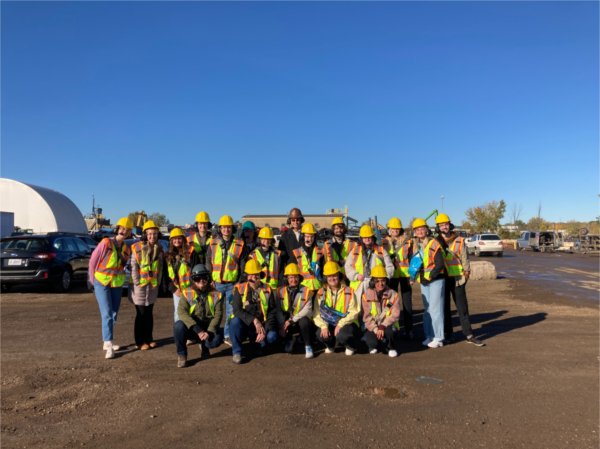
These experiences have included trips to area landfills, the Kent County Recycling and Education Center, GVSU's Sustainable Agricultural Project and Beaver Island. In June, field school students worked with the nonprofit organization SeedKeepers on a regenerative agriculture project on the island.

students and group in hardhats outside recycling center
Williams and students are pictured at the Kent County Recycling and Education Center.
large group of people standing in two rows in front of a whiteboard
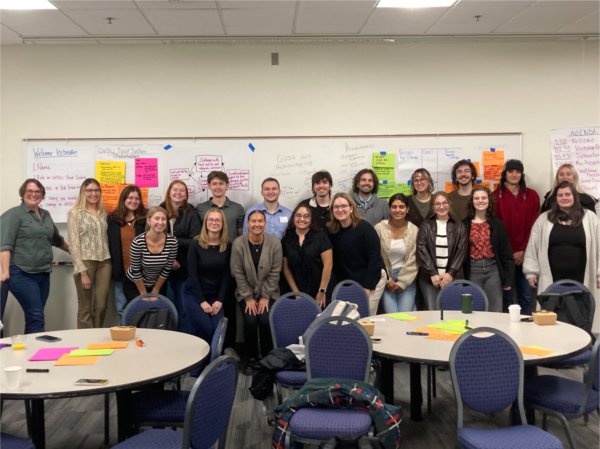
Students in Williams's class researched GVSU's food systems last year and met with stakeholders.

Students in Williams's classes also take action on campus. Last year, their class project centered on Grand Valley's food systems. Through action steps that led to a final project, students met with stakeholders, facilitated meetings and toured Laker Food Co. dining locations and Replenish Basic Needs centers. 

"They understand how all these things are connected and they understand how they can effect real change," she said. "By the end of the semester, they felt empowered."

Faculty, staff and students can learn more action steps in October during the Climate Change Education Solutions Summit . Williams said Grain is scheduled to give a presentation during the summit.

Subscribe

Sign up and receive the latest Grand Valley headlines delivered to your email inbox each morning.