

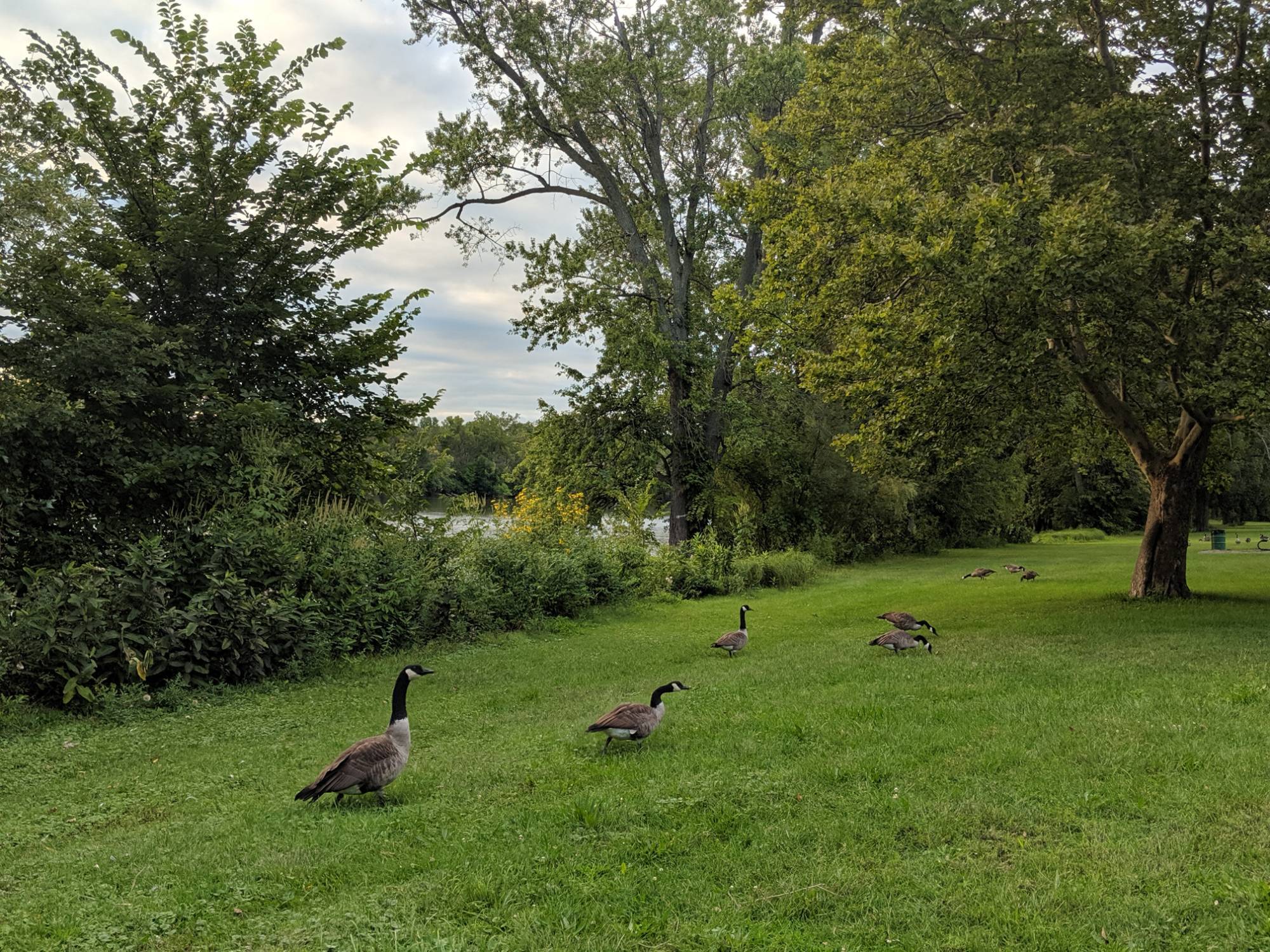
Too Many Ducks and Geese
You identified too many ducks and geese as an environmental problem in your community.
Why is this a problem?
Too many ducks and geese living around our lakes and rivers leads to a lot of bird waste. Rainwater picks up the waste as it flows over the land and carries it to lakes, streams, and rivers.
Animal waste is a source of pathogens, which are organisms that can make people sick. When there are too many of these pathogens in the water, beaches will close to protect human health. Pathogens are one of the leading causes of water quality problems in the United States.
Animal waste also is a source of nutrients (nitrogen and phosphorus) that can lead to excessive algae growth.
Resources:
- Geese, Ducks, and Coots: An overview by the USDA highlighting the damage caused by geese and ducks to agriculture, property, and natural resources, and/or impact human health and safety
- How Will You Grow?: Helpful resources for whatever horticulture project you're growing
- Polluted Runoff: Nonpoint Source (NPS) Pollution: An EPA collection of resources related to NPS and actions to reduce NPS
- Recreational Water Quality Criteria and Methods: EPA criteria to protect people from organisms, such as viruses and bacteria, and their associated toxins in water bodies
- Outbreaks of Illness Associated with Recreational Water: A CDC report of illness outbreaks in treated (ex. pools) and untreated (ex. lakes) recreational waters
- Beach Closures: A Woods Hole Oceanographic Institution overview of beach closures
- What is nutrient pollution?: A NOAA overview of excess nutrients in waterways
What Actions Can You Take?
Page last modified July 30, 2026