

New Branches Charter Academy

Project Description:
Middle school students teamed up with well-known local artist Reb Roberts to create a nonpoint source pollution educational art campaign. Students painted both storm drains on the road approaching the school, which was then connected by a mural illustrating the effects of nonpoint source pollution on waterways and suggestions for prevention. Students took part in a culminating celebration to unveil their artwork to the community, which was very well-attended. The sixth-grade students visited the GVSU science boat to perform water quality tests and compare the river water with the water of Lake Michigan. All sixth, seventh, and eighth grade students participated in Mark Walton’s seminar educating the students about the negative effects of water runoff from land and storm drains on the watershed, and the actions that could reduce the amount of nonpoint source pollution entering our water systems. In addition, all students toured the Plaster Creek Watershed and followed the storm drains to the park. They made observations during rain events and learned how the rush of storm water had an immediate effect on Plaster Creek. Finally, Plaster Creek Watershed Stewards presented an educational slide show to all middle school students, giving information about storm water issues and solutions.
Fostering Lifelong Stewardship:
Students have a deeper connection to their waterways and know how to communicate about threats to it.
Partners:
City of Grand Rapids Environmental Services Department, GVMC/LGROW, Calvin College - Plaster Creek Stewards, Ottawa County Parks & Recreation Commission, GVSU AWRI, Sanctuary Folk Art, MI Stormwater Floodplain Assoc, Kent Conservation District,
Teachers:
3
Students:
95
Funder:
U.S. Environmental Protection Agency through the Michigan Department of Environmental Quality
Showcase Video:
https://www.youtube.com/watch?v=YEOTgiZq0r0
Project Description:
Students researched, planned, planted, and maintained a community garden of native species and locally cultivated species. The heritage garden idea was a result of a survey asking staff and parents about resources they wanted to see added at the school. The garden features native plants that help provide habitat and collect rainwater from the school campus. Students learned about winter ecology, ecosystems, water, and other monthly environmental science themes implemented by New Branches Charter Academy.
Fostering Lifelong Stewardship:
The rain garden has created a sense of pride in the school. This project has encouraged students and families to become more engaged in solutions for the local watershed.
Partners:
Plaster Creek Stewards
Teachers:
2
Students:
290
Funder:
Baldwin Foundation
Showcase Video:
https://www.youtube.com/watch?v=2ImUlNwc7eM
Project Description:
Butterfly Garden Project: With the help of an expert from Plaster Creek Stewards, students installed a butterfly garden at the school. They planted Michigan native and nectar plants that included: wild columbine, wild strawberry, purple coneflower, black-eyed Susan, prairie dropseed, swamp milkweed, and poke milkweed. Teachers ordered Monarch caterpillars for students to observe chrysalis-making and metamorphosis, with the goal of releasing the butterflies in the garden in the fall. Students will then track migration via the Journey North project website, and investigate if NBCA butterflies reach the Mexico overwintering destination.
Teachers used the various educational materials purchased with Groundswell funds to teach about pollinators, butterflies, and Monarchs in the environmental science classroom, as well as at NBCA Earth Week Family Night held on Tuesday, May 16, 2017. With the help of student volunteers at this event, New Branches provided educational activities to help teach parents and families about the importance of pollinators, butterflies, Monarchs, and planting milkweed.
Native Plants Area Restoration: Students filled in the collapsed rain garden area with soil, then planted native grasses and sedges with deep roots to stabilize and restore the area.
Fostering Lifelong Stewardship:
This project has already made a positive impact on students in all three areas – knowledge, attitudes, and behaviors. They are able to view the garden and watch it grow from both inside and outside the school building on a daily basis. In the short time since the garden was established, students have already become invested in not only learning about pollinators, butterflies, biodiversity, etc., but also learning about conservation efforts. They are becoming more aware of the natural habitats that are all around them, even in the midst of their urban environment. The implementation of the butterfly garden and native plant restoration area has helped NBCA become one step closer to its goal of becoming an environmentally focused school and empowering students to become environmental stewards.
Partners:
Plaster Creek Stewards
Teachers:
5
Students:
55
Funder:
Baldwin Foundation and GVSU College of Education
Showcase Video:
https://www.youtube.com/watch?v=UHRk6VhpM_Q
Project Description:
Students constructed a functioning school garden on the NBCA campus using the unused baseball field. With the Groundswell grant, students were able to fill 16 raised garden beds (8ft x 4ft wooden boxes), one for each of the classrooms, with good quality soil from Birch Tree Bark & Stone business. Garden supplies, including tools, seeds, and other relevant materials, were purchased as well with the grant. We are now able to provide teachers the opportunity to bring classroom learning outdoors and to encourage student interactions with nature.
During April, classes decided what plants to grow and helped with the initial planting of their garden boxes. Once the crops started germinating and growing, students helped with the daily/weekly maintenance, including weeding and watering. Some classes were able to use the crops in their garden beds in other aspects of learning, including math lessons given by their regular classroom teachers. Before the end of the school year, students were able to test-taste some of the fresh vegetables and herbs. By having students directly involved in all aspects of growing and harvesting fresh food, teachers are not only encouraging students' relationship with nature, but also promoting an understanding of agriculture and the farm-to-table concept.
Fostering Lifelong Stewardship:
There were immense benefits for the students. Studies have shown that school gardens increase student engagement in their studies as well as promote positive behaviors not only about themselves, but also about the school community in general. Students will be taking on ownership of caring for living plants and learning about where their grocery store food comes from versus the benefits of growing their own food. The school garden will empower students to become more engaged with and invested in their natural environment and teach them why we should care about being good stewards.
Partners:
Birch Tree Bark and Stone
Teachers:
11
Students:
379
Funder:
GVSU College of Education
Showcase Video:
https://www.youtube.com/watch?v=d2PeoxmsDDI
Project Description:
The previous landscaping along the front of the NBCA school building consisted mostly of yew hedges. All of it was torn out via skidsteer during Summer 2017. Nothing had been planted in the meantime, partly due to budget constraints. This was the perfect opportunity to support and strengthen our environmental science focus and vision by using native plant landscaping instead of relying on more traditional, nonnative landscaping design.
In addition to showcasing native landscaping, we used a variety of Michigan perennial plants and shrubs that will increase the biodiversity of habitats on our campus and attract important pollinators. We also incorporated milkweed to attract Monarch butterflies and focus on pollinator and Monarch conservation as part of the student learning goals.
During the spring, students helped weed both sides of the front entrance area. More weeding and the initial planting was completed with the help of Groundswell volunteers including native plant landscaping consultant Rebecca Marquardt and Jessica Vander Ark on 6/21/19. During that time, wood chips were also distributed along the right side of the entrance area. The rest of the planting will be completed during the summer 2019.
Fostering Lifelong Stewardship:
The large scale and ideal location of this project will be one of the school’s greatest influences on creating a sense of stewardship and school pride among students. Not only is it going to make a positive impact as one of the first things students, families, and the community see before entering the school, but students will also be confident in teaching their families the importance of the landscaping habitat. Their ownership in helping maintain the habitat and its integration into lessons will help sustain the project over time.
Partners:
Revery Studio; Birch Tree Stone & Bark, LLC
Teachers:
9
Students:
206
Funder:
MiSTEM
Showcase Video:
https://youtu.be/kKvLT55QDrI
Project Description:
For this year’s project, we are in the process of enhancing and extending the butterfly garden area we established with Groundswell and Plaster Creek Stewards in Spring 2017. We are removing most non-native species, extending the area with additional native pollinator plants, and adding more milkweed plants to be able to fulfill our initial goal of registering the area as a Monarch Waystation. We will also be turning the area into a functional outdoor learning space with students driving the design.
The initial plan involved taking students to the Outdoor Discovery Center to gather outdoor classroom ideas; however, due to Covid restrictions, the field trip was canceled. As an alternate plan, I was able to connect with Mei Mah, GVSU, via zoom for advice on facilitating the student-driven design process. First, students discussed in small groups the pros/cons of the current and only outdoor learning space, which is located in the school garden pavilion. Second, we discussed these opinions as a class and then developed a list of needs vs. wants for the new outdoor learning space. Each class agreed on three necessary items: seating, shelter, and teaching space that includes white board. Currently, we are awaiting Board approval for the overall design idea voted on by all classes. Implementation of both classroom area and additional native plants (planting scheduled for June) will occur during Summer 2021.
Fostering Lifelong Stewardship:
Students were excited to be involved in helping design the new outdoor learning space. They felt empowered and inspired, which was evident during both group discussions and design drawing time. I am optimistic that students will be more invested in promoting the benefits of our pollinator gardens surrounding our outdoor classrooms; I have already witnessed numerous student attitudes change from negative to positive regarding the bees and insects observed around campus recently. They love being involved in the decision-making process and have been more engaged with the nature lessons as a result!
Partners:
Go Grow Plant Natives llc, Gilson Graphics
Teachers:
Heather Bessinger, 4th Grade Science; Natalie Mollema, 4th Grade Science; Elizabeth Brame Michaelson, 3rd Grade, Science; Becca Maupin Coates, 3rd Grade Science; Al Pall, 2nd Grade Science
Students:
108
Funder:
Independent Bank, the Wege Foundation
Showcase Video:
https://www.youtube.com/watch?v=GVNTeTELxvY&list=PLV2DqaYFEsPw2JB18lRhsDlGdXGILwakG&index=6
Project Description:
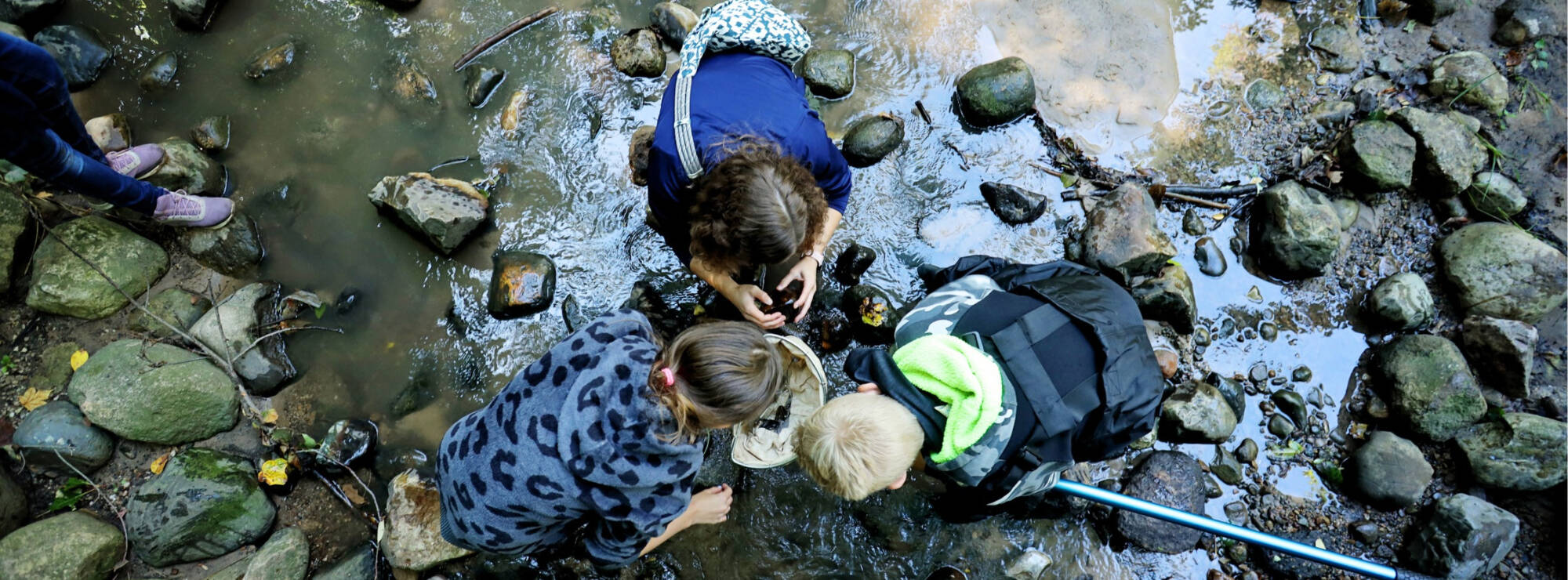
I have been teaching my 7th-grade students introductory lessons about watersheds. For more in-depth lessons, WMEAC (Kyle) visited our classroom in April and presented on non-point source pollution using a waterscape model. At the end of May, WMEAC (Kyle + team) led the Teach for Watershed program field trip at nearby Plaster Creek in Ken’O’Sha Park for hands-on learning about overall watershed health. Students were able to collect macroinvertebrates from Plaster Creek, observe them under a microscope, and learn about testing specific chemicals and pH to determine watershed health further.
Fostering Lifelong Stewardship:
Students have already shown more interest in environmental engagement in the Ken’O’Sha Park and Plaster Creek areas. Many of them have been at the school for multiple years, but never have known about these areas, much less visited them. Several students have visited the areas with their families since the field trip. I am expecting more awareness among students and families about the importance of watersheds and working to keep them healthy within our community areas.
Partners:
West Michigan Environmental Action Council
Teachers:
Kate Hasenbank, 7th Grade, Science; Chelsea Helrigel, 7th Grade, Science
Students:
27
Funder:
The Baldwin Foundation
Showcase Video: (Found on YouTube page)
Project Description:
Ultimately, we would like to implement an educational trail system in our campus woodland habitat (~ 1 ½ acres). This will be a two-phase process because of the seasonal timing of invasive species removal (fall) and the time required to design and implement a trail system. This Spring 2024 Project will focus on Phase 1, which involves students learning about invasive species as well as native tree species growing in our woodland habitat. Students will learn how to use a dichotomous key and practice identifying tree species with activities facilitated by Lea Sevigny of Joyful Wildcrafting (community partner). They will also learn the importance of invasive species removal to maintain a healthy forest ecosystem and be able to identify some of the invasive species currently growing in our woods; this information will be presented by Ryan Wilemski of Kent County Conservation District (community partner).
Fostering Lifelong Stewardship:
During this project, students have learned a lot not only about components of healthy ecosystems in general, but also about our specific forest habitat on the NBCA campus. They are starting to take ownership and as they learned how to identify some of the tree and shrub species during the lessons, as well as native versus invasive plants, they have become more invested in taking care of the woods. Moreover, as they began to understand the importance of protecting native species, they started making connections to their own yards, neighborhoods and parks they have visited. I am excited to watch this awareness, ownership and care of our woods grow during phase 2 of this project!
Partners:
Joyful Wildcrafting, Kent County Conservation District
Teachers:
Kate Hasenbank, K-8 Specials Teacher; Nichole Carta, Nancy Gale, 5th Grade Contained Classrooms; Maddie Grossi, LaShonda Steward, 6th Grade Contained Classrooms;
Quinn Menier, Sara Thompson, Q. Menier - MS Science, 7th ELA, S. Thompson - MS Social Studies, 7th ELA
Students:
110
Funder:
The Baldwin Foundation
Showcase Video: https://youtu.be/c2c3kyZsFJ4?si=imKF3-1xLS28VqyD
Project Description:
Ultimately, we would like to implement an educational trail system in our campus woodland habitat (~ 1 ½ acres). This will be a two-phase process because of the seasonal timing of invasive species removal (fall) and the time required to design and implement a trail system. Last year’s Phase 1 of the project (Spring 2024) involved students learning about invasive species as well as native tree species growing in our woodland habitat (student workshops given by Lea Sevigny of Joyful Wildcrafting and Ryan W. of KCCD).
This year’s Phase 2 of the project will focus on the planning and implementation of an educational trail system in our wooded area on campus. It will also include lessons on invasive species and the importance of removal; information will be presented to both 5th grade classes by David Richards of Kent County Conservation District (community partner). Students will be working through a design process activity in groups and submit their group design for judging. The winning design will be used as the basis for the educational trail system! Students will then help clear/develop the trail area under the guidance of Mark Fitzpatrick during field work days.
Partners:
Joyful Wildcrafting, Kent Conservation District, Eco & EE LLC
Teachers:
Kate Hasenbank
Students:
130
Funder:
Great Lakes Fishery Trust
Showcase Video: https://youtu.be/R4OA155z5zo?si=om6jeJ1nhEWXr1JB