

Godwin Middle School

Project Description:
Students learned about nonpoint source water pollution, then observed land usage on the school grounds to determine the impact of the school building on the health of the stream. Students recommended the removal of an area of blacktop in the school parking area, under a downspout from the school roof, and created a green space (about 15’ by 25’) in its place. They installed submerged garden beds in the existing soil. Students researched the types of plants that would grow best in an area that is “recovering” from being paved. A soil sample was sent to a lab to determine what types of substances were in the gravel. They also researched the potential for using plants to remove any potential contaminants from the material that was below the asphalt. After conducting more research on the best way to water the green space, students installed a rain barrel.
Fostering Lifelong Stewardship:
Through the practice of citizen science, students are more aware of how humans can positively or negatively impact their watersheds.
Partners:
Plaster Creek Stewards, City of Wyoming
Teachers:
3
Students:
150
Funder:
GVSU College of Education
Showcase Video:
https://www.youtube.com/watch?v=UB77sg-hlh0
Project Description:
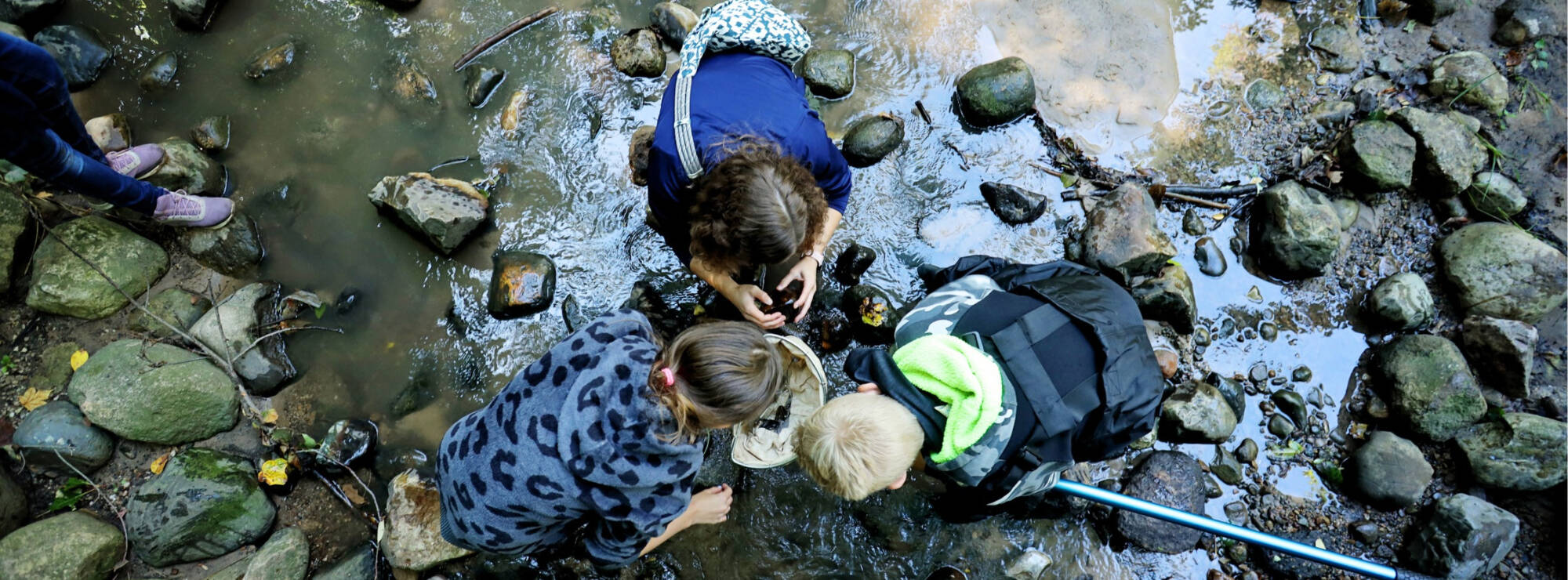
Students learned about water quality and stream health in class, then used this information to go to the local tributary of Plaster Creek and observe the physical characteristics of the stream. Students completed chemical testing of the water, then collected and analyzed bioindicators in the stream. They observed an outflow pipe that carries runoff from the neighborhood around the school. Students then completed testing both above and below the outflow pipe to look for measurable differences.
Fostering Lifelong Stewardship:
Students have a greater idea now that stream health and clean water are everyone’s responsibility and that choices they make can have an impact.
Partners:
Plaster Creek Stewards, WMEAC, Wedgewood Christian Services
Teachers:
1
Students:
170
Funder:
GVSU College of Education
Showcase Video:
https://www.youtube.com/watch?v=vR3fUM3XL3I
Project Description:
This year, we participated in the Salmon in the Classroom program for the first time. While we were doing so, we learned how to complete stream monitoring and testing. We researched the habitat requirements for salmon spawning and ideal conditions for survival of salmon.
We then tested our own local stream as part of our Environmental Education field Day at Hillcroft Park that included a BioBlitz done with help from Kellogg Biological Station and community stewardship work with the help of Wedgwood Christian Services. We also used our time at the stream to consider best practices and what improvements we might be able to make to this stream in future years.
We then used our knowledge from the stream testing and water quality to test 5 different streams or stream locations within parks that student groups selected to determine which was the best location for planting our fish from Salmon in the Classroom for this year and future years.
The students worked to identify parks and propose where they should test. Classes then decided together which stream and park should be tested and a group of students went to that stream and collected the data. The project then culminated with the release of the salmon at the park that, after testing and review of the data by students, was determined to be the best for the fish.
Fostering Lifelong Stewardship:
Students have a much better understanding now about how their actions affect the local watershed. This should help students in decisions they make in the future in terms of what they put into the watershed and decisions they make that could impact stream health.
Partners:
Michigan DNR, Kellogg Biological Station, Wedgwood Christian Services, WMEAC, Plaster Creek Stewards
Teachers:
5
Students:
155
Funder:
NOAA BWET
Showcase Video:
https://youtu.be/x5kTDzcdnMI
Project Description:
We are preparing to put native plants into a bioswale that the city of Wyoming will be building next year. This year we tested the waters (pond and stream) in the area and also the soil to collect baseline data on the area.
Fostering Lifelong Stewardship:
From our work this year, students will have a clearer understanding of nonpointstource pollution and its effects on the health of the watershed. Students engaged in testing this area and making determinations on health of the water there. Next year, students will work to build the bioswale which will empower them as stewards of their park.
Partners:
Lower Grand River Organization Watersheds, Plaster Creek Stewards
Teachers:
Bill Mull, 6th & 7th Grade Science; Mandy Goossen, 7th Grade Science; Renae Hackley, 6th Grade Science; Alex Mosley, 6th Grade Math
Students:
25
Funder:
Michigan Department of the Environment, Great Lakes, and Energy (EGLE)
Showcase Video:
Project Description:
This year, we planted native plants in the new bioswale. We retested the water in the area that we tested this year using our new water quality kits. Finally, we pulled nearby garlic mustard. We also designed a sign to be used at the park to inform the public about the purpose of the bioswale.
Partners:
Plaster Creek Stewards, Lower Grand River Organization of Watersheds
Teachers:
Bill Mull, 6th & 8th Grade, Math, Science Club
Students:
25
Funder:
Michigan Department of the Environment, Great Lakes, and Energy, Environmental Protection Agency
Showcase Video: https://www.youtube.com/watch?v=eHgNI42eFHY&list=PLV2DqaYFEsPwEUUHkVf4EWeARMMgZa9NL&index=9&ab_channel=GroundswellMichigan
Project Description:
We took all sixth grade students to Pinery Park to see the work our students have been doing there and did a variety of projects there and participate in series of stations related to their science curriculum. We had stations that included: 1. learning about the bioswale and doing upkeep (planting or weeding) at the bioswales, 2. invasive species learning and pulling of garlic mustard there, 3. a chance to view/observe the urban forest located in the park, 4. water quality testing of the water at the park, 5. park clean-up.
Fostering Lifelong Stewardship:
Students will be more informed about watersheds and will feel more empowered to take action to improve them.
Partners:
Plaster Creek Stewards, West Michigan Environmental Action Council
Teachers:
Bill Mull, Math, 6th Grade; Renae Hackley, Science, 6th Grade
Students:
110
Funder:
Wege Foundation
Showcase Video: https://youtu.be/iazkvg5zT7M
Project Description:
We have ongoing projects at Pinery Park that involve the bioswales there. We will be looking at doing similar activities to previous years that include water quality testing, bioswale upkeep, ecosystem observation, and a garlic mustard pull. In addition, we will be looking at adding one or two additional projects that will be student-chosen. This selection will involve a student group observing the area prior to project day and determining an additional area of focus and work at the park that day. The aim is to make students more aware of the components of the ecosystem at the local park and how they can influence the ecosystem both negatively and positively.
Fostering Lifelong Stewardship:
Students will be more aware of environmental issues. Already, when we talk about plants, I have students asking me, “Is it a native plant.” We do a lot with invasives (science project, Project Slime live lampreys), etc, and the invasive portion of the project helped students to realize not all invasives are animals.
Partners:
Plaster Creek Stewards, LGROW,
Teachers:
Bill Mull, Math, 6th Grade; Renae Hackley, Science, 6th Grade, Nate Jessee 6th Grade Social Studies, Bobbi Jo Gonzalez 6th Grade Language Arts
Students:
150
Funder:
Wege Foundation
Showcase Video: https://youtu.be/R_QKitSaljs?si=ub9KBR3eE5GCOaHE