

Central Woodlands 5/6

Project Description:
The school grounds were overrun with invasive plant species, specifically spotted knapweed, garlic mustard, oriental bittersweet, and autumn olive. Last year, students removed over 50 autumn olive trees and a sizable area of oriental bittersweet. This year continued these efforts (20+ trees and 30+ oriental bittersweet vines removed) along with an additional focus on the expanse of spotted knapweed on our grounds. Students researched the invasives and best practices for removal and wrote feature articles highlighting their findings. A controlled burn was conducted this spring with follow-up removal by hand pulling (by students) and propane torching rosettes (by teachers). Students then planted native seeds in the burn area that they harvested from their Sand Hill Farm field trip this past Fall.
Fostering Lifelong Stewardship:
Students are more aware of the impact they can have on a habitat.
Partners:
River City Wild Ones, Amway, Sand Hill Farm
Teachers:
4
Students:
11
Funder:
National Oceanic and Atmospheric Administration
Showcase Video:
https://www.youtube.com/watch?v=sf_HVJfF5dA
Project Description:
In the beginning of the year, students learned the importance of taking care of our waterways, the damaging effects of nonpoint source pollution, and why reducing run-off into our storm drains is crucial to our waters. After noticing that a storm drain was right in our landscape in the front of our building, students were placed into teams of five and were given the charge to come up with a new landscape design with a theme of their choice using native plants. Students researched native plants, drew the layout to scale, wrote a script to present to the principal, teachers, and the partnering landscape architect. The best feature from each team was taken and placed into a new design by Amy Heilman. In late May, students worked on implementing the project by mulching, planting, and placing tree cookies in our transformed landscape.
Fostering Lifelong Stewardship:
Some students have expressed an interest in careers in landscape design and landscaping.
Partners:
River City Wild Ones
Teachers:
3
Students:
52
Funder:
U.S. Environmental Protection Agency through the Michigan Department of Environmental Quality
Showcase Video:
https://www.youtube.com/watch?v=iHKymh0aGxU
Project Description:
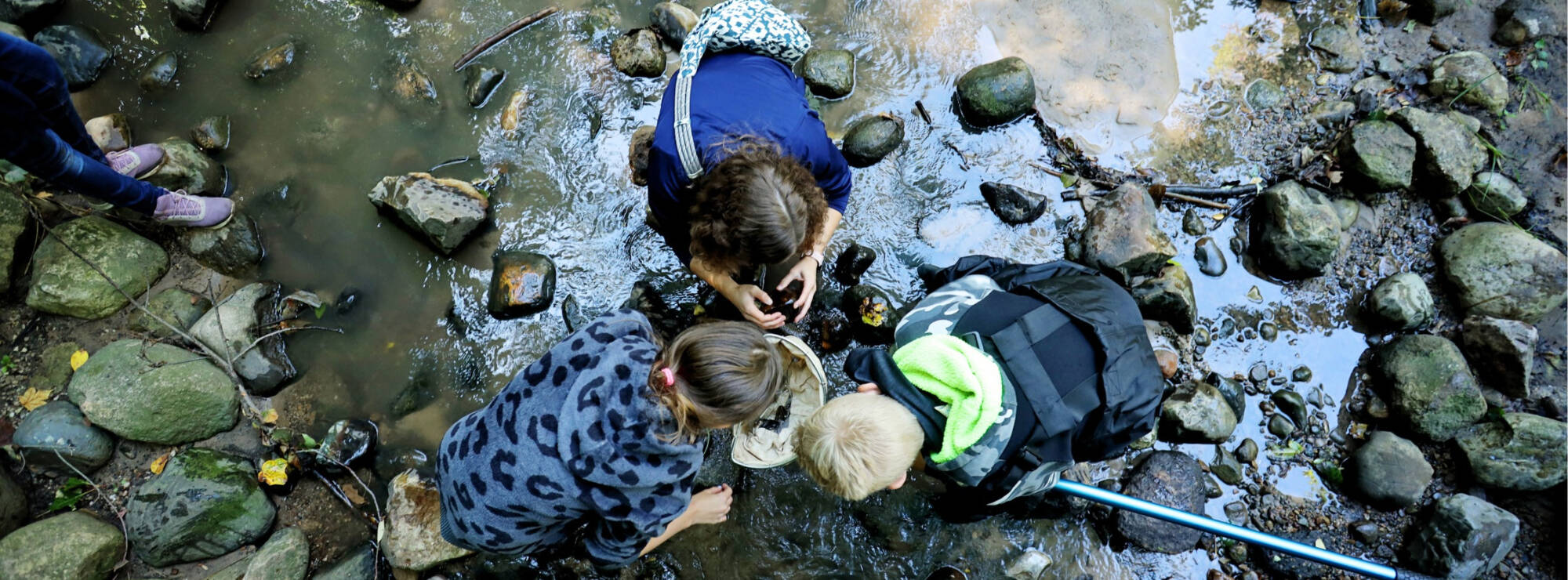
Students continued the project from last year, adding more native plants to fill in the native garden that was planted in front of the school. They also put in an environmentally safe protectant on the walkway. Students used D nets and water testing kits to sample and test water at different times of the year, and set up a hydroponic system to teach others how to grow without chemicals. Students also made break out lessons to teach fellow students about nonpoint source pollution. Students researched, designed, published, and taught these lessons to students in the building and to other Groundswell students, students at the STEAM Zoo Day, and at the Groundswell presentation.
Fostering Lifelong Stewardship:
Teaching breakout lessons to the wider community noticeably improved the students' attitudes towards stewardship.
Partners:
John Ball Zoo
Teachers:
3
Students:
51
Funder:
U.S. Environmental Protection Agency through the Michigan Department of Environmental Quality
Showcase Video:
https://www.youtube.com/watch?v=RNg0wG4OEJc
Project Description:
Central Woodlands students and teachers partnered with the zoo to develop a new exhibit for the otters. Students went through the design process class at the zoo and researched otters' adaptations to their environment in order to come up with a new exhibit. Students also put in a new native garden at the school as part of their own projects. Last, students took a trip to the GRAM and the GR Public Museum to learn about human impact on the environment.
Fostering Lifelong Stewardship:
Students become very knowledgeable about nonpoint source pollution and the Great Lakes, and how it affects them personally.
Partners:
John Ball Zoo
Teachers:
2
Students:
180
Funder:
GVSU College of Education
Showcase Video:
https://www.youtube.com/watch?v=kI6pSnbpiIY
Project Description:
Central Woodlands students learned about watersheds, how human activities affect the quality of our water, particularly in the Buck Creek Watershed and the importance of native plants in our environment to help with filtration. We took a field trip to Wittenbach-Wege Center to learn about native plants. Our class divided into several different groups and students were able to complete a project of their choosing. Groups worked on recycling in our cafeteria, reducing plastic use, children’s book writing, native plant gardens, and videos to teach others. Our culminating activity will be a field trip to Saugatuck Sand Dunes to learn more about ecosystems and native plants keeping the dunes intact.
Fostering Lifelong Stewardship:
I would expect that students continue to reduce their waste as they move to the middle school.
Partners:
John Ball Zoo, Friends of Buck Creek, Lower Grand River Organization of Watersheds
Teachers:
1
Students:
27
Funder:
GVSU College of Education
Showcase Video:
https://youtu.be/TiB2_KH4uW8
Project Description
This year, Central Woodlands 5/6 saw two projects in different areas of campus.
Patrick's Class worked on transforming the Central Woodlands courtyard into an environment that attracts native bird species and provides them with shelter, food and water: "We’ve added native grasses and wildflowers that will provide nesting opportunities/cover/nutrients. Not only will these native plants provide valuable resources for our bird populations, but they will beautify the courtyard. They already have, even though they are yet to bloom. It has also created an environment in which students can comfortably study and read while observing and appreciating our natural surroundings."
Tolly's students were able to study the lack of biodiversity that is on the Central Woodlands site and with that make a plan to increase it. They looked at water flow and how plants and trees were needed to help keep the watershed clean. With the help of experts, the students were able to research/plant trees/ plants that attracted butterflies and birds to our grounds.
Partners:
Revery, Kent Conservation District, Lower Grand River Organization of Watersheds, Plaster Creek Stewards
Teachers:
Christopher Patrick, 5th grade Language Arts and Science; Patty Tolly, 6th grade Science and Social studies
Students:
152
Funder:
The Baldwin Foundation, Wege Foundation
Showcase Video:
Patrick's Class: https://www.youtube.com/watch?v=lDMHELHsYOQ
Tolly's Class: https://www.youtube.com/watch?v=0fRcbrl1hgk
Project Description:
Students researched different things that could affect the biodiversity in a given area. They were broken into groups based on interests. One group looked at how to save bees, another how to get rid of using salt on our sidewalks, another looked at litter, another looked at invasive species and another looked at native plants and signage for them.
Fostering Lifelong Stewardship:
Students have an extreme awareness about how changes in the environment can affect so many different parts of an ecosystem. They have an understanding of how chemicals including salt can damage water and how to help with that.
Partners:
Inland Seas, Future Prep'd, Lower Grand River Organization of Watersheds
Teachers:
Patty Tolly, 6th Grade, Math, Science, Social Studies; Deb Elsholz, 6th Grade, Language Arts
Students:
51
Funder:
MiSTEM
Showcase Video: https://www.youtube.com/watch?v=k1-FK32_9sE&list=PLV2DqaYFEsPwEUUHkVf4EWeARMMgZa9NL&index=5&ab_channel=GroundswellMichigan
Project Description:
Students did a lot of work with water and ecosystems this year. The project started in Suttons Bay where students got a hands- on experience of plastics and invasives in our water. We then went to our own watershed and studied the amount of salt that was in water in the winter and if it was good or bad for the environment.
Fostering Lifelong Stewardship:
Throughout the year we have looked at the importance of clean water in the lives of different people in areas of the world. We continuously take it back to how lucky we are to live in Michigan and how important preserving the Great Lakes has become for us. Through this work, and their research, students will know the importance of keeping our waterways clean.
Partners:
West Michigan Environmental Action Council
Teachers:
Patty Tolly, All Subjects, 6th Grade
Students:
25
Funder:
Wege Foundation, Wheels to Woods
Showcase Video: https://youtu.be/MYdlQ20CO1c
Project Description:
Studying the chemical makeup of water, water phases, water pollution, invasive species, and ecosystems, and how these elements relate to climate change. Participating in civic action through public policy work.
Teachers:
Patty Tolly, 6th
Showcase Video: https://youtu.be/AdON6ew2hN0?si=qdhKvYOh_ky_ScX9