

Bursley Elementary

Project Description:
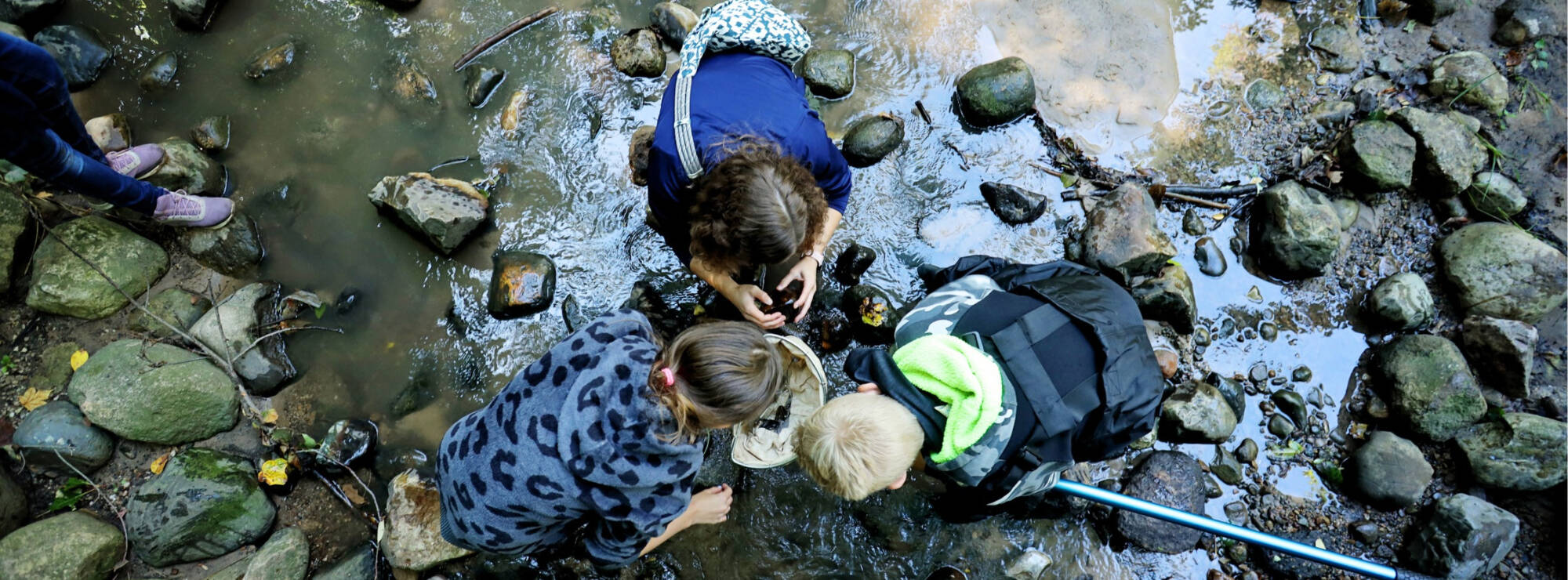
"Stream buddies" was a collaboration between second- and fourth-grade Spanish Immersion classes and the school art teacher to raise awareness of the watershed and threats to water quality. Students learned about factors that affect the overall health of a stream, conducted observations of Rush Creek, and identified specific concerns for that creek. Students learned about possible repercussions of non-point source pollution on animal and plant life in/near the stream,and on the community at large as Rush Creek flows into the Grand River and then into Lake Michigan.
Students learned how private citizens can help reduce stormwater runoff and non-point source pollution. They presented their learning to the community at the school Science Night by using model watersheds to show what happens when stormwater runoff washes everyday contaminants into streams. The project culminated with a collaborative art project following an art unit on “Activist Art” as students designed and painted rain barrels and posters about the benefits of rain barrels. Informational flyers went home to Bursley families about the benefits of rain barrels announcing a give-away of three rain barrels.
Fostering Lifelong Stewardship:
Students know what threats the watershed faces and actions they and their families can take to reduce non-point source pollution and stormwater runoff (clean up after pets, properly dispose of yard waste, reduce or eliminate use of fertilizer and pesticides on lawns, monitor and maintain vehicles and avoid washing them in driveways). Students are able to act as citizen-scientists and as advocates for responsible use and management of our water resource.
Partners:
WMEAC, Plaster Creek Stewards
Teachers:
3
Students:
47
Funder:
U.S. Environmental Protection Agency through the Michigan Department of Environmental Quality
Showcase Video:
https://www.youtube.com/watch?v=FTjlEbuafSk
Project Description:
Students learned about the role plants play in an ecosystem and how plants contribute to conserving and protecting resources (e.g., cleaning water and supporting sensitive animal populations). Students took field trips to Hemlock Crossing Park where they went through the "Discovering Ecosystems" program. The program helped cement science learning and encouraged stewardship. This project also forged a sense of unity as the school merged programs housed in three separate buildings into one shared building.
Fostering Lifelong Stewardship:
This project addressed science standards for understanding plants and understanding habitats. It also fit into social studies themes of stewardship and conservation of resources. Students were able to see firsthand the interconnectedness of plants and animals, and the characteristics that plants and animals have to survive in their environments.
Partners:
Ottawa County Parks-- Hemlock Crossing Parks Nature Center
Teachers:
1
Students:
60
Funder:
Great Lakes Stewardship Initiative