

Allendale Middle

Project Description
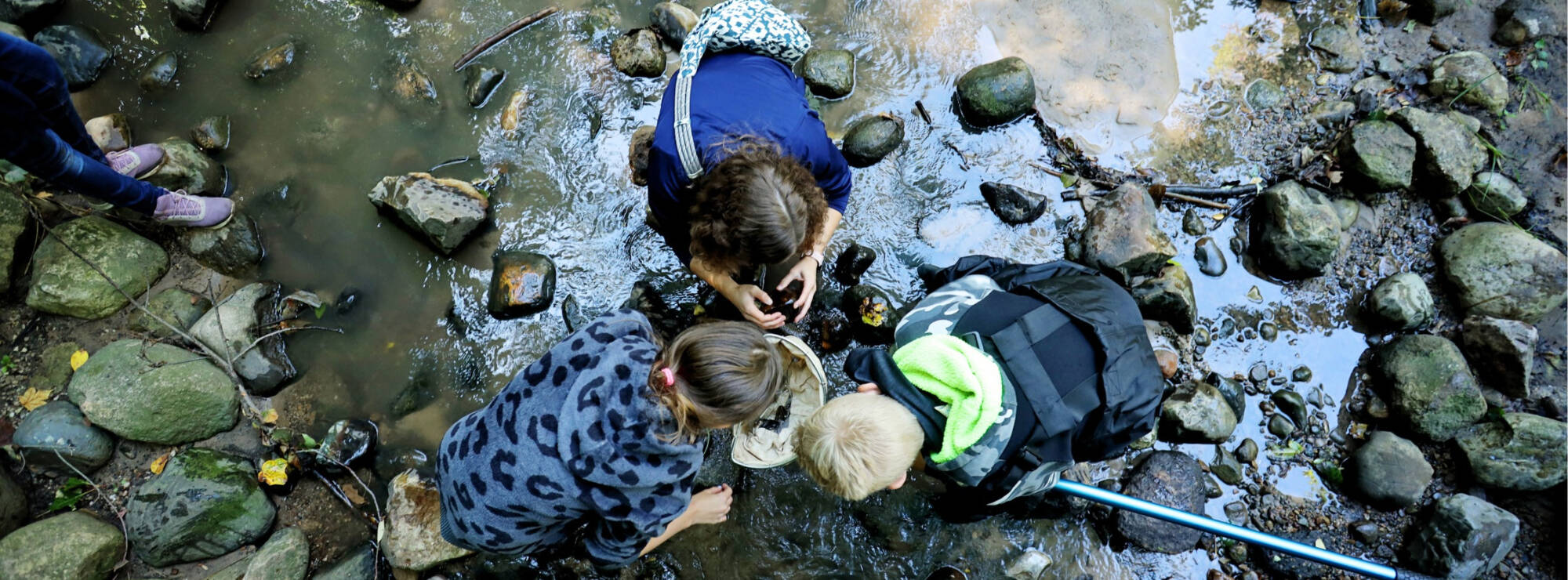
Aquatic macroinvertebrates are such an interesting way to bring a hands-on inquiry-based activity into your classroom by letting your student gain an insight into concepts and processes that occur within the mysterious world of a stream ecosystem.
Nearly every aspect of a stream’s ecosystem is influenced by water flowing downstream. The flow of a stream transports organic matter, which is eaten by aquatic organisms (Merritt and Cummins 1996). Faster flowing parts of a stream carry organic matter (e.g., leaves, debris) to slower moving parts, where it settles to the bottom. Changes to the physical bottom of a stream can lead to fewer macroinvertebrates adapted to specific habitats (Merritt and Cummins 1996). This loss of habitat and increased sedimentation in a stream could ultimately change the aquatic macroinvertebrate community (Roth, Allan, and Erickson 1996).
In this project, with partnership with Coopersville Middle School, students relate the distribution of aquatic organisms to the physical, chemical, and biological relationships in a stream. Based on these distributions, they make inferences about the ecosystem attributes and water quality of a stream and predict how human-induced changes, such as construction projects, or natural changes, such as drought, could affect organisms in the stream.
Partners:
Allegheny College, Grand Valley State University, Michigan Department of the Environment, Great Lakes, and Energy (EGLE)
Teachers:
Keith Piccard, 6th grade, Science
Students:
154
Funder:
GVSU College of Education, National Oceanic and Atmospheric Administration
Showcase Video: https://www.youtube.com/watch?v=f9qBd7wb57A
Project Description:
Aquatic macroinvertebrates are such an interesting way to bring a hands-on inquiry-based activity into your classroom by letting your student gain an insight into concepts and processes that occur within the mysterious world of a stream ecosystem.
Nearly every aspect of a stream’s ecosystem is influenced by water flowing downstream. The flow of a stream transports organic matter, which is eaten by aquatic organisms (Merritt and Cummins 1996). Faster flowing parts of a stream carry organic matter (e.g., leaves, debris) to slower moving parts, where it settles to the bottom. Changes to the physical bottom of a stream can lead to fewer macroinvertebrates adapted to specific habitats (Merritt and Cummins 1996). This loss of habitat and increased sedimentation in a stream could ultimately change the aquatic macroinvertebrate community (Roth, Allan, and Erickson 1996).
In this project, with partnership with Coopersville Middle School, students relate the distribution of aquatic organisms to the physical, chemical, and biological relationships in a stream. Based on these distributions, they make inferences about the ecosystem attributes and water quality of a stream and predict how human-induced changes, such as construction projects, or natural changes, such as drought, could affect organisms in the stream.
Fostering Lifelong Stewardship:
Each year I look to enlighten more of the community to the unique biodiversity that is found in the often unexplored streams and drainage ditches of Allendale, MI and how what happens upstream does directly/indirectly affects the water downstream and eventually the waters within our Great Lakes Drainage Basin.
Partners:
Grand Valley State University, Allegheny College, Bizstream, Michigan Department of the Environment, Great Lakes, and Energy
Teachers:
Keith Piccard, 6th Grade Science; Matt Mullen, 6th Grade Science
Students:
174
Funder:
Wege Foundation
Showcase Video: https://www.youtube.com/watch?v=jQwooteLPPI&ab_channel=GroundswellMichigan
Project Description:
Aquatic macroinvertebrates are such an interesting way to bring a hands-on inquiry-based activity into your classroom by letting your student gain an insight into concepts and processes that occur within the mysterious world of a stream ecosystem.
Nearly every aspect of a stream’s ecosystem is influenced by water flowing downstream. The flow of a stream transports organic matter, which is eaten by aquatic organisms (Merritt and Cummins 1996). Faster flowing parts of a stream carry organic matter (e.g., leaves, debris) to slower moving parts, where it settles to the bottom. Changes to the physical bottom of a stream can lead to fewer macroinvertebrates adapted to specific habitats (Merritt and Cummins 1996). This loss of habitat and increased sedimentation in a stream could ultimately change the aquatic macroinvertebrate community (Roth, Allan, and Erickson 1996).
In this project, students will gather baseline data on the abundance and diversity of aquatic macroinvertebrates and ecological health of the Sevey Drain prior to the introduction of Salmon in the Classroom.
Fostering Lifelong Stewardship:
I look to enlighten more of the community to the unique biodiversity that is found in the often unexplored streams and drainage ditches of Allendale, MI.
Partners:
Allegheny College; Grand Valley State University Biology Department; Michigan Department of the Environment, Great Lakes, and Energy; Bizstream
Teachers:
Keith Piccard, 6th Grade, Science
Students:
185
Funder:
Allegheny College
Showcase Video: https://youtu.be/9m8JVq_IfI8
Project Description:
Aquatic macroinvertebrates are such an interesting way to bring a hands-on inquiry-based activity into your classroom by letting your student gain an insight into concepts and processes that occur within the mysterious world of a stream ecosystem.
Nearly every aspect of a stream’s ecosystem is influenced by water flowing downstream. The flow of a stream transports organic matter, which is eaten by aquatic organisms (Merritt and Cummins 1996). Faster flowing parts of a stream carry organic matter (e.g., leaves, debris) to slower moving parts, where it settles to the bottom. Changes to the physical bottom of a stream can lead to fewer macroinvertebrates adapted to specific habitats (Merritt and Cummins 1996). This loss of habitat and increased sedimentation in a stream could ultimately change the aquatic macroinvertebrate community (Roth, Allan, and Erickson 1996).
In this project, students will continue to gather data on the abundance and diversity of aquatic macroinvertebrates and ecological health of the Sevey Drain (using our newly created RAIL Project App) to see if/how the release of salmon may have impacted the biodiversity and ecological health of the macroinvertebrate community.
Fostering Lifelong Stewardship:
I hope that students see the value in biodiversity and how a particular event (like litter, etc.) can impact the ecology of something as simple as a stream or drainage ditch in your backyard.
Partners:
Bizstream, LGROW, Allegheny College
Teachers:
Keith Piccard, 6th Grade, Science
Students:
214
Funder:
National Oceanic and Atmospheric Administration (NOAA) Bay Watershed Education and Training
Showcase Video: https://youtu.be/-elvJWeIEp8?feature=shared
Project Description:
Riparian Area Integrated Learning (RAIL) Project: Assessment of the abundance and diversity of aquatic macroinvertebrates and ecological health of the Sevey Drain after the introduction of salmon in the classroom.
Teachers:
Keith Piccard, 6th
Students:
175
Funders:
Great Lakes Fishery Trust - Teaching Great Lakes Literacy
Showcase Video: https://youtu.be/-elvJWeIEp8?feature=share