

Our data tells a story. What does your data say?
Dear Data @ GVSU invites all students, faculty, and staff to track data about one aspect of their daily life for a week, visualize that data, and share it with the campus community.
Faculty and Dear Data @ GVSU
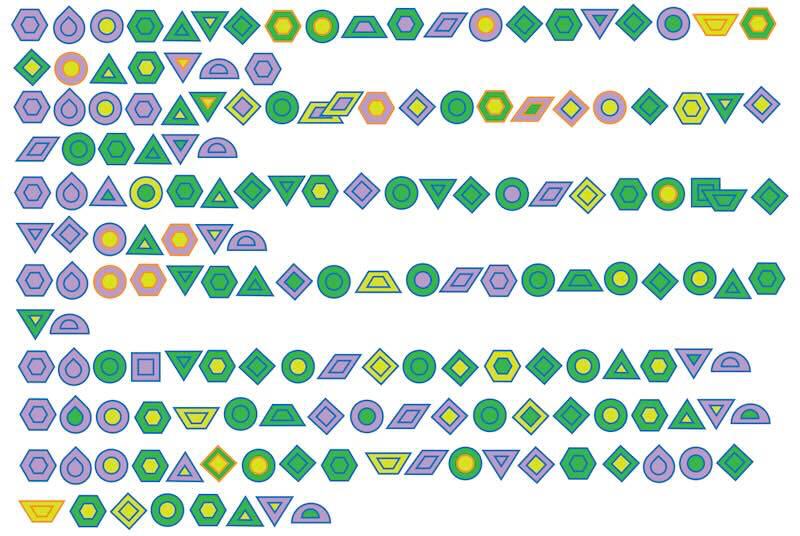
Professor Janelle Malagon uses Dear Data in their Digital Data and Design (DS 202) course. Dear Data "invites students to reimagine what 'data' can look like, and to recognize patterns in their own lives through data analysis." This data analysis is by student Kaitlyn Cooper and visualizes the activities, moods, and energy levels of a mother and one year old throughout a week.
Students and Dear Data @ GVSU
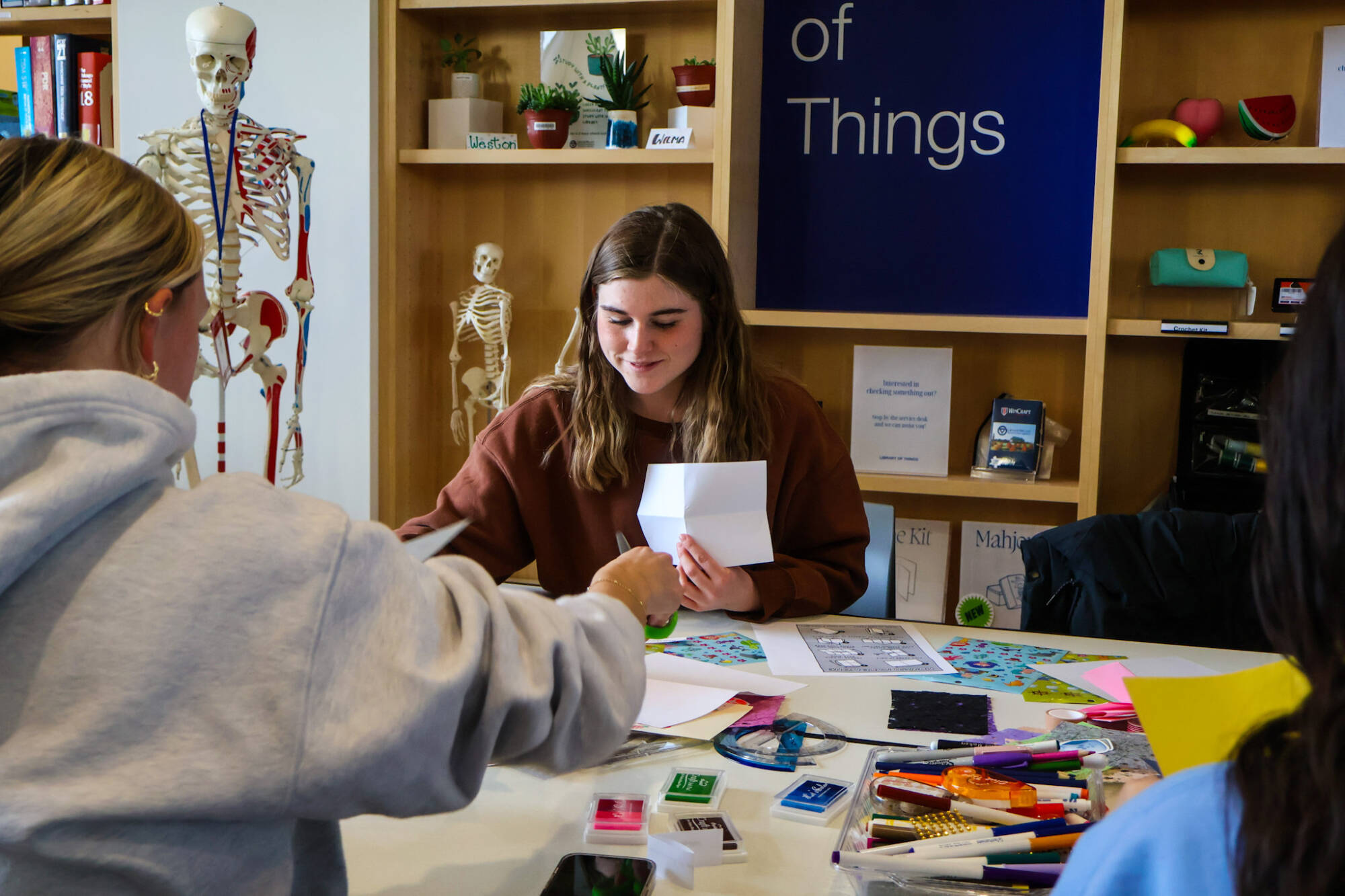
Students across campus are tracking one aspect of data in their lives and creating art to tell the story of that data. Anyone at GVSU can join!
–Information designers Giorgia Lupi and Stefanie Posavec, creators of Dear Data
What Can I Track?
Pick one part of your daily life to track—like your habits, emotions, conversations, or movement. You can choose any topic that interests you, such as “my week in music” or “my week of social media.” Other ideas include:
- Wildlife Sightings
- Distractions
- Food Eaten
- Time Spent with Others
- Books Read
- Walks Taken
- Social Media
- You can track anything!
The Lanthorn recently profiled Librarian Hazel McClure as she tracked a week of laughter as part of Dear Data @ GVSU.
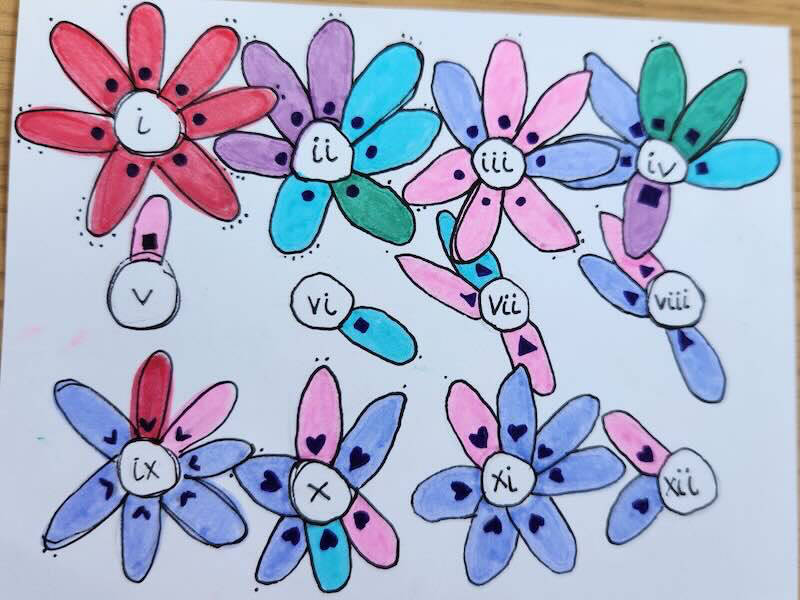
Example postcards
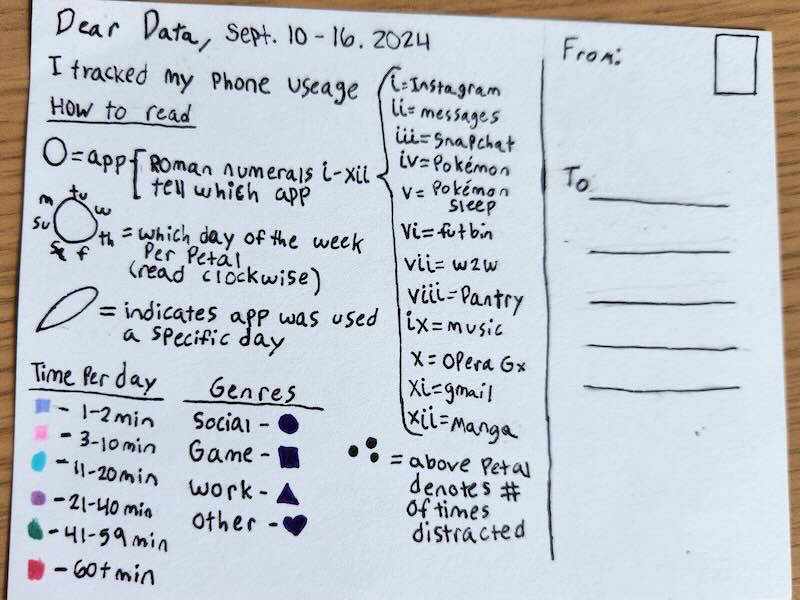
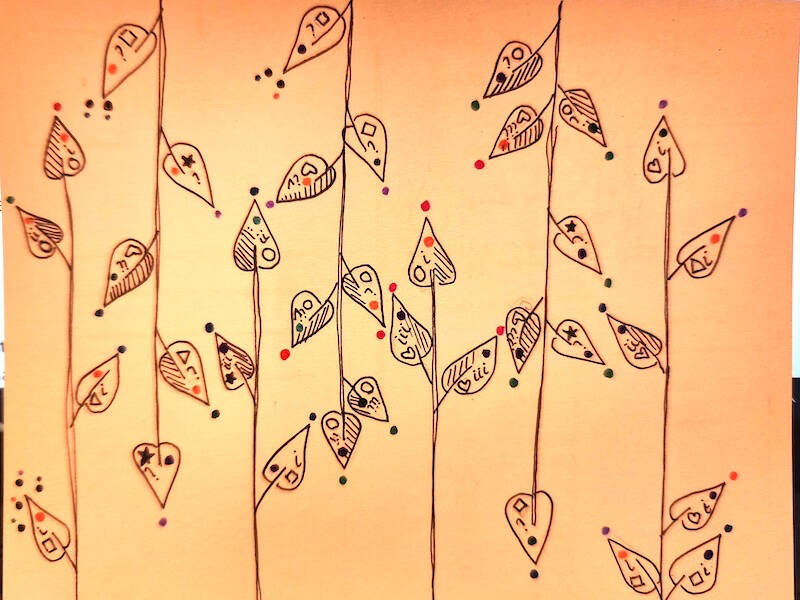
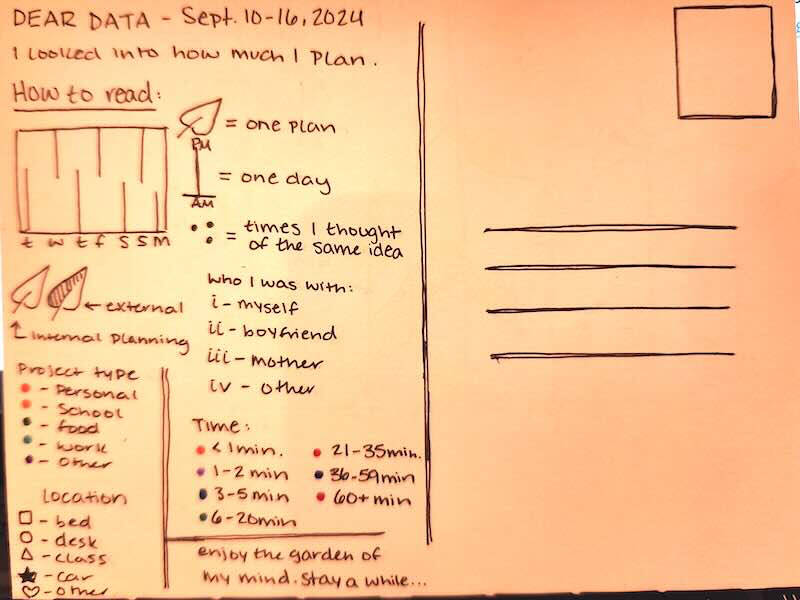
Why Participate?
Discover something new
You might notice patterns in your daily life that you never paid attention to before. Tracking your week can help you learn something new about yourself.
Slow down and notice more
This project encourages you to pause and take a closer look at everyday moments. It’s a simple way to reflect on your day and be more mindful.
Have fun and be expressive
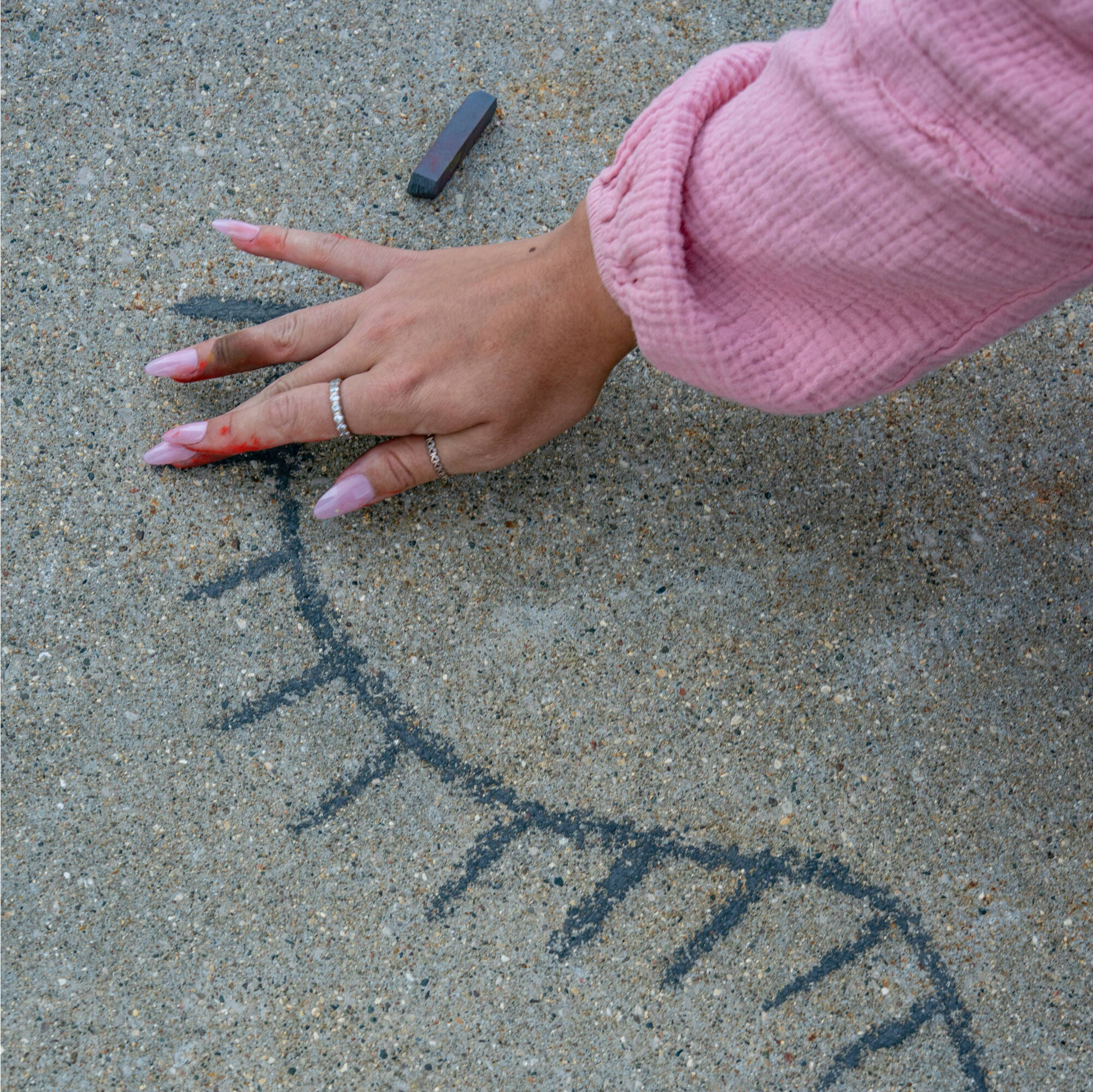
There’s no right or wrong way to draw your data. Use colors, shapes, and your own style to turn information into a piece of art.
What is Dear Data?
Dear Data is, at its core, a practice of slow data transmission, and an invitation to pause, reflect, and connect with others through the patterns of our everyday lives.
Over the course of one year, designers Giorgia Lupi and Stefanie Posavec got to know each other by exchanging weekly postcards between the UK and the US. Each postcard featured a hand-drawn visualization of personal data they had agreed to collect during the week. For instance, one week they tracked every time they said “thank you.” Another, they tracked their “interactions with strangers” or the “sounds” they noticed. Each postcard explored a different topic, with the visualization on the front and a detailed legend on the back.
What began as a personal exchange became a global phenomenon—Dear Data is now a 300-page book and part of the permanent collection at the Museum of Modern Art.
The Digital Studies Program , the Office of Undergraduate Research and Scholarship, and the University Libraries and Art Museum invite the campus community to join Dear Data @ GVSU, a collective data design activity inspired by information designers Giorgia Lupi’s and Stefanie Posavec’s “Dear Data” project.