

Laboratory Room Placard
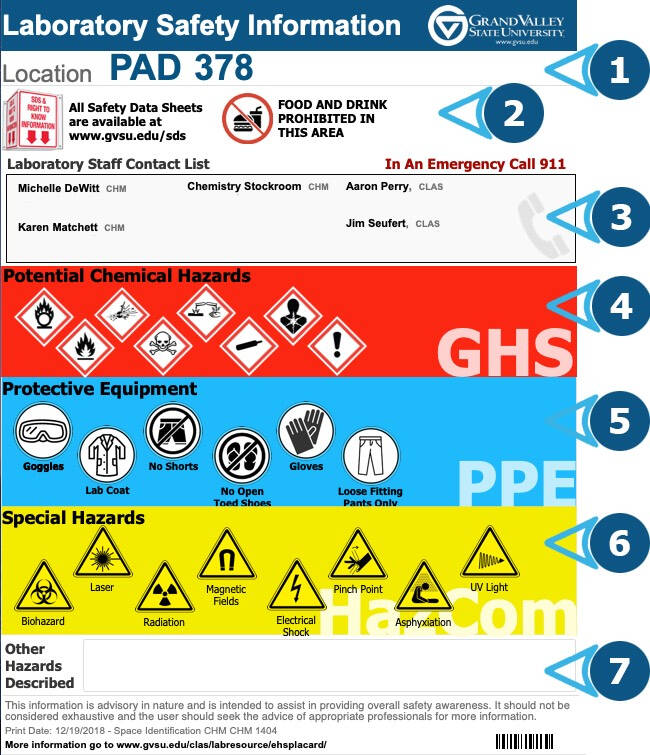
Safety Placard Definitions
1. Room Location
2. General Laboratory Information and Guidelines.
3. Important Contact Information for Responsible Laboratory Staff
4. Potential Chemical Hazards within the space. Please click for more information
5. Personal Protective Equipment requirements which must be used or avoided while working in the room. Please click for more information
6. Potential Physical Hazards which might be encountered while working in this space. Please click for more information
7. Additional Laboratory specific information you might need to know.
Chemical Hazard Information and Definitions
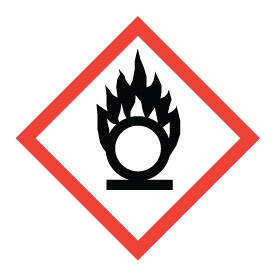
Flame over Circle
This symbol on a chemical label means that the substance is an oxidizer. Oxidizers may cause a fire by increasing the concentration of oxygen in the air.
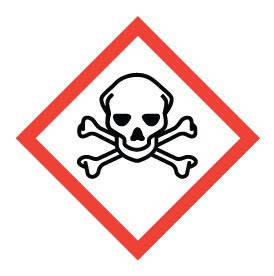
Skull and Crossbones
Substances with a hazard of acute toxicity will have this symbol on their chemical label. Acute toxicity means that exposure to a single dose of the chemical may be toxic or fatal if inhaled or swallowed, or if it comes into contact with the skin.
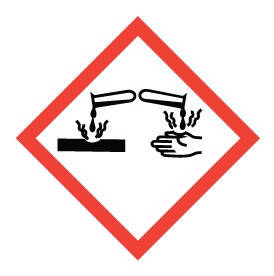
Corrosion
This pictogram on a chemical label means that the substance causes skin burns, eye damage, or destroys metals.
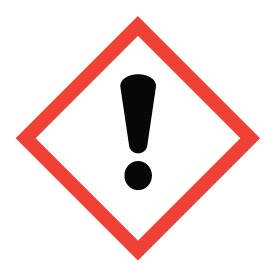
Exclamation Mark
It is used on a chemical label for substances that represent the following hazards: Irritant–irritates the skin or eyes; Skin sensitizer–which is an allergic response following skin contact; Acute toxicity–which may be fatal or cause organ damage from a
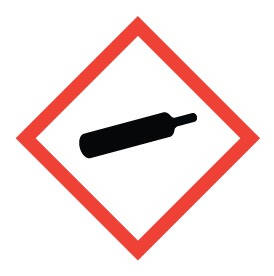
Gas Cylinder
This pictogram on a chemical label means that the substance is a compressed, liquefied, or dissolved gas under pressure at 29 pounds per square inch or more.
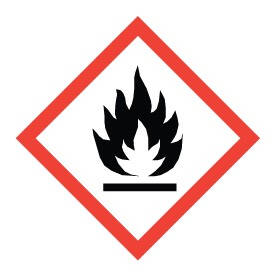
Flame
The flame pictogram appears on chemical labels for substances that are flammable, self-reactive, pyrophoric, self-heating, emitters of flammable gas, and organic peroxides.
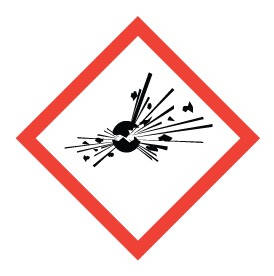
Exploding Bomb
The exploding bomb pictogram appears on explosives, self-reactive, organic peroxides.
Eye Protection
Some type of eye protection must be worn in this space.
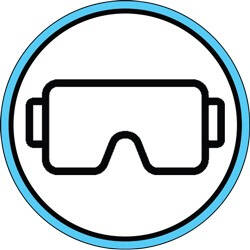
Goggles
Full splash goggles must be worn.
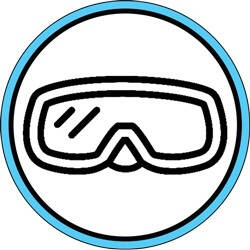
Safety Glasses
Safety glasses must be worn in the space.
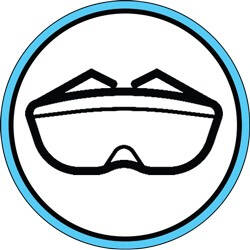
Lab Coat
A lab coat must be worn while working in this space.

No Shorts
Shorts are not allowed to be worn while working in this space.

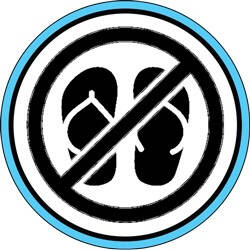
No Open-Toed Shoes
No open-toed shoes are allowed to be worn in this space. The entire foot must be covered at all times.
Gloves
Gloves must be used when working in this space. Please be considerate not to touch any communal equipment, or wear them outside the lab.

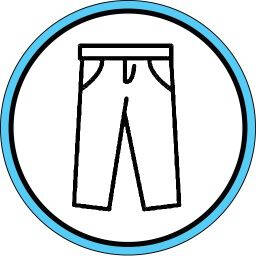
Loose Fitting Pants Only
Loose fitting pants must be worn while working in the space. No tights are allowed.
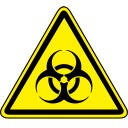
Biosafety Hazard
Potential biohazardous materials are located in this space.
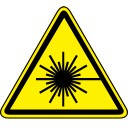
Laser Radiation
The use of laser equipment is used in this space.
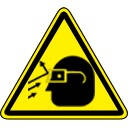
Flying Particles
Risk of flying projectiles while equipment is operating in this space.
Sharp Objects
Risk of sharp objects in this space.
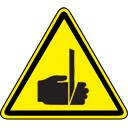
Strong Magentic Field
An invisible field that exerts a magnetic force on substances which are sensitive to magnetism.
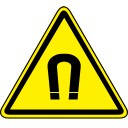
Pressure - Vacuum
Equipment in the space operates either under pressure or vacuum potentially causing an explosion.
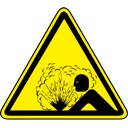
Electric Shock
Potential equipment which could deliver a dangerous level of electricity to the body.
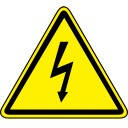
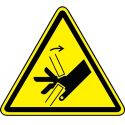
Pinch Point
Pinch points are points in and around machinery where there is a chance of a body part getting caught between a stationary and a moving part of a machine.
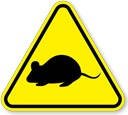
Animal Room
This room houses live mice. Entering the room could cause severe infection to the animals in this facility. Please ask the laboratory staff for training before entering the room.
Page last modified March 17, 2026