


Emma Boonstra Awarded Best Case Study
Published March 13, 2026 by Eliza MacDonald
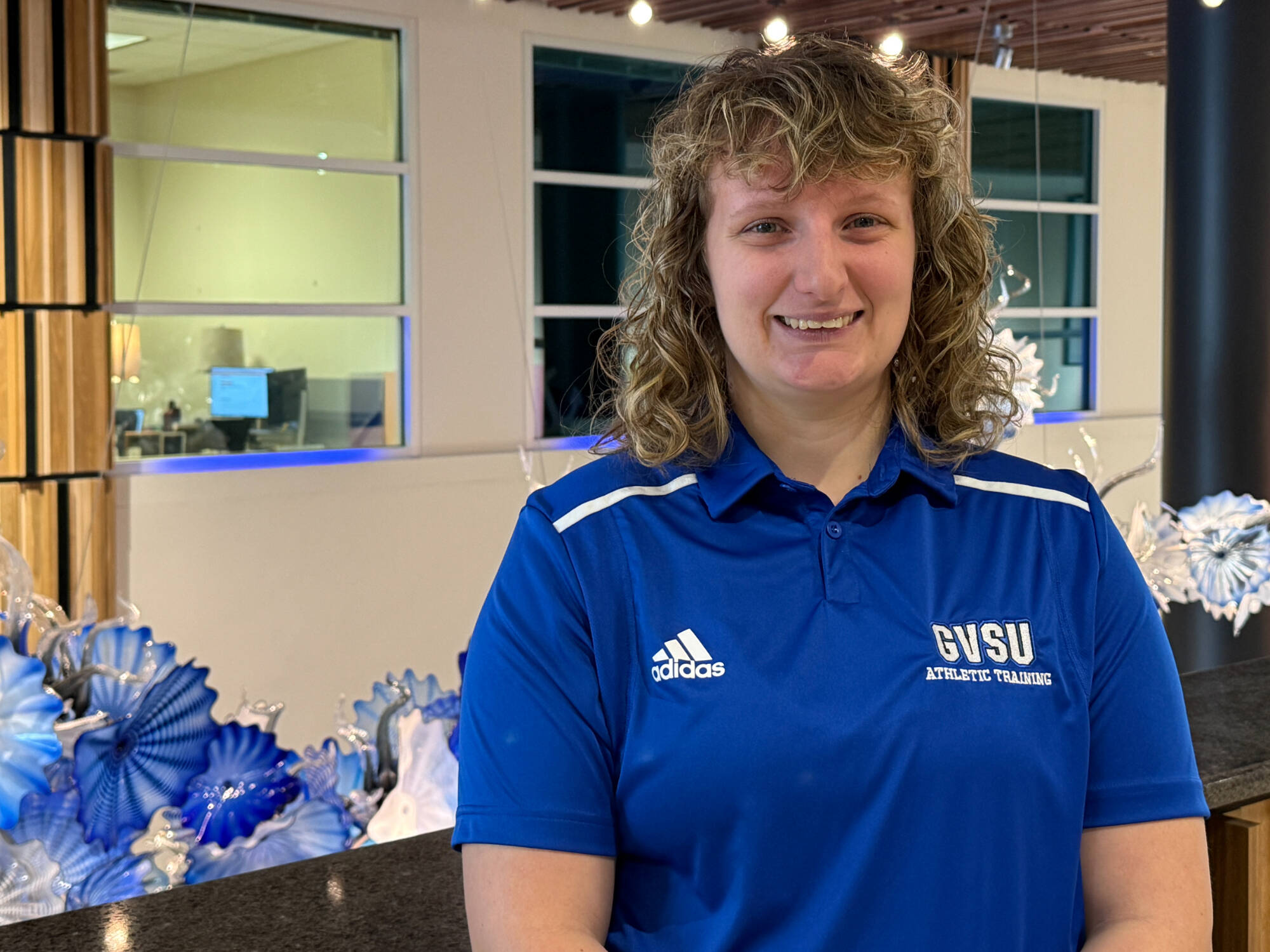
Emma Boonstra is a graduate student in the Master of Athletic Training at Grand Valley State University. She earned her Bachelor of Science in Exercise Science with a minor in Sports Management from Cornerstone University. Emma has gained hands-on clinical and internship experience in athletic training settings at both the high school and collegiate levels, where she developed skills in injury evaluation, taping, rehabilitation support, and athlete care. A former collegiate softball athlete, she values teamwork, leadership, and building strong rapport with individuals from diverse backgrounds. Emma is certified in Basic Life Support and First Aid and is a member of the Iota Tau Alpha Athletic Training Honor Society. She is passionate about supporting athletes’ health, performance, and well-being through compassionate, evidence-based care.
Case Study Abstract
Cyclops Lesion Development in a High School Male Football Player After ACL Reconstruction Surgery: A Level 4 Rare Events CASE Study
Background. A 17-year-old high school football player tore his ACL on his left leg the second day of training camp while running a route. He underwent ACL reconstruction surgery and was cleared to return to playing football after 9 months of rehabilitation. Five weeks into his senior season, he presented to the Athletic Trainer with pain on the medial side of the knee with medial rotation. Upon evaluation, he exhibited muscle guarding with the valgus stress test, and the McMurry's test was positive for pain. Supportive tapings were done for the MCL, however, the pain did not subside. The Athletic Trainer diagnosed him with either a MCL sprain and/or medial meniscus tear. He was prescribed and fitted for a new brace to assist in keeping him in a more stable position because the one that he had currently was too big. That still did not solve the problem, and the pain was still there so the Athletic Trainer referred him back to his orthopedic surgeon. Differential Diagnosis. The athletic training staff believed that it could have been either medial meniscus pathology or an MCL sprain due to its presentation on the medial aspect of the knee. Treatment. The surgeon ordered an MRI which revealed a cyclops lesion which is a fibrous nodule of scar tissue that can develop on the anterolateral aspect of the tibial insertion site of the ACL after ACL reconstruction surgery. The surgeon presented the options of surgical intervention to remove the cyclops lesion or to continue to try to play through the pain and complete his senior year of football. The patient and his family chose to try and play through the pain and schedule surgery after the season ended. Uniqueness. About 46% of people who have ACL reconstruction surgery develop a cyclops lesion. However, the development of a symptomatic cyclops lesion after an ACL reconstruction surgery only happens in about 2-10% of cases. Symptomatic lesions are more prevalent in females compared to their male counterparts due to narrower intercondylar femoral notches, making this case even more rare. The exact cause of a cyclops lesion is still unknown. Conclusions. The case of a symptomatic cyclops lesion in a high school football player is rare due to the fact that he is a male and the lesion itself is causing symptoms to occur. The symptoms were consistent with either an MCL problem or a medial meniscus, reinforcing the importance of referral when symptoms do not respond to typical treatment. As of right now, he is continuing to finish out his senior year of football, but has been instructed to stop if it becomes too painful.