

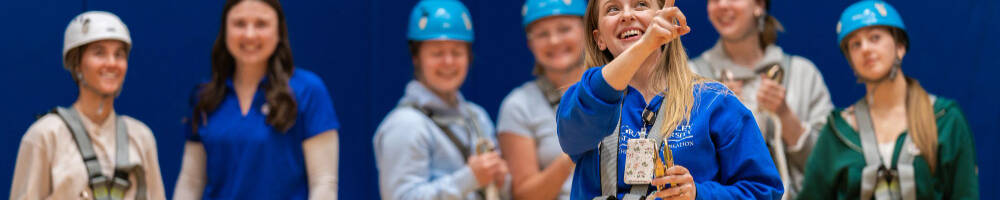
What is Recreational Therapy?
Recreational therapy, also known as therapeutic recreation, is a systematic process that utilizes recreation and other activity-based interventions to address the assessed needs of individuals with illnesses and/or disabling conditions, as a means to psychological and physical health, recovery and well-being. The purpose of the recreational therapy process is to improve or maintain physical, cognitive, social, emotional and spiritual functioning in order to facilitate full participation in life.
Why Study Recreational Therapy at Grand Valley?
- Rigorous. The program meets the standards of the National Council for Therapeutic Recreation Certification (NCTRC).
- Recognized. Nationally recognized curriculum with a small, welcoming program.
- Engaged. Students and alumni are active in local, state, and national professional organizations.
- Employment Opportunities. Diverse opportunities for employment after graduation.
- Giving Back. Service learning is integrated throughout the curriculum.
- Connected Faculty. Faculty members assist students in worldwide networking.
- Well-Rounded. Graduates are prepared to meet consumer health needs in a dynamic and culturally diverse world by completing a comprehensive curriculum that offers theoretical knowledge as well as practical experience and application.
- Accredited. Grand Valley’s Recreational Therapy program is accredited by the Commission on Accreditation of Allied Health Education Programs upon the recommendation of the Committee on Accreditation of Recreational Therapy Education.
Program Overview
Recreational Therapy (RecTx) is the specialized application of recreation and experiential activities or interventions that help maintain or improve the health status, functional capacities, and ultimately the quality of life for persons with disabilities and chronic conditions.
The recreational therapy major is a four-year academic curriculum plus one semester of internship leading to a Bachelor of Science (B.S.) degree. Graduates are prepared to meet consumer health needs in a dynamic and culturally diverse world by completing a comprehensive curriculum that includes theoretical and practical experience and application. Students need to be able to use clinical reasoning skills such as problem solving, formulating concepts, making judgments, analyzing behaviors and tasks, and determining appropriate intervention.
Students interested in pursuing further study in Recreational Therapy can explore our Recreational Therapy M.S. program page.
Qualified undergraduates may be admitted to the program and obtain both the B.S. and M.S. in recreational therapy within an accelerated time frame. Students interested in the Recreational Therapy B.S. & M.S. combined degree program follow the undergraduate curriculum for recreational therapy, and apply to the graduate program during their first year of undergraduate recreational therapy coursework. (120 undergraduate credits, 24 graduate credits)
Admissions Process
Application Deadline:
February 15. Applications are accepted on a rolling basis until all seats are filled.
Already have a bachelor's degree? See our Recreational Therapy M.S. program page for further opportunities.