

Professor Ian Anthony
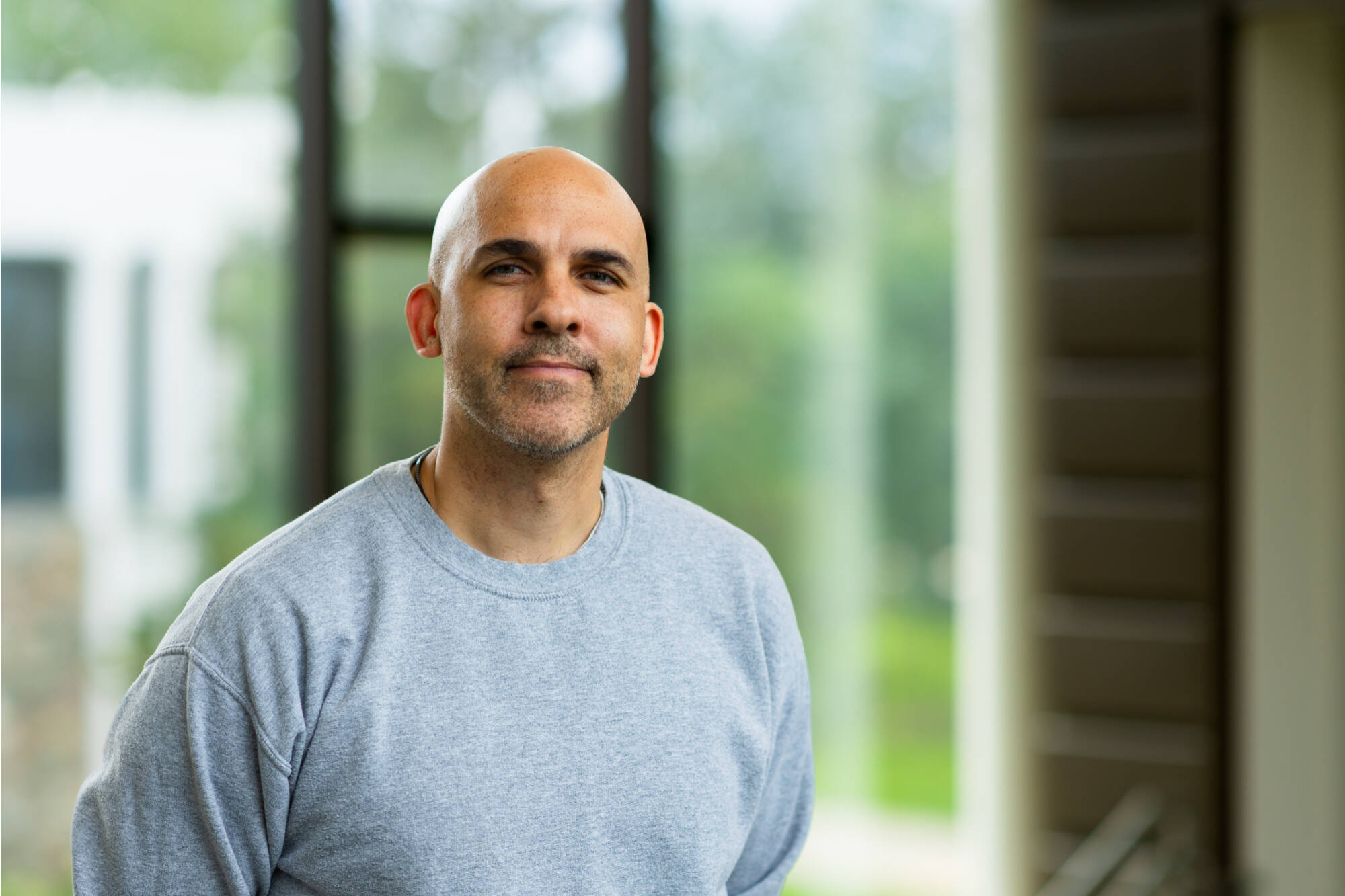
Visiting Professor
Office Address: 2151 AuSable Hall
Email: [email protected]
- B.A. International Studies, University of Washington, Seattle
- M.A. Education, University of Washington, Seattle
- M.A. Sociology, University of California, Santa Barbara
- PhD Sociology, University of California, Santa Barbara
Fields
Race & Multiracial Identity, Gender & Masculinities, Sociology of Science, Religion & Spirituality, Qualitative Research Methods
Courses
- Introduction to Sociology
- Social Problems
Current Research Interests
Race & Multiracial Identity
Gender & Masculinities
Spiritualities
Uncertainty
Selected Publications
Anthony, I., Zhou, Z., Artzer, B., Zuleta-Alonzo, A., & Low, K. (2025). Multiracial exhaustion and racial agency under the monoracial imperative: Fighting, flipping, and capitulation. The Journal of Cultural and Ethnic Studies, 12(3), 110–130.
Anthony, I. (2025). Reacting to the irrationality problem: Civilian astrology and certainty posturing. The International Journal of Religion and Spirituality in Society, 15(3), 115–136.
Bridges, T. and Anthony, I. (2024). “On the crisis of (white) masculinity: Victimization discourse and transformations in racialized forms of gender inequality.” dePICTions: The Paris Institute for Critical Thinking.
Biography
Ian Anthony is a proud teacher-scholar who earned a master's degree in education from the University of Washington (2018), and a master's degree (2022) and Ph.D. (2026) in sociology from the University of California, Santa Barbara. His research examines how perceptions of uncertainty shape social life, focusing on how people respond to being seen as racially ambiguous, spiritually irrational, or socially unsettled, and what those responses reveal about the structures that produce them. His teaching seeks to make sociology come alive for students at whatever life stage they are in and whatever trajectory they are seeking. He does this by actively engaging students in fun and games and, in the spirit of bell hooks, also works to humanize the teacher-student relationship, while remaining attentive to the power structures that undergird institutions like higher education.