

Issue #5 Winter 2023
In this newsletter, after a brief greeting and update from our new department chair Professor Mary Bower-Russa, we introduce our two Assistant Chairs and newest faculty member. Following that we feature some faculty members' outreach efforts in using their expertise to serve community-based projects and create opportunities for our students to apply knowledge in the real world. Professor Kristen Schrauben presents a current project about the Lakers working with students at the Boys and Girls Club, and Professors Gwenden Dueker and Jing Chen describe their work at Family Futures on building resilience against trauma. At the end, we feature the three panelists from the Alumni Career Paths Panel Discussion in Fall 2022.
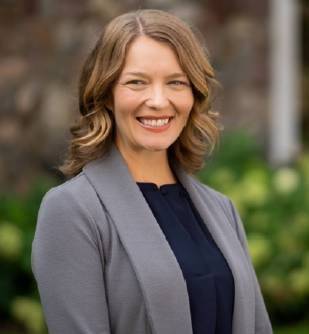

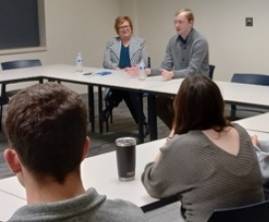
I just stepped into the Department Chair role in May of 2023, and it has been exciting to see the department regaining momentum as we move closer to post-COVID. Our department clubs (Psi Chi, Psych Club and Psych Friends) have been very active re-engaging students with events from information sessions on topics like graduate studies, to ice cream socials, cookie decorating, and peer-to-peer mentorship. I have even heard a rumor of an upcoming reprisal of the Family Feud event from last year! This year we are also excited about the launch of a new student club, SAGE, which is an extension of the Grand Connections initiative co-lead by Psychology Professor, Jing Chen. Grand Connections is working to create relationships between students and older adults from our community. So far the response from students to all these opportunities has been enthusiastic, and it is a pleasure to see students connecting with each other and creating communities of support as they experience the excitement and opportunities that university life has to offer.
At the faculty level, we are continuing to work to brainstorm how to better integrate a variety of different types of High Impact experiences into the major curriculum. These experiences have been demonstrated to have a host of benefits for students, and our department already offers quite a few of these experiences. Some examples include Professor Shupe’s Study abroad in Ireland, and Professor Gwenden Dueker’s work with students to provide educational presentations at a local GVSU sponsored conference on trauma and resilience building. From 2023-24 Professor Tessa Jordan will be offering her first cohort of students the opportunity to participate in a year-long class focused on mentoring of fellow psychology students (a new packaging of the current Psych Friends Initiative), while Professor Mikhila Wildey continues to engage students in connecting with the community and exploring professional directions via our traditional Practicum.
Finally, our recent addition of one more class to the Methods sequence for Psych majors ensures that students will complete their degree with the kinds of research skills that will allow them to more confidently market themselves for research roles in future employment. In addition, many students continue to work with faculty members in their research laboratories, becoming more well-rounded scholars, and allowing them to build portfolios to apply for graduate studies. We take great pride in all our graduates, and welcome opportunities to stay connected with all of you as you move into careers in which you have opportunities to positively shape your professions and societies!
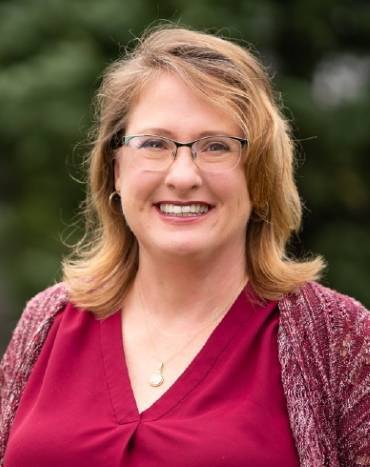
Dr. Mary Bower-Russa, Professor and Chair
The Psychology Department is pleased to have two Assistant Chairs working alongside Dr. Bower-Russa, to provide leadership and assist with administrative and strategic departmental work.
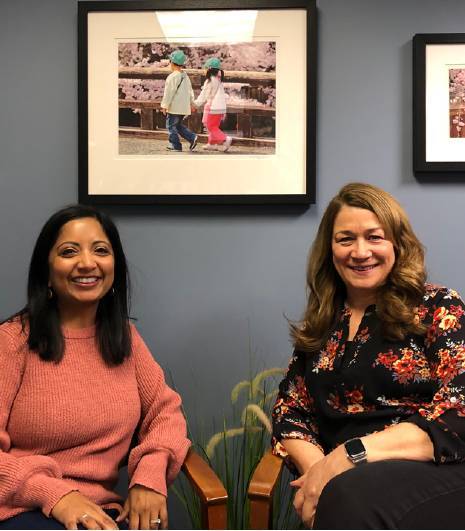
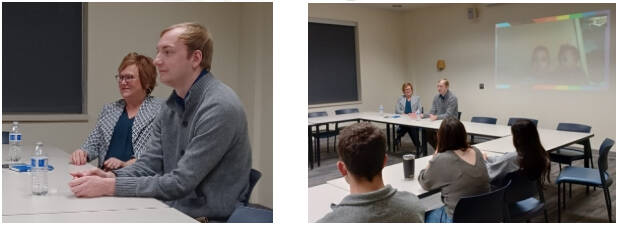
Dr. Christine Smith (right) joined the psychology department in 1995 and moved into her position as Assistant Chair of Assessment three years ago. In her job as Assistant Chair, Dr. Smith manages lab operations, oversees assessment, and assists with the department’s strategic planning. She also continues to teach courses in Group Dynamics, Social Psychology, and Research Methods, and she leads an active group dynamics research lab. As a first generation college student, she believes the research opportunities she had as an undergraduate played an invaluable role in getting her into graduate school, so she is always eager to facilitate research opportunities for GVSU students. When she’s not working, she enjoys traveling, hiking, backpacking, and reading, and spending time cooking and baking, especially with her two adult sons.
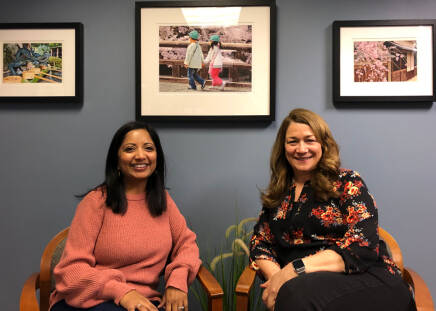
Dr. Mikhila Wildey (left) joined the department in 2015 and became the Assistant Chair in Advising, Enrollment, and Curriculum last fall. In her new role Dr. Wildey plans and facilitates advising events, coordinates advising processes in the department, and leads curriculum-related initiatives for the department. She especially enjoys finding ways to connect with students and get them the information and resources they 3 need to succeed and reaching students who aren’t likely to seek help. Dr. Wildey also continues to teach the Psychology Practicum course and Psychopathology, and to collaborate on research in the areas of sexual health and student mental health. As a licensed clinical psychologist Dr. Wildey maintains a clinical practice one day a week, focusing primarily on relationship issues in couples. Outside of work she enjoys spending time with her husband and her busy 3- and 6-year-old kids, and to travel and explore new restaurants with friends and family.
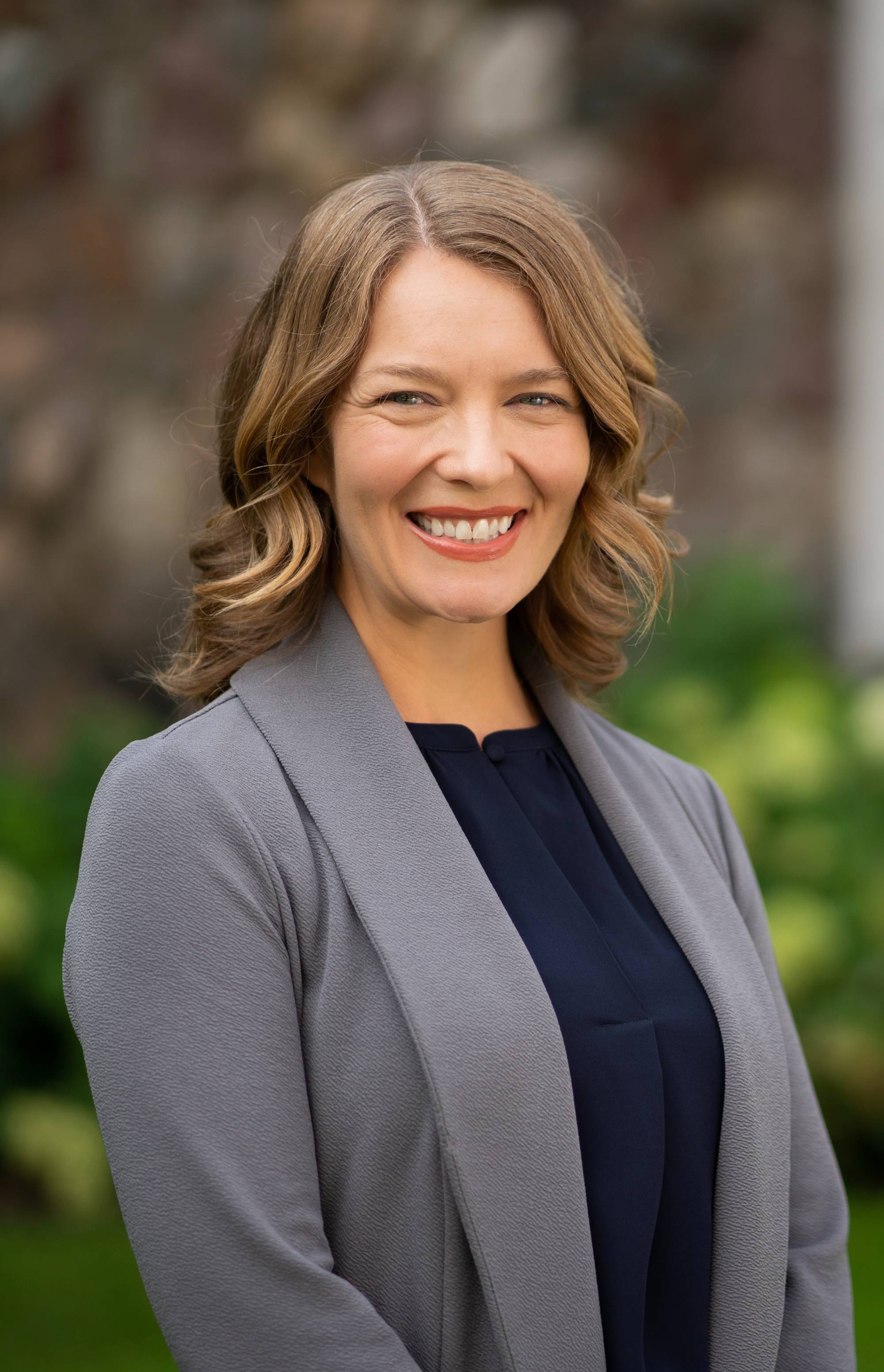
Dr. Karsten Joined us in 2021 and became the newest faculty member after several years of no new addition to the department. Let’s hear what she says about her career journey and her plans at GVSU.
I was born and raised in Michigan and completed my undergraduate and graduate training in behavior analysis at Western Michigan University. After my pre-doctoral internship in autism services at University of Nebraska Medical Center, I began my career in the Department of Psychology at Western New England University (WNEU) where I taught for 9 years and became mom to two sons. While at WNEU, I collaborated with school-based professionals to offer a clinical-research practicum that led to several poster presentations and post-bachelor’s job opportunities for my students. I also co-supervised a 1-year paid work-study experience for approximately 15 students per year to provide academic and social support for university students with autism, ADHD, or related concerns.
We hoped to eventually live closer to family and the Great Lakes, and I was proud to return to my alma mater as a Clinical Faculty Specialist co-leading the WMU Hybrid Master’s in Applied Behavior Analysis Program from 2017-2021. When the opportunity opened up at GVSU to help undergraduate and graduate students prepare for fulfilling, impactful careers serving people with and without disabilities in K-12 schools, I had to go for it. I am married to an awesome teacher from a long line of teachers, and my own parents and teachers instilled a love of learning that has made all the difference in my life. A chance to positively impact schools alongside GVSU faculty who are state and national leaders in evidence-based practice and school-based collaboration is a dream come true for me.
My plans at GVSU are to advance and disseminate the science of learning through applied research collaborations and through mentoring students in our department’s undergraduate and graduate programs. I currently teach undergraduate introduction to ABA, graduate introduction to ABA, and graduate ethics and diversity in professional practice.
My first research activities at GVSU have focused on improving the generality and social acceptability of Zoom-based supports for teens and young adults with ASD who are transitioning to their first work or internship experiences. I have been truly impressed by the caliber of undergraduate research assistants who have helped me get started with research at GVSU.
I’m also in the final stages of coauthoring a graduate-level ethics textbook for aspiring Board Certified Behavior Analysts. I look forward to developing new studies and outreach projects based on the interests of students and colleagues at GVSU (e.g., literacy instruction, cross-cultural adaptations of ABA). For example, Dr. Kristen Schrauben, Dr. Amy Matthews, and I secured a GVSU Teaching Innovations grant to begin an afterschool literacy tutoring partnership with Boys and Girls Club of North Holland. Now in our second semester, Lakers at the Club has resulted in measurable change for some of our elementary school students and fantastic learning opportunities for our graduate and undergraduate tutors. We look forward to building on this work in 2023-2024.
Initiated by Dr. Amy Matthews, psychology department faculty Dr. Amanda Karsten and Dr. Kristen Schrauben have partnered with the Boys and Girls Club of Greater Holland (North location) to provide a valuable learning experience for both undergraduate and graduate students while also supporting the needs of youth at the Boys and Girls Club. GV students have been providing targeted programming to support the nee ds of youth as part of their after-school care. The 1st-12th grade population served by this community partner is already at-risk for poor academic and social-emotional outcomes, but the pandemic has exacerbated these issues and the needs are greater than ever before. The goal of this project is to support the needs of youth who attend the Boys and Girls Club through academic tutoring and/or social-emotional learning sessions that are facilitated by school psychology graduate assistants and psychology undergraduate student volunteers as part of a high-impact, experiential learning experience.

This year (2022-2023) we have two graduate students and five undergraduates participating in the project, now named “Lakers at the Club”. Psychology department faculty provide supervision and support throughout the experience, such as selecting and organizing discussions on key readings, providing training, and troubleshooting difficulties. Given the individualized and intensive needs of the youth at the club, we have been limited in how many youth we can tutor and how much data we could collect during this pilot year. We have slowly proposed, developed, and attempted to implement various procedures, data collection methods, and staff/parent communication strategies. However, the pilot project has been successful and beneficial to all involved thus far. Youth at the Boys and Girls Club have been able to get individualized support in reading as well as a physical space with safe, supportive adults to support their social-emotional needs. Initial quantitative data suggest that the youth we are working with are improving in their reading and youth indicate they enjoy the sessions with our Lakers.
Undergraduate psychology students are gaining valuable knowledge and hands-on tutoring experience with youth to help inform and enhance their career and graduate school prospects. They have also been able to get course credit for the hours they are putting into the experience. The school psychology graduate students are financially supported through assistantships and are acquiring advanced experience developing tutoring materials, assessing initial skills and outcomes, coaching undergraduate tutors, and monitoring fidelity of implementation. The Boys and Girls Club staff have additional adult support in their building, a free tutoring program they can offer to parents, and tutoring materials we provide for them to use outside our own sessions.
Given the project’s alignment with the university’s commitment to “empowered educational experiences” and the college’s vision to expand high-impact experiences for students, we look forward to continuing and possibly expanding Lakers at the Club next year (2023-2024). Thank you to GVSU Psychology Department, Pew Faculty Teaching and Learning Center (Teaching Innovation Grant), and The Graduate School (Special Project Graduate Assistantship) for making this project possible thus far.
Professors Gwenden Dueker and Jing Chen are spending time this Winter semester partnering with Family Futures, a non-profit family support organization based in Grand Rapids, MI. They have joined Family Futures’ efforts in reducing the impacts of trauma and building resilience in individuals and families in our community.

Here are some of the major works that they are conducting:
• Creating curriculum modules for training community members and professionals about preventing childhood trauma, fostering resilience in families and communities and various parenting topics.
• Conducting training sessions across Kent County
• Training members of Family Futures staff to present the curriculum modules.
• Presenting at a Lunch & Learn series at Family Futures to community partners on understanding trauma and building resilience-related topics.
• Partnering with Family Futures to plan and present a conference titled “Practicing Resilience Through Relationship Building” to bring information about evidence-based practices to community partners working on the frontline with children and families in our community in April, 2023.
Last November, the Faculty Alumni Relations Committee, Psi Chi, and two student clubs, Psych Friends, and Psych Club, jointly hosted an Alumni Career Paths Panel Discussion. We invited three alumni, Krista Harmon, Jeffrery Lueders, and Jazz McKinney. This was the first in-person alumni panel discussion we had after the pandemic. The panelists shared their own education and career experiences with the students and answered students’ questions. Prior to the panel discussion, we asked the panelists to think about several questions regarding their career paths and current positions before participating in the panel. Here are some highlights from their written responses, most of which they also spoke about in the panel discussion.
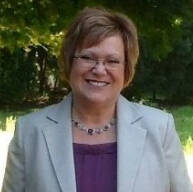
Krista Harmon:
Graduated in 1988 with a major in Psychology and a BS in Group Social Sciences
Krista described her career paths:
• I waitressed after college because I really didn't want to be a teacher - which is the direction I was advised to do to become a guidance counselor. Those first few years after college were bumpy as I figured it out.
• Volunteering for a year at the Women's Resource Center was the primary experience that helped me land my first professional position as a Career Specialist. I worked there for 14 years and earned a credential as a Global Career Development Facilitator. This helped open the door to working at Kent ISD as a Career Development Facilitator- a school setting with summers off!
• I have had two additional role changes over the last 8 years and moved into being a Consultant with local school districts.
• All of the degrees and experiences came together as part of my career path - nothing was wasted.
Krista described how she has worked in career consulting in a variety of capacities:
• I am currently a Workforce Development Consultant with the Kent ISD. My work experience over the last 25+ years has made me an expert in career and workforce development. I will be working at business development to connect our local employers to schools for career awareness, exploration and preparation experiences. This is a critical part of career development and will add relevancy to young people's education and help them make informed career decisions upon graduation. I was recruited to take on this newly created role for the Kent ISD due to my work performance - not any additional credentials.
• I also am the owner of Discovery Careers - a career consulting business. I started my business about 8 years ago after seeing how many students didn't understand how their unique set of interests, values, personality and experiences fit into the world of work. It has been great having a business where I serve students (and adults) since my day job doesn't provide opportunities to work directly with students. It is the best of both worlds. I don't advertise - it is only word of mouth due to my capacity.
• I'm currently the President of the Michigan Career Development Association.
Krista reflected on her experiences at GVSU and what she wished she had known then:
• I loved my psychology classes! The professors were fantastic.
• Being a first-generation college student, I look back and wish I would have been more knowledgeable on the importance of clubs and networking groups during the college experience. I think I missed out on many opportunities because I just didn't know better. I'm always giving examples of how these kinds of activities are valuable to the high school students I work with.
Jazz McKinney
Graduated in 2009 with a major in Psychology and two minors: Women & Gender Studies and Math.
Jazz’s career paths:
• Graduated in the middle of a recession when there weren’t many jobs available for a psychology major. Tried for a year to apply for a job.
• Went back to school to get a Master’s degree in order to do therapy, particularly with either the LGBTQ+ field or domestic violence.
• Graduated with a Master’s degree in 2014.
• Got a job at a crisis call center, dealing with about 60 crises a day. This job shaped Jazz’s view on trauma and suicidality.
• In 2016 got a “dream job” doing therapy for LGBTQ clients who experienced domestic and sexual violence.
• Stayed at this job until 2019 and went to residential treatment until the pandemic hit.
• During the pandemic, happily stayed at home with their children before becoming the executive director of the Pride Center.
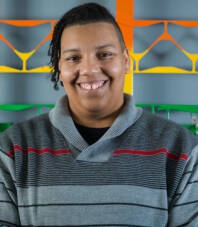
Jazz reflected on their current position:
I am the Executive Director of the Grand Rapids Pride Center. I definitely did not ever see myself in the job that I am in now. While I may not have taken the traditional route to get here, let me tell you I have used every single technique I have ever learned in my psychology field journey.
Jazz reflected on how GVSU experiences has impacted their career:
• I had so many good experiences at GV it is hard to choose which had the most impactful, but I think I will discuss my attending EDU 200. This happened in my 2nd semester as a freshman and we were supposed to create a lesson plan on a topic that was important to us and do a quick 10 min lesson plan. Well I chose LGBTQ as this was a taboo subject back in 2005 but very important to me. But anyone who knows me will tell you, I talk ...a lot so I was not able to get my lesson plan AND activity done in 10 mins, but it was such an impactful presentation that the teacher asked the class if they minded if I finished. It got such positive reviews that he asked me to come back to his class every semester until I graduated to teach that very subject...and very smartly gave me an hour haha.
• Also, another big impact was I was involved in so many student organizations and got to meet so many people and get involved in so many events it was awesome.
Jazz’s advice for our current students:
• Make sure that you have passion for whatever it is that made you choose psychology. Sometimes it can be a thankless job but the intrinsic reward is what keeps me sustained.
Jeffrey Lueders
Graduated in 2018 with double major in Psychology and Sociology and minor in Statistics
Jeffrey’s career paths:
• Expected to go on to a PhD in sociology after graduation – COVID changed the course.
• Went to University of Chicago and got a Master’s of Arts in Urban Sociology in 2019.
• Job searched a few months after University of Chicago and found a job as a CPS/Foster Care caseworker for MDHHS.
• Worked at MDHHS for two years.
• Now plans to pursue a clinical MSW to become a counselor, school social worker, or hospital social worker with a better work/life balance.
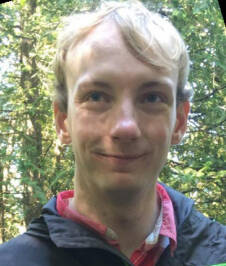
Jeffrey talked about his job as a CPS/Foster Care casework:
• My job as a CPS/Foster Care caseworker requires a bachelor’s degree in psychology, sociology, family/child development, criminal justice, social work, or almost any other social science related field. HOWEVER, moving upward within MDHHS often requires a MSW or master’s in psychology.
• Duties include referring children and their parents to mental health services, helping families navigate welfare payments through the state, creating service plans for parents to follow to achieve reunification with their kids, testifying in court, supervising contacts between parents and their children, and plenty of paperwork/data entry.
• Main challenges are maintaining a work/life balance. Easy to get behind on paperwork or recording/entering contacts with clients. Reward is knowing that I protect children everyday and try my best to help their parents improve their lives. Very rewarding to create bonds with the families and children I work with.
Jeffrey reflected on his experiences at GVSU on his career:
• Double majoring/taking class work in a social science in addition to psychology helped impact my ideas for my future. Experiencing another social science helped make me well-rounded and extra valuable when applying to graduate schools.
• I was also engaged in as many clubs as possible, as a tutor for psychology/sociology, and tried to maintain positive relationships with each of my professors. Having my professors be able to write detailed and positive letters of recommendation based on doing research with them, helping tutor some of their students (through the Tutoring Center), and by engaging in club activities with my professors outside of class helped make their letters of reference even more meaningful when I applied for graduate school.
• The research I did and the professors I became close with also helped formulate what I’d base my master’s thesis on and what career path I would like to enter.
Jeffrey’s advice to our current students:
• Plan out your future career as much as possible!
• See what master’s degrees will open as many doors as possible for you that you are interested in!
• Do the career that you are interested in, not your family, your friends, or significant other (although it’s great to have their support)!
• Explore other social sciences to see what you might like about them, consider adding them on as a minor/second major.
• Come up with multiple career ideas and find what graduate path will help you achieve as many of those career paths as possible.
• Be humble and listen. There is always more to learn.
• Do your best but know that your best will look different day-to-day so forgive yourself for the days where your best seems underwhelming.
• Have fun! Life is “serious” but don’t let it be too serious.
Sharing Your Advice
If you have helpful advice to share with our current students, please send us a note via our Contact Us page. We hope to share the collective wisdom with our students.