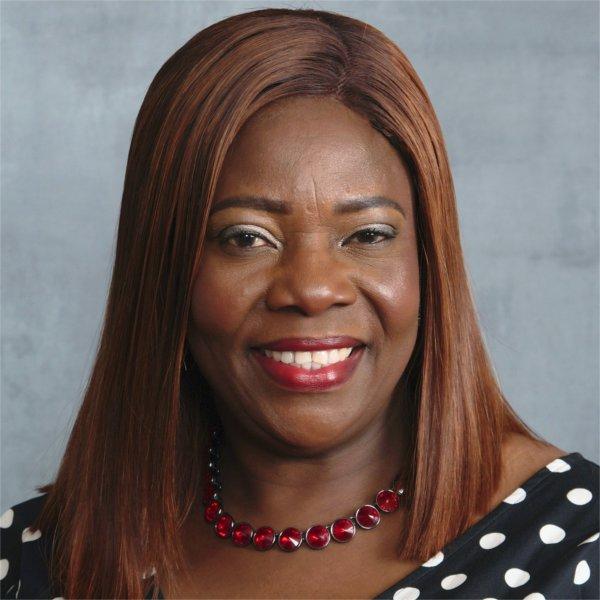
Tara Hefferan is a Senior Affiliate Professor at Grand Valley and an applied anthropologist. Among her specialties, Hefferan has an interest in the anthropology of sport, particularly soccer studies. She is the Co-Director of GVSU's UK: Soccer & Society study abroad program. Currently, Hefferan's research focuses on the construction of Amway Stadium in Grand Rapids. This ethnographic study explores how people make sense of and adopt positions of opposition or support related to the stadium.
GVSU Expert: A Q&A on what it means for the United States to host the World Cup
Jun 8, 2026



Tara Hefferan, a Senior Affiliate Professor of anthropology at Grand Valley
Image credit - Amanda Pitts
Explain the significance of the FIFA World Cup and what it means for the U.S. to be one of the host countries this year.
The FIFA World Cup is the biggest sporting event in the world, a global event of unmatched significance. To give a sense of scale, more than 1.5 billion viewers tuned into the 2022 World Cup final, and an estimated 5 billion people engaged with the tournament. Compare that to the Super Bowl, which, here in the U.S., we often think of as the biggest event anywhere. In reality, the 2026 Super Bowl averaged just 126 million viewers, a fraction of the World Cup audience. The World Cup really is unlike any other sporting event, transcending nation, religion and language as people everywhere simultaneously engage in the same activity: watching soccer matches.
For the U.S. to be a co-host for the 2026 World Cup is tremendously important. Eleven U.S. cities will host three-quarters of tournament matches, with more than 1 million visitors projected to travel to the U.S. for games. That said, this year's tournament is not without controversy. Currently, travel bans or restrictions apply to visitors from 75 different countries, raising questions about tournament access for both players and fans from those nations. Calls to boycott this year's tournament have also cited U.S. foreign policy, escalating geopolitical conflicts and U.S. immigration policies, among other concerns. At the same time, fan-led initiatives are pushing boycotts due to exorbitantly high ticket prices, issues with the ticketing draws and general dissatisfaction with FIFA as a politicized and overly profit-driven organization.
The U.S. hosted the World Cup back in 1994. What factors played into the success of the event for the country?
The 1994 World Cup was really a watershed moment in U.S. soccer history, moving soccer from the fringes to the center of public consciousness. A record-breaking 3.6 million spectators came to watch matches in person, and television coverage introduced the game to millions more Americans. Importantly, during the 1994 tournament, the U.S. Men's National Team advanced out of group stage play, the first time that had happened since 1930, giving Americans a magical and historic moment to get behind the home team.
Major League Soccer (MLS) was also born out of the tournament, as FIFA required the U.S. to create a professional soccer league as a condition for winning the hosting bid. Alongside the U.S. Women's National Team World Cup victories (four total since 1991) the success of the 1994 tournament helped to launch much of the soccer-related culture and social structure that we see today in the U.S.
The U.S. hosts major sporting events every year. What is it about the World Cup that sets it apart from other major sporting events?
As a truly global event, the World Cup distinguishes itself from other sporting spectacles in terms of sheer scale and cultural significance. The game of soccer is played virtually everywhere in the world, with the World Cup its apogee, the pinnacle of sporting achievement. Five billion people sharing a cultural touchpoint is massive, bridging divides of culture, language and nationality through connection to "The Beautiful Game." In this way, soccer is more than just a game. It is a container for cultural values, worldviews, economic and political relationships, shared community and so much more.
The U.S. is hosting alongside Canada and Mexico. What is the significance of FIFA choosing to split the matches across multiple host countries rather than a single one?
This is the first time FIFA has awarded a joint bid to three host nations: The U.S., Canada, and Mexico. There are some practical reasons for this, including that all three nations have the existing stadium infrastructure, broadcast networks and marketing resources necessary to make this a very profitable World Cup. By co-hosting, they are also spreading out some of the financial risks and organizational burdens of the tournament in its newly expanded format of 48 teams and 104 matches. There is a symbolic dimension, as well, signaling that the three nations are friends and neighbors who share values and a sense of community, and that they can work together to put on one of the world's greatest sporting spectacles.
Describe the growth of soccer in the United States. How did the '94 World Cup and Women's World Cup Championships impact that growth?
Soccer is booming in the U.S. right now, with shows like “Ted Lasso” and docuseries like “Welcome to Wrexham,” expanded youth participation, expansion in Major League Soccer, the National Women's Soccer League and other professional and semi-professional leagues. In Grand Rapids, we have several new semi-professional teams popping up, as well as the new AC Grand Rapids professional team set to launch in spring 2027 at Amway Stadium. Soccer is now the third most popular sport in the U.S., edging out baseball in terms of popularity.
The 2026 World Cup, with all its hype and broadcast accessibility, is set to only further soccer's popularity here. The U.S. national teams, like national teams everywhere, inspire imagined communities, inviting fans and spectators to identify with something bigger than themselves, and bringing strangers together around a sense of belonging and community. For example, even if you are unable to attend a World Cup match live in person this summer, you still can head to “watch parties” planned across West Michigan.
Subscribe
Sign up and receive the latest Grand Valley headlines delivered to your email inbox each morning.