

Unique exhibition features artwork by interdisciplinary pairs of faculty
Since last fall, eight faculty members from Classics, English, History, and Visual and Media Arts have worked in pairs to explore their research interests and develop an exhibition project.
The faculty are in the College of Liberal Arts and Sciences' Society, Technology, and Environment Cluster. Their projects will be displayed in the Calder Arts Center, Padnos Student Gallery, through Nov. 12. An opening reception is Thursday, Nov. 5, from 5-7 p.m.
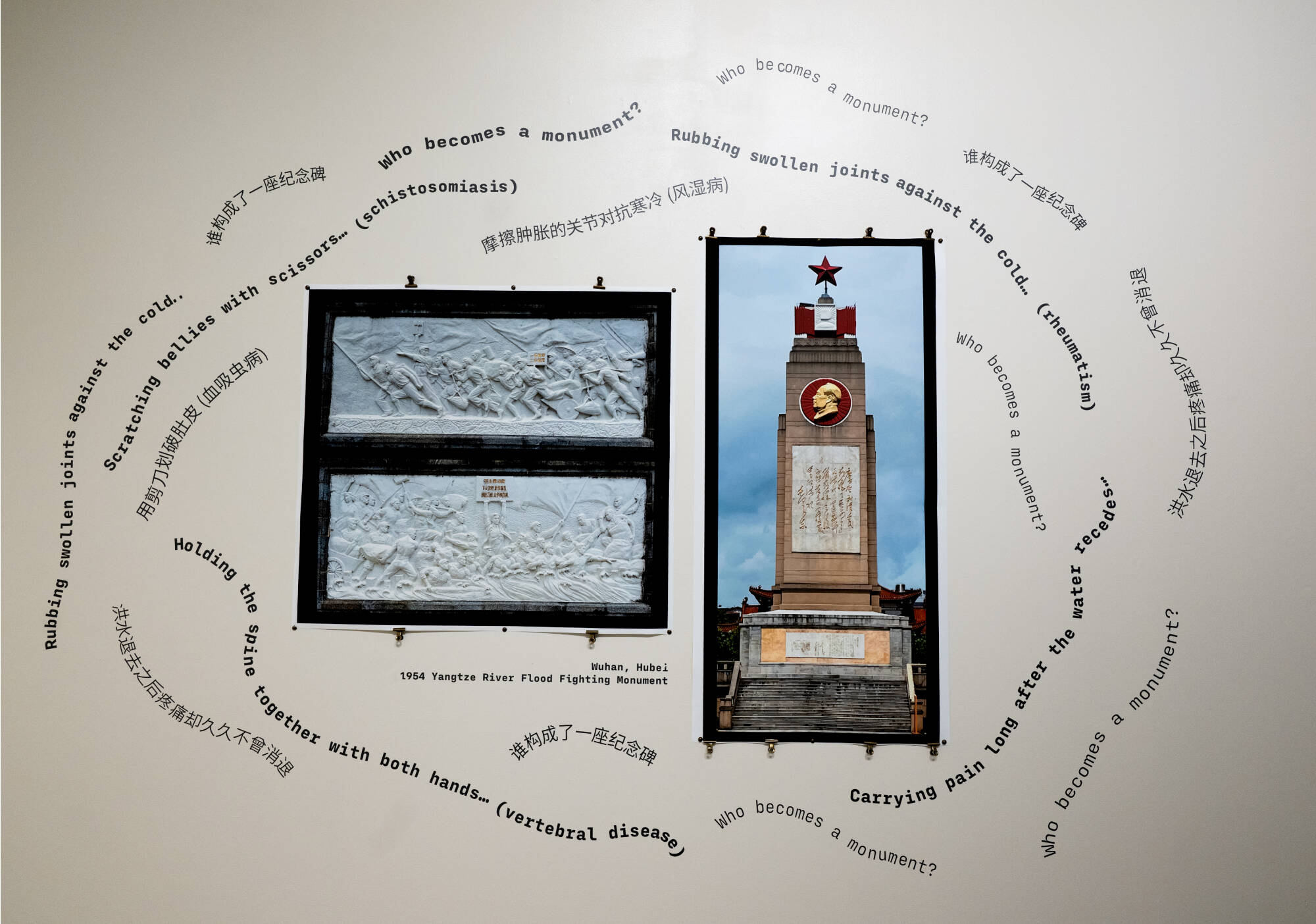
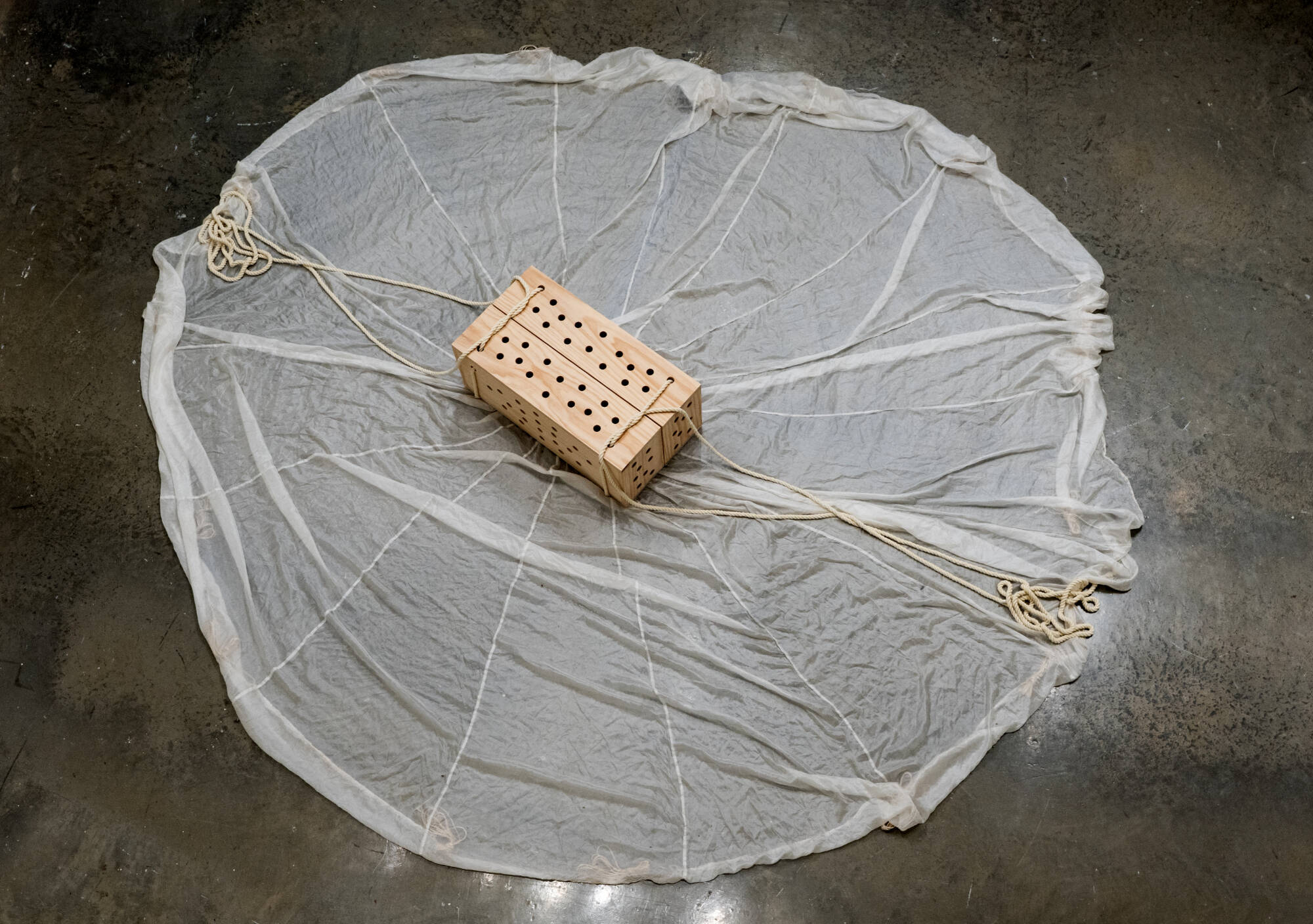
From "Bodies that Remain, Bodies that Dissolve," created by Yue Liang and Kristin Reeves. (Kendra Stanley-Mills)
From "A Beaver’s Vertical Visions," by Marianne Hoffmeister Castro and Blair Stein. (Kendra Stanley-Mills)
Yue Liang, assistant professor of history, was paired with Kristin Reeves, assistant professor of visual and media arts. They created "Bodies that Remain, Bodies that Dissolve," using archival approaches and technological adaptations to interrogate the tensions between state and citizen, between heroes and victims during the 1954 Yangtze River flood.
“So many intellectual inspirations have come out of our dialogue and discussions. I especially appreciate Kristin's effort to make written documents — and the silences within them — visible, along with the marginalized individual voices that often go unheard," Liane said. "There were moments during preparation and installation when new ideas emerged and those moments have been genuinely inspiring for my historical research."
Reeves said working with a historian like Liang greatly impacted her creative process.
“Because of her skill as a historical researcher, Yue provided me with first-hand accounts of flood survivors' experiences that I used in the artwork," Reeves said. "She also provided me with visual references that I used for multimedia drawings and animations. I want to make artwork that reflects human experience and the more historically accurate it is, the more culturally relevant it can be."
Also on exhibit
In their installation, "A Beaver’s Vertical Visions," Marianne Hoffmeister Castro and Blair Stein break from anthropocentric models of inquiry to speculate on the intersections of technology and animal sentience. Their research asks the viewer to reconsider the implications of a 1948 effort in Idaho to reintroduce beavers to the rural landscape.
Maggie ten Berge and Shalom Yabilsu-Anyaduba in "The Many Stories of a Roman Bill of Sale" use historical imagination to ask viewers to connect with Fortunata, an enslaved woman living in Roman Britain. Foregrounding the contexts of individuals whose histories have been neglected and minimized, their efforts shape an ethical approach toward a charged past.
Tierney Powell and Wenxin Zhao examine and critique the role of academic labor in "A Shipping Manifest." Focusing on how the contemporary university is shaped by market and logistical forces as well as cultural mores, they ask viewers to see higher education within a broad context that highlights the systems in which it operates and its human laborers.
— Sofia Ellis is a senior writing major and a student writer for University Communications.