


Nutrition and Neurotransmitters: Week Five
Putting it all Together Mind and Body Connection
Stress and its Effects on the Body
Stress is how the brain and body react to the daily pressures of life. These pressures may include school, work, family, daily responsibilities as well as the positive pressures of navigating a new relationship, planning a vacation or moving.
Stress can be short term from a one time event (break-up, illness, pandemic) or it can be ongoing and chronic (long term illness, job stress). Not all stress is bad and it is designed to give cues to our body that we need to become aware and motivated to face the challenge ahead. Physical manifestations in the body such as heart rate and breathing getting quicker, brain using more oxygen and muscles getting tense are common during acute stress.
Effects of Stress on the Body:
|
Lack of concentration and energy, headaches, dizziness, panic, depression and anger. |
|
Increased heart rate and blood pressure leading to increased risk of high cholesterol and heart attack. |
|
Upset stomach, acid reflux, pain ulcers and change in appetite leading to weight gain. |
|
Suppressed immune system leading to illness and high levels of inflammation. |
|
Joint pain and lowered bone density, muscle tension, tightness, and protein breakdown. |
|
Decreased hormone production leading to reduced fertility and sex drive. |
Are you in your stress sweet spot?
|
Stress too low |
Lethargic Bored Unfocused Directionless Purposeless |
|
Just right |
Energized Engaged and interested Actively moving toward goals Learning and growing |
|
Stress too high |
Anxious or obsessive Depressed Panicked and flailing Stuck or numb |
Chronic Stress
Chronic stress can be harmful to the body over time.
- Increased cortisol and adrenaline can cause long term increase to the heart rate, blood pressure and glucose levels in the body.
- Increased cortisol over time can raise pro-inflammatory markers in the body increasing the chance for heart disease and diabetes
- Overstimulated immune system from a cytokine storm which may decrease the body's ability to fight illness and may promote depression
How Stress Can Make You Sick

Stress Response
Social: loneliness, isolation, social rejection or ostracism, unsupportive, or dysfunctional relationship, etc.
Physical: overtraining, poor nutrition, food restriction, lack of sleep, jet lag, major injury or illness, medication use, etc.
Emotional: loss, grief, anger, guilt, shame, fear, loneliness, etc.
Environmental: light-dark cycles, pollutants, noise, extreme conditions, discomfort, chaos, violence, etc.
Cultural: cultural misfit or culture shock, homesickness, migration, language issues, etc.
Mental: anxiety, worry, too many cognitive demands, decision fatigue, perfectionism, etc.
Psycho-spiritual: purposelessness, despair, hopelessness, lack of meaning, poor sense of self, etc.
Financial: poverty, no financial security, debt, precarious work, etc.
Recognizing the Symptoms of Stress
- Teeth grinding
- Apathy
- Trouble concentrating
- Anger
- Anxiety
- Headaches
- Muscle tension
- Stomach problems
- Skin irritations
- Decreased sex drive
- Fatigue
The Effects of Stress on the Body
- Mood issues including anger, depression, irritability, lack of energy, concentration problems, sleeping issues, headaches, mental issues including anxiety disorders and panic attacks.
- Increased blood pressure, increased heart rate, higher cholesterol, and risk of a heart attack.
- In the immune system, there is a reduced ability to fight and recover from illness.
- Stomach cramps, reflux, and nausea.
- Loss of libido, lower sperm production for men, and increased menstrual discomfort.
- Aches and pains in the joints and muscles.
- Lower bone density.
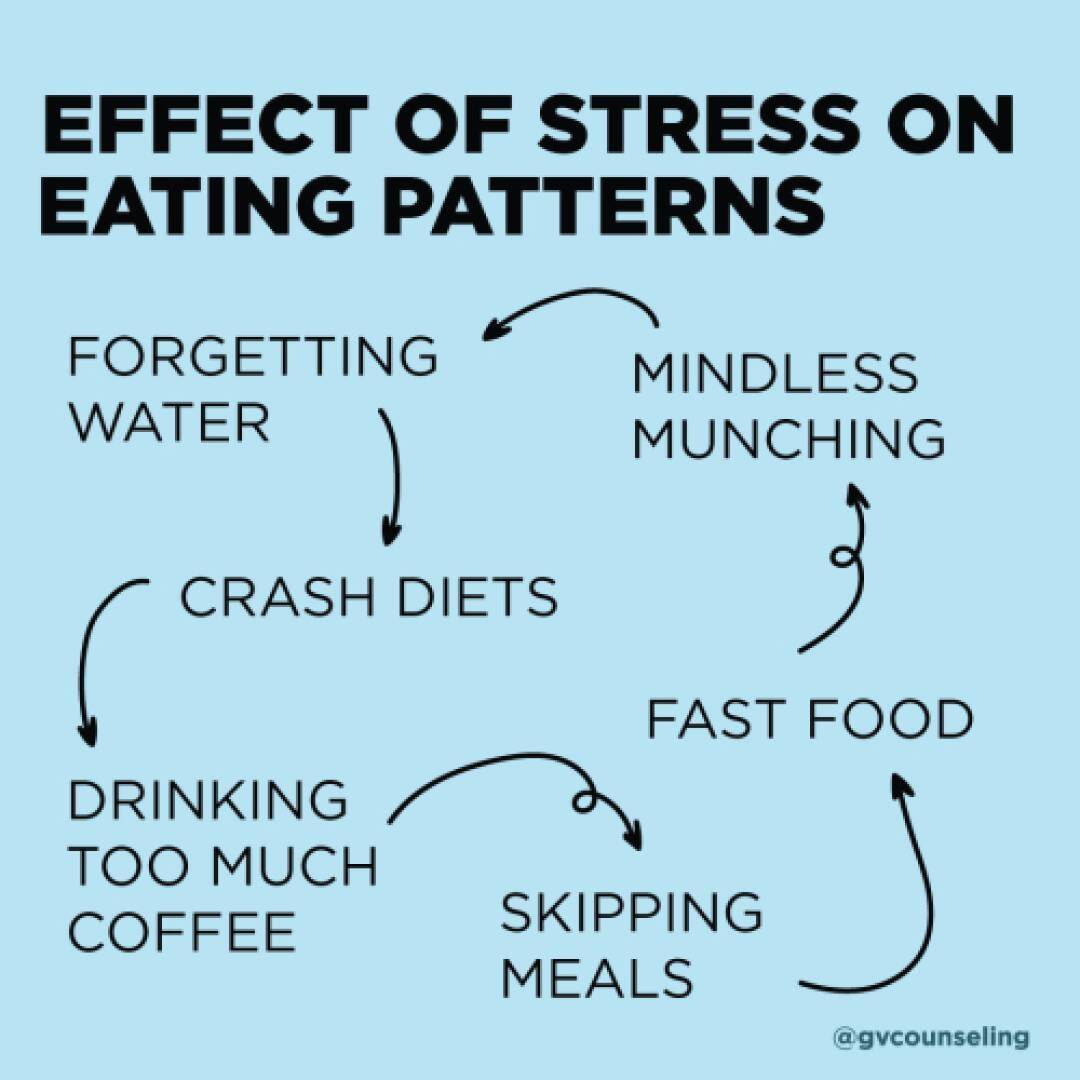
5 ways stress makes fat loss harder
1. Intensifies hunger and cravings
2. Slows metabolism by suppressing thyroid production
3. Drains your energy, so you're too tired to workout
4. Interferes with sleep
5. Makes it difficult to keep long-term goals in front of mind
Reducing Stress, Promoting Health
Movement
- Exercise and movement reduce inflammation by leading to an anti-inflammatory response.
- Exercise and movement promote neurogenesis and help to the production of new brain cells primarily in the hippocampus.
- Yoga promotes deep relaxation and focuses on movement and breathwork counteracting the harmful effects of chronic stress.
- Movement includes PLAY! Doing fun activities such as walking your dog, frisbee with friends, or swinging on the playground all decrease inflammation and promote wellness.
Connection
- Connecting with safe relationships in our lives promotes a feeling of belonging and lowers the stress hormones.
- Feeling part of a bigger community whole helps create a wider lens in which to view life through rather than focusing on one's own problem.
Education
- Having strong cognitive reserves has been proven to promote mental wellness and is protective against depression and anxiety.
- Cognitive reserves are mental stores that we gather throughout our lives that help us see problems and solutions in creative and open-minded ways. Examples of this are either-and thinking versus either-or thinking.
Mindfulness and Giving
- Mindfulness practice promotes a feeling of gratitude and curiosity about the world.
- Giving back to a charity or community project promotes positive feelings about life and activates the reward system in the brain.
Nutrition
- Adding in more anti-inflammatory foods in one's diet promotes healing at the cellular level.
- Avoiding pro-inflammatory foods such as sugar, processed foods and unhealthy fats can help prevent inflammation in the brain and body.
Sleep
- Focus on getting 7-8 hours of good quality sleep a night.
- Establish a regular bedtime routine to signal to the brain that it is time to become quiet and ready itself for rest.
- Avoid screen time 2 hours prior to bed including cell phones, laptops, and gaming all of which can be activating to the brain. Alternative activities include reading before bed, listening to audiobooks, listening to relaxing nature sounds or doing a guided body relaxation meditation
Healthy Snack Ideas
|
Ants On A Log |
Celery, almond butter, and raisins pack a dose of energizing carbs and filling fiber, fat, and protein |
|
Energy Bites |
Name says it all. Mix 1/2 cup chopped dates, 1/2 cup nut butter, and 1/4 cup rolled oats in a bowl. Form into 12 to 14 balls |
|
Herbal Teas |
Chamomile eases anxiety, while green tea contains the amino acid L-theanine, which provides a focused tranquility |
|
PB&B |
Childhood foods - like peanut butter slathered on toast with banana are naturally calming and comforting |
|
Dark Chocolate Almonds |
Dark chocolate's bold flavor curbs cravings; 1oz a day also reduces stress hormones |
|
Veggies & Dip |
Veggies fill you up with good-for-you fiber, and guac or hummus, with healthy fat, helps you feel full longer |
|
Mini Parfait |
Dairy packs calcium and protein, both of which help you body release feel-good chemicals |
|
Seltzer with Sliced Fruit |
Dehydration is often mistaken for hunger. Make drinks interesting so you're more inclined to sip |
|
Trail Mix |
Walnuts help the body respond better to stress. Pair with dried fruit and chocolate for max satisfaction |
|
Roasted Chickpeas |
For guiltless salt + crunch, toss with oil and spices on sheet pan and bake at 400 degrees for 30 minutes. |
Find another Healthy Lakers Virtual Workshop