

West Michigan Salt Survey
Abstract
The salinization of freshwater ecosystems is a growing concern, especially in north temperate regions due to runoff from de-icing salts. We have observed this problem in a chain of lakes in Grand Rapids, MI and other isolated examples have been detected around Kalamazoo and Ann Arbor but we believe this problem is prevalent throughout Michigan. However, observational data are needed to assess the degree of salinization and its putative causes.
AWRI's Steinman and Woznicki Labs conducted a 5-part study to evaluate the prevalence and severity of salinization in west Michigan lakes:
- conduct a geospatial analysis of lakes larger than 5 hectares in the 5-county west Michigan Metropolitan Planning Organization (MPO): Muskegon, Oceana, Lake, Newaygo, and Mason Counties, extracting data from existing databases to identify candidate lakes to sample;
- determine salt application rates from MDOT and county road commission data bases;
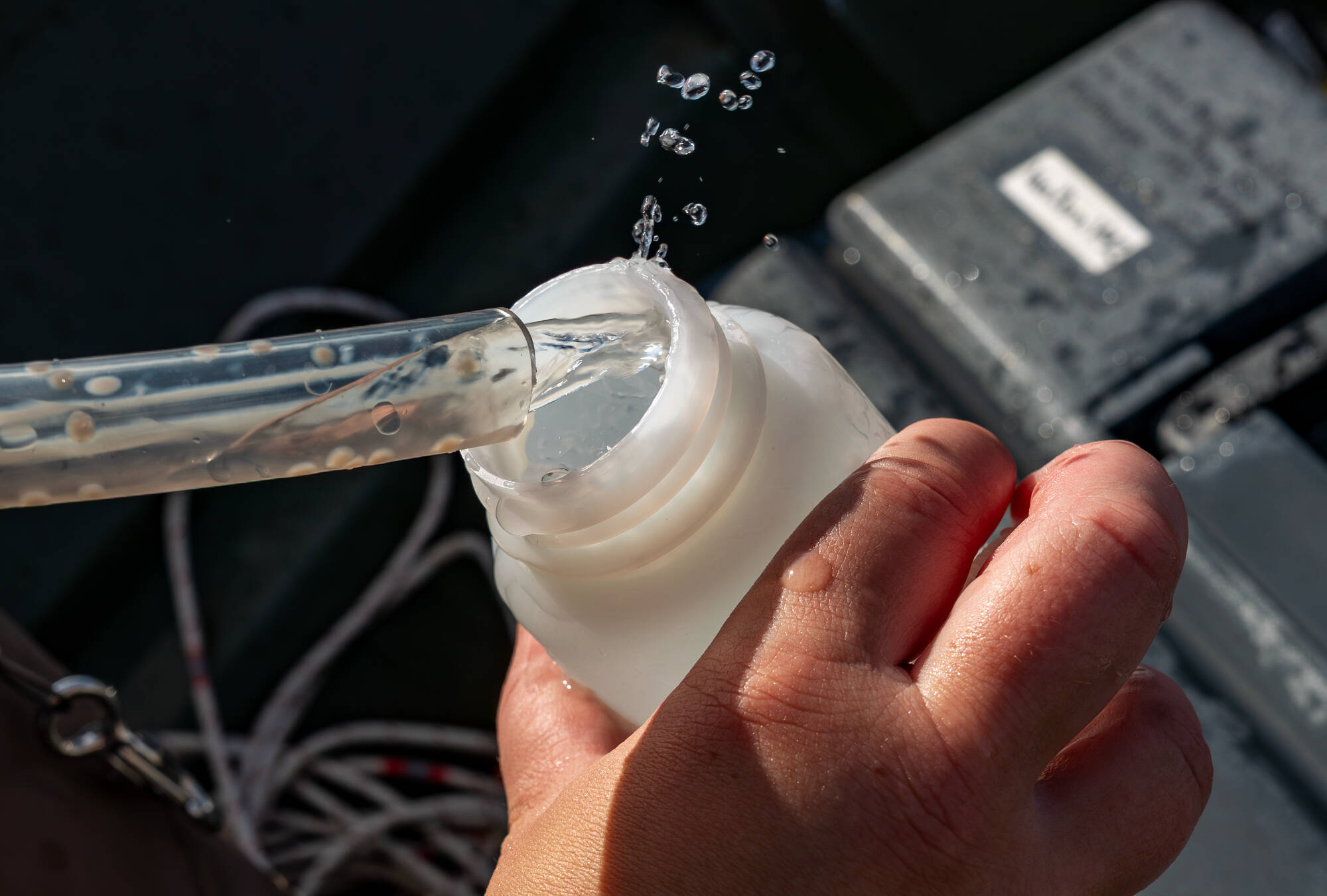
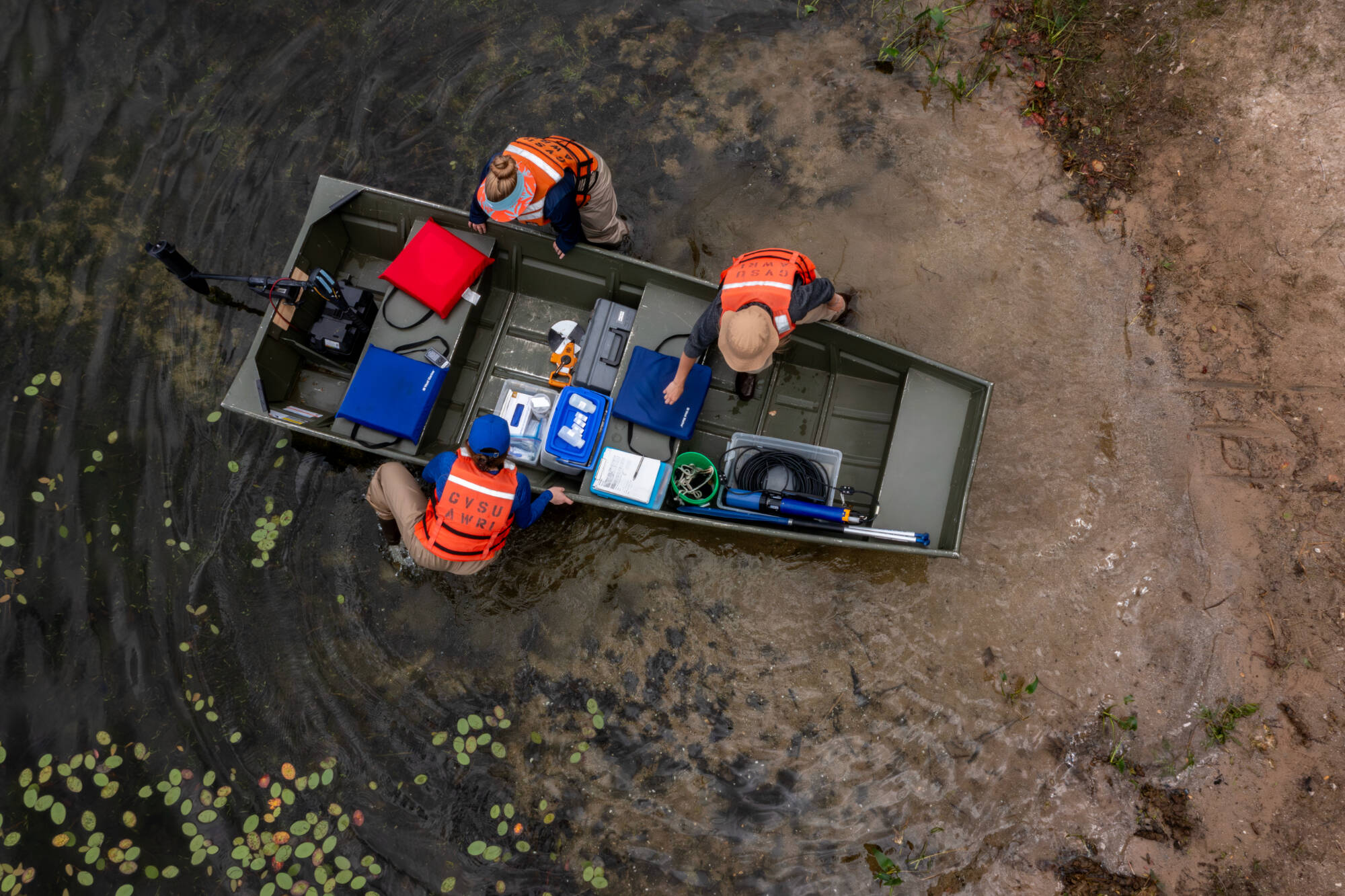
- sample a depth profile in a subset of the lakes (~50 lakes) for specific conductivity, chloride, total phosphorus, and general water quality;
- synthesize the results and use predictive models to predict the prevalence of salt contamination to other lakes in Michigan; and
- disseminate this information to stakeholders in west Michigan with assistance of MSU extension and our local planning organization (MPO), the West Michigan Regional Shoreline Development Commission (WMSRDC).
Problem
Because salt density is greater than water, salt entering lakes sinks into the hypolimnion. As a consequence, a lake surface may appear healthy because the salt problem, existing beneath the halocline, is not visible. Hence, lake residents or users may not be aware that a salt problem exists. However, if the density gradient in the lake is strong, the lake will no longer mix (either in part or completely), leaving a relatively salt-free epilimnion but a salinized hypolimnion, where nutrients also can accumulate because of continuous inputs but limited biotic uptake. Indeed, we have measured total phosphorus (TP) concentrations exceeding 5,000 µg/L in a salt-impacted Grand Rapids lake (Foley and Steinman 2023). The elevated chloride levels are potentially toxic to the biota, resulting in changes to the lake food web. In addition, if the lake does mix, high nutrient and salt concentrations will reach the photic zone, resulting in algal blooms and/or toxicity to salt-sensitive biota. In effect, the salt issue is a ticking time bomb for the ecological health of the lakes and represents a potential economic risk for lakefront homeowners.
Results & Benefits:
This project results in 2 sets of useful and applied data. First, our observational results from the 5-county WMSRDC MPO region will inform stakeholders, planners, and natural resource managers whether or not their lakes have a salt (and related phosphorus) problem. The Steinman Lab is exploring desalination solutions for small lakes that are tractable and financially viable, but currently there is no easy answer. However, there are ways to manage high concentrations of hypolimnetic phosphorus, which can be shared with the homeowners (Steinman and Spears 2020). The second benefit will be the use of our observational data to predict the number and distribution of lakes in the lower peninsula of Michigan that also may be experiencing salt issues. The state of Michigan is very interested in routinely monitoring lakes for chloride (K. Goodwin, pers. comm.) given their concerns about violations of the aquatic life water quality value (the state threshold for use in assessing surface water quality, and use in permits) for chloride, and this information will be of use in their assessments.

Contacts
Al Steinman, Project Manager, Water Quality: [email protected]
Sean Woznicki, Geospatial Analysis: [email protected]