

2026 Engineering Design Conference
Project: Varroa Mite Detector
Team 2

Team Members
Kyler Cope
Laura Goenner
Libby Gresley
Morgan LeFaive
Paige Rabideaux
Faculty Advisor
Farid Jafari
Sponsor Advisor
Phillip Hittepole
Abstract
Honey bee colonies worldwide face significant losses due to Varroa destructor mites, a parasite that weakens bees and spreads harmful viruses throughout the hive. Current detection methods often require manual sampling and can be time-consuming, disruptive, or destructive to the colony.
This project aims to develop a non-invasive diagnostic system that helps beekeepers assess colony health by analyzing brood frames outside of the hive. The system is designed to provide rapid, objective measurements that may help identify potential signs of infestation while minimizing disturbance to bees and brood. By leveraging modern sensing, automation, and data-analysis techniques, the project seeks to improve the efficiency and accessibility of hive health monitoring.
The long-term goal is to provide beekeepers with a practical tool that supports earlier detection of colony health issues and more informed management decisions, helping improve honey bee survival and productivity.
Industry Sponsor
Brian Stork, MD
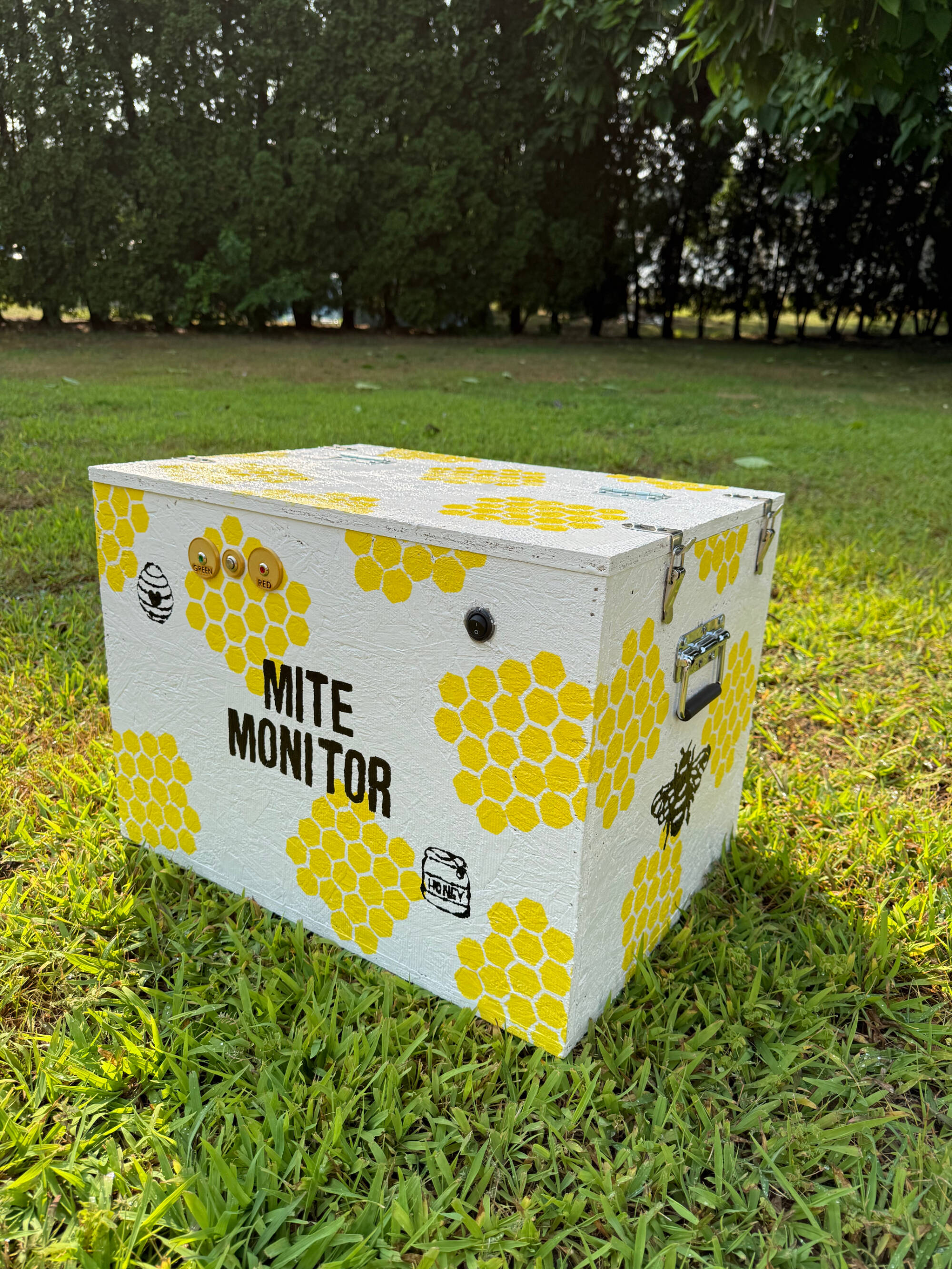
Project Photo
Project Poster
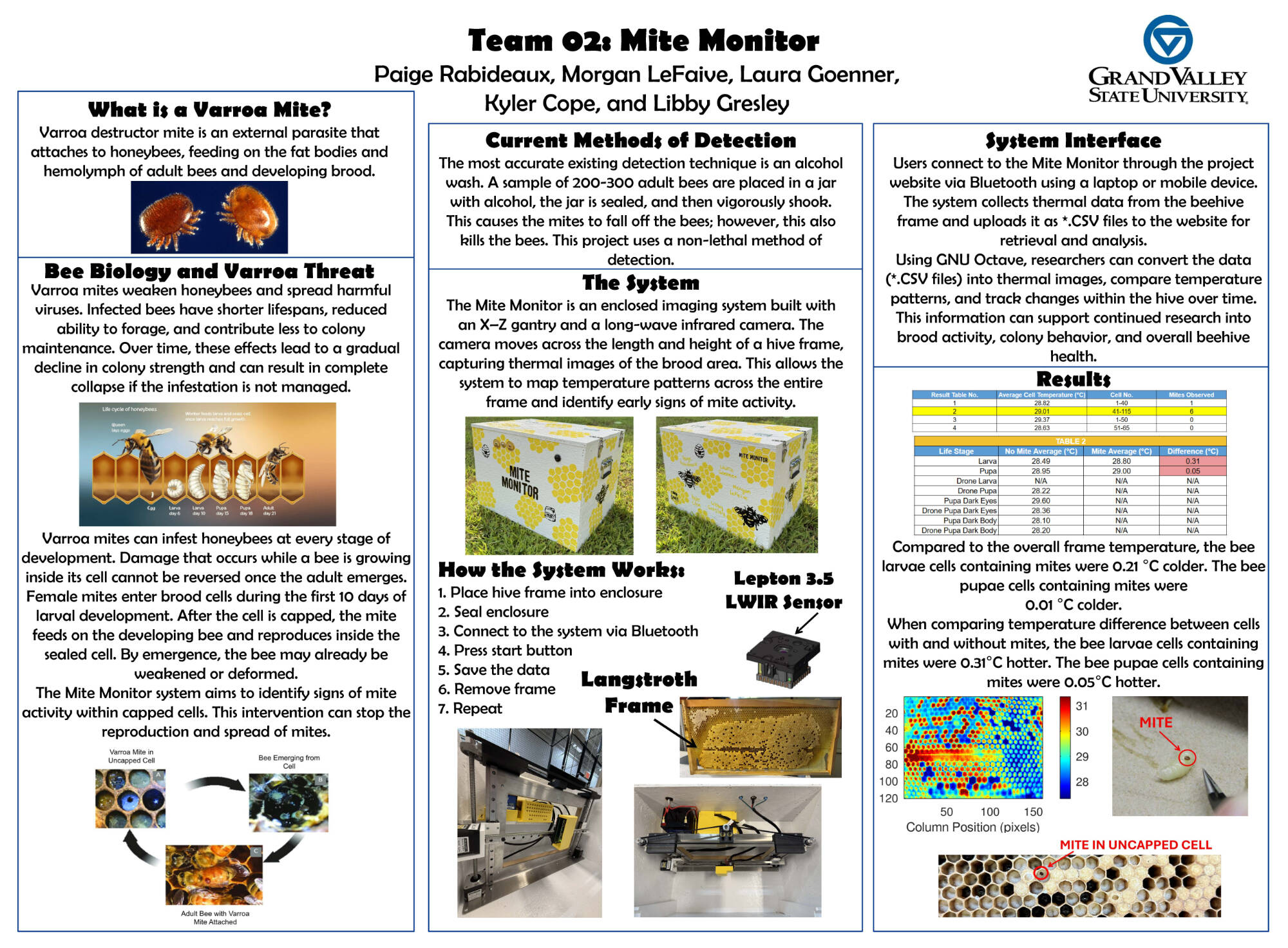
Click to open PDF
Project Video
