
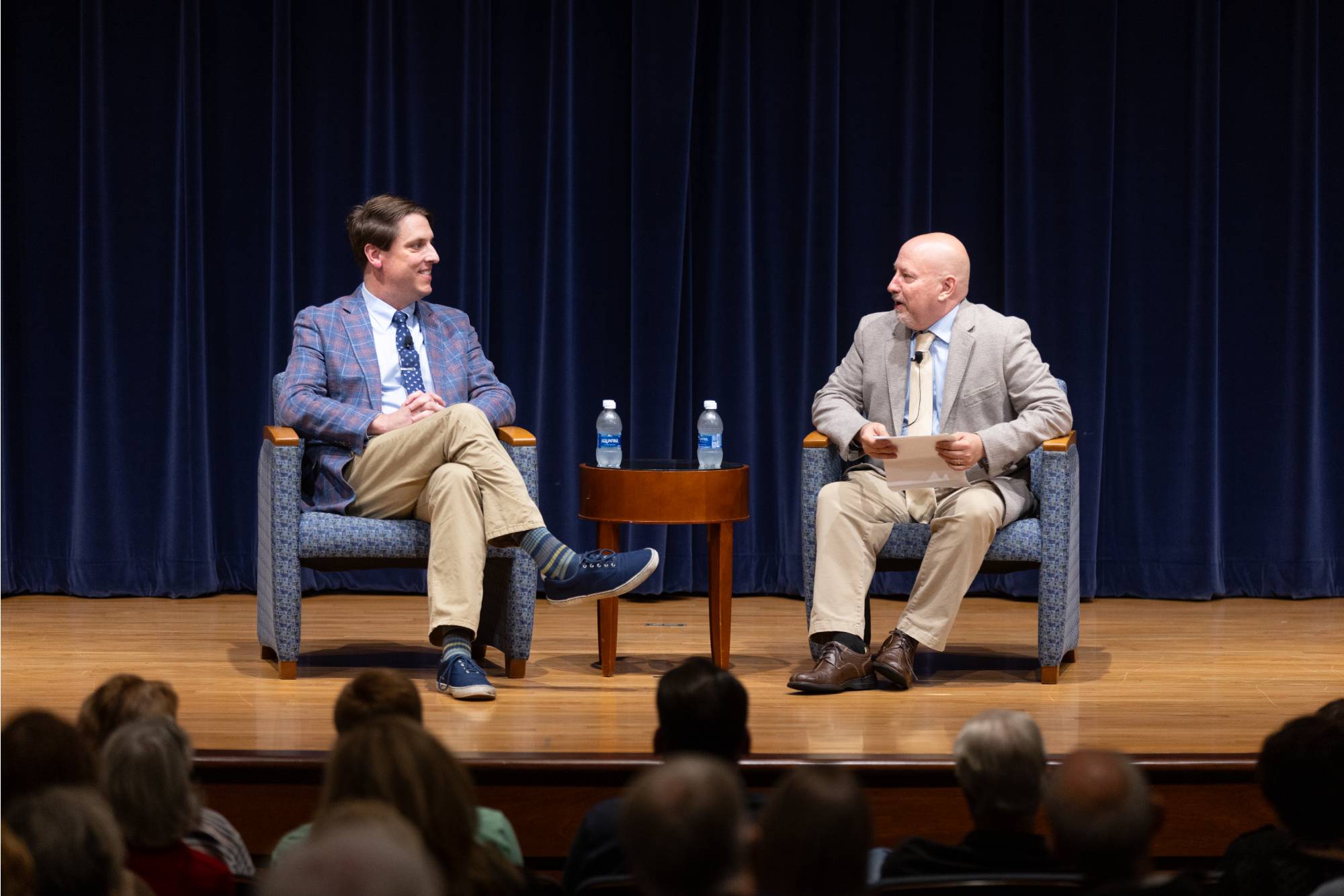
Why World War II Still Matters featuring Garrett Graff
September 3, 2025
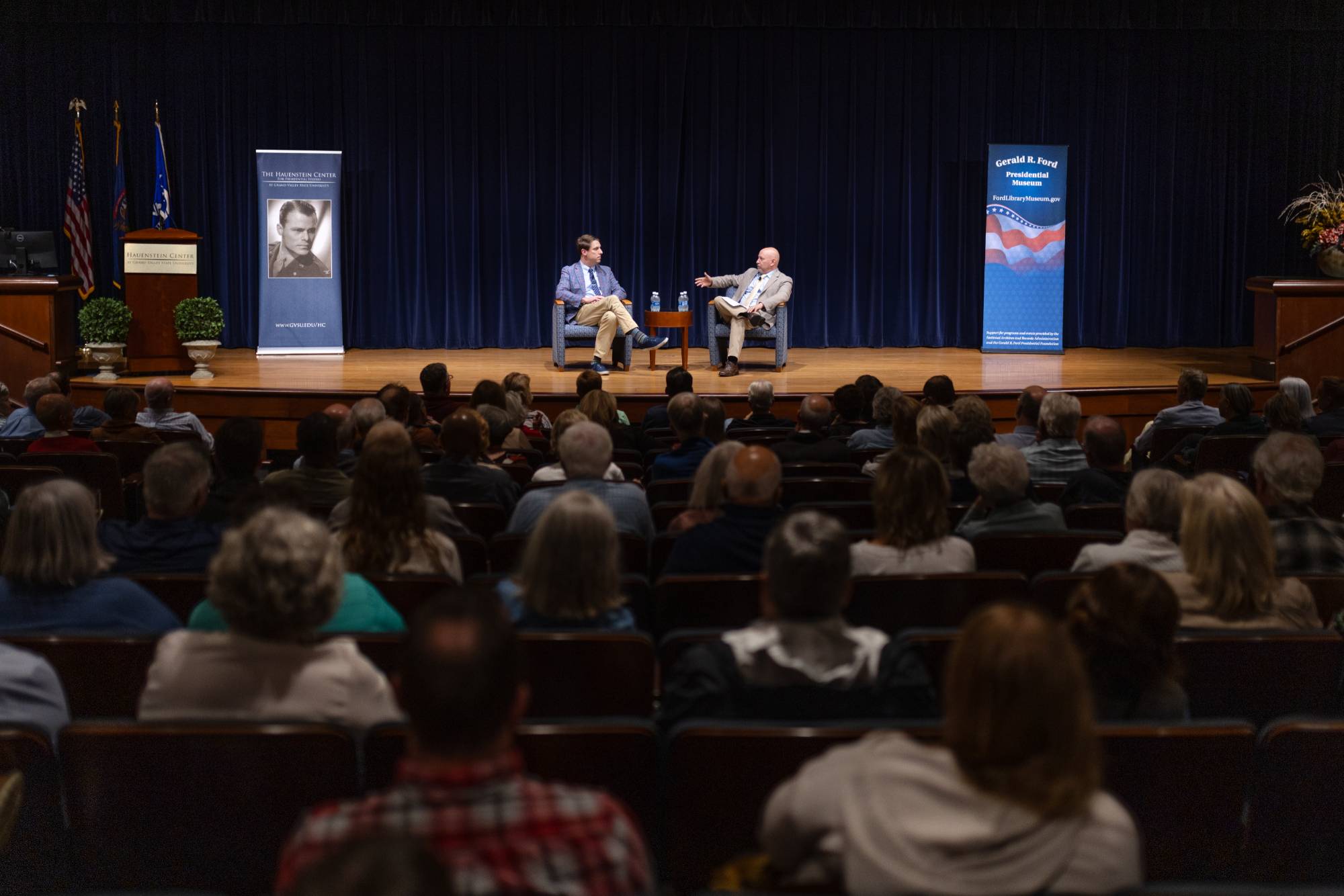
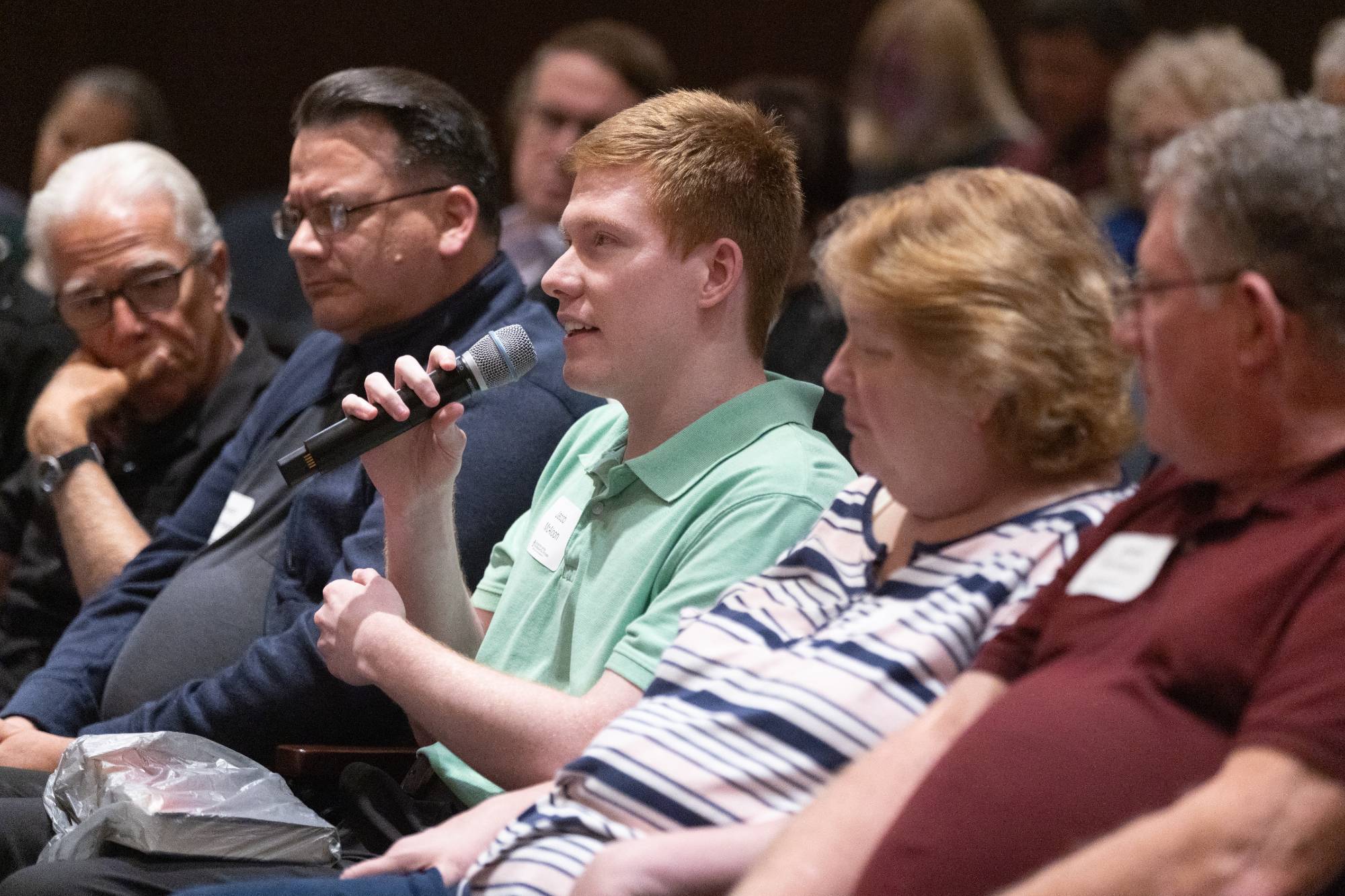
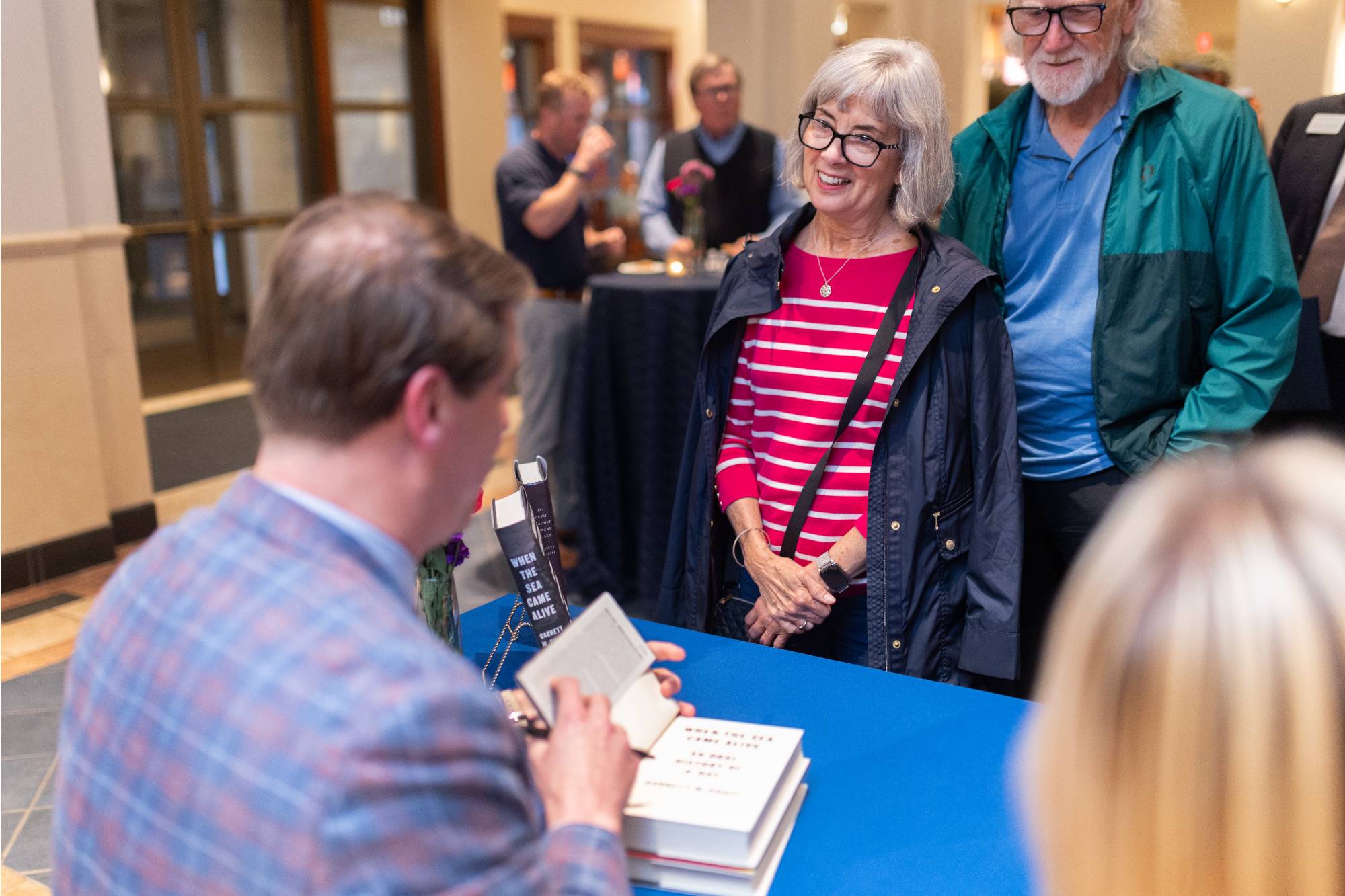
Historian, journalist, and author Garrett Graff joined the Hauenstein Center as part of the Greatest Generation Celebration to discuss two of his recent oral histories about the major turning points of World War II: the D-Day invasion of Europe as well as the Manhattan Project and the atomic bombings of Japan. He explored the legacy of the Greatest Generation, how World War II changed the world, and the first-person realities of fighting in the greatest conflict humanity has ever known.
[1757555903].jpg)
“The speaker's knowledge and passion for preserving oral histories was very inspiring to me.”
—

Full Event Recording

Speaker
[1757554343].jpg)
Garrett Graff
Bestselling historian and Pulitzer Prize finalist Garrett M. Graff has spent nearly two decades covering politics, technology, and national security, and is now recognized as one of the nation’s most prolific and wide-ranging journalists and historians. His award-winning work—including nine books on topics ranging from presidential campaigns, Watergate, 9/11, and cybersecurity, to D-Day and the U.S. government’s Cold War Doomsday plans, as well as dozens of magazine articles, essays, podcasts, and documentaries—uses history to explain the story of today, illuminating where we’ve been as a country and where we’re headed as a world.
Currently, he’s a columnist for the Washington Post, where he writes on leadership, serves as the director of cyber initiatives at the Aspen Institute, and hosts the award-winning history podcast, Long Shadow. The former editor of POLITICO Magazine and Washingtonian, and a longtime contributor to WIRED and CNN, he’s written for publications like Esquire, Rolling Stone, Vanity Fair, New York, and Foreign Affairs.
Among his multiple New York Times bestsellers, his book Watergate: A New History was a finalist for the Pulitzer Prize in History, called “dazzling” by Douglas Brinkley in the New York Times Book Review and “standard-setting” by Kirkus Reviews. In a review for the Washington Post, Len Downie, Jr., wrote, “Do we need still another Watergate book? The answer turns out to be yes — this one.”
The #1 national bestseller The Only Plane in the Sky: An Oral History of 9/11 , compiled the voices of 500 Americans as they experienced that tragic day, was called a “a priceless civic gift” by the Wall Street Journal, as well as “an exceptional document [and] brilliant work of immediate history” by Le Monde. It was also named the industry’s 2020 Audiobook of the Year, saying, “Graff has created a historical document with the deftness of a poet.”
More recently, he’s published UFO: The Inside Story of the US Government’s Search for Alien Life Here—and Out There and When the Sea Came Alive: An Oral History of D-Day, which also was an instant New York Times bestseller and spent multiple weeks on national bestseller lists. The Washington Post’s Ron Charles wrote When the Sea Came Alive was “absolutely gripping” and in a starred review, Publisher’s Weekly called it, “gripping and propulsive” and “a panoramic view of an astonishingly intricate plan coming to fruition, undertaken by men and women with a clear sense of its momentousness. Readers will be spellbound.”
He is the founding director of the Aspen Institute’s cybersecurity and technology program, where he helped start the prestigious Aspen Cybersecurity Group, and has a long history as a new media pioneer. He was the founding editor of mediaBistro.com’s FishbowlDC, a popular blog that covered the media and journalism in Washington, and co-founder of EchoDitto, Inc., an internet strategy consulting firm at the dawn of the social media age. During his time at FishbowlDC, he was the first blogger admitted to cover a White House press briefing in 2005. A Vermont native and graduate of Harvard, he served as deputy press secretary on Howard Dean’s presidential campaign and, beginning in 1997, was then-Governor Dean’s first webmaster.
Previously, he taught at Georgetown University for seven years, including courses on journalism and technology, has served on the boards of the Burlington Housing Authority, Vermont Public Radio, and the National Conference on Citizenship, and he has received a doctorate of humane letters, honoris causa, from Champlain College.