News from Grand Valley State University
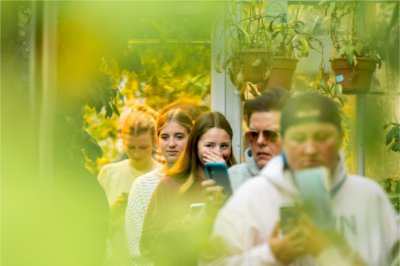
Five people wait in line for the corpse flower. One person holds their nose.

Thousands visit GVSU's rare corpse flower to experience the smelly sensation

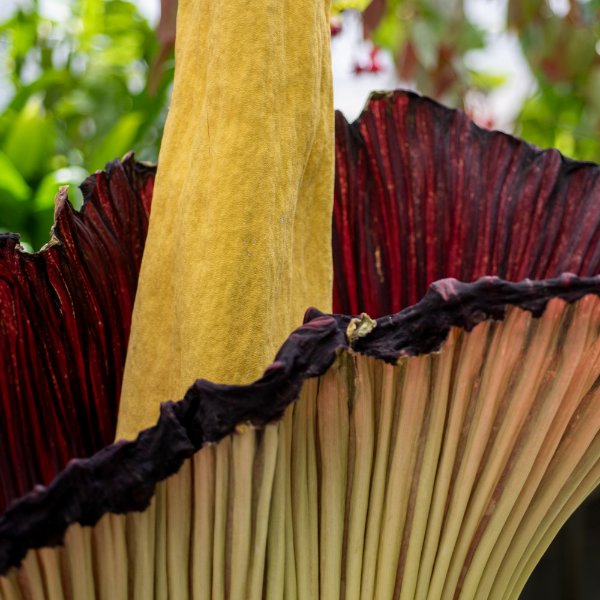
Thousands of people — some coming from several hours away — visited the GVSU corpse flower on the Valley Campus to experience the latest bloom from the rare tropical plant that emits a rotting-flesh odor to attract pollinators such as flies.

More than 4,800 people filed through Grand Valley's Barbara Kindschi Greenhouse to experience the tropical plant that is native to Sumatra, said Christina Hipshier, greenhouse supervisor. About 2,300 visited in just one day during its peak bloom.

This year's bloom from the plant lovingly nicknamed "The Beast" was again sooner than expected, though Hipshier is now "assuming now this is an established pattern." 

The plant first bloomed in 2022 and wasn't expected to do so again for another seven to 10 years. Then it surprised everyone by blooming in 2024. For that bloom, it was transferred to be on loan at Frederik Meijer Gardens & Sculpture Park to accommodate the crowds given that staffing was low during a quiet time on campus.
Watch a timelapse of the "The Beast's" flower open and close

This time, "The Beast" got to stay home in the tropical room of the research greenhouse, while Hipshier and a dedicated crew ensured visitors from campus and throughout the state, and even out of state, could experience the wonder. She said some people even mentioned that seeing the flower was a bucket list item.

All of this happened as the needs of a research greenhouse kept going, including prepping labs and having classes come through. Hipshier applauded the students who helped with managing the viewing of the plant. 

"They went above and beyond. They had classes, they had homework and they were still here until 10 p.m. helping with visitors," said Hipshier, noting a challenge for planning is the plant's unpredictability given influences such as weather outside, leading to a waiting game until the bloom appears imminent, then "you turn on a dime and rally staff."

MORE: See the moments from the 2026 blooming of "The Beast"

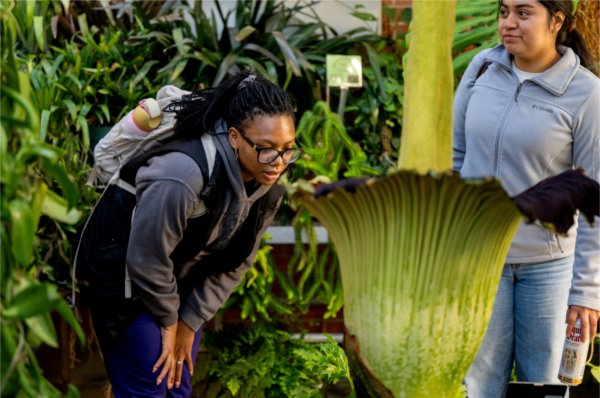
One person leans over to inspect the GVSU corpse flower while another person looks on.
Biomedical sciences graduate students, from left, Kendall Boynton and Carla Estrada, said they saw the signs for the corpse flower so they followed the signs to see it. “We could smell it outside in the hallway,” said Estrada.
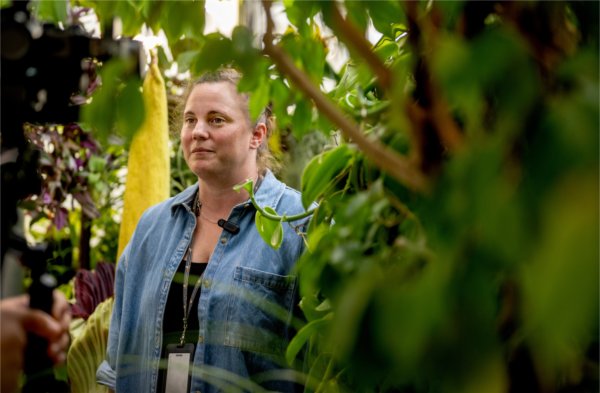
A person looks off to the side while standing amid plants in a greenhouse. The GVSU corpse flower is in the background.
Christina Hipshier is the supervisor of the Barbara Kindschi Greenhouse, where she oversees care of "The Beast."

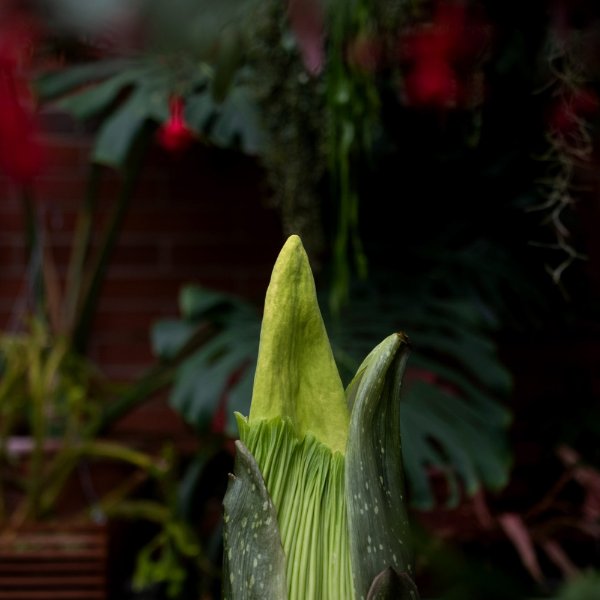
The first time the plant bloomed in 2022, cold, dreary weather slowed its expected blooming. This year, Hipshier theorizes that an unusual October warm-up just as the plant was starting to bloom accelerated the process, leading to what she observed as a little skinnier — but no less fabulous — flower.

Whenever "The Beast" blooms, those in the Biology Department are glad they can open the greenhouse, which is generally not open to the public, to offer an accessible way to take part in the sensation.

"Although our corpse flower is on a fast bloom cycle, events that happen every two years are worth celebrating," said Joseph Jacquot, department chair. "It’s joyous to share this unique experience with members of our university and community."

After all the excitement, "The Beast" is now dying back, a shadow of its fleeting, smelly glory. 

And now we wait for the next bloom. Will it be 2028, following the current pattern? We shall see.

Subscribe

Sign up and receive the latest Grand Valley headlines delivered to your email inbox each morning.