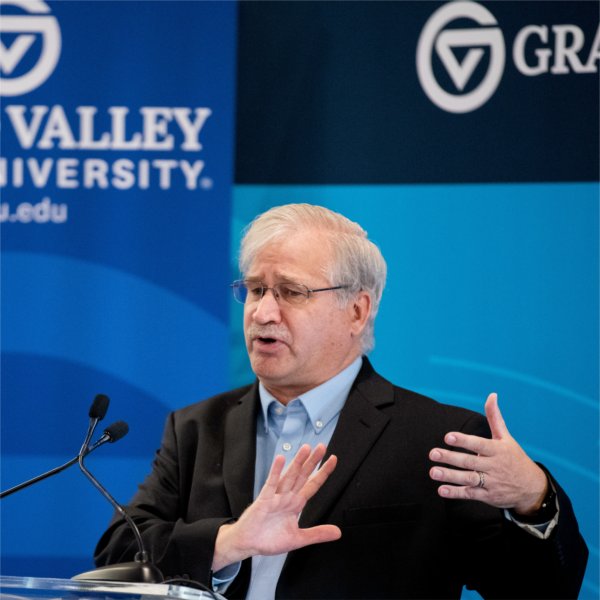
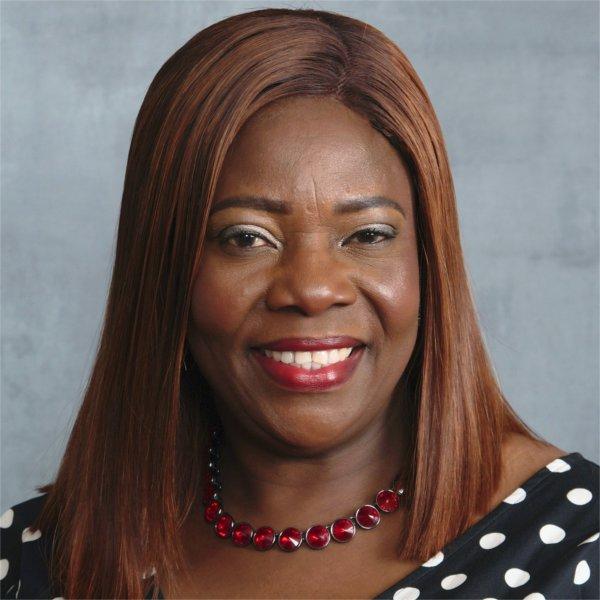
Polly Diven, professor of political science, researches and teaches
international relations and U.S. foreign policy. She discusses the
diplomatic challenges, regional dynamics and long-term implications of
the agreement for U.S. foreign policy.
Paul Isely, professor of economics, examines how the agreement could
ease some of the economic uncertainty created by the conflict and
affect consumers, businesses and financial markets.
Polly Diven
Polly Diven
Image credit - Amanda Pitts
What makes this agreement significant compared with
the previous U.S.-Iran diplomatic efforts, including the Joint
Comprehensive Plan of Action (JCPOA that the Obama administration
negotiated in 2015?
The terms of this agreement remain secret and unclear.
There does seem to be a 60-day ceasefire in place, during which the
U.S. and Iran will negotiate the future of Iran’s nuclear program
and the future of the U.S. blockade and the Iranian blockage of the
Strait of Hormuz. There are already key differences in how the two
parties are portraying the ceasefire agreement. For example,
President Trump has stated that the Strait of Hormuz will reopen to
transit without charges, while the Iranians say they will continue
to levy tolls for some of the vessels transiting the Strait. In
addition, Israel does not seem to have been included in the
negotiations, so while Iran says Israel agreed to pull out of
Lebanon, Israel says they will maintain a troop presence in Lebanon.
Wendy Sherman, deputy secretary of state under
President Biden and lead JCPOA negotiator, has noted that the
conditions of any agreement with Iran are less advantageous to the
U.S. than the 2015 JCPOA. Since the U.S. formally left the JCPOA in
May 2018, Iran has increased its highly-enriched uranium from
roughly 20% to 60%. So we are now dealing with a country that is
closer to having nuclear weapons capacity and with tougher terms to
negotiate. Before the U.S. and Israel initiated the bombing of Iran
in March, there was free and open transit of the Strait of Hormuz.
One of the primary criticisms of the JCPOA that Trump noted was that
the U.S. would be unfreezing Iran’s assets held in U.S. banks if
they continued to comply with the agreement. Today, it seems that
the same “reward” is what the U.S. is offering Iran if they comply
with the dilution or removal of their enriched uranium.
How has this conflict and the subsequent agreement
reshaped America's relationships with key allies, both in the Middle
East—such as Israel and Saudi Arabia—and with long-standing partners
like Canada, Mexico and the European Union?
In my opinion, this agreement has strengthened AND
challenged our relationship with Israel. We have been allied in the
attacks in Iran, for sure. However, this military activity has made
it very clear that the U.S. and Israel have different objectives for
any war with Iran. Israel has called for the destruction of Iran,
and its own security in the region is paramount. For the U.S., we
ally ourselves with Israel and support their attacks on Iran, but no
U.S. president wants a prolonged war. The U.S. people have clearly
indicated that they do not support another lengthy military
involvement, especially one that they connect to higher prices of gasoline.
Let me just take up how the U.S. war in Iran has
impacted our relationship with Europe. The Europeans, including our
long-standing allies in the UK, will not prioritize involvement in
this conflict. Their populations won’t tolerate it, and they are
already fully committed to the Russia/Ukraine conflict that is
closer to home. Several European leaders have demonstrated that they
are willing to increase NATO military contributions as a result of
President Trump’s criticism. However, they have also demonstrated
that they will not be bullied into contributing money or troops to
any U.S./Israel military intervention in Iran.
If this agreement holds, what are the most realistic
best-case and worst-case scenarios for U.S.-Iran relations over the
next five years?
President Trump will face increasing pressure to end
U.S. military involvement in Iran as the midterm elections get
closer. He will need a way to spin this as a “win” in the very near
future. Unfortunately, I fear he has undermined the Iranian
progressive movement that was once so critical of the current
Iranian administration. President Trump is fond of saying that he
has decapitated the regime, but I believe it is more likely that the
regime is stronger than it was before the war broke out.
What should we watch for over the next 60 days to
determine whether this agreement is succeeding or failing?
If the Strait of Hormuz fully reopens, that is a very
positive sign. I think many large transit vessels are fearful that
mines laid by the Iranians are still in place. If international
shipping companies feel it is safe enough to move through the
Strait, that is good news. Any military activity, even by Israel
against Hezbollah in Lebanon, is a sign of renewed troubles. For the
sake of civilians throughout the region, let’s hope this doesn’t happen.
Paul Isely
Paul Isely
Image credit - Kendra Stanley-Mills
With the U.S. and Iran agreeing to a preliminary
deal, do you think this will alleviate some of the economic pressure
that a lot of Americans are feeling?
Yes. It will cause immediate moves in two areas.
Gas prices: Gas prices will retreat provided that the
strait is opened with minimal risks relatively quickly. However,
they will not retreat to pre-war levels for some time. It will
take several months just to get everything moving again. Then
there will be both normal reserves and strategic reserves to
re-fill around the world. This will create elevated demand. Likely
it will be next summer before oil prices are on the same plain as
before the war.
Interest rates: As price pressures ease, the federal
reserve can take a softer approach to interest rates. In fact,
bets on interest rate increases are already disappearing
quickly. However, more importantly, it will move the bond market
even more quickly which affects the interest rates consumer pay –
like mortgages. This caused mortgage rates to increase leading
into summer where they were set up to drift lower before the war
began. Again, we are already seeing interest rates ease, and this
will be the biggest effect on the economy.
What economic indicators will you be watching over
the next several months to determine whether this agreement is
having a real impact?
Again we will be watching oil prices carefully to fully
understand how the logistics of moving oil around the world is
impacted. It is the physical market not the financial markets that
will be moving the prices if we see the strait reopen. This will
begin to give us a better idea of how long the effects will last. We
will also be watching consumer confidence and retail sales to see if
the consumer is feeling better about the world.
What industries in Michigan stand to benefit most
from this agreement?
Real estate because interest rates will retreat faster
than oil prices if this is a lasting agreement. We could quickly see
mortgage rates below 6%, and this will lead to increased demand in
the real estate market.
Agriculture because it had effects from the price of
oil on fertilizers and diesel fuel as well as interest rate
effects. The cost structure in agriculture probably increased more
than any other industry in Michigan as a result of the war. As this
cost structure normalizes, it will help Michigan farmers and take
pressure off of food prices as we enter the fall.
What lessons has this situation taught us about the
connection between geopolitics and economics?
The world is highly connected and something happening
in one place has unintended consequences in geographies and
businesses that seem to have little to do with the actual event happening.